
Solid Wood vs Engineered Wood Flooring: Key Differences
Choosing between solid wood and engineered wood flooring comes down to more than appearance. Both offer a genuine wood look and long-term value, but they differ in construction, dimensional stability, installation, maintenance and suitability for different environments.
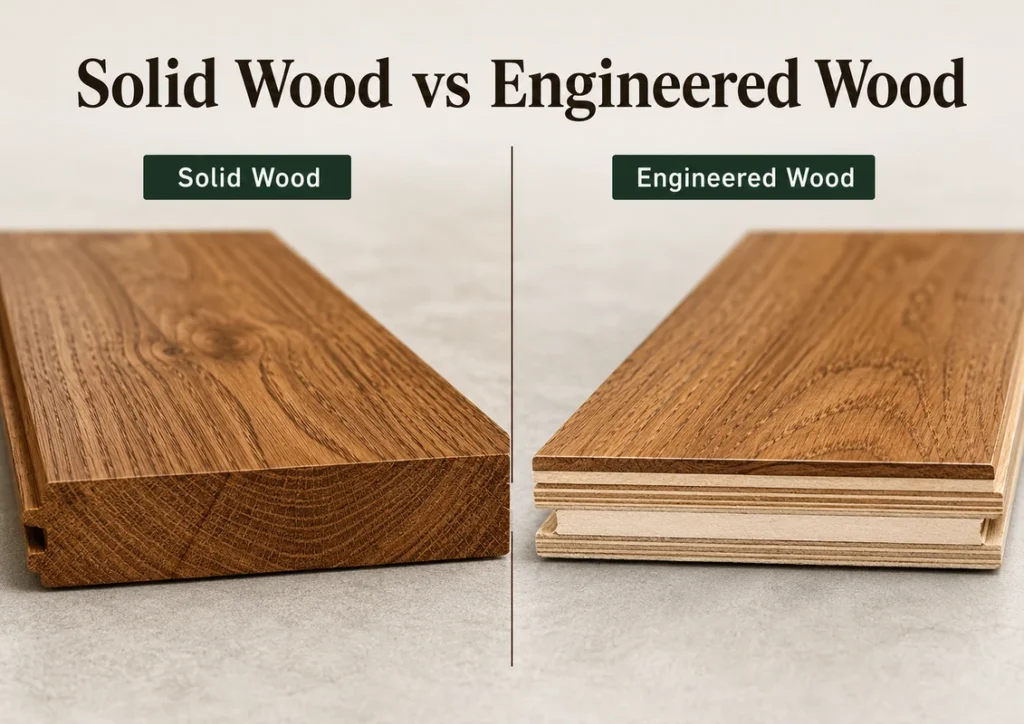
Solid hardwood flooring is made from a single piece of timber, while engineered wood flooring combines a real hardwood surface with a stable multilayer core. These structural differences affect how each floor responds to humidity, temperature changes, subfloor conditions and refinishing over time.
In this guide, we compare solid wood vs engineered wood flooring side by side to help you understand which option may be better suited to your home or project in the UAE.
Solid vs Engineered Wood Flooring: Quick Answer
The main difference between solid and engineered wood flooring is their construction. Solid hardwood is made from a single piece of timber, while engineered flooring uses a real hardwood surface over a multilayer core.
Solid wood generally offers greater refinishing potential, while engineered wood provides better dimensional stability and more flexible installation options.
For many projects, the decision comes down to subfloor type, indoor conditions, budget and how long you expect to keep and refinish the floor
What Is Solid Hardwood Flooring?
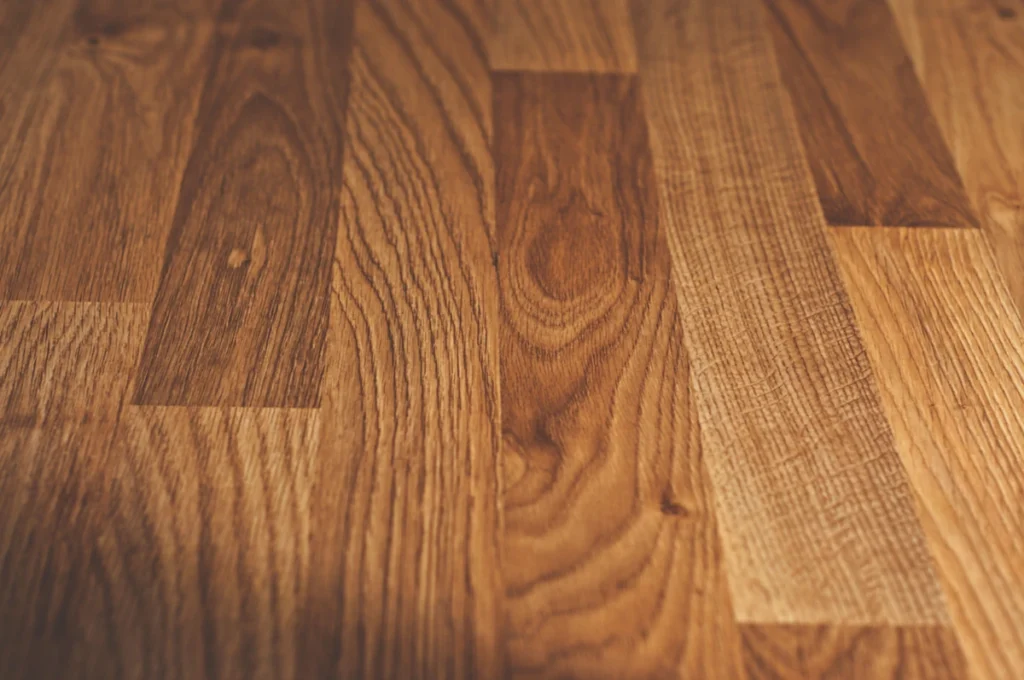
Solid hardwood flooring is made from a single piece of natural timber, typically oak, walnut or another hardwood species. Because the entire plank consists of solid wood, it can usually be sanded and refinished multiple times during its lifespan.
Solid wood is valued for its natural grain, authentic feel and long service life. However, because natural timber expands and contracts as moisture levels change, installation conditions and indoor climate need to be considered carefully.
What Is Engineered Wood Flooring?
Engineered wood flooring is a real wood flooring product made with a hardwood wear layer bonded to a stable multilayer core. The surface provides the appearance and texture of natural hardwood, while the layered construction improves dimensional stability.
This structure generally allows engineered flooring to handle changes in temperature and humidity more effectively than solid timber. Depending on the thickness of the real wood wear layer, some engineered floors can also be sanded and refinished during their lifespan.
Engineered hardwood flooring should not be confused with MDF or particle board. These are different manufactured wood products and do not have the same construction or intended use as engineered hardwood flooring.
Key Differences Between Solid and Engineered Wood Flooring
Although both options provide a real wood surface, their different construction methods affect performance, installation, maintenance and long-term use. The following factors are the most important when comparing solid wood and engineered wood flooring
Construction Difference
Solid wood flooring is made from a single piece of hardwood. Engineered flooring is made with multiple layers, usually with a real wood veneer on top and plywood or HDF underneath. This layered construction helps reduce expansion and contraction.
Appearance Difference
Solid wood has natural grain throughout the plank. It can show deeper variation, knots, and organic character. Engineered hardwood can also look natural when it has a real wood veneer, but lower-quality engineered products may look too uniform or artificial.
Strength and Durability Difference
Solid wood is extremely durable and can last for decades when maintained properly. It can also be sanded and refinished multiple times. Engineered hardwood is also durable, but its refinishing potential depends on the thickness of the top veneer. A thick veneer performs much better than a thin one.
Moisture and Humidity Resistance
This is one of the biggest differences in solid vs engineered wood flooring. Solid wood reacts more strongly to humidity. It can expand, shrink, cup, or gap if the environment is not controlled. Engineered wood is more dimensionally stable, making it a better option for many UAE interiors.
However, engineered wood is not automatically waterproof. If you are asking, “is engineered wood waterproof?” the honest answer is no, not in most cases. Some products are water resistant, but standing water can still damage the floor. The same applies to “is engineered hardwood water resistant?” Yes, many products resist humidity better than solid wood, but they are not fully waterproof unless specifically designed and certified for wet areas.
Cost Difference
Solid wood usually costs more because it uses full natural timber. Installation can also be more expensive. Engineered wood is often more budget-friendly, although premium engineered oak floors can still be costly. If you are comparing solid hardwood flooring cost with engineered flooring, include material, installation, subfloor preparation, maintenance, and refinishing potential.
Maintenance Difference
Solid wood needs regular care, stable indoor humidity, and protection from scratches and water. Engineered wood is easier to maintain in daily use, but it still needs proper cleaning. Avoid soaking either type with water.
Weight and Installation Difference
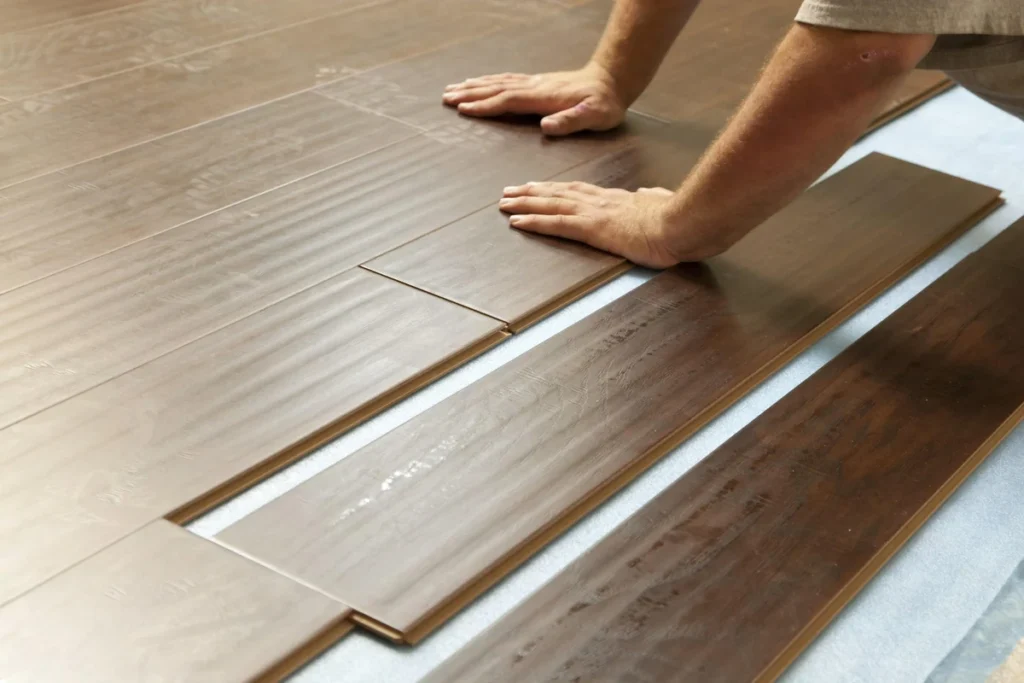
Solid wood is heavier and often needs more technical installation. Engineered wood is usually easier to install and can work better over concrete subfloors, which are common in UAE buildings. It may be glued, floated, or clicked depending on the product system.
Solid Wood vs Engineered Wood Comparison Table
| Feature | Solid Wood | Engineered Wood |
|---|---|---|
| Construction | One natural timber piece | Layered or bonded wood material |
| Appearance | Natural hardwood grain and texture throughout the plank | Real hardwood surface with the appearance and texture of natural wood |
| Moisture Stability | Lower | Higher |
| Lifespan | Very long with care | Long, depending on quality |
| Refinishing | Multiple times | Limited by veneer thickness |
| Cost | Usually higher | Usually more flexible |
| Installation | More demanding | Easier and more versatile |
| Best For | Luxury, long-term value | Modern homes, humidity-prone spaces |
Pros and Cons of Solid Hardwood Flooring
pros
- Natural appearance: Each plank is made entirely from natural timber and develops character over time.
- Refinishing potential: Solid hardwood can generally be sanded and refinished multiple times.
- Long lifespan: When correctly installed and maintained, high-quality solid wood flooring can remain in use for decades.
- Premium material: Solid hardwood remains a desirable choice for high-end residential interiors.
cons
- More movement with humidity: Natural timber expands and contracts as environmental conditions change.
- Installation limitations: Some subfloors and environments require more careful preparation and installation.
- Higher initial cost: Material and installation costs can be higher than many engineered alternatives.
- Requires climate consideration: Indoor humidity and temperature should remain reasonably controlled
Pros and Cons of Engineered Wood Flooring
pros
- Better dimensional stability: Its layered construction helps reduce expansion and contraction caused by environmental changes.
- Real wood surface: Quality engineered flooring retains the natural appearance and texture of hardwood.
- Flexible installation: Engineered flooring can often be installed over a wider range of suitable subfloors.
- Good fit for modern UAE interiors: Its stability can make it practical for air-conditioned homes, apartments and commercial spaces
cons
- Refinishing depends on the wear layer: Thinner wear layers may allow limited or no sanding.
- Quality varies: Core construction, wear-layer thickness and manufacturing quality differ significantly between products.
- Premium options can still be expensive: High-quality engineered wood should not automatically be treated as a budget alternative to solid hardwood
When Engineered Wood Flooring Is the Better Choice
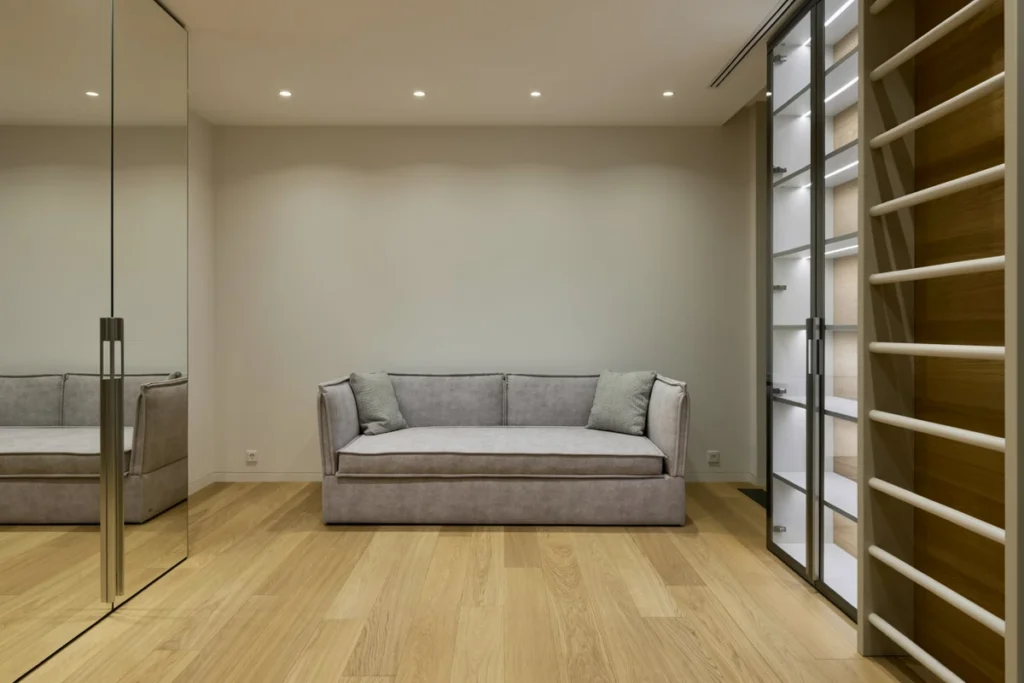
Engineered wood flooring can be a particularly practical choice where dimensional stability and installation flexibility are priorities.
It may be worth considering for:
• Apartments and villas with concrete subfloors
• Air-conditioned interiors
• Areas exposed to moderate temperature or humidity changes
• Renovation projects where installation height matters
• Projects that need a real wood surface with greater structural stability
The final choice should still depend on the product specification, wear-layer thickness, installation method and conditions of the room
Which Performs Better in UAE Conditions?
Flooring performance in the UAE depends on more than the material alone. Air conditioning, indoor humidity, direct sunlight, subfloor moisture and installation quality can all affect how a wood floor performs over time.
Engineered wood flooring generally offers greater dimensional stability because of its layered construction. This can make it a practical option for many UAE apartments, villas and commercial interiors, particularly where concrete subfloors are common.
Solid hardwood flooring can also perform well when installed in suitable conditions. However, because solid timber naturally expands and contracts in response to environmental changes, moisture levels, acclimatisation and installation conditions require careful consideration.
In both cases, product quality and installation are just as important as the flooring type itself. Proper subfloor preparation, acclimatisation and following the manufacturer’s installation requirements can significantly influence long-term performance.
At Greenwood, we help homeowners, interior designers, architects and project professionals compare wood flooring options based on the actual requirements of their space.
Solid or Engineered Wood Flooring: Which Should You Choose?
Neither option is automatically better for every project. The right choice depends on the room, subfloor, indoor conditions, budget, expected lifespan and how important future refinishing is to you.
Choose Solid Hardwood Flooring If:
Solid hardwood can be the better choice if you prefer traditional solid timber, want maximum refinishing potential and have suitable installation and environmental conditions. It is particularly appealing for projects where long-term use and the character of natural timber are priorities.
Explore our solid hardwood flooring collection to compare available wood species, finishes and formats.
Choose Engineered Wood Flooring If:
Engineered wood can be the better choice if you want a real hardwood surface with improved dimensional stability and greater installation flexibility. It is particularly practical for many modern homes, apartments and projects built over concrete subfloors.
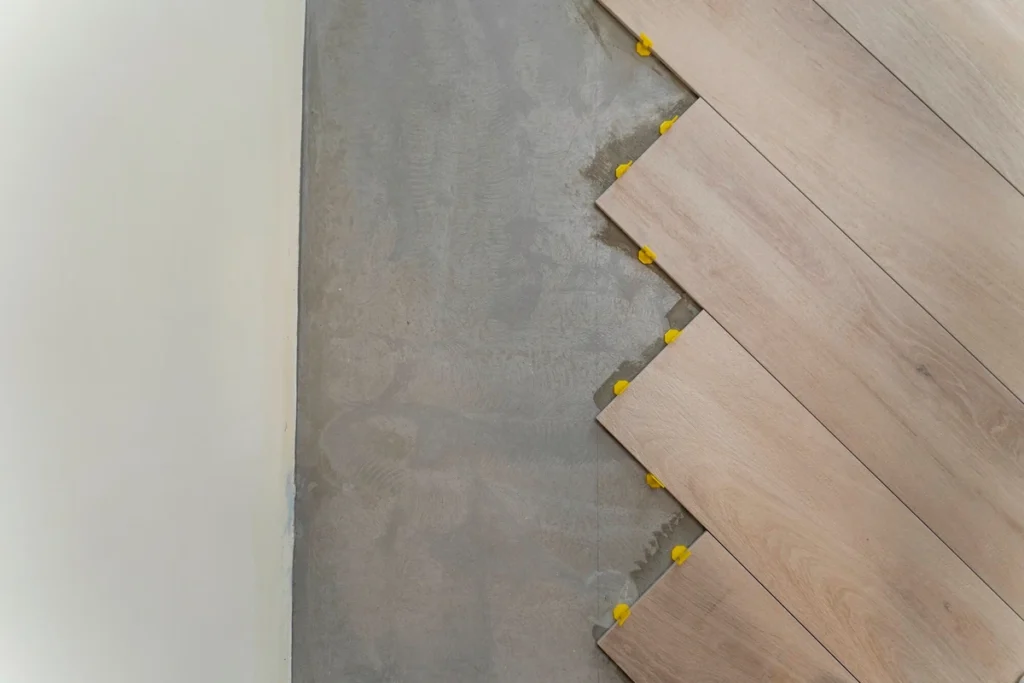
Explore our engineered wood flooring collection to compare plank, herringbone and other available options.
For homeowners, designers and contractors comparing wood flooring Dubai options, the final decision should also consider indoor climate, subfloor conditions, installation method and the specifications of the individual flooring product.
Rather than choosing between solid and engineered wood based on appearance alone, compare the complete flooring system and select the option that best matches the conditions of your space
Conclusion
Solid hardwood and engineered wood flooring can both deliver the natural appearance, durability and long-term value expected from a quality wood floor.
Solid hardwood offers traditional single-piece timber construction and greater refinishing potential, while engineered flooring provides a real hardwood surface with improved dimensional stability and greater installation flexibility.
The best choice depends on where the flooring will be installed, the condition of the subfloor, indoor climate, budget and how you expect the floor to be maintained over time.
If you are comparing solid and engineered wood flooring for a project in the UAE, reviewing physical samples and product specifications can make the final decision much easier
what is the main difference between solid wood and engineered wood?
Solid hardwood flooring is made from one solid piece of timber. Engineered wood flooring uses a real hardwood surface bonded to a stable multilayer core. This difference affects dimensional stability, installation options and refinishing potential.Solid hardwood flooring is made from one solid piece of timber. Engineered wood flooring uses a real hardwood surface bonded to a stable multilayer core. This difference affects dimensional stability, installation options and refinishing potential.
is engineered wood good for flooring?
Yes, engineered hardwood is good for flooring, especially in spaces where stability is important. It is often a better choice than solid wood for UAE apartments and concrete subfloors.
what is difference between engineered hardwood and hardwood?
Both have a real hardwood surface. Solid hardwood consists entirely of natural timber, while engineered hardwood combines a hardwood wear layer with a layered core designed to improve stability
is engineered wood better than solid wood?
is solid wood worth than extra cost?
It can be when long service life, natural timber construction and repeated refinishing are priorities. However, engineered hardwood may offer better value for projects where stability and installation flexibility are more important
Is engineered wood flooring suitable for UAE homes?
Yes, engineered wood flooring can be well suited to UAE homes when the correct product and installation system are selected. Its layered construction provides greater dimensional stability than solid timber, which can be useful in air-conditioned interiors and environments where temperature or humidity may vary.
Subfloor preparation, moisture conditions and manufacturer installation requirements should still be checked before installation