
How Do You Clean Engineered Wood Floors?
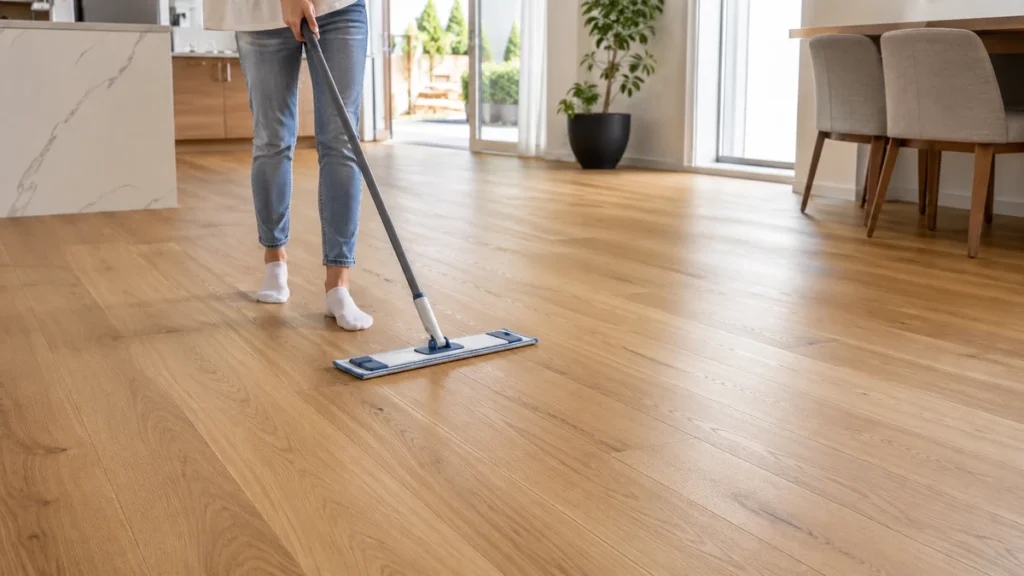
How do you clean engineered wood floors without damaging their surface or allowing moisture to enter the joints? Start by removing dust and grit with a soft broom or a vacuum made for hard floors. Then use a pH-neutral cleaner approved for wood and a microfiber mop that is only slightly damp. Never soak the floor, pour water directly onto it, or leave spills standing. Work in small sections and dry any visible moisture immediately. This method removes everyday dirt while protecting the finish, edges, and real-wood wear layer. Always check the flooring manufacturer’s care instructions before using a new product.
The Safest Way to Clean Engineered Wood Floors
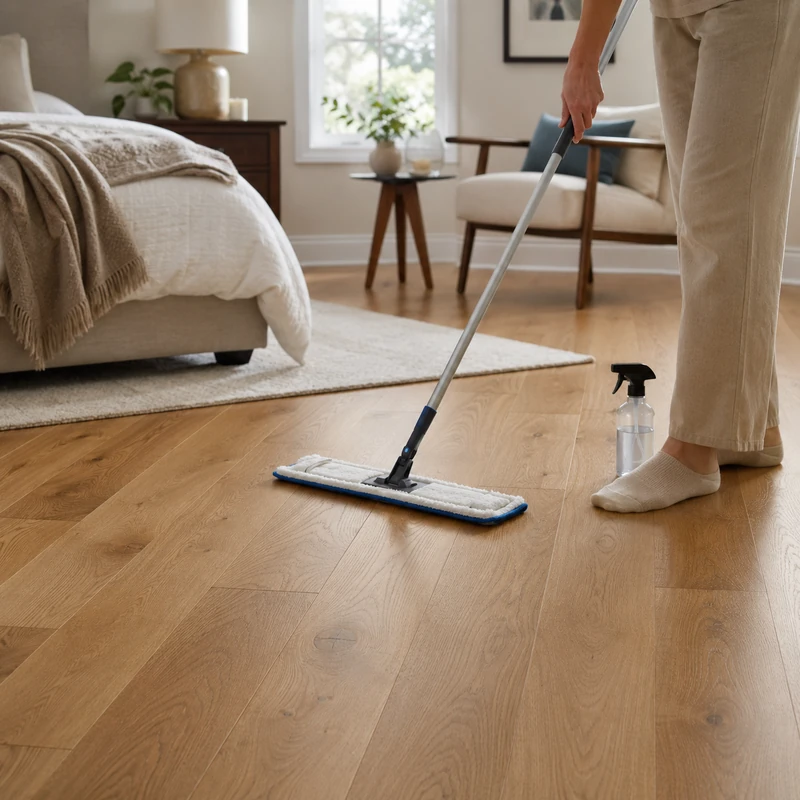
The safest method uses as little moisture as possible. Although engineered wood is generally more stable than solid timber, most products are not waterproof. Water can still enter plank joints, affect the finish, or cause swelling if it remains on the surface.
Use this routine:
- Sweep or vacuum loose dirt. Remove sand, crumbs, pet hair, and dust.
- Choose a wood-safe, pH-neutral cleaner. Confirm that it suits the floor’s lacquered, oiled, or factory-applied finish.
- Lightly mist the cleaner. Spray the microfiber pad or a small section instead of pouring liquid across the floor.
- Mop with a barely damp microfiber pad. It should feel damp, not wet.
- Dry any remaining moisture. Use a clean towel or dry pad, especially around joints and board edges.
Wood-floor manufacturers consistently recommend regular dry cleaning and limited damp cleaning. Kährs advises using a well-wrung mop and says the remaining moisture should dry quickly, while Bruce recommends misting a hardwood cleaner and wiping the surface rather than mopping with water
What You Need to Clean Engineered Wood Flooring
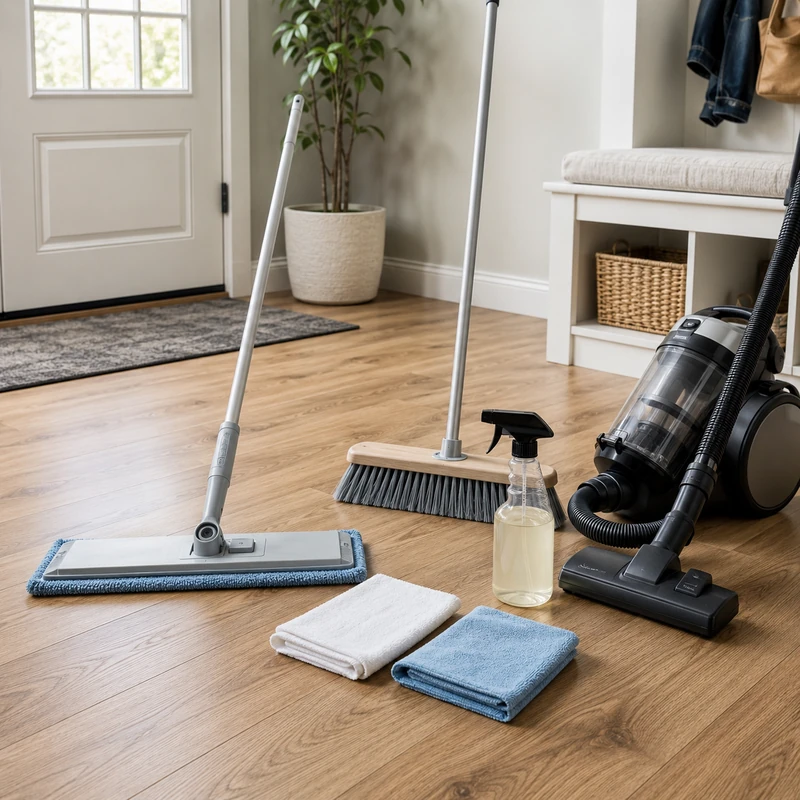
You do not need many products for cleaning engineered wood floors. Using too many often creates residue, haze, or conflicting chemical layers.
Prepare:
- A soft-bristle broom, dust mop, or vacuum with a hard-floor attachment
- A clean microfiber flat mop and replacement pad
- A pH-neutral cleaner approved for wood floors
- A clean, absorbent towel for spills and drying
- Felt furniture pads and entrance mats for prevention
Avoid abrasive brushes, steel wool, bleach, ammonia, oil soap, wax-based cleaners, and general-purpose detergents unless the manufacturer specifically approves them. These products may scratch the coating, leave a film, change the sheen, or interfere with maintenance treatments.
The best cleaner for engineered wood floors is the product that matches the exact finish and care instructions supplied by the manufacturer. A cleaner intended for lacquered engineered hardwood flooring may not suit an oil-finished surface.
How to Clean Engineered Wood Floors Step by Step
1. Sweep or Vacuum the Floor First
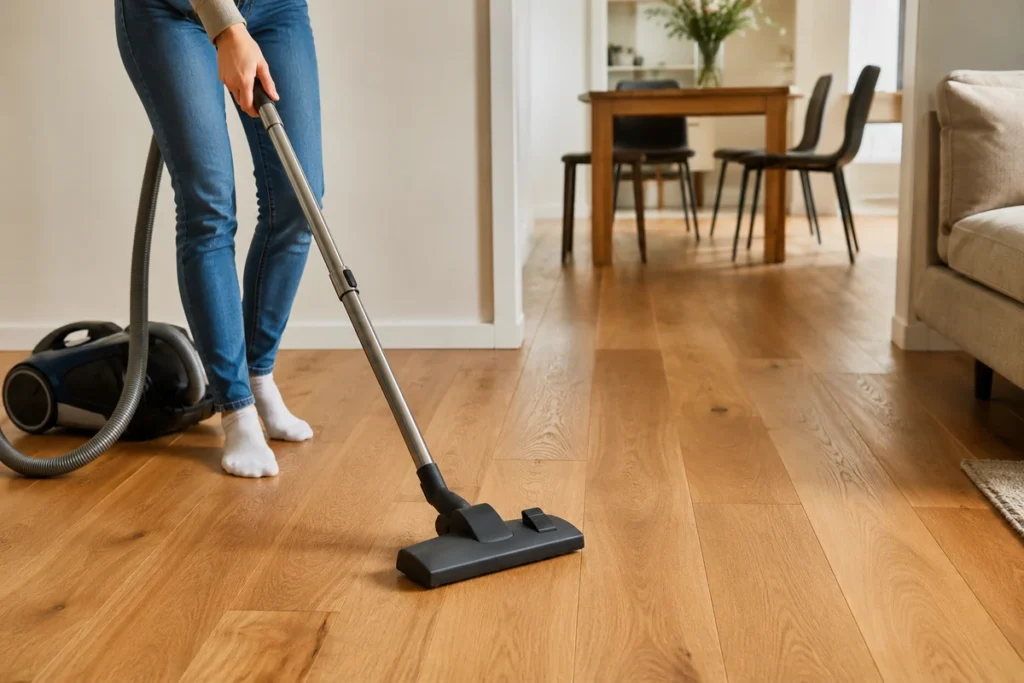
Dust, sand, and fine grit must be collected before moisture touches the floor. When trapped under a mop pad, these particles act like an abrasive and may create small scratches or dull traffic lanes.
Sweep with a soft broom or use a vacuum set to hard-floor mode. Disable the rotating beater bar, if possible, and use a soft parquet attachment. Focus on entrances, kitchen work areas, spaces beneath dining chairs, and rug edges, where grit often collects.
Damp mopping a dirty floor simply moves gritty residue around instead of removing it
2. Test the Cleaner on a Hidden Area
Test the product behind a door, under movable furniture, or in another discreet area. Apply a small amount with a microfiber cloth and allow it to dry fully.
Check for changes in colour, gloss, texture, slipperiness, or a cloudy film. If the area becomes dull or sticky, stop using the product and consult the floor’s care guide.
Testing matters when the brand, finish, or previous maintenance history is unknown. Old wax, polish, or oil residue can react badly with a new cleaner
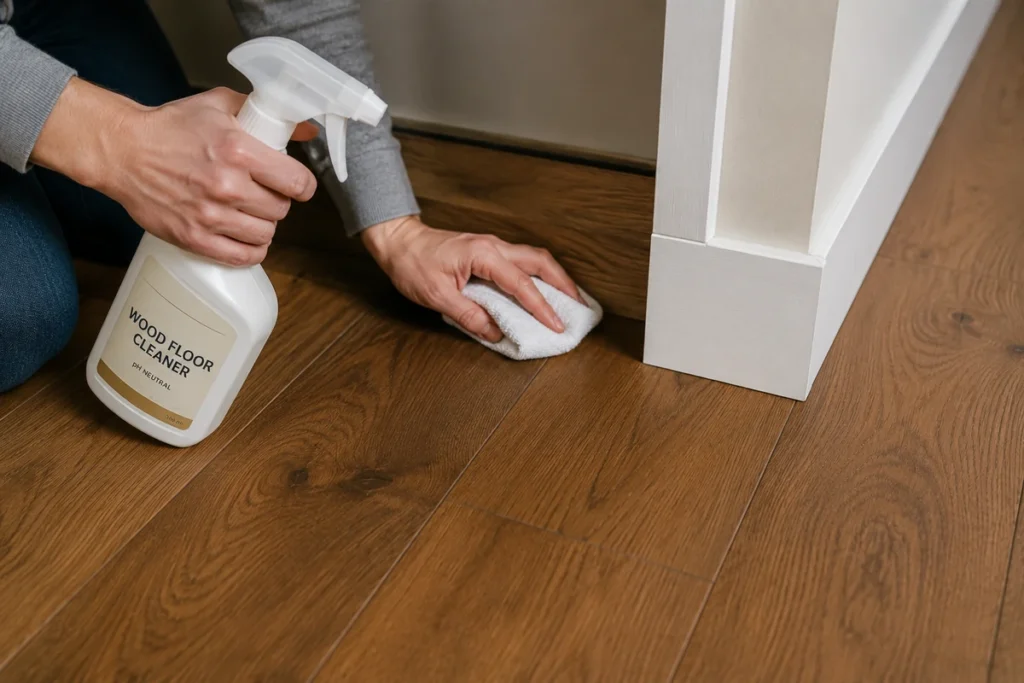
3. Apply a Small Amount of Cleaner
Do not pour detergent directly onto the floor. Liquid can spread into bevels, gaps, damaged finish areas, or plank joints before it can be collected.
Lightly spray the microfiber pad or mist a small section, clean it immediately, and then continue. Follow dilution instructions exactly; extra concentrate usually leaves residue rather than improving the result.
For spills, blot instead of spreading the liquid. Clean the affected spot with an approved product and dry it promptly
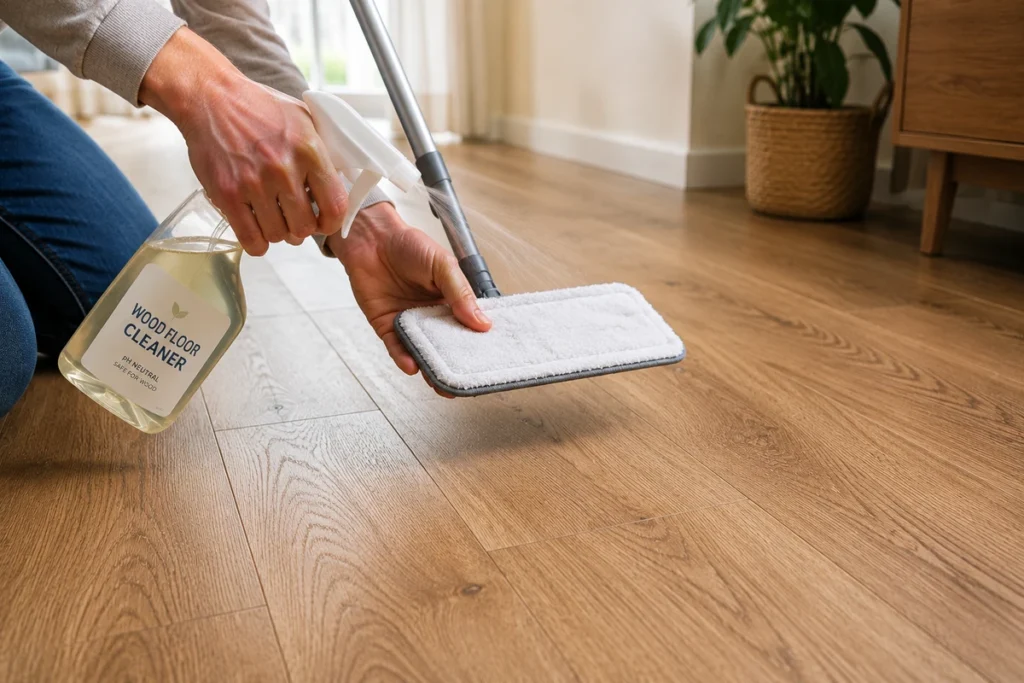
4. Mop With a Barely Damp Microfiber Pad
Move the mop in smooth passes, following the direction of the boards where practical. Clean one manageable section at a time and avoid repeatedly scrubbing one area.
The pad must remain barely damp. If it becomes dirty, replace or rinse it and wring it thoroughly. A saturated pad is unsuitable for washing engineered hardwood floors because it pushes moisture toward seams and edges.
Do not assume engineered hardwood is waterproof because it has a layered construction. The wood surface, joints, adhesives, core, and finish still require protection from prolonged moisture
5. Dry the Floor and Check for Streaks
The floor should not remain visibly wet. Use a dry microfiber pad or towel to collect moisture around seams and slow-drying areas.
Once dry, inspect the surface from different angles. Streaks usually indicate too much cleaner, a dirty pad, excess moisture, or residue from an earlier product. Do not add polish to hide the problem. Use a fresh pad and repeat a light clean with the approved dilution.
Kährs uses quick drying as a sign that the correct moisture level has been used. BOEN also recommends dry everyday cleaning and damp wiping with products selected for the specific lacquered or oiled finish
How Often Should You Clean Engineered Wood Floors?
Frequency depends on foot traffic, pets, outdoor dust, and room use. A busy entrance needs more attention than a low-traffic bedroom.
| Cleaning task | Suggested frequency | Why it matters |
|---|---|---|
| Blot spills and wet marks | Immediately | Prevents moisture and staining |
| Sweep, dust mop, or vacuum | Daily to several times a week | Removes scratch-causing grit |
| Spot-clean marks | As needed | Reduces unnecessary damp mopping |
| Lightly damp mop | Weekly or when visibly dirty | Removes soil dry cleaning cannot collect |
| Inspect joints, mats, and furniture pads | Monthly | Reveals trapped dirt or moisture issues |
| Apply finish-specific maintenance | According to the manufacturer | Oiled and lacquered finishes have different needs |
Homes with pets, children, garden access, or frequent visitors may need more dry cleaning. However, cleaning more often should not mean using more water
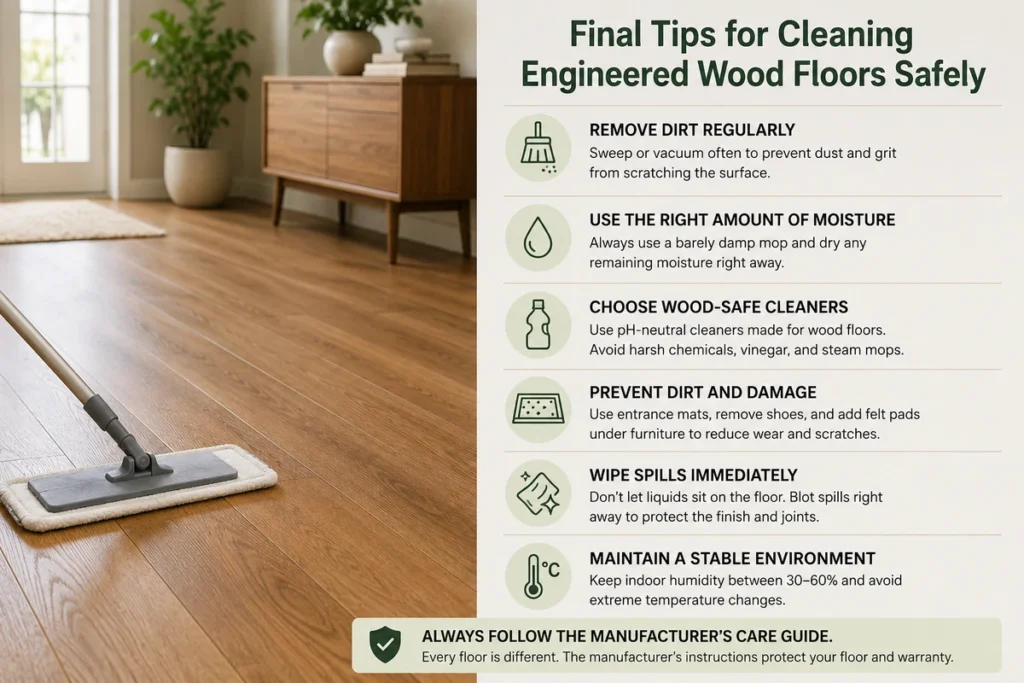
Final Tips for Cleaning Engineered Wood Floors Safely
The key to cleaning engineered hardwood floors is controlling grit, cleaner, and moisture. Vacuum first, use a compatible product sparingly, work with a clean microfiber pad, and dry the surface quickly.
Preventive care reduces deeper cleaning. Place mats at entrances, remove outdoor shoes, fit felt pads beneath furniture, trim pets’ nails, and wipe spills immediately. Never drag heavy furniture across the boards.
Keep the floor’s care guide. Engineered wood products may look similar but use different coatings and maintenance systems. Generic advice should never override the instructions or warranty requirements for your specific floor
FAQs
Can You Use a Steam Mop on Engineered Wood Floors?
Usually, no. Steam combines heat with moisture and may drive vapour into joints, edges, or small breaks in the finish. This can contribute to swelling, warping, finish damage, or separation. Bruce and Bona advise against steam cleaning hardwood surfaces. Follow the manufacturer’s instructions if a product is marketed as steam-compatible, but never assume compatibility
Can You Wash Engineered Hardwood Floors With Water?
Do not soak the floor with a bucket of water or wet mop. A small amount of moisture may be acceptable with a well-wrung microfiber pad, but the surface should dry quickly. Remove standing water immediately. Manufacturer guidance takes priority because permitted methods vary between products and finishes.
Can You Use Vinegar on Engineered Wood Flooring?
It is safer to avoid vinegar unless the manufacturer explicitly permits it. Vinegar is acidic and repeated use can dull or weaken some finishes. It may also leave cloudiness when mixed incorrectly or used over residue. Choose a pH-neutral, wood-specific cleaner instead. Bona and Bruce both advise against vinegar on hardwood finishes.
How Do You Clean Engineered Wood Floors Without Streaks?
Vacuum thoroughly, use the correct cleaner dilution, and apply only a light mist. Work with a clean microfiber pad and replace it when dirty. Mop in small sections, then let the surface dry or buff it gently with a dry pad. Too much product is a common cause of streaks and sticky residue
Is Cleaning Oiled and Lacquered Engineered Wood the Same?
No. Routine dust removal may be similar, but approved cleaners and maintenance treatments differ. Oiled floors may require periodic re-oiling, while lacquered floors need products designed for their sealed coating. Using polish, wax, or oil on the wrong finish can create residue or complicate future refinishing. Identify the surface treatment before cleaning engineered timber floors