
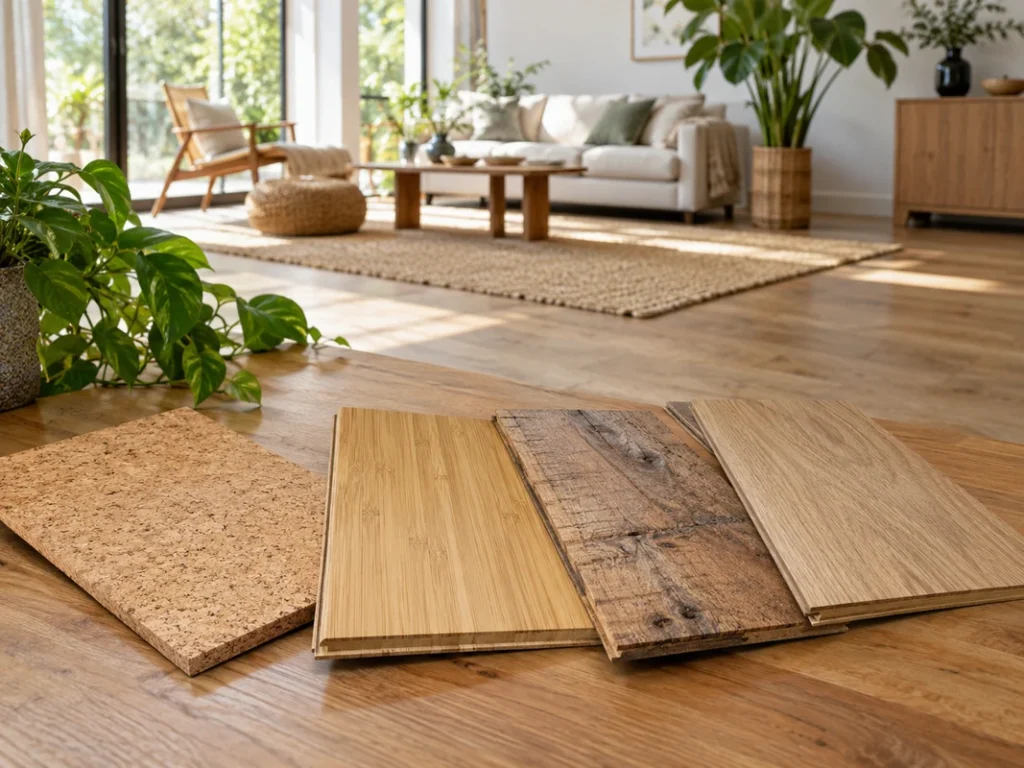
Eco-Friendly Flooring Options: 8 Sustainable Choices
Choosing eco friendly flooring options is not simply about buying a floor labelled “green.” A genuinely sustainable floor should balance responsible raw materials, durability, indoor air quality, manufacturing impact, installation methods, maintenance needs, and what happens to the material at the end of its useful life.
For most homes, there is no single flooring material that is environmentally superior in every situation. Cork may be an excellent renewable choice for bedrooms, while reclaimed timber can make more sense for a character-rich living space and recycled tile may perform better in wet areas.
The best decision comes from comparing the entire lifecycle of the floor rather than judging the material by one environmental claim
What Makes Flooring Truly Eco-Friendly?
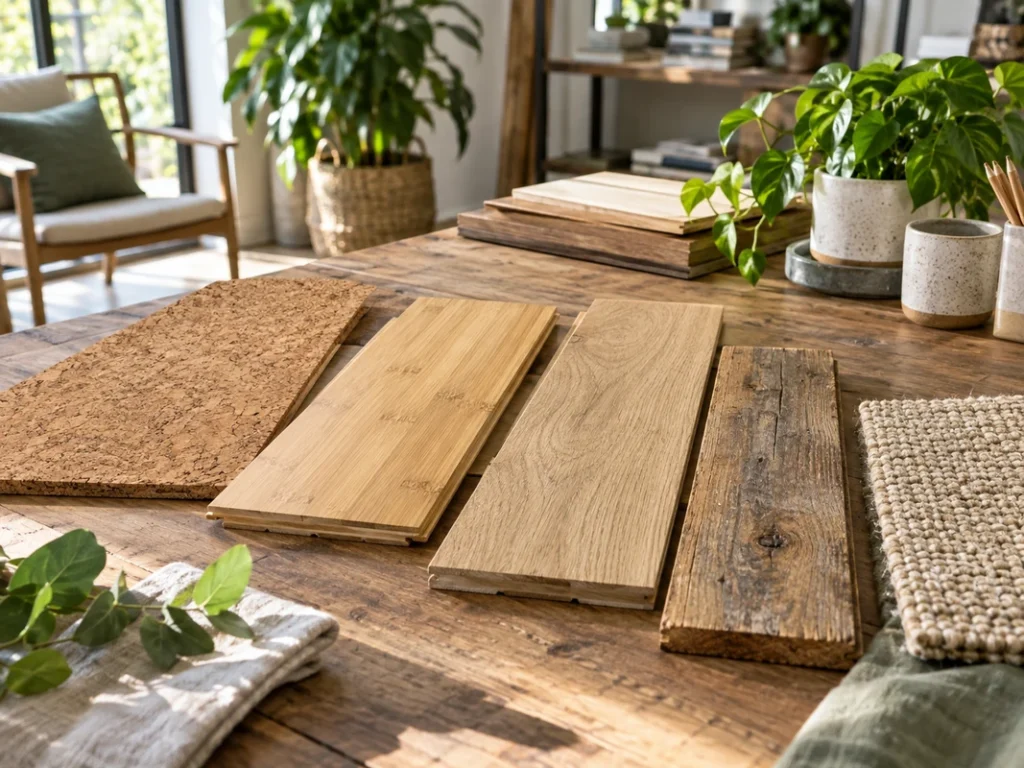
Eco-friendly flooring generally has a lower environmental impact across sourcing, manufacturing, installation, use, and disposal.
Several factors matter:
- Raw materials should come from renewable, responsibly managed, reclaimed, recycled, or abundant sources.
- Manufacturing should minimize unnecessary energy use, waste, and harmful chemicals.
- Flooring, adhesives, finishes, and underlays should have low emissions of volatile organic compounds, or VOCs.
- A durable floor that lasts for decades can be more sustainable than a supposedly green product that requires frequent replacement.
- Materials that can be repaired, refinished, recycled, reused, or safely disposed of have an advantage at the end of their lifespan.
This is why environmentally friendly flooring cannot be judged only by whether it is natural. Transportation distance, adhesives, coatings, expected service life, and replacement frequency all matter.
For homeowners considering different types of wooden flooring, responsible forestry and product longevity are particularly important parts of the environmental equation
Eco-Friendly Flooring Options Compared
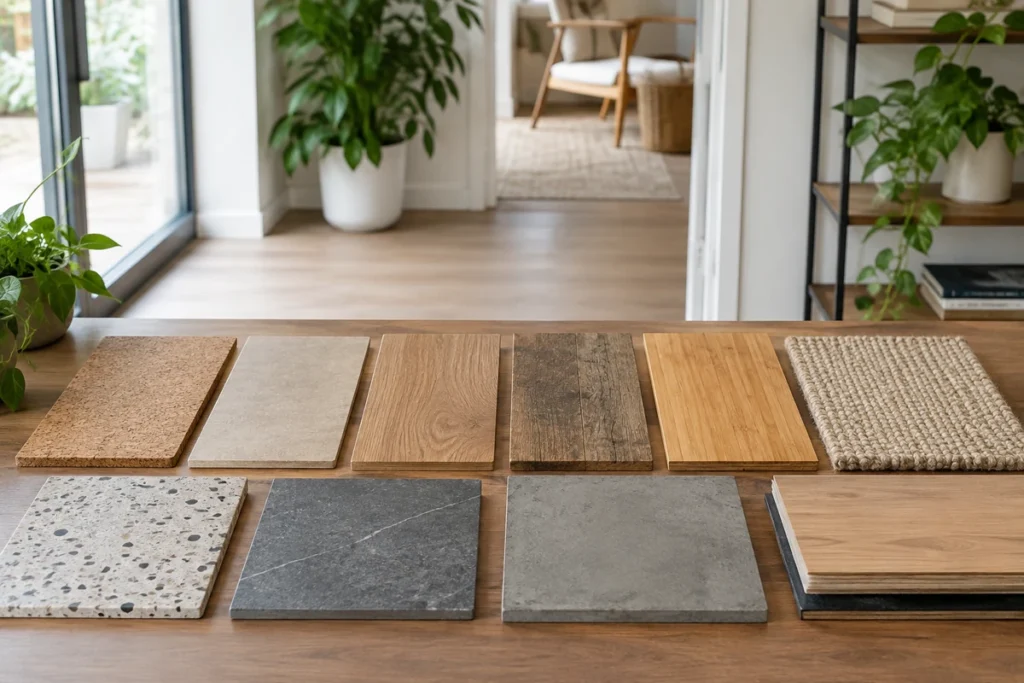
The following comparison provides a practical overview rather than an absolute sustainability ranking.
| Flooring option | Main sustainability advantage | Best suited to | Main consideration |
|---|---|---|---|
| Cork | Renewable bark harvesting | Bedrooms, living rooms, offices | Can be sensitive to standing water |
| Natural linoleum | Mostly renewable raw materials | Kitchens, halls, commercial spaces | Product composition must be verified |
| Certified wood | Renewable and long-lasting | Living rooms, bedrooms | Forestry certification matters |
| Reclaimed wood | Reuses existing timber | Living rooms, feature spaces | Quality and sourcing vary |
| Bamboo | Fast-growing renewable resource | General residential areas | Manufacturing quality varies greatly |
| Natural-fiber carpet | Renewable fibers | Bedrooms, quiet spaces | Backing and treatments matter |
| Recycled tile/terrazzo | Uses recycled material | Kitchens, bathrooms, entrances | Manufacturing can be energy-intensive |
| Existing/polished concrete | Avoids installing another floor | Ground floors, modern interiors | Comfort and acoustics may be concerns |
The strongest sustainable flooring options are therefore usually those that combine appropriate material sourcing with a long lifespan and suitability for the room.
The 8 Best Eco-Friendly Flooring Options
1. Cork Flooring
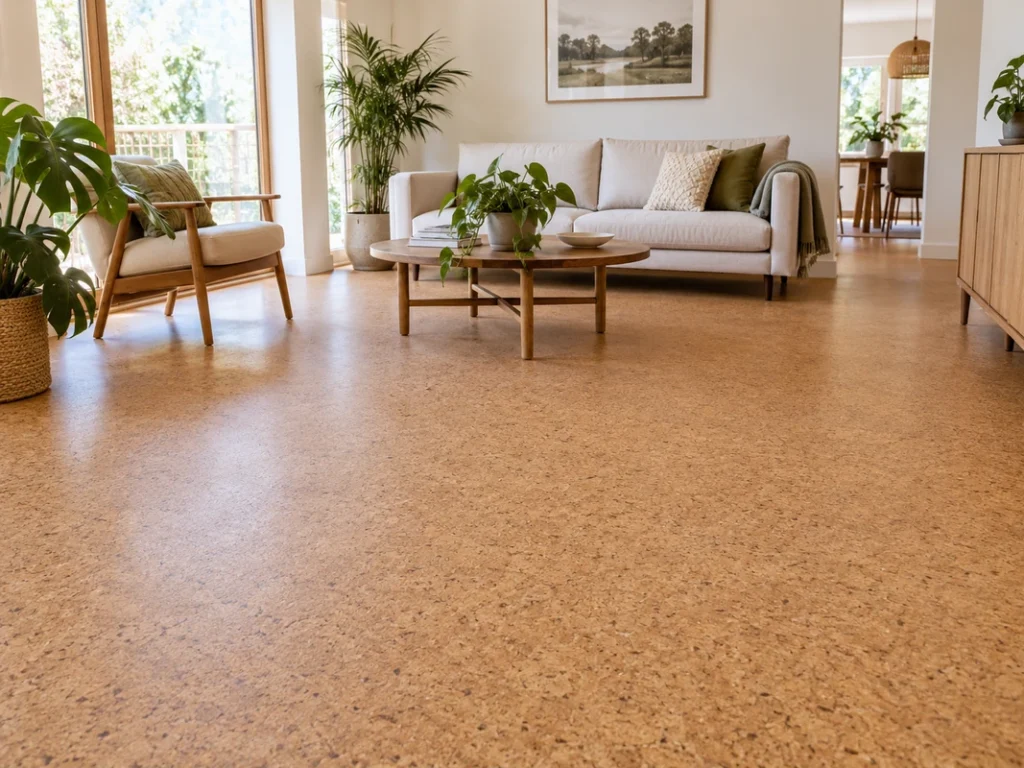
Cork is produced from the bark of cork oak trees rather than from cutting down the entire tree. The bark can regenerate, making cork one of the more interesting renewable eco flooring materials.
Cork also provides natural thermal and acoustic insulation and feels softer underfoot than stone or concrete.
Its main limitation is moisture exposure. Properly finished cork can handle normal household use, but prolonged standing water can cause damage. It is therefore generally better suited to bedrooms, living areas, offices, and other relatively dry rooms
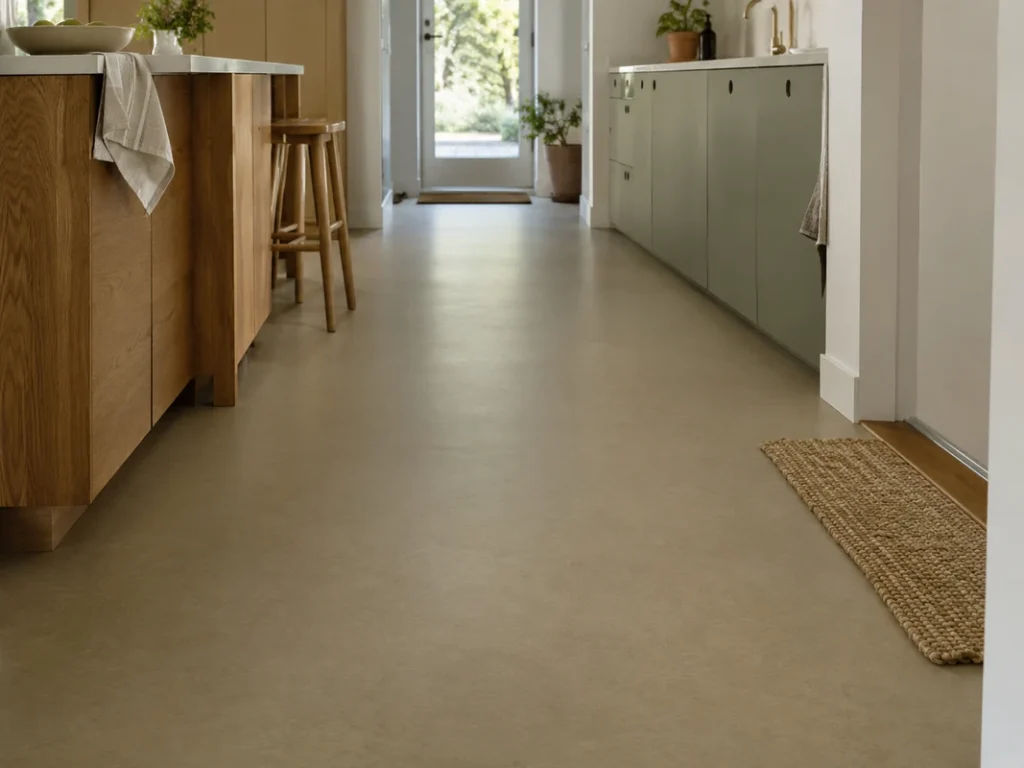
2. Natural Linoleum Flooring
True linoleum is different from vinyl flooring. Traditional linoleum is commonly made using ingredients such as linseed oil, wood flour, cork dust, mineral fillers, pigments, and a natural backing.
Its durability is one of its strongest sustainability advantages. A well-selected and properly maintained floor can remain in service for many years, reducing replacement waste.
Consumers should still check the manufacturer’s composition and environmental documentation. Products marketed with similar terminology do not necessarily contain the same materials
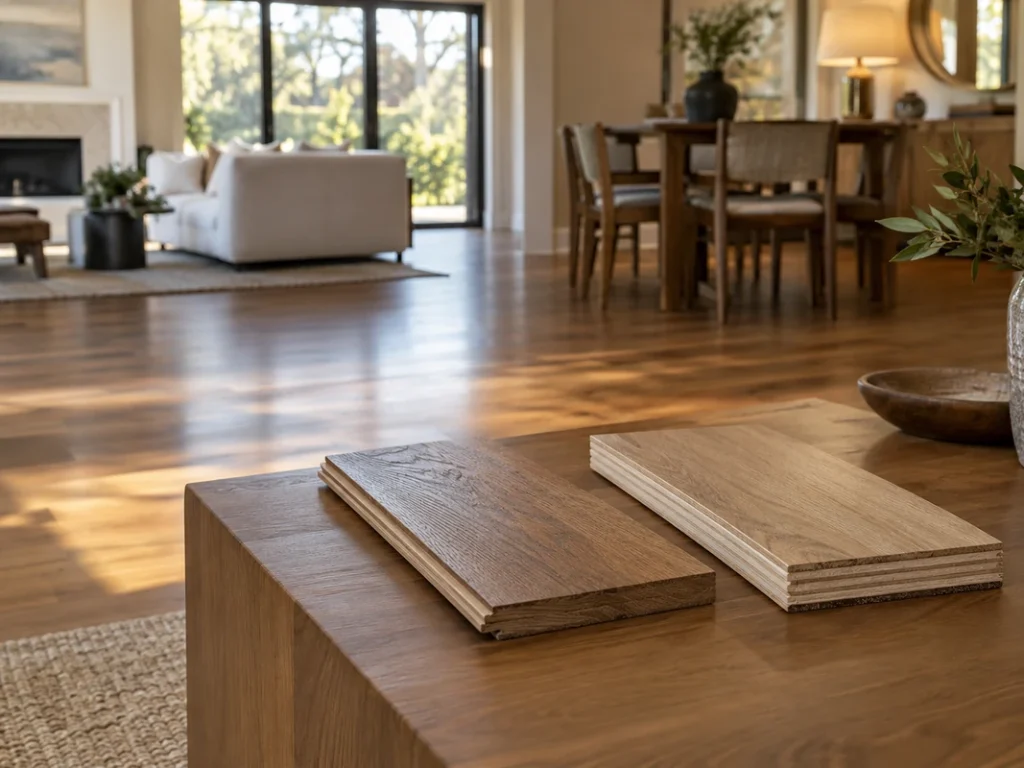
3. FSC-Certified Hardwood and Engineered Wood
Wood can be a renewable flooring material when forests are responsibly managed and the product has a sufficiently long service life.
FSC certification provides one useful way to identify timber sourced through a forestry system with defined environmental and social standards.
Both hardwood and engineered wood can potentially fit an environmentally responsible specification. Engineered products use a real-wood surface layer over a multi-layer construction, which can allow valuable hardwood resources to be used more efficiently.
However, buyers should also investigate adhesives, finishes, VOC emissions, product lifespan, and whether the floor can be repaired or refinished.
This section also connects naturally with the broader types of wood flooring available, because construction method can influence both sustainability and long-term performance
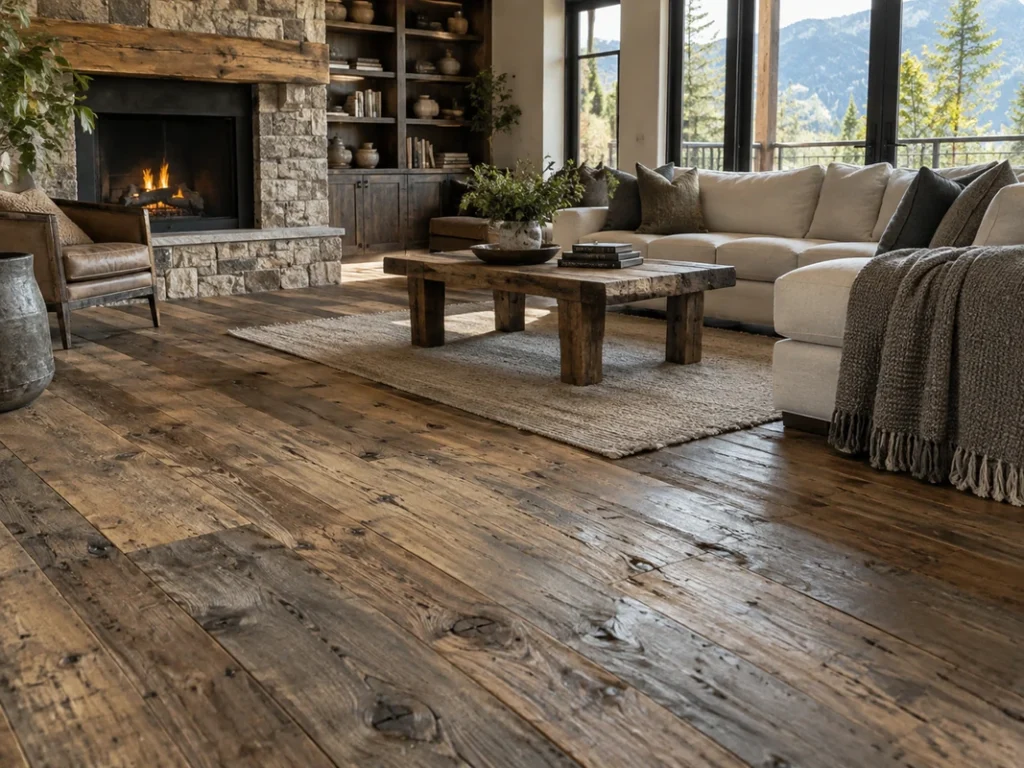
4. Reclaimed Wood Flooring
Reclaimed wood gives existing timber another useful life instead of relying entirely on newly harvested material.
Boards may come from old buildings, warehouses, beams, or other timber structures. Besides reducing demand for virgin material, reclaimed timber can provide a distinctive appearance that is difficult to reproduce with new flooring.
Reclaimed boards are not automatically problem-free, however. They may require cleaning, machining, grading, or treatment before installation.
For homeowners attracted to traditional parquet flooring, reclaimed timber can also provide opportunities to create patterned floors while reusing existing wood
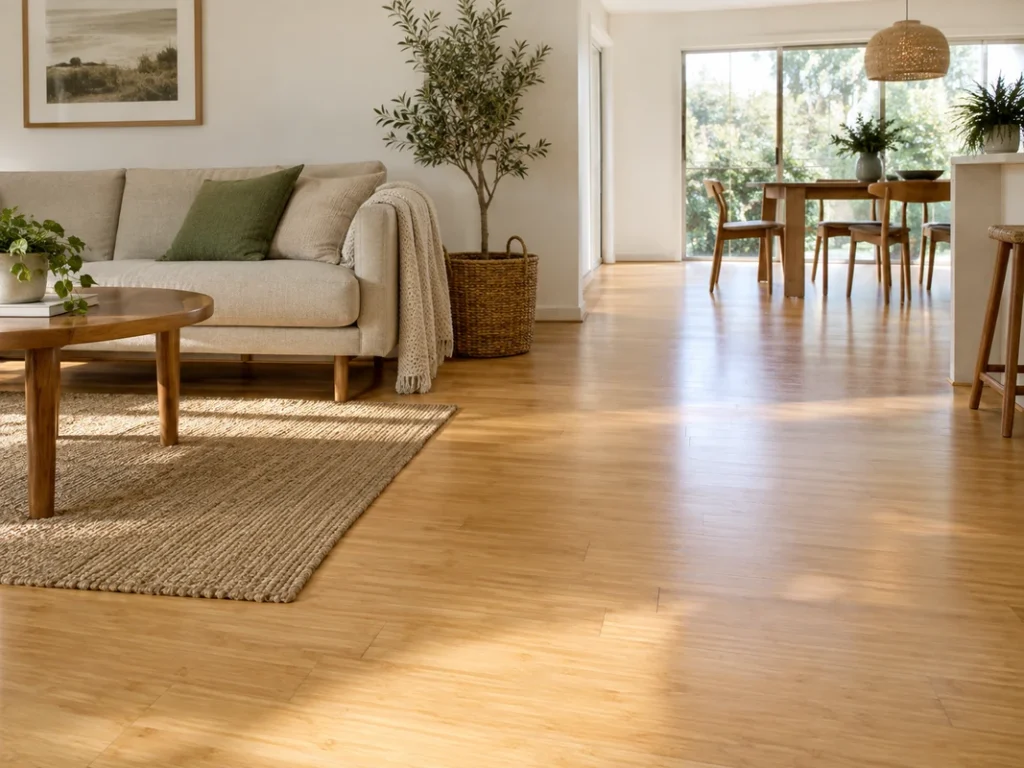
5. Bamboo Flooring
Bamboo grows much faster than most timber species, which makes its renewability attractive from an environmental perspective.
But bamboo should not be treated as automatically sustainable.
Manufacturing methods vary considerably. Resins, adhesives, surface finishes, transportation distances, and factory standards can significantly affect the final environmental profile.
A high-quality bamboo product with verified low emissions and transparent sourcing is therefore a stronger choice than selecting bamboo purely because the plant grows quickly
6. Wool and Natural-Fiber Carpet
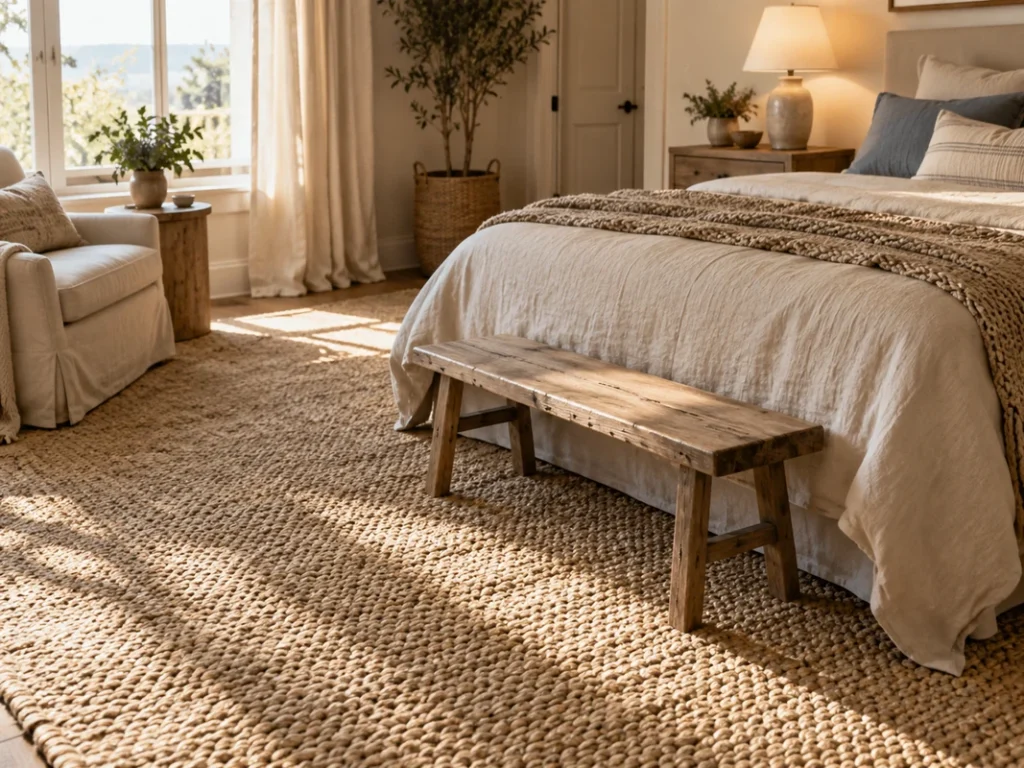
Natural-fiber carpets made from wool, sisal, jute, coir, or similar fibers can reduce reliance on petroleum-based synthetic fibers.
Wool is especially valued for comfort, insulation, and durability in bedrooms and low-moisture living spaces.
The fiber itself is only part of the product, though. Carpet backing, adhesives, stain-resistant treatments, dyes, and installation materials should also be considered.
For someone comparing green flooring options, checking the complete carpet system is more useful than focusing only on the visible surface fiber
7. Recycled-Content Tile and Terrazzo
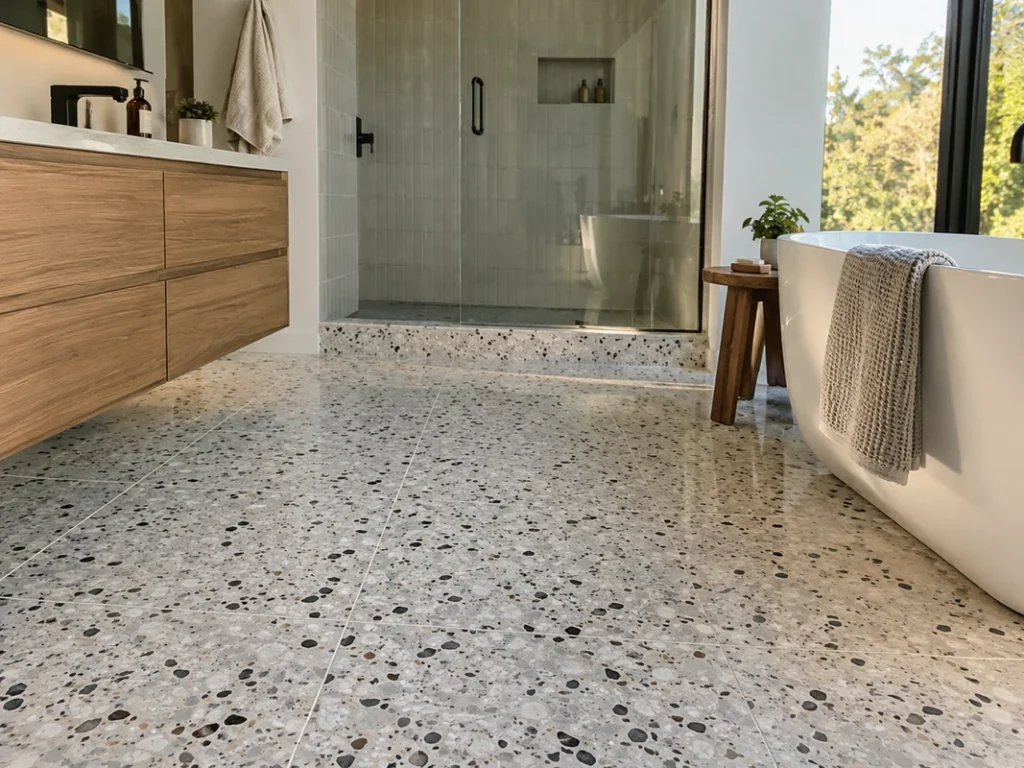
Some ceramic tiles, glass tiles, and terrazzo products incorporate recycled glass, stone, porcelain, or industrial material.
Their main advantage is durability. A floor that performs for decades without frequent replacement can justify a manufacturing process that may initially require more energy.
Tile is particularly useful in bathrooms, kitchens, entrances, and other areas where moisture resistance is important.
Choosing locally or regionally manufactured products can also reduce transportation impacts where suitable products are available
8. Existing or Polished Concrete
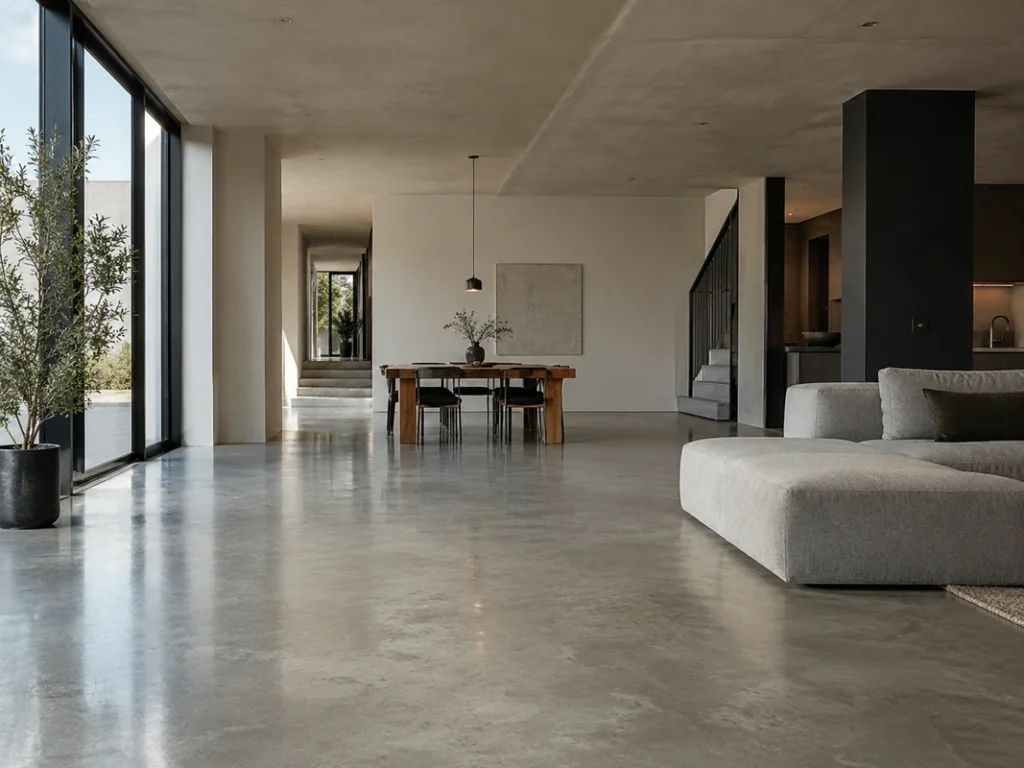
One of the most overlooked eco friendly flooring options is using a structural floor that already exists.
If a concrete slab is already part of the building, polishing or finishing that surface may avoid manufacturing, transporting, and installing an additional floor covering.
Polished concrete is highly durable and easy to maintain, but it is hard underfoot and can create acoustic or thermal comfort concerns.
Its environmental advantage is therefore strongest when the existing slab can genuinely replace another flooring material rather than requiring new concrete purely for decorative purposes
Which Eco-Friendly Flooring Is Best for Your Space?
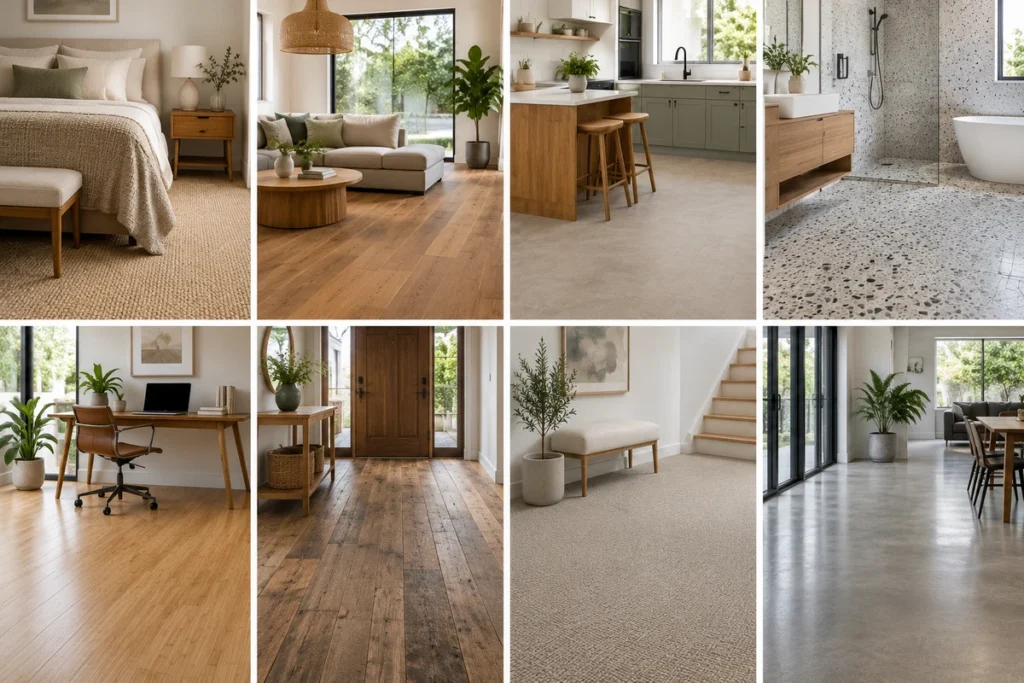
The best material depends on the conditions of the room
| Space | Practical eco-friendly choices | Why |
|---|---|---|
| Bedroom | Cork, certified wood, wool carpet | Comfortable and suitable for dry spaces |
| Living room | Certified wood, reclaimed wood, bamboo | Durable and visually versatile |
| Kitchen | Linoleum, tile, suitable wood systems | Easier maintenance and practical durability |
| Bathroom | Recycled-content tile | Strong moisture resistance |
| Home office | Cork, linoleum, engineered wood | Comfort and durability |
| High-traffic entrance | Tile, terrazzo, linoleum | Better resistance to wear |
| Existing concrete space | Polished concrete | May avoid an additional floor covering |
Room conditions should always override generic sustainability rankings. Installing an unsuitable material that fails early creates more waste and replacement demand.
The same principle applies to solid hardwood flooring: its long potential lifespan can be an environmental advantage, but only when the floor is appropriate for the installation conditions and maintained correctly
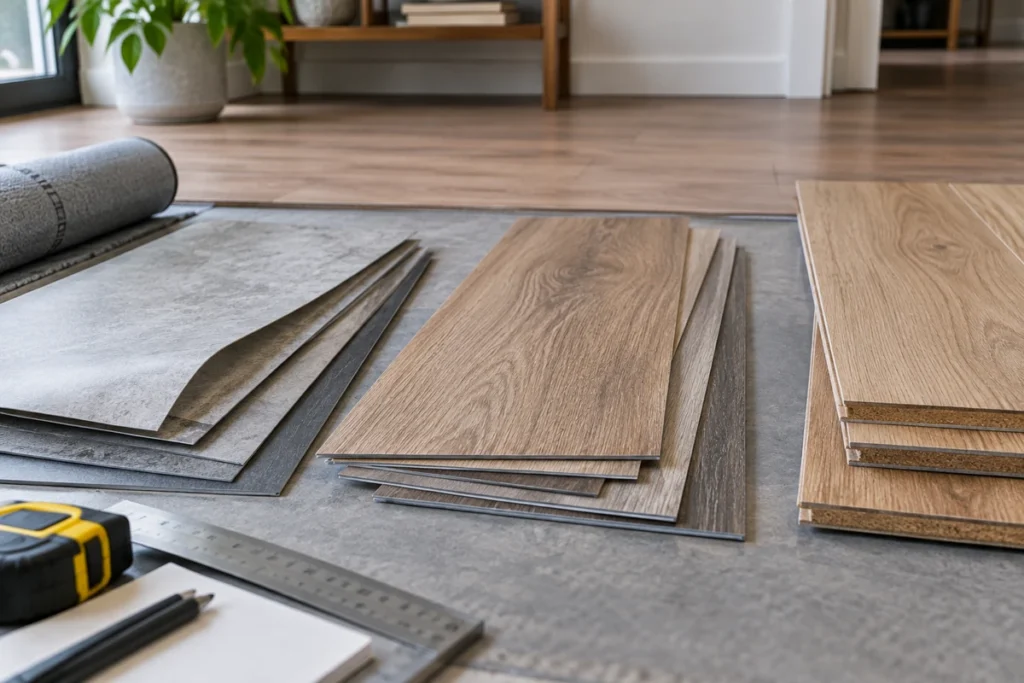
Are Vinyl, LVT and Laminate Really Eco-Friendly?
Vinyl and LVT are not usually considered the strongest environmental choices because they are primarily synthetic products and commonly contain PVC.
That does not mean every vinyl product has the same environmental impact. Manufacturers may use recycled content, lower-emission formulations, improved production processes, or recycling programmes.
Laminate presents a different situation. Its core is commonly wood-fiber based, but the finished product also includes resins, decorative layers, and protective coatings. Product quality and emissions therefore vary.
Rather than categorically calling these materials sustainable or unsustainable, buyers should compare:
- verified VOC emissions;
- recycled or certified material content;
- expected lifespan;
- manufacturer transparency;
- repairability;
- recycling or take-back options.
A durable product used appropriately may sometimes create less lifecycle waste than a poorly chosen natural material that needs replacing after a few years
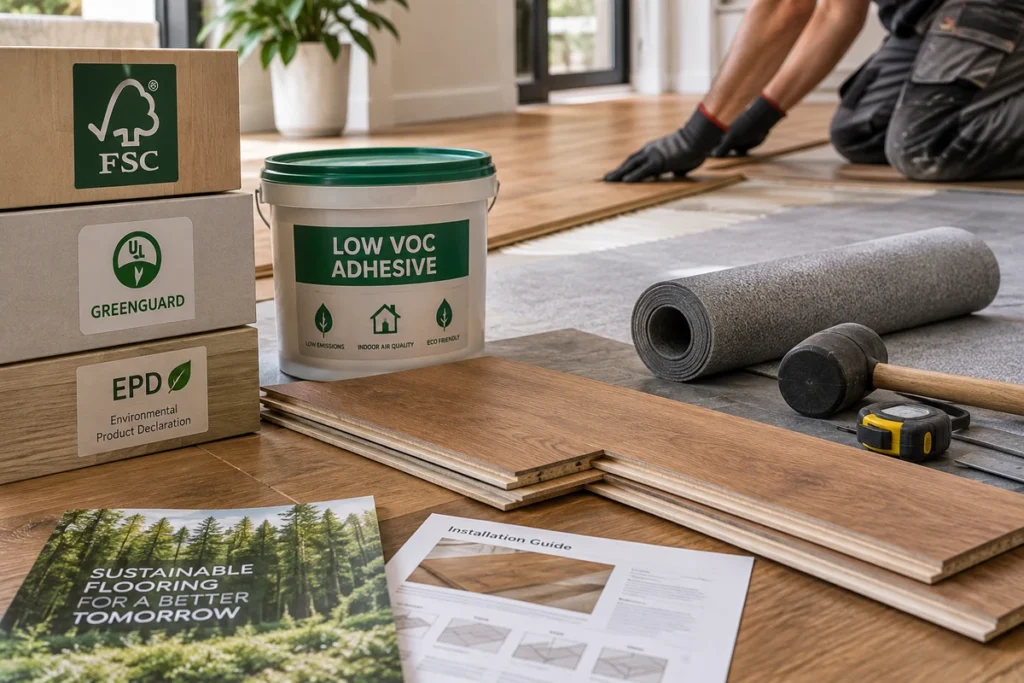
Certifications and Installation Details That Actually Matter
Environmental claims should be supported by credible documentation whenever possible.
For wood products, FSC certification is one useful indicator of responsible forestry. Indoor-air certifications and independent VOC-emission testing can also help assess flooring, adhesives, finishes, and underlays.
Different certification systems examine different issues, so no single label proves that a floor is environmentally perfect.
Installation also matters. A responsibly sourced floor can lose part of its environmental advantage if it requires high-emission adhesives or unsuitable coatings.
Floating installation systems may reduce adhesive use in some applications, while mechanically fixed or repairable systems can sometimes make future maintenance easier.
For buyers researching wood flooring in Dubai, climate-controlled interiors, indoor humidity, subfloor moisture, and installation quality should be considered alongside sustainability credentials. A floor that remains stable and usable for longer generally produces less replacement waste
Choosing a Sustainable Floor That Will Actually Last
The best eco friendly flooring options are not necessarily the products with the strongest green marketing. Sustainable flooring requires a broader view of material sourcing, manufacturing, indoor emissions, installation, durability, maintenance, and eventual disposal.
Start with the conditions of the room, eliminate materials that are unsuitable, and then compare the environmental performance of the remaining products. A durable floor that performs properly for many years is often more responsible than a theoretically greener material that fails prematurely.
For homeowners comparing wood-based solutions, Greenwood can help evaluate suitable products alongside practical considerations such as construction, installation conditions, durability, and long-term maintenance
FAQs
What is the most eco-friendly type of flooring?
There is no universal winner. Reclaimed wood, cork, certified timber, natural linoleum, recycled-content materials, and an existing concrete slab can all be strong choices depending on the room and product.
The most sustainable floor is usually one that combines responsible sourcing, low emissions, durability, appropriate installation, and a long usable lifespan
What is the best non-toxic flooring option?
Low-emission solid wood, carefully selected engineered wood, cork, natural linoleum, and some ceramic or stone-based products can all provide good options.
The complete installation system matters. Adhesives, sealers, finishes, backing materials, and underlays should also be checked for emissions
Is engineered wood flooring eco-friendly?
Engineered wood can be eco-friendly when it uses responsibly sourced timber, low-emission adhesives and finishes, and a durable construction.
Because only the surface layer needs to use higher-value hardwood, engineered construction can also use timber resources efficiently. Sustainability varies between manufacturers, so certification and technical documentation should be checked
Is vinyl flooring environmentally friendly?
Conventional vinyl flooring is generally less environmentally attractive than renewable or reclaimed materials because it is predominantly synthetic and commonly PVC-based.
However, environmental performance differs between manufacturers. Recycled content, durability, verified low emissions, manufacturing practices, and end-of-life recycling can improve a particular product’s profile.
What certifications should I look for?
For wood flooring, FSC is one of the most widely recognised forestry certifications. Depending on the product and market, buyers can also look for independent low-VOC or indoor-air-quality certification and environmental product declarations.
Certification should support a decision rather than replace one. Material durability, installation method, manufacturer transparency, repairability, and suitability for the room remain equally important