
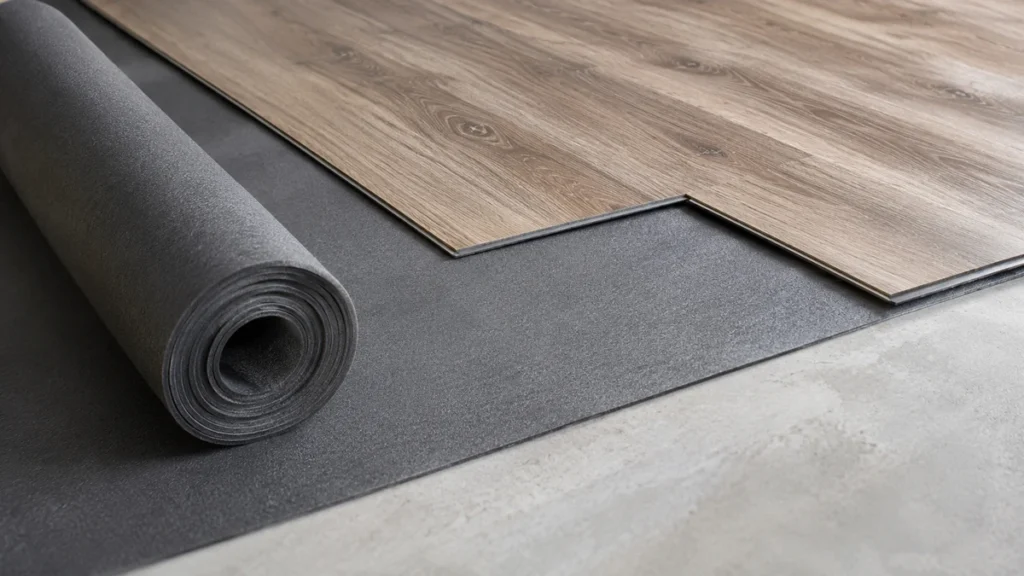
What Is the Best Underlay for LVT Flooring?
The best underlay for LVT flooring is a thin, high-density, compression-resistant product specifically approved for your flooring’s installation system. For compatible click-lock LVT, a specialist vinyl underlay can improve sound insulation, provide stable support and reduce minor subfloor irregularities. However, not every LVT floor needs an additional layer.
Glue-down LVT generally requires a properly prepared surface rather than conventional loose underlay. Click flooring with factory-attached backing may also prohibit extra underlay.
Before choosing a material, check the flooring manufacturer’s instructions, subfloor condition and moisture requirements. The wrong underlay can damage locking joints even when the material appears suitable for vinyl.
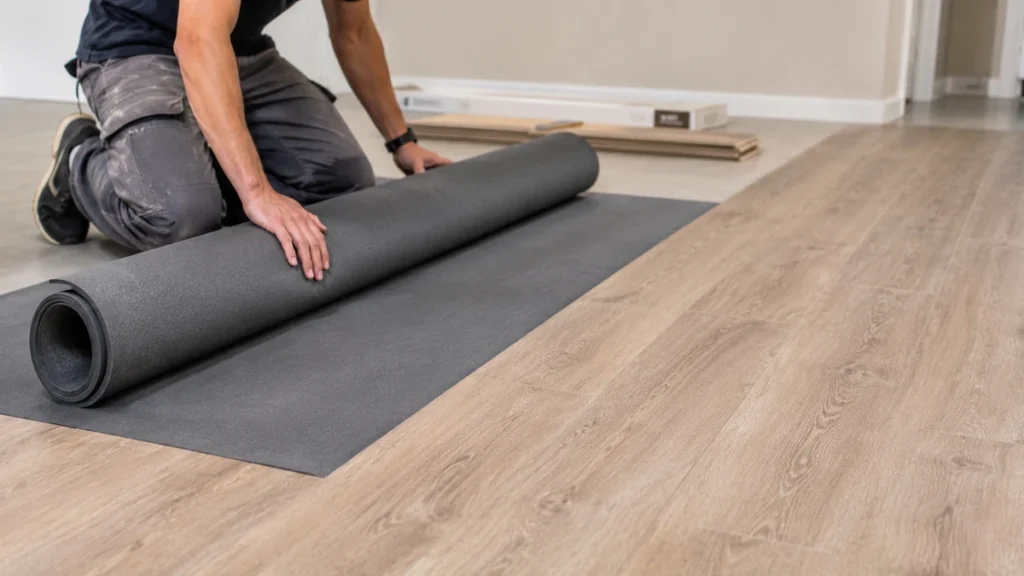
Does LVT Flooring Need Underlay?
LVT flooring does not always need underlay. The answer depends primarily on whether the floor is glued down, installed with a click-lock system or supplied with integrated backing.
Click-lock LVT: May require or benefit from a manufacturer-approved underlay that supports the locking mechanism and improves acoustics.
Glue-down LVT: Normally bonds directly to a smooth, dry, prepared substrate. Separate resilient underlay should only be used within an approved installation system.
LVT with attached backing: Usually needs no additional cushioning. Adding a second layer may create excessive movement and compromise the warranty.
Underlay can reduce footstep noise and improve walking comfort, but it cannot correct major subfloor defects.
If you’re unfamiliar with the differences between vinyl formats, our guide to lvt flooring explains their construction and installation methods.
The important distinction is that underlay is not automatically a necessary accessory. It must serve a specific purpose without reducing the floor’s stability
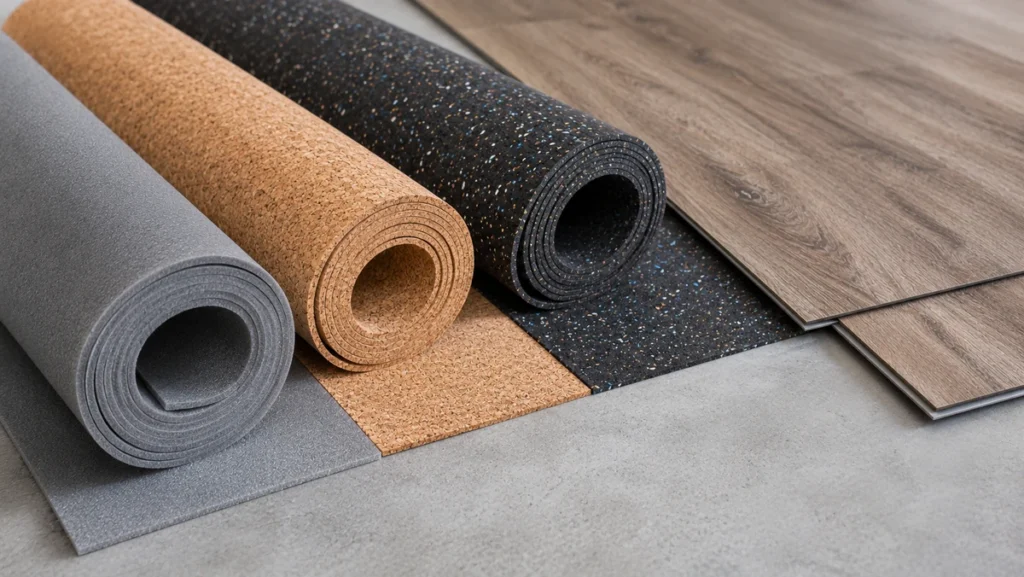
Best Underlay Materials for LVT Click Flooring
For compatible click systems, the best underlayment for vinyl flooring combines sufficient compressive strength, dimensional stability and suitable acoustic performance.
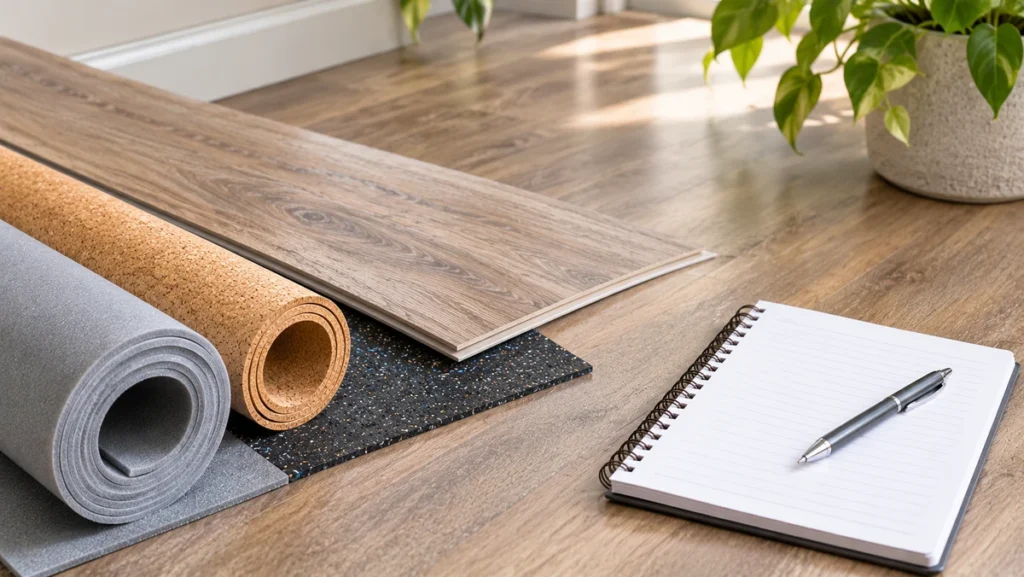
High-density foam, cork and rubber are common candidates, but material alone does not establish compatibility. The finished product’s technical specifications matter more
High-Density Foam vs. Cork vs. Rubber
| Material | Potential benefits | Main limitation |
|---|---|---|
| High-density foam | Lightweight, convenient installation and sound reduction | Soft or low-density grades can compromise locking joints |
| Cork | Natural composition and potential acoustic benefits | Must be sufficiently firm and specifically approved for LVT |
| Rubber | Potentially strong acoustic performance under load | Some formulations may cause staining or chemical migration |
High-density foam is often a practical option for click LVT when engineered specifically for vinyl flooring. Unlike soft foam intended for other floor types, approved products provide controlled compression beneath the planks.
Cork underlay may appeal to homeowners prioritising natural materials. However, traditional cork sheets are not automatically suitable for flexible vinyl or click-lock products. Density, thickness and manufacturer approval must be verified.
Rubber underlay can be effective in specialised acoustic systems. Yet some rubber compounds may react with vinyl, causing discolouration or material migration. Only products tested and approved for the particular floor should be considered.
For most installations, choose the underlay recommended by the LVT manufacturer rather than selecting a material solely because it offers better advertised cushioning.
How Thick Should LVT Underlay Be?
Many specialist click-vinyl underlays are approximately 1–1.5 mm thick, although the permitted thickness varies between flooring systems. This is a useful reference range, not a universal installation requirement.
Thickness alone does not determine quality. A thin underlay with high compressive strength may protect click joints better than a thicker, softer material.
Excessive cushioning allows planks to flex under footsteps and furniture. Over time, this movement can strain locking connections and contribute to gaps or joint damage.
Before selecting thickness, verify the manufacturer’s permitted range, compressive strength and any requirements relating to underfloor heating.
If the flooring already has an integrated acoustic pad, do not assume that adding another 1 mm layer will improve performance.
Best Underlay for LVT on Concrete vs. Wood
The best underlay for LVT flooring also depends on the substrate. Concrete creates different moisture concerns from timber, while wooden subfloors require particular attention to structural movement.
In both cases, the foundation must be sufficiently flat, clean, dry and stable before installation.
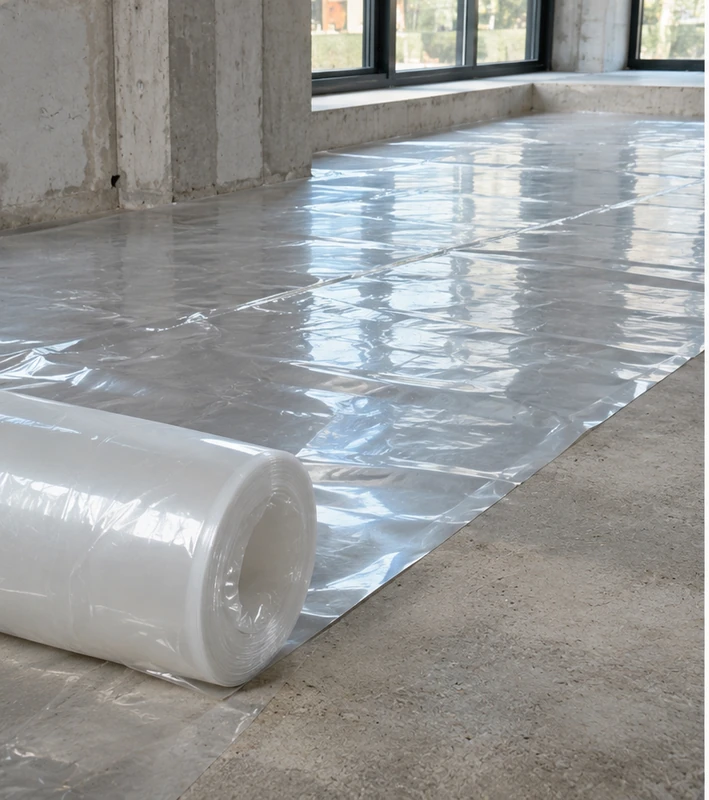
Concrete Subfloors: Moisture and Vapour Protection
Concrete is common beneath LVT in apartments, villas and commercial properties. Its main concerns are residual moisture, unevenness and surface contamination.
Before installing underlay:
Test concrete moisture using a method accepted by the flooring manufacturer.
Confirm that the results meet the specified installation limits.
Repair cracks and use suitable smoothing compounds where necessary.
Install an approved vapour-control layer or moisture mitigation system when required.
A waterproof vinyl plank does not prevent moisture problems beneath the flooring.
Some floating LVT systems require a separate polyethylene vapour barrier over concrete, even with integrated backing. Others specify different protection methods. The requirement must be checked rather than assumed.
In Dubai, moisture assessment is particularly relevant for new screeds, ground-floor installations and buildings with uncertain waterproofing conditions.
Never use acoustic underlay as a substitute for proper moisture management unless its specifications explicitly permit that function.
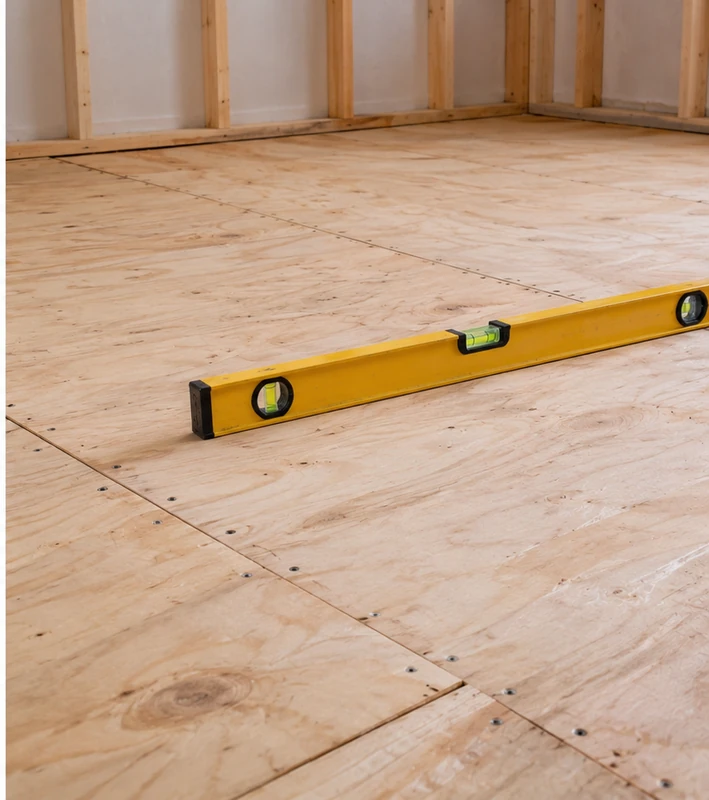
Wooden Subfloors: Flatness and Stability
Wooden subfloors present a different challenge: movement.
Loose boards, damaged plywood, unsupported joints and uneven panels may cause LVT to flex regardless of the underlay used.
Check that the substrate is firmly secured, structurally sound and free from excessive moisture. Tighten loose boards, repair damaged sections and correct surface irregularities before proceeding.
A suitable flooring-grade plywood overlay may be necessary where the existing surface cannot provide adequate support.
An existing wooden flooring installation should not automatically be treated as an acceptable substrate, particularly if it is floating or unstable.
Avoid placing an impermeable vapour barrier directly over timber without confirming the complete floor assembly’s moisture requirements. Trapped moisture can damage the wood beneath.
Underlay should provide controlled support, not conceal an unstable wooden foundation.
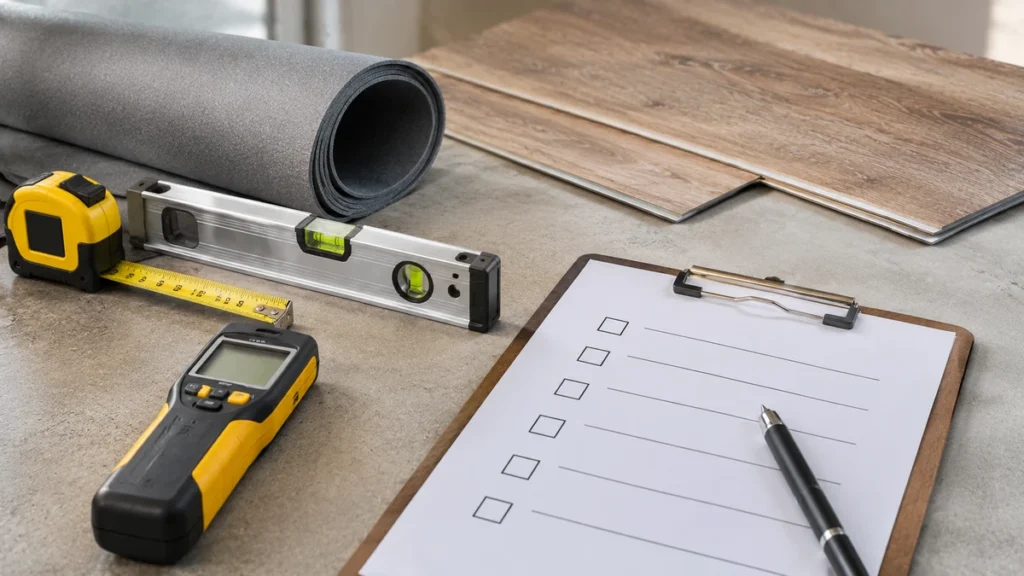
What to Check Before Choosing LVT Underlay
Before purchasing underlay for LVT flooring, evaluate the complete floor system rather than comparing thickness or price alone.
| Factor | What to verify |
|---|---|
| Installation system | Click-lock, glue-down or factory-attached backing |
| Manufacturer approval | Permitted underlay products and warranty conditions |
| Compressive strength | Adequate resistance to loads and repeated movement |
| Moisture protection | Whether a separate vapour barrier is required |
| Acoustic performance | Tested sound reduction for the relevant floor assembly |
| Underfloor heating | Thermal resistance and system compatibility |
| Subfloor flatness | Compliance with the flooring's stated tolerances |
For apartment installations, acoustic performance may be especially important. Look for documented impact-sound ratings rather than relying on claims such as “silent” or “noise-proof.”
For rooms with strong sunlight, verify the flooring’s permitted temperature range and any special underlay requirements.
These checks also apply when comparing spc flooring with flexible click LVT. Although SPC has a rigid composite core, it is not automatically compatible with every vinyl underlay.
A reliable choice is the underlay explicitly approved for the selected flooring, environmental conditions and subfloor.
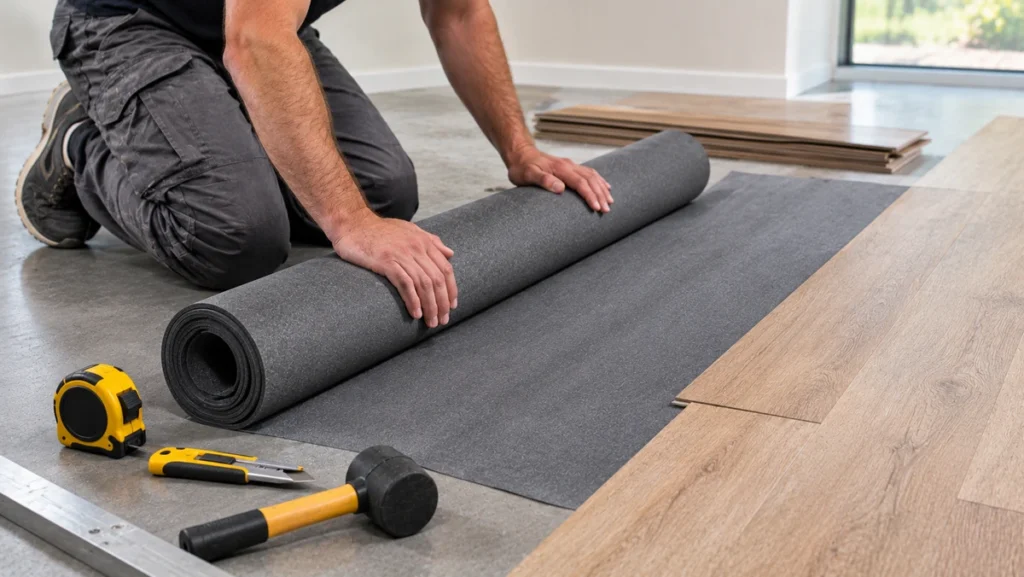
How to Install LVT Underlay and Avoid Common Mistakes
Correct installation starts before the underlay is unrolled. Even premium materials cannot compensate for poor preparation.
Follow these steps for a floating LVT system that permits separate underlay:
Inspect the subfloor. Remove debris, check moisture and verify flatness against the flooring manufacturer’s tolerances.
Complete repairs. Fill approved surface defects and allow smoothing compounds to cure as instructed.
Install moisture protection if required. Follow the specified barrier material, overlaps, joints and sealing details.
Lay the approved underlay. Position it according to the product instructions, normally without overlapping adjacent sheets unless expressly required.
Secure the seams. Use the recommended tape or joining method, keeping the surface flat and free of wrinkles.
Install the LVT planks. Follow the specified joint-locking procedure, perimeter expansion clearances and transition requirements.
One common mistake is using standard laminate underlay beneath click vinyl. These products can differ considerably in thickness and compressive strength.
Other mistakes include doubling underlay beneath attached backing, ignoring damp concrete and laying flooring over loose boards.
Never add extra cushioning simply to compensate for an uncomfortable or uneven floor. Correct the underlying problem first.
For glue-down products, follow the specified substrate preparation, adhesive and installation system instead of these floating-floor steps.
FAQs
Does LVT With Attached Backing Still Need a Moisture Barrier?
Yes, it may still need a separate moisture barrier, even when additional acoustic underlay is prohibited.
Attached backing normally addresses cushioning, noise or support. It does not necessarily provide the vapour resistance required over concrete.
Some manufacturers specify a separate polyethylene membrane, while others approve different moisture-control arrangements.
Check the backing specification, concrete moisture readings and installation manual before deciding.
A moisture barrier and an acoustic underlay perform different functions and should not be treated as interchangeable.
Can You Reuse Existing Underlay When Replacing LVT?
Reusing existing underlay is generally not recommended unless its condition, specifications and compatibility can be verified.
Previous use may leave compression marks, tears, contamination or uneven areas that affect the replacement floor.
Even apparently undamaged underlay may have been designed for laminate or a different vinyl installation system.
For a replacement click floor, confirm that the original material meets the new manufacturer’s requirements. If compatibility cannot be established, remove it and use the approved system.
For glue-down replacement installations, remove unsuitable underlay and prepare the exposed substrate according to the new flooring’s instructions.
coclusion
The best underlay for LVT flooring is not necessarily the thickest or most expensive. It is the product that provides adequate support, meets the manufacturer’s requirements and suits the underlying surface.
For click LVT, a thin, compression-resistant specialist underlay may be appropriate. Glue-down flooring usually needs direct adhesion to a prepared substrate, while attached-back products may prohibit extra cushioning.
If you’re planning an installation in Dubai, Greenwood can help you assess flooring compatibility, subfloor conditions and suitable installation solutions before work begins.