
What Is Engineered Hardwood? Construction, Pros and Cons
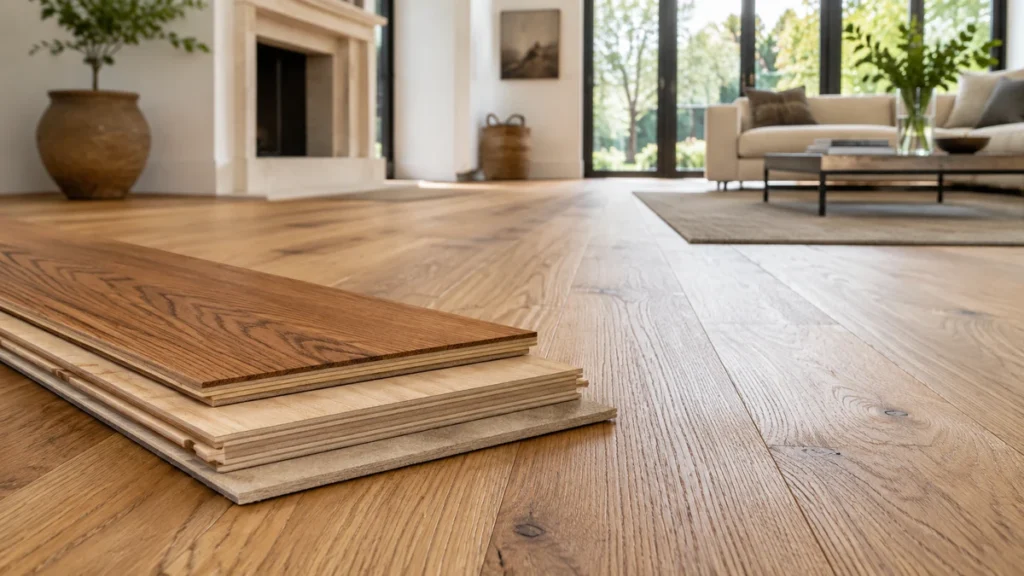
Engineered hardwood is real wood flooring made from a genuine hardwood top layer bonded to a stable multilayer core. It provides the natural appearance of timber but usually reacts less to changes in temperature and humidity than solid wood. In general, its quality depends on the wear layer, core construction, finish, installation method, and conditions in the room.
What Is Engineered Hardwood and How Is It Made?
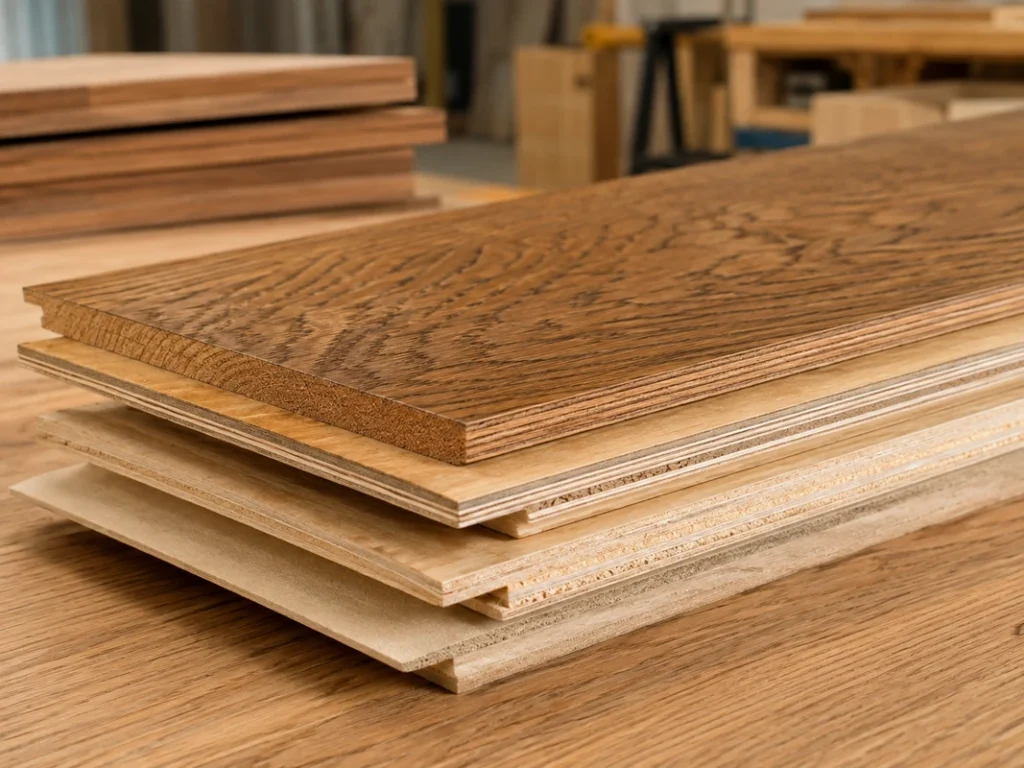
To understand what is engineered hardwood, it helps to look beneath the visible surface. A solid hardwood plank is cut from one piece of timber, while an engineered board is manufactured from several bonded layers.
The visible surface is made from real hardwood. The layers beneath it provide strength, balance, and dimensional stability.
A simple way to define engineered wood is as a layered wood product designed to reduce natural movement while retaining the appearance and texture of genuine timber. The layers are positioned and bonded so that their grain directions help control expansion and contraction.
Construction varies between manufacturers. Some boards use a multi-ply plywood core, while others use high-density fibreboard or a softwood-based core. Better products generally have balanced layers, reliable adhesives, accurately manufactured joints, and a durable factory-applied finish
The Hardwood Wear Layer
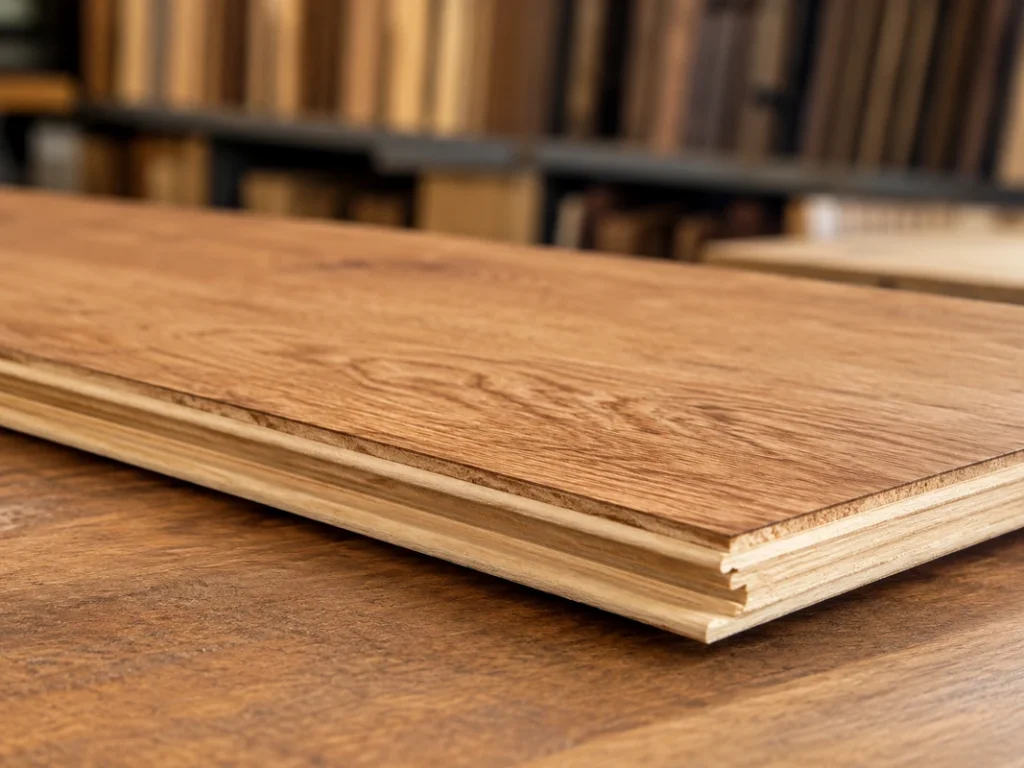
The wear layer is the real hardwood veneer attached to the top of the board. It creates the colour, grain, texture, knots, and natural variation visible after installation. Common timber species include oak, walnut, maple, ash, and hickory.
Wear-layer thickness influences the floor’s repair and refinishing potential. A thin veneer may only support light surface renewal, while a thicker layer may allow professional sanding.
However, thickness is not the only sign of quality. The timber grade, cutting method, bonding strength, and protective finish also affect how the floor looks and performs.
Sawn or sliced veneers often resemble traditional solid hardwood more closely. Rotary-peeled veneers may display a broader and less conventional grain pattern. Buyers should examine full-size samples whenever possible because small samples rarely show the complete colour and grain variation of natural timber
The Core and Backing Layers
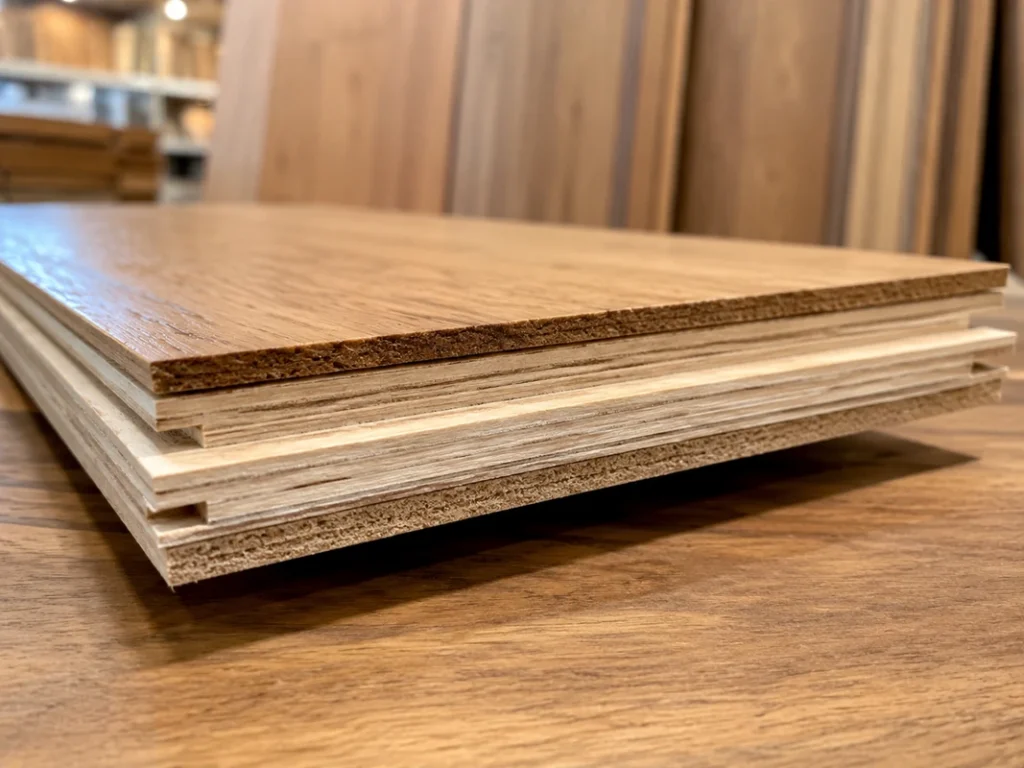
The core provides most of the board’s structural stability. In many high-quality products, plywood layers are arranged in alternating directions. This cross-layered structure limits movement across the width of the plank when indoor humidity or temperature changes.
High-density fibreboard cores can also perform well, although their durability and moisture tolerance depend heavily on manufacturing quality.
The backing layer balances the board and helps reduce bending or distortion. All layers must function as one system. Internal gaps, weak adhesives, or poor milling can cause noise, movement, open joints, or separation over time.
An attractive hardwood surface cannot compensate for a poorly manufactured core
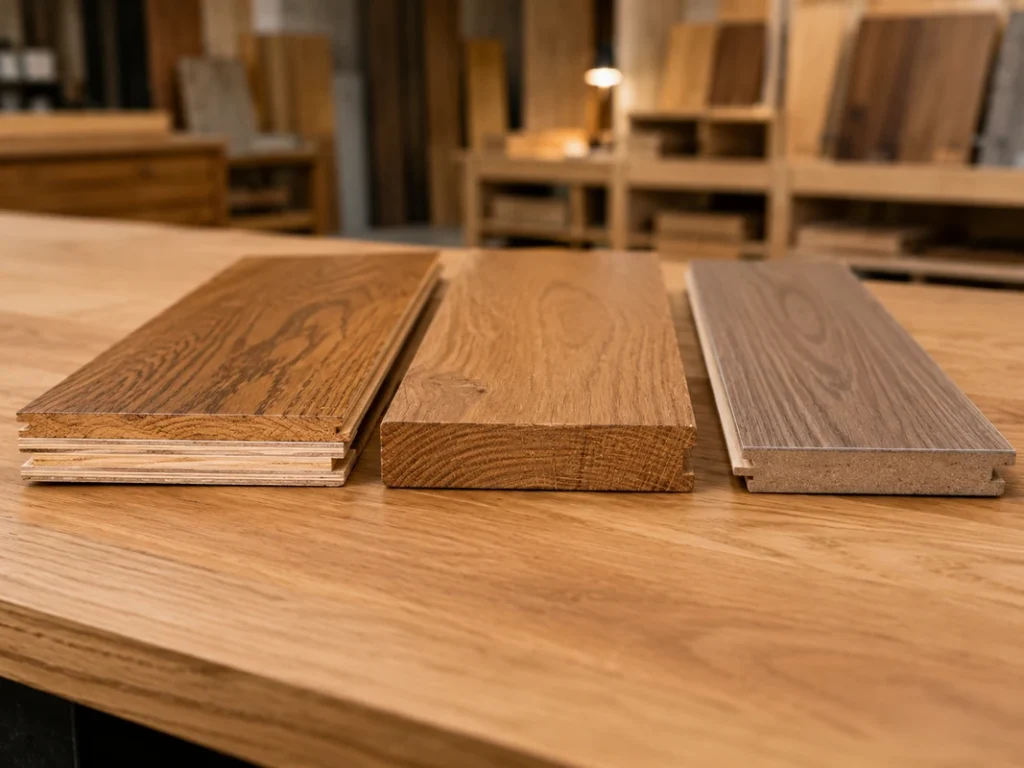
Engineered Hardwood vs. Solid Hardwood and Laminate
Engineered hardwood, solid hardwood, and laminate can appear similar after installation, but their materials, performance, and repair options are different.
| Feature | Engineered hardwood | Solid hardwood | Laminate |
|---|---|---|---|
| Surface | Real hardwood veneer | Solid natural timber | Printed wood-effect layer |
| Structure | Layered wood or fibreboard core | One piece of timber | High-density fibreboard core |
| Stability | Good resistance to normal humidity changes | More sensitive to expansion and contraction | Stable when kept dry |
| Installation | Floating, glued, nailed, or stapled | Usually glued or nailed | Usually installed as a floating floor |
| Refinishing | Possible on selected products | Usually possible several times | Cannot be refinished |
| Water resistance | Better than many solid floors but not waterproof | Limited | Depends on the product |
| Typical cost | Mid-range to premium | Usually premium | Usually lower |
Laminate flooring can be suitable when affordability and easy installation are the main priorities, but its surface is not real timber.
Solid hardwood flooring offers greater refinishing potential because the entire plank is made from natural wood. However, it is generally more sensitive to environmental changes.
Engineered wood flooring often provides the most practical balance between authentic appearance, dimensional stability, and installation flexibility
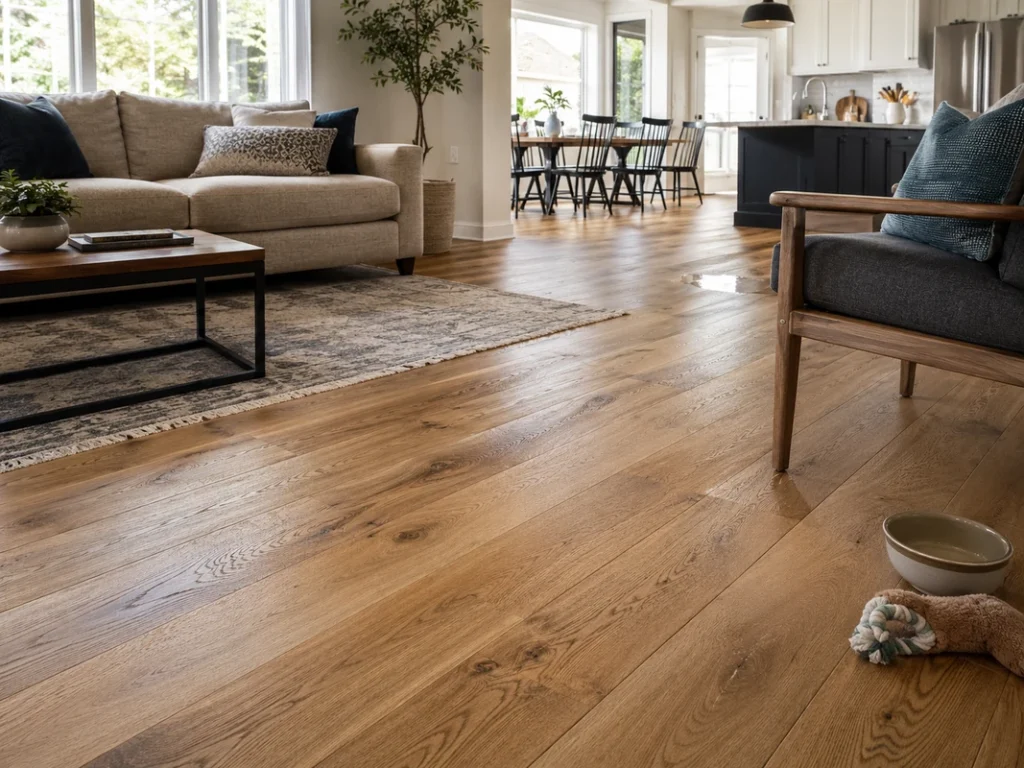
Pros and Cons of Engineered Hardwood
The main advantage of engineered hardwood is that it combines a genuine timber surface with a more stable internal structure. It can often be installed in locations or over subfloors where solid hardwood would be less practical.
Many products are also approved for use with compatible underfloor heating systems.
Additional benefits include:
- Genuine wood grain, texture, and natural variation
- Better dimensional stability than solid timber
- Several installation options
- A wide range of species, colours, finishes, and plank sizes
- Availability in straight-plank and patterned formats
- Factory-applied finishes that provide immediate protection
Engineered hardwood also has limitations.
It is not waterproof. Leaks, standing water, and repeated wet cleaning can damage the finish, joints, core, or subfloor. The surface may also scratch or dent because it is made from natural wood.
Quality varies considerably between products. Budget boards may have thin veneers, shorter lengths, weaker locking systems, or less stable cores.
Refinishing potential is another limitation. Some floors can be sanded once or more, while products with very thin wear layers may only be lightly screened and recoated.
The floor should therefore be selected by its full technical specification rather than appearance or price alone
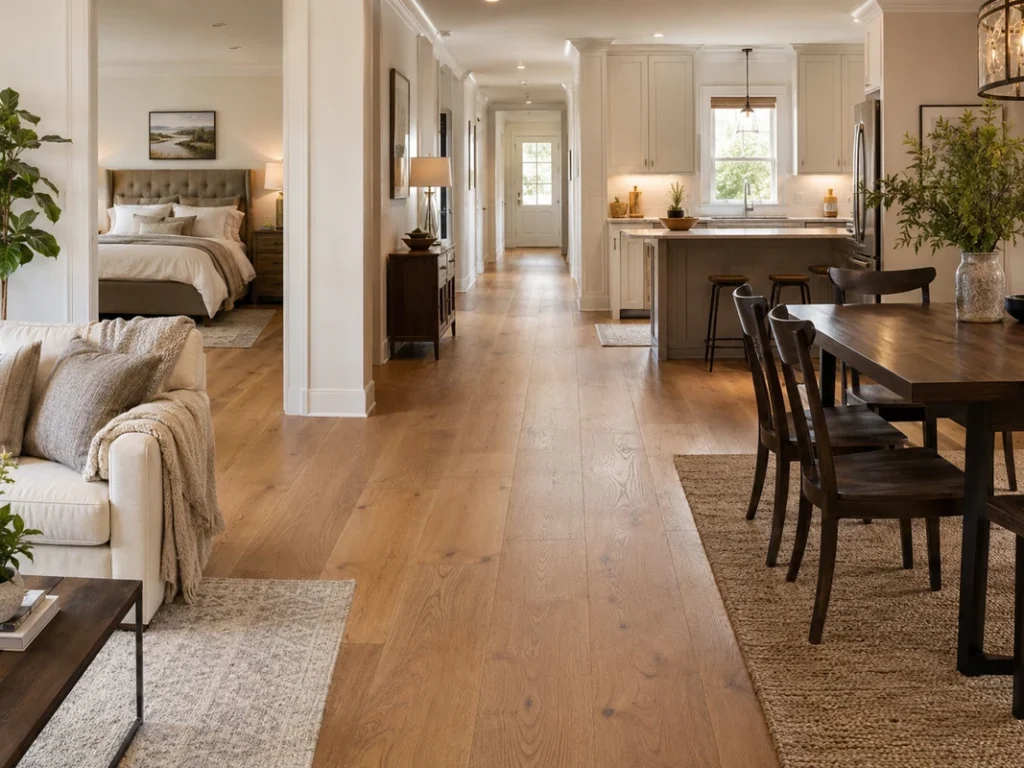
Where Can Engineered Hardwood Be Installed?
Engineered hardwood can be installed in many residential and light-commercial spaces. Suitability depends on moisture exposure, traffic, subfloor condition, installation method, and manufacturer approval
| Space | Suitability | Important point |
|---|---|---|
| Living room | Highly suitable | Protect the floor from furniture movement and prolonged direct sunlight |
| Bedroom | Highly suitable | Provides a warm and natural surface underfoot |
| Hallway | Suitable | Choose a durable finish and use entrance mats |
| Dining room | Highly suitable | Clean spills quickly and place felt pads under chairs |
| Kitchen | Conditionally suitable | Confirm manufacturer approval and prevent standing water |
| Basement | Product-dependent | Test moisture and use a product approved for below-grade installation |
| Bathroom | Usually unsuitable | Frequent water exposure creates a high risk of damage |
| Over underfloor heating | Often suitable | Follow temperature and installation limits |
| Light-commercial space | Product-dependent | Check the traffic rating and commercial warranty |
Before installation, the subfloor must be checked for moisture, levelness, strength, and cleanliness. Even premium wood flooring can fail when installed over a damp, unstable, or uneven base
How to Choose High-Quality Engineered Hardwood
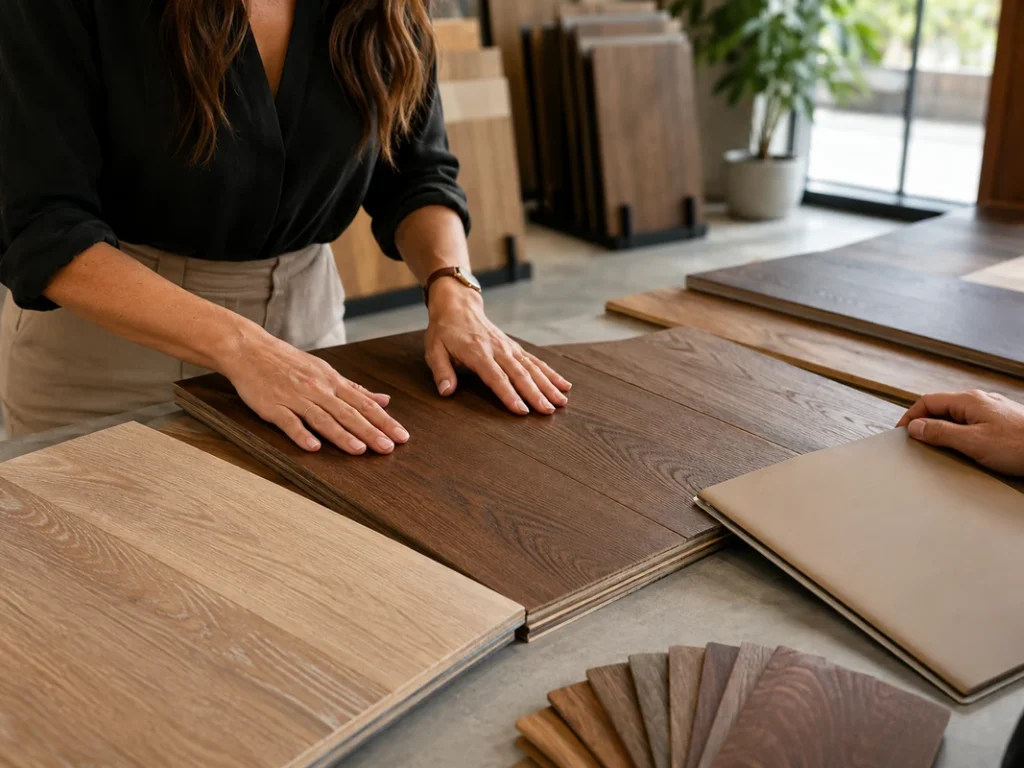
Do not judge a board only by its colour or surface texture. Compare the wear-layer thickness, core material, board dimensions, finish, joint profile, timber grade, warranty, and installation requirements.
Longer and wider boards can create a more premium appearance, but they require accurate manufacturing and a well-prepared subfloor.
Samples should also be viewed under the lighting conditions of the intended room. Natural timber can look noticeably different in daylight, warm artificial light, and cool artificial light
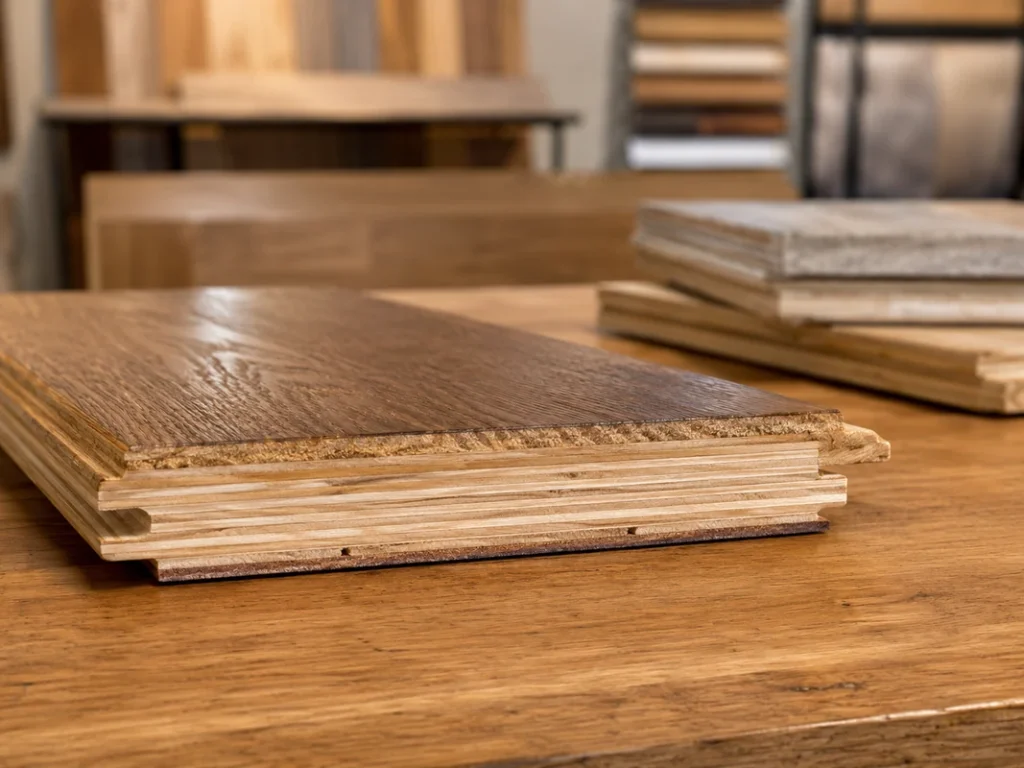
Evaluate the Core Construction
A stable multi-ply plywood core is often a strong choice. Alternating grain directions help control movement, although the number of layers is not enough to prove quality.
Bonding strength, consistent materials, and the absence of internal gaps are equally important.
Inspect the edges and locking system. Clean machining helps the boards connect tightly and reduces the risk of gaps, movement, or noise.
Confirm that the product is approved for the intended installation method, whether floating, glue-down, nail-down, or staple-down.
Dimensional accuracy is particularly important for engineered hardwood parquet. Herringbone and chevron installations depend on consistent plank dimensions and precise angles. Small manufacturing errors can become highly visible across a finished patterned floor
Review the Finish, Warranty, and Certifications
The surface finish protects the timber from stains, everyday wear, and minor scratches.
UV-cured lacquer normally creates a protective film over the wood. Hardwax oil tends to provide a more natural appearance and may allow local maintenance, although it can require more regular care.
Read the warranty exclusions rather than focusing only on the advertised duration. Check the conditions relating to:
- Moisture and water damage
- Pets and scratches
- Underfloor heating
- Commercial use
- Cleaning products
- Indoor humidity
- Professional installation
Indoor-air-quality and responsible-sourcing certifications may provide additional reassurance. Requirements vary by market, so confirm that each certificate applies to the exact product rather than only to the manufacturer or another collection
Installation, Cleaning, and Refinishing
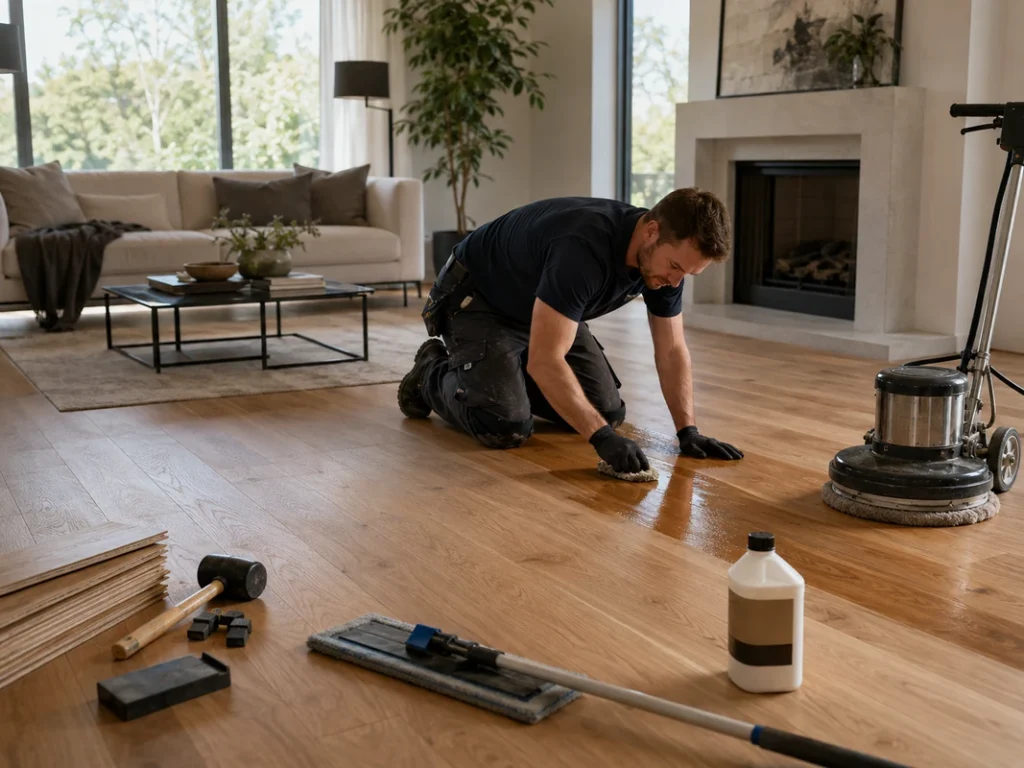
Engineered hardwood may be floated over underlay, glued directly to the subfloor, or fixed using nails or staples. The board design and manufacturer’s instructions should determine the installation method.
Floating installation is often quicker and easier to remove. Glue-down installation can provide a firmer feel underfoot and may reduce hollow sound.
Before fitting begins, the boards may need to acclimatise inside the property. The subfloor must be dry, level, clean, and structurally sound. Expansion gaps are normally required around walls, door frames, pipes, and fixed objects.
For routine cleaning, remove grit with a soft broom or suitable vacuum attachment. Use a slightly damp mop and a cleaning product approved for natural wooden flooring.
Avoid steam cleaners, excessive water, abrasive pads, and harsh chemicals. Spills should be wiped up immediately, while entrance mats and furniture pads can help prevent scratches.
Refinishing depends on the remaining thickness of the wear layer. Some floors can only be lightly screened and recoated. Products with thicker hardwood veneers may be professionally sanded, but repeated sanding is not possible with every board.
The wear layer and overall condition should be inspected before restoration work begins
conclusion
Engineered hardwood is a genuine timber surface supported by a stable multilayer core. It offers the natural appearance of hardwood, better dimensional stability than solid timber, and several installation options.
The best product is not automatically the thickest or most expensive. Long-term performance depends on the wear layer, core construction, finish, manufacturing accuracy, installation quality, and conditions inside the room.
When these factors are evaluated carefully, engineered hardwood can provide an attractive, stable, and long-lasting floor for many areas of a home
FAQs
Is engineered hardwood real wood?
Yes. The visible top layer is genuine hardwood. The supporting layers are normally made from plywood, softwood, or high-density fibreboard. This makes engineered hardwood different from laminate, which uses a printed decorative image
Is engineered hardwood waterproof?
No. It may tolerate normal humidity changes and small spills better than some solid floors, but standing water, plumbing leaks, and repeated moisture exposure can still cause serious damage
Can engineered hardwood be refinished?
Some products can be refinished. The number of possible refinishing treatments depends mainly on the thickness of the hardwood wear layer. Thin veneers may only allow light recoating, while thicker veneers may permit professional sanding
How long does engineered hardwood last?
A well-manufactured, correctly installed, and properly maintained floor can last for several decades. Its lifespan depends on traffic, moisture control, finish quality, wear-layer thickness, installation, and cleaning practices.
Does engineered hardwood scratch easily?
It can scratch because its surface is real wood. Scratch resistance depends on the timber species, protective finish, pets, footwear, and maintenance. Entrance mats, regular grit removal, and felt pads under furniture can reduce damage
Is engineered hardwood better than solid hardwood?
Not in every situation. Engineered hardwood is generally more stable and offers greater installation flexibility. Solid hardwood usually provides more refinishing potential. The better option depends on the room, subfloor, budget, environmental conditions, and expected use