What Is Herringbone Flooring? A Practical Guide to the Pattern
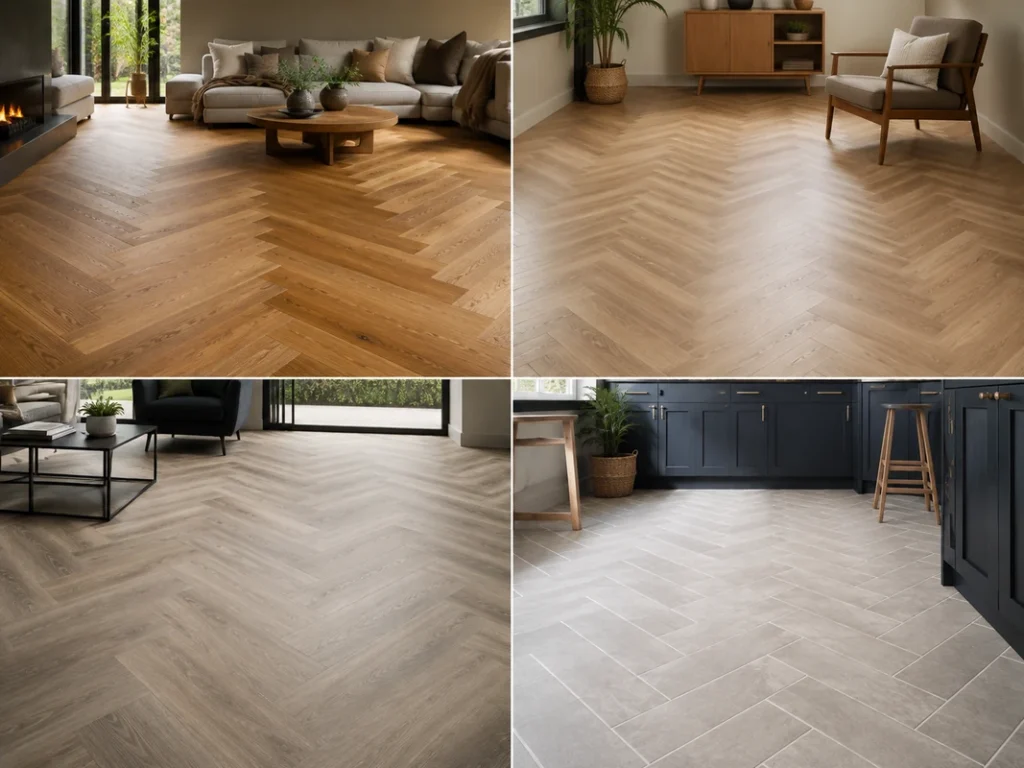
Herringbone flooring is a geometric layout made by placing rectangular boards or tiles at right angles to one another, creating a repeated zigzag effect. It is commonly used in living rooms, hallways, bedrooms, dining areas and kitchens. The pattern can be produced with solid timber, engineered boards, laminate, luxury vinyl or tile, so its performance depends on the material chosen.
For anyone asking what is herringbone flooring, the key point is simple: herringbone describes the arrangement, not one specific product. This guide explains how the pattern works, how it differs from chevron, which materials are available, and what to expect from installation, cost and maintenance
What Is Herringbone Flooring?
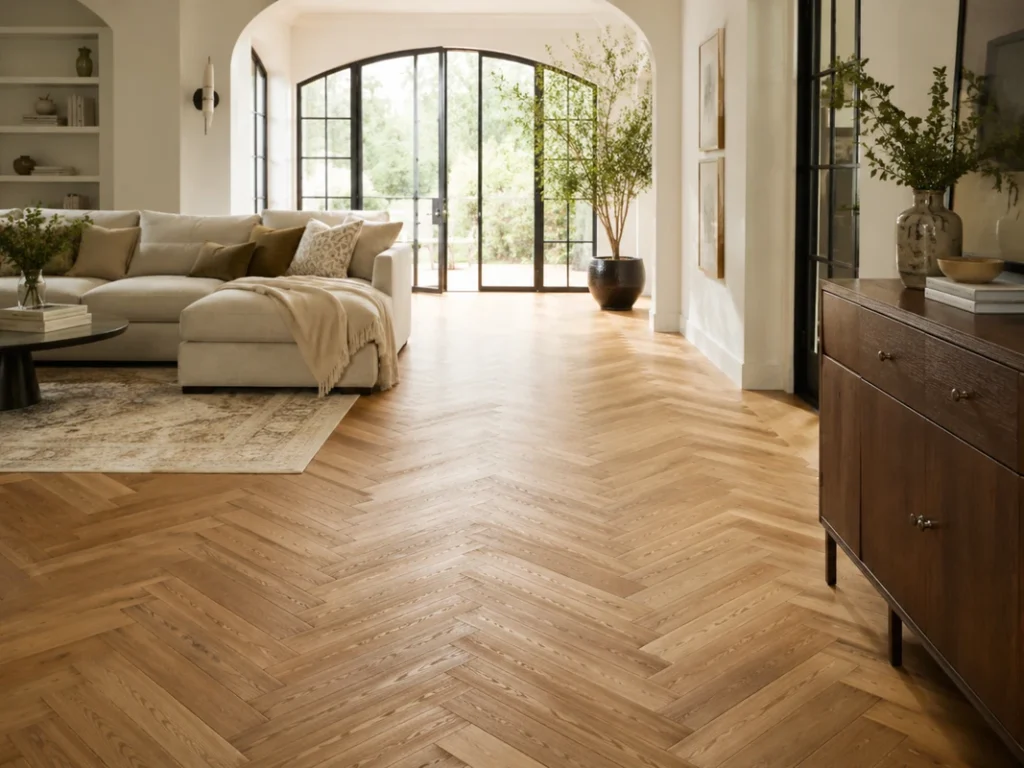
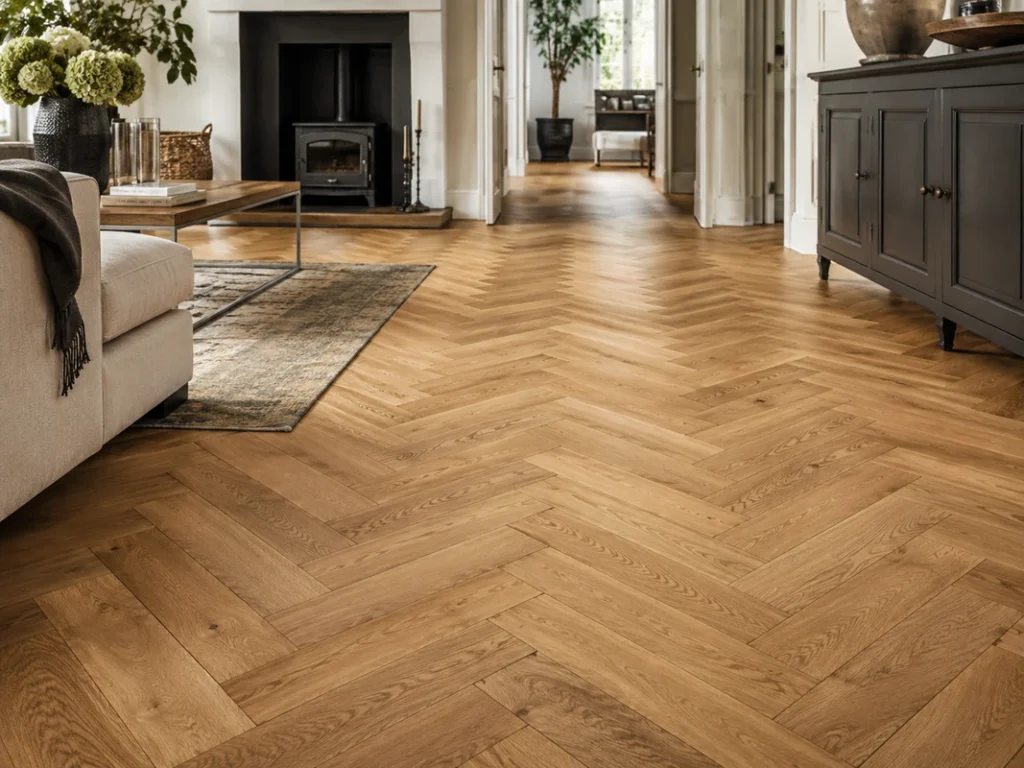
Herringbone flooring uses short rectangular pieces installed in alternating directions. The end of one piece meets the side of the next at a 90-degree angle. Repeated across the room, the joints create a broken zigzag resembling fish bones, which is where the name comes from.
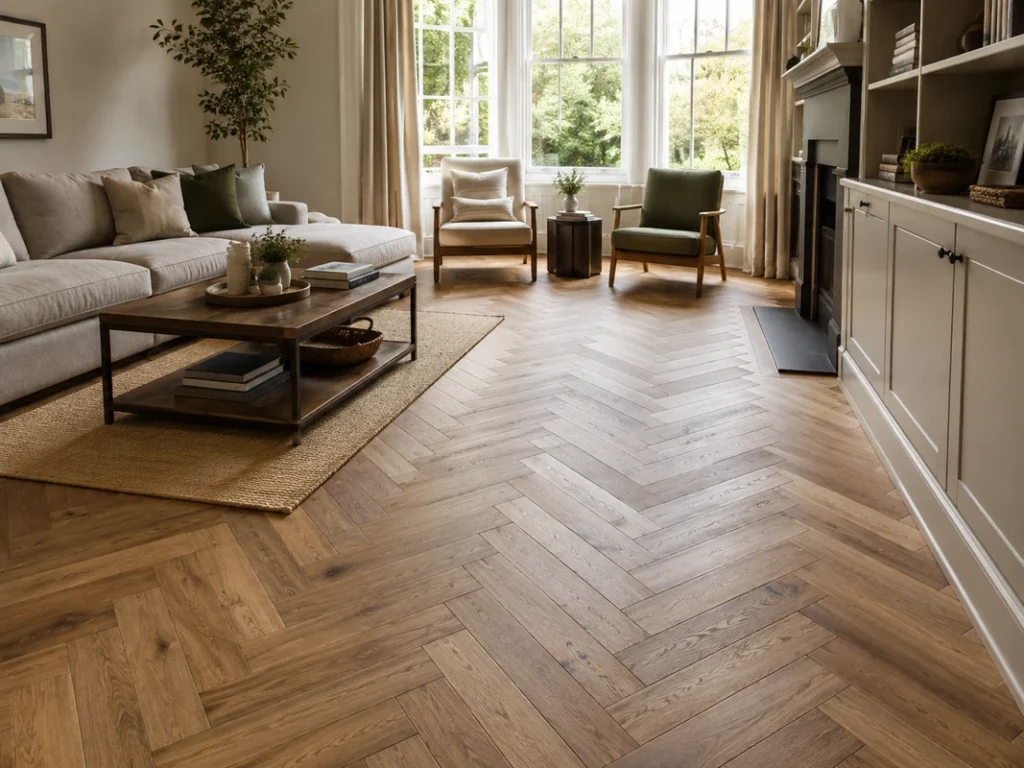
Traditional versions were often made from small solid timber blocks. Today, the same appearance can be created with engineered herringbone parquet flooring, click-lock products, laminate, vinyl and porcelain tiles. This makes the pattern suitable for period interiors and modern homes.
Herringbone is sometimes mistaken for a material, but it is only a layout. A wooden flooring and a porcelain floor can both use it while performing very differently. The arrangement also appears in a deck herringbone pattern, a herringbone driveway, a herringbone kitchen backsplash, a herringbone patio and herringbone tiles on a wall.
Installers normally position the central spine along a strong visual axis, such as the line from an entrance toward a window. Poor setting out can make the pattern look uneven
Herringbone vs. Chevron: What’s the Difference?
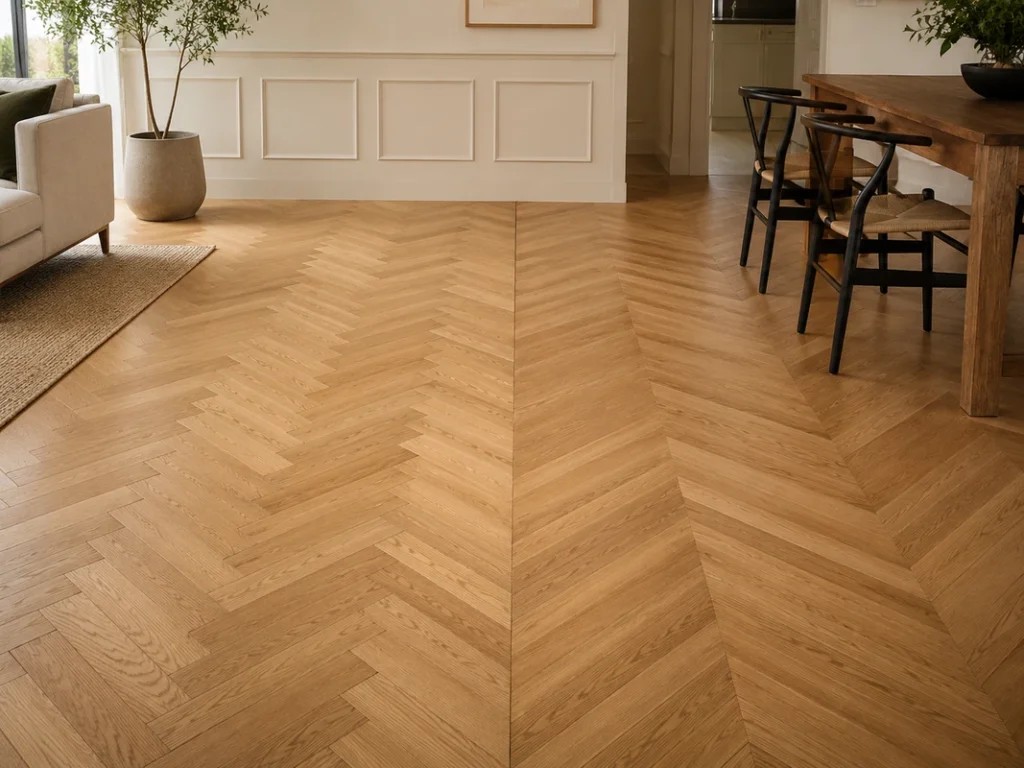
Herringbone looks more layered because the zigzag is interrupted at each joint. Chevron forms an uninterrupted arrow shape. Herringbone suits interiors that need texture and classic character, while chevron creates stronger directional lines.
Neither is automatically better. The right choice depends on the room proportions, board colour, interior style and the desired visual effect. Herringbone often feels more traditional and detailed, while chevron can produce a cleaner and more formal result
Is Herringbone Flooring a Good Choice?
Herringbone can be an excellent choice, but it is not right for every room or budget. It adds more visual interest than a straight layout, yet that detail also increases planning, cutting and labour.
Benefits of Herringbone Flooring
Its biggest advantage is appearance. Herringbone adds movement and structure without requiring bold colours or decorative borders. It can become a design feature without dominating the furniture.
It is also versatile. Light oak tones suit Scandinavian and contemporary interiors, while darker herringbone hardwood flooring can create a traditional or luxurious result. Narrow blocks produce a detailed classic look, while larger boards feel cleaner and more modern.
The pattern can also guide the eye through a room. When its direction is planned properly, it can lead attention toward a window, fireplace or kitchen island. In open-plan spaces, it may help connect different zones without physical divisions.
Good-quality engineered or solid herringbone parquet may also provide a long service life. Some products can be sanded and refinished, although this depends on the thickness of the real-wood wear layer.
Herringbone can also add perceived value to an interior because it looks more customised than a standard straight-board installation. However, the quality of the material and installation matters more than the pattern alone
Drawbacks to Consider
The main drawback is cost. Herringbone requires accurate reference lines, careful positioning and more perimeter cuts than straight flooring. It may also create more waste, especially in rooms with irregular walls or several doorways.
Installation mistakes are highly visible. A small error near the centre can become more obvious as the pattern spreads, making the layout less forgiving for inexperienced installers.
The design can also look busy in small rooms filled with furniture or strong wall patterns. Larger boards, lighter colours and calmer grain variation can reduce this effect.
Moisture remains another concern. The pattern does not make a product waterproof. Solid timber, laminate and vinyl each have different moisture limits, so the material must suit the room.
Repairs may also be more complicated than with a straight layout. Removing one damaged piece without affecting neighbouring boards can require specialist tools and careful cutting, particularly with glued installations
What Types of Herringbone Flooring Are Available?
Solid timber herringbone is made from one piece of wood. It offers an authentic appearance and may be refinished several times, but it is more sensitive to humidity and usually needs professional installation.
Engineered herringbone has a real timber wear layer over a layered core. It is generally more stable than solid timber and may be suitable for underfloor heating when approved by the manufacturer. It is a popular choice for homeowners who want genuine timber with improved dimensional stability.
Click herringbone flooring uses profiled edges that lock together. Some systems float over an underlay, while others require adhesive. Installation can be faster, but left- and right-handed boards must still be arranged accurately. A click system should not be assumed to be easy simply because it avoids traditional tongue-and-groove fitting.
Laminate herringbone uses a printed design over a fibreboard core. It is usually more affordable and resistant to everyday wear, but it cannot be sanded. Water resistance varies by product, so standard laminate should not be treated as waterproof.
Luxury vinyl herringbone offers easy cleaning, practical moisture resistance and a softer feel than tile. It can work well in kitchens and busy family areas. However, the subfloor must be smooth because imperfections may show through thinner products.
Tile herringbone can use porcelain, ceramic or stone-look tiles. It suits wet or high-traffic areas but feels harder and colder unless paired with a suitable heating system.
The best type depends on whether the priority is authentic timber, moisture resistance, easy maintenance, installation speed or budget. Appearance alone should not determine the decision
What Should You Know About Installation, Cost and Care?
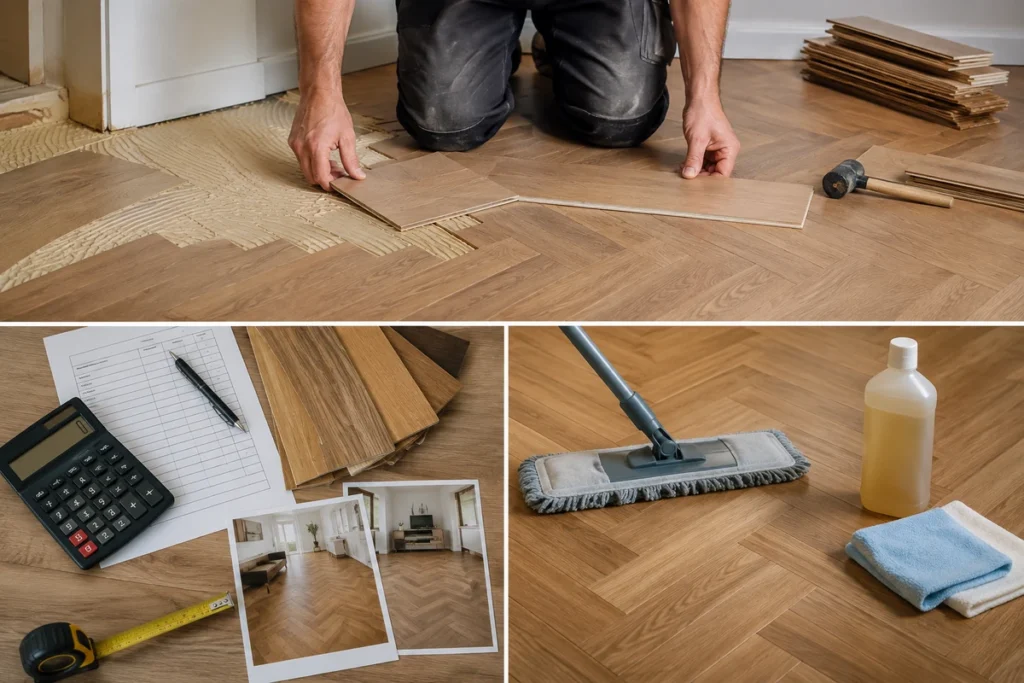
The subfloor must be clean, dry, flat and structurally sound. Uneven areas can disrupt alignment or cause movement later. Timber and engineered products may also need to acclimatise before fitting.
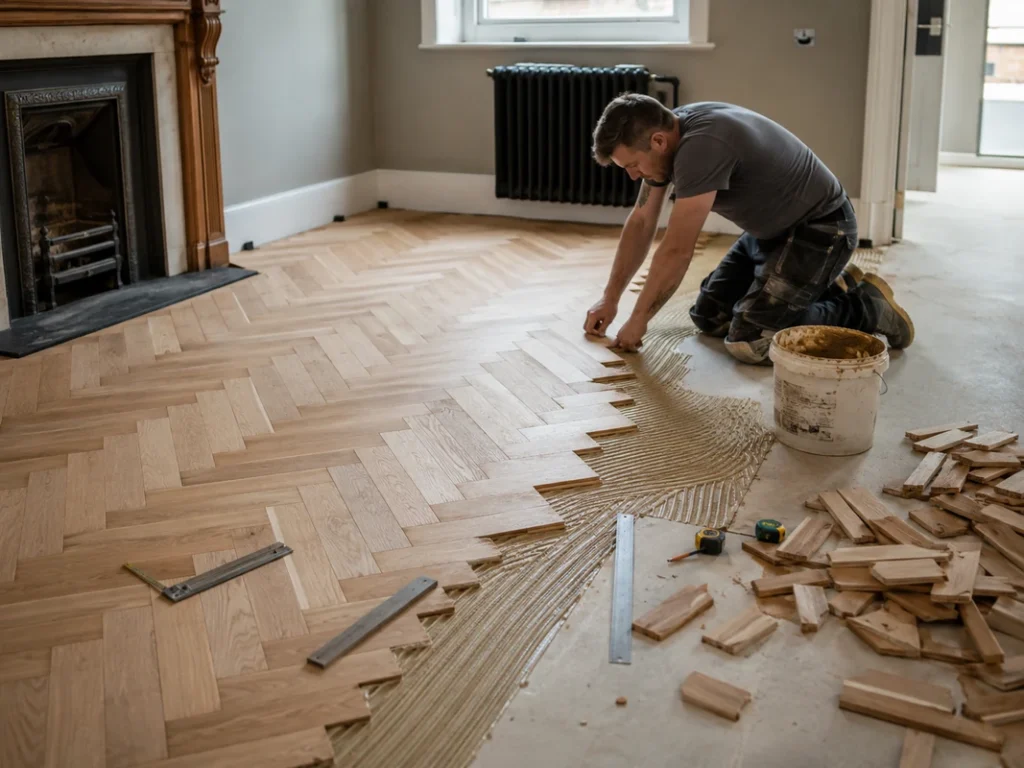
The installer then marks the centre line and creates a reference spine. The first rows are critical because every later row follows them. Required expansion gaps must be left around walls, columns and fixed objects.
Installation methods vary. Many solid and engineered products are glued down. Some timber floors can be nailed to a suitable wood subfloor. Floating click systems are joined without being fixed directly to the base, but only when the product allows it.
Herringbone normally costs more than a straight layout. Specialised milling, extra waste and higher labour all affect the price. A proper quotation should include the product, subfloor preparation, adhesive or underlay, fitting, trims and waste allowance rather than showing only a price per square metre.
The room shape also affects labour. A simple rectangular room is usually easier than a space with curved walls, multiple doorways, built-in cabinets or irregular corners. Removing an existing floor and repairing the base can increase the total cost further.
Care depends on the material. Real timber should be cleaned with a vacuum, soft broom or lightly dampened mop and a cleaner approved for wood flooring. Excess water, steam and abrasive chemicals can damage the finish or joints.
Laminate and vinyl are generally easy to maintain, but spills should still be removed quickly. Furniture pads and entrance mats help limit scratches and tracked-in grit. Tile tolerates more moisture, although grout lines may need separate cleaning.
Before purchasing, check the manufacturer’s instructions for cleaning, humidity, expansion gaps, installation method and underfloor-heating compatibility. These requirements are more reliable than general advice because different products can have very different limitations
conclusion
Herringbone flooring is a layout made from rectangular pieces positioned at 90-degree angles to form a broken zigzag. It can be created with solid timber, engineered boards, click systems, laminate, vinyl or tile.
Its strengths are visual character, versatility and the ability to direct the eye through a room. Its weaknesses are higher installation costs, added waste and the need for precise setting out.
The best result comes from choosing a product suited to the room rather than selecting it only for appearance. Careful subfloor preparation, accurate installation and correct maintenance are essential for a herringbone floor that looks balanced and performs reliably
FAQs