
Difference Between Vinyl Flooring and Laminate Flooring
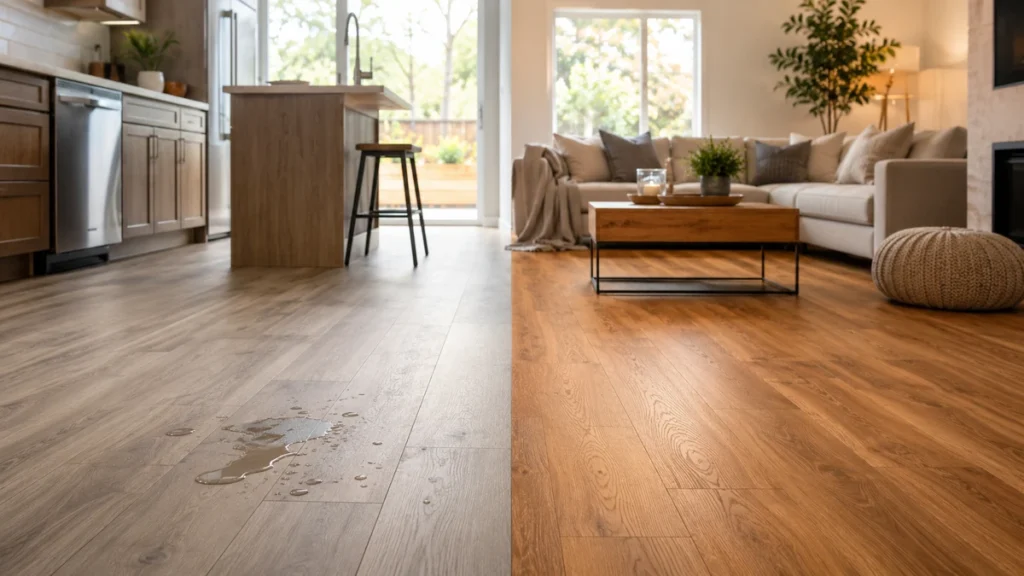
Choosing between vinyl and laminate can be confusing because both floors can recreate the look of timber, stone and other natural materials while costing less than many traditional options. However, the difference between vinyl flooring and laminate flooring goes much deeper than appearance. Their construction, resistance to water, comfort, durability and ideal applications are different.
Vinyl flooring is primarily made from synthetic materials such as PVC and is generally highly resistant to moisture. Laminate flooring uses a wood-fibre-based core topped with a decorative printed layer and protective wear layer. As a result, laminate often delivers a convincing wood-like feel, while vinyl usually performs better in areas where spills, humidity or frequent cleaning are concerns.
Neither material is automatically better. The right choice depends on the room, expected traffic, moisture exposure, budget and the quality of the specific product
Vinyl vs. Laminate Flooring: Quick Comparison
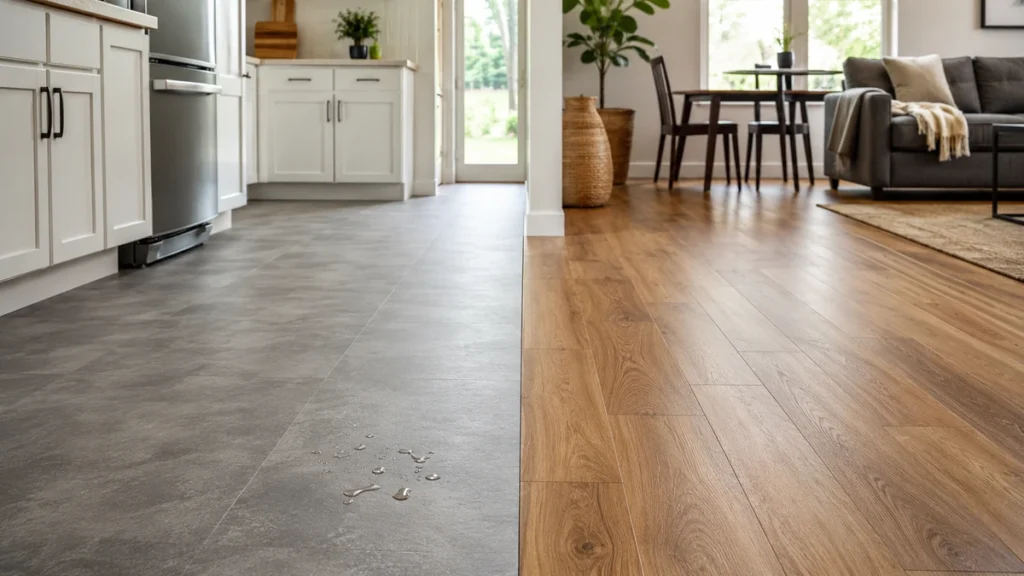
The table below summarizes the main points when comparing vinyl flooring vs laminate flooring.
| Feature | Vinyl Flooring | Laminate Flooring |
|---|---|---|
| Core material | Mostly synthetic/PVC-based | High-density or medium-density fibreboard |
| Water resistance | Usually excellent; many products are waterproof | Water-resistant options available, but prolonged moisture can damage the core |
| Appearance | Realistic timber, stone and tile designs | Particularly convincing wood appearance |
| Comfort | Slightly softer and quieter underfoot | Firmer and can feel more similar to a floating wooden floor |
| Scratch resistance | Good, depending on wear layer | Often strong against everyday scratches |
| Dent resistance | Can dent under concentrated heavy loads | Usually relatively rigid but can chip under severe impact |
| Maintenance | Easy to clean and moisture tolerant | Easy to clean but excess water should be avoided |
| Installation | Click-lock, loose-lay or glue-down depending on product | Commonly click-lock floating installation |
| Best areas | Kitchens, bathrooms, living areas and commercial spaces | Bedrooms, living rooms, offices and dry areas |
| Main weakness | Quality varies significantly between products | Fibreboard core remains sensitive to excessive moisture |
The quick verdict on laminate floor vs vinyl is therefore simple: vinyl usually wins where moisture resistance is the priority, while laminate can be an excellent choice for homeowners prioritising realistic timber appearance and a rigid floor feel.
What Is the Main Difference Between Vinyl and Laminate Flooring?
The biggest difference is their construction.
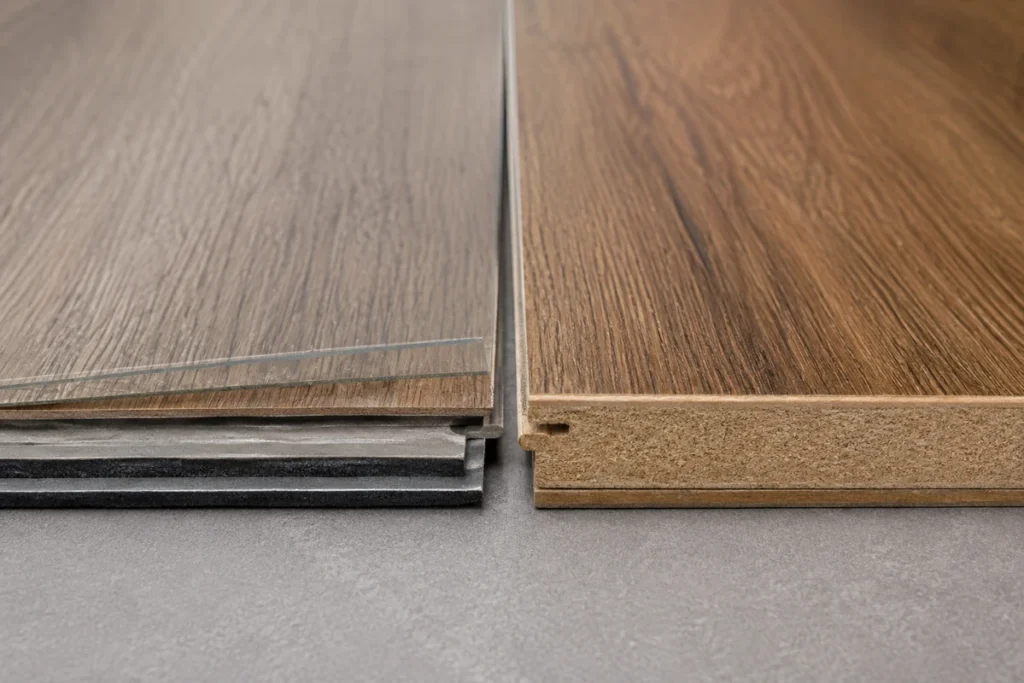
Most modern vinyl floors contain several synthetic layers. A typical product includes a backing layer, structural core, printed design film and transparent wear layer. Products such as lvt flooring use this layered construction to reproduce wood or stone while remaining resistant to everyday moisture.
Laminate is built differently. Its structural core is generally made from compressed wood fibres. Above the core sits a photographic design layer and a hard transparent surface designed to protect against scratches, stains and wear.
This construction explains much of the difference between LVT and laminate. Vinyl does not rely on a wood-fibre core, so water is less likely to cause swelling or structural damage. Laminate, meanwhile, can provide the visual character many homeowners associate with wood flooring, especially when high-definition printing, textured surfaces and bevelled edges are used.
The distinction also matters when comparing luxury vinyl vs laminate. Two products may look almost identical in a showroom, but they can behave very differently once installed in a kitchen, bathroom or heavily used family space
Key Differences Between Vinyl and Laminate Flooring
Water Resistance and Moisture
Moisture is one of the strongest reasons to choose vinyl.
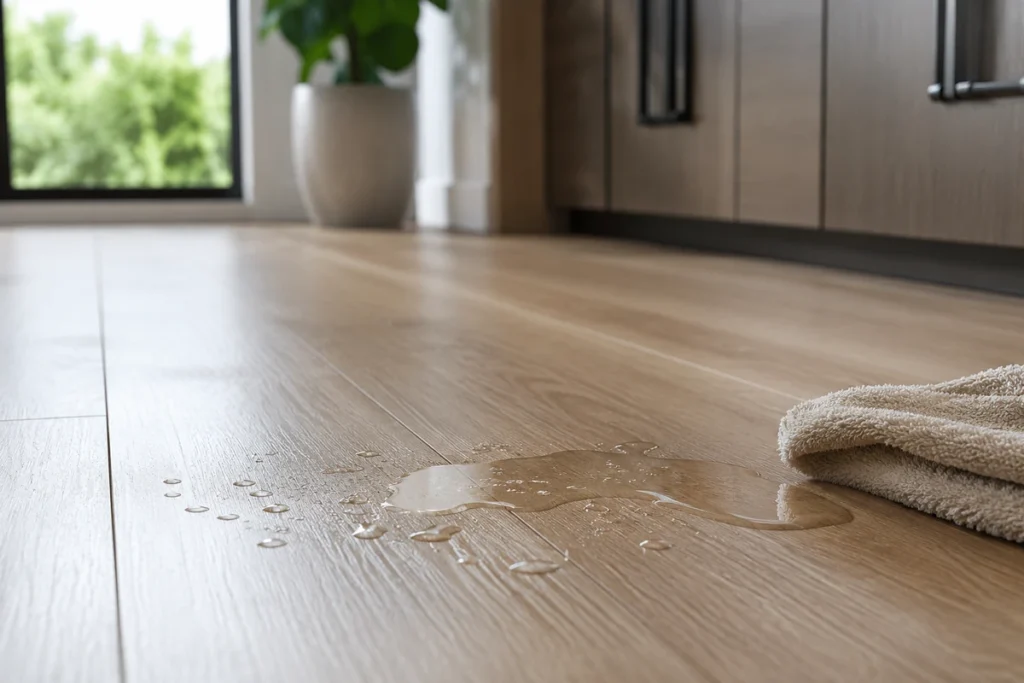
Quality vinyl products can tolerate spills, damp cleaning and humid environments much better than conventional laminate. This makes luxury vinyl tiles particularly practical for kitchens, utility spaces and some bathrooms, provided the specific product and installation method are approved for those environments.
Laminate technology has improved, and many current products are marketed as water resistant. However, water resistance should not automatically be interpreted as complete waterproofing. If moisture penetrates the joints and reaches the fibreboard core, the boards can swell, deform or develop raised edges.
For rooms where water exposure is frequent, the laminate versus vinyl decision generally favours vinyl.
In bedrooms, living rooms and other controlled dry spaces, the difference is less important and laminate may be equally suitable
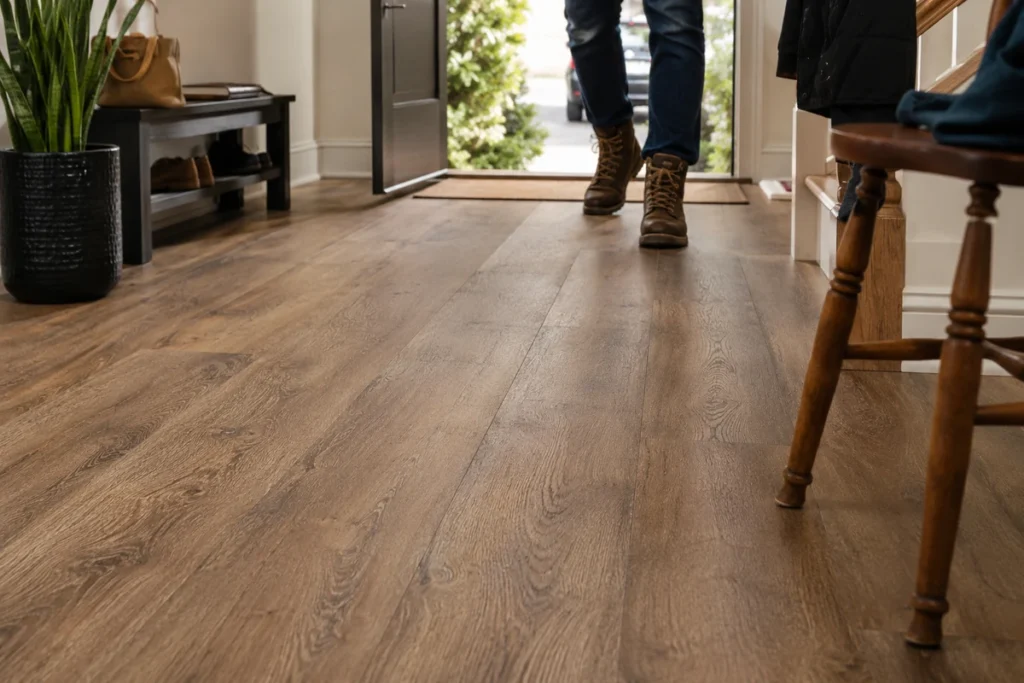
Durability: Scratches, Dents and Heavy Traffic
Both flooring types can be durable, but performance depends heavily on product quality.
Laminate surfaces are generally hard and can handle everyday foot traffic, furniture and light scratching well. This is one reason quality laminate flooring is frequently installed in busy homes and offices.
Vinyl uses a protective wear layer rather than the hard melamine-type surface commonly found on laminate. A thicker and better-quality wear layer can significantly improve resistance to scratches, stains and general wear.
However, vinyl is slightly more flexible. Heavy furniture legs or concentrated loads may leave impressions in softer products. Laminate is more rigid but can suffer from chipped edges or damaged joints if exposed to severe impact.
There is therefore no reliable answer to durability based only on the words “vinyl” or “laminate.” A premium vinyl product can outperform budget laminate, while high-quality laminate can outperform inexpensive vinyl.
When assessing vinyl hardwood flooring vs laminate, check the wear layer, product class, warranty and manufacturer’s recommended application rather than judging durability purely by appearance
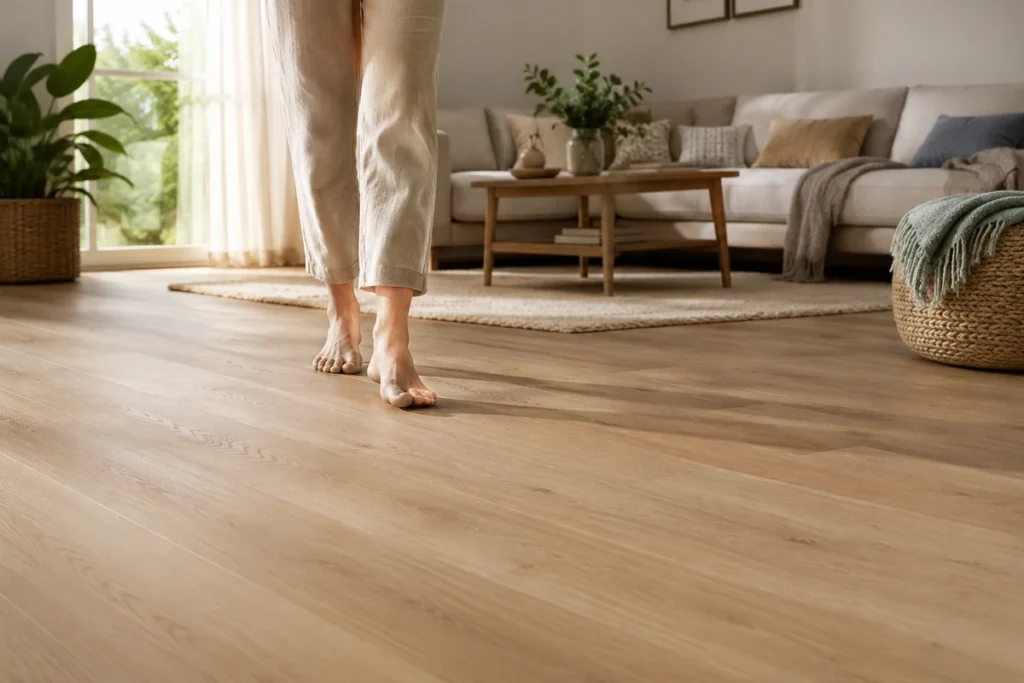
Appearance, Comfort and Noise
Both technologies have improved significantly, and inexpensive artificial-looking surfaces are no longer representative of every product.
Laminate is particularly strong at reproducing timber. High-quality laminate wood flooring can combine detailed printing with registered embossing, grain texture and bevelled edges to create a convincing timber appearance.
Vinyl can also imitate wood extremely well and has the additional advantage of reproducing tile, concrete and stone designs. This makes it more flexible from an interior-design perspective.
Comfort is more subjective.
Vinyl usually feels slightly softer and can produce less impact noise. Laminate has a harder, more rigid feel that some homeowners prefer because it feels closer to a traditional wooden floor.
Underlay also has a major influence. A quality acoustic underlay can improve both walking comfort and sound reduction with compatible floating-floor systems.
If choosing luxury vinyl or laminate mainly by appearance, compare full installed samples rather than small showroom boards. Lighting, plank dimensions, surface texture and repeated print patterns can all affect how natural the finished floor looks
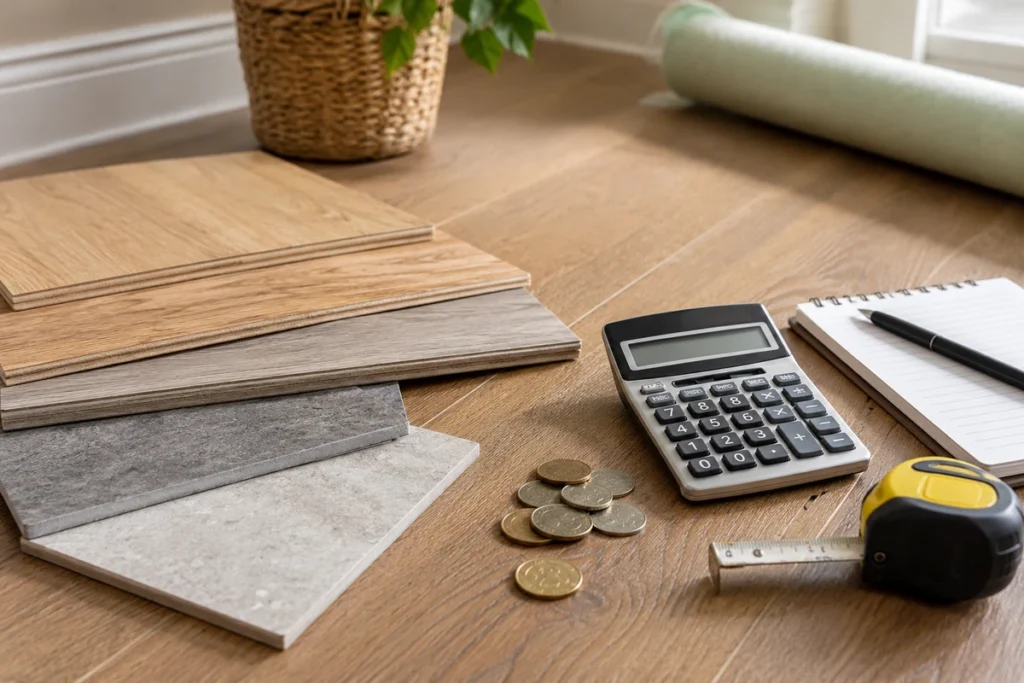
Cost and Long-Term Value
There is substantial price overlap between laminate and vinyl.
Entry-level products exist in both categories, while premium LVT and premium laminate can cost considerably more than their basic alternatives. Installation requirements can also affect the final budget.
Click-lock laminate is often straightforward to install over a properly prepared subfloor. Click vinyl can offer similar convenience, while glue-down vinyl may require more extensive subfloor preparation and professional installation.
The cheapest purchase price does not necessarily provide the best value.
A low-cost floor that requires replacement after premature water or surface damage can become more expensive than buying a suitable higher-quality product from the beginning.
When comparing vinyl tile or laminate, consider:
- product quality and wear rating;
- expected traffic;
- subfloor preparation;
- installation cost;
- moisture exposure;
- maintenance requirements;
- warranty conditions;
- expected service life.
Long-term value comes from choosing the right material for the environment rather than simply selecting the cheapest square-metre price
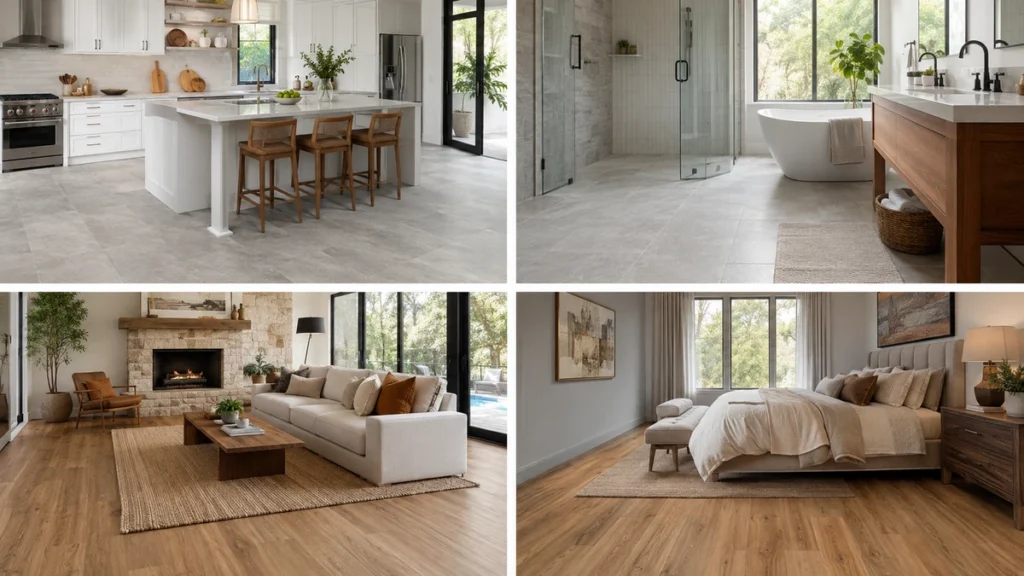
Which Is Better for Each Room?
The best choice changes according to how the room is used.
| Room | Usually Better Choice | Why |
|---|---|---|
| Living room | Either | Both provide attractive designs and good everyday durability |
| Bedroom | Laminate or vinyl | Laminate offers a rigid timber feel; vinyl can be quieter |
| Kitchen | Vinyl | Better protection against spills and regular moisture |
| Bathroom | Vinyl | Waterproof-approved vinyl is generally more suitable |
| Home office | Either | Choice depends mainly on appearance and traffic |
| Hallway | Either, with adequate wear rating | Both can handle traffic when correctly specified |
| Commercial area | Product-dependent | Traffic class and warranty are more important than material alone |
This room-by-room comparison also answers the common question, is laminate flooring better than vinyl? Sometimes it is—but not everywhere.
For a dry bedroom where timber appearance is the priority, laminate may be the stronger choice. In a kitchen where water and spills are routine, vinyl usually makes more sense.
For homeowners comparing products in warmer climates, including lvt flooring dubai, manufacturer limits for subfloor temperature, sunlight exposure and indoor conditions should also be checked before installation
What to Check Before Buying Vinyl or Laminate Flooring
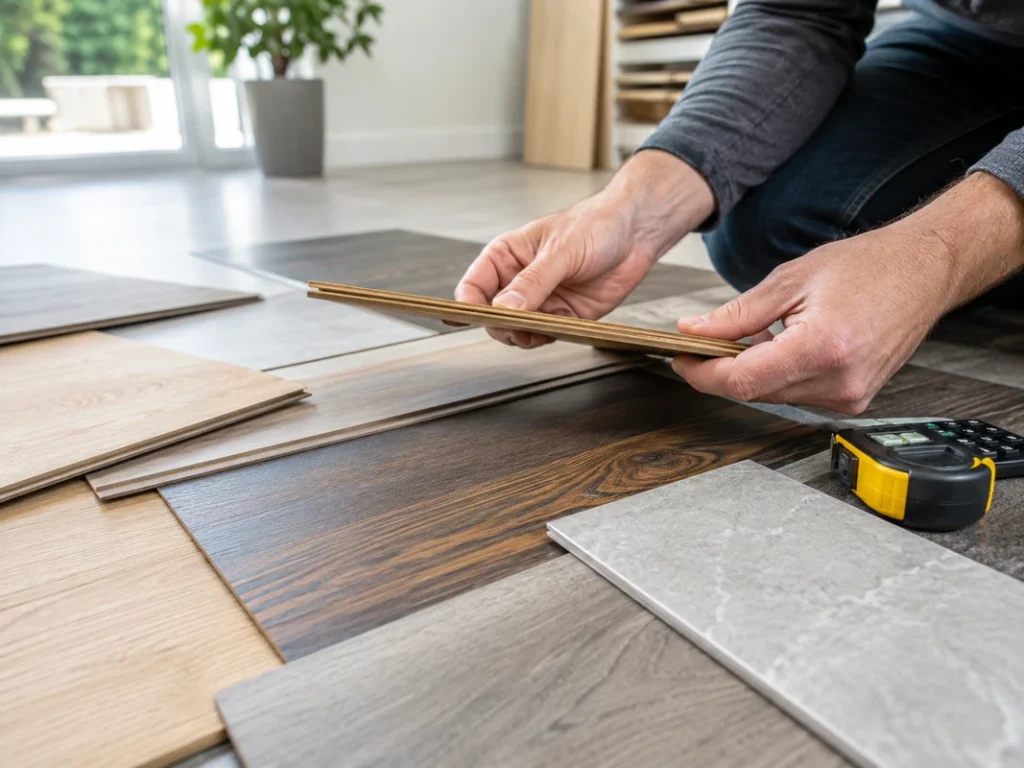
Do not select a floor based only on colour or a single sample board.
Start by confirming whether the product is approved for the intended room. If moisture is possible, check the manufacturer’s exact water-resistance claims rather than assuming every vinyl product is waterproof or every laminate product is unsuitable.
Next, examine the surface specification and wear classification. Homes with pets, children or heavy foot traffic need stronger surface protection than lightly used bedrooms.
Also check:
- plank or tile thickness;
- quality of the locking system;
- wear-layer specification;
- slip resistance where relevant;
- compatibility with underfloor heating;
- acoustic requirements;
- subfloor tolerances;
- installation method;
- residential or commercial warranty;
- cleaning and maintenance instructions.
The subfloor is especially important. Even premium flooring can perform badly when installed over an uneven, damp or poorly prepared base.
Finally, compare several installed samples. The best laminate and vinyl flooring products should be judged by construction, suitability and overall performance—not simply by which design looks best under showroom lighting
conclusion
The difference between vinyl flooring and laminate flooring starts with construction and influences almost every aspect of performance.
Vinyl uses predominantly synthetic materials and normally provides superior resistance to water, making it particularly useful in kitchens, bathrooms and moisture-prone spaces. Laminate uses a wood-fibre core and often delivers an exceptionally convincing timber appearance with a firm, comfortable surface for bedrooms, living rooms and other dry areas.
Neither material wins every comparison.
Choose vinyl when moisture tolerance, easy maintenance and versatility are priorities. Choose laminate when realistic wood aesthetics, surface rigidity and performance in dry living spaces matter more.
Most importantly, compare the specifications of individual products rather than treating all vinyl or all laminate as identical. Product quality, installation and room conditions can matter just as much as the flooring category itself
FAQs
Is vinyl flooring better than laminate flooring?
Vinyl is generally better in rooms exposed to moisture because quality products can offer excellent water resistance. Laminate may be preferable in dry living spaces when a realistic timber appearance and firmer underfoot feel are priorities. The better choice therefore depends on the room and product specification.
Which is more waterproof, vinyl or laminate?
Vinyl is normally more resistant to water. Many vinyl products are designed to be waterproof, while laminate usually relies on water-resistant surfaces and sealed joints to protect its wood-fibre core. Always confirm the manufacturer’s rating before installing either floor in wet areas.
Which scratches more easily, vinyl or laminate?
Laminate often has a very hard surface that performs well against everyday scratching, while vinyl scratch resistance depends strongly on the quality and thickness of its wear layer. Premium products in either category can perform well, so wear specifications matter more than the material name alone.
Which lasts longer, vinyl or laminate flooring?
Both can last for many years when correctly specified, installed and maintained. Lifespan depends on product quality, traffic, moisture, maintenance and installation conditions. High-quality vinyl may have an advantage in moisture-prone areas, while quality laminate can provide excellent long-term performance in dry residential spaces.