
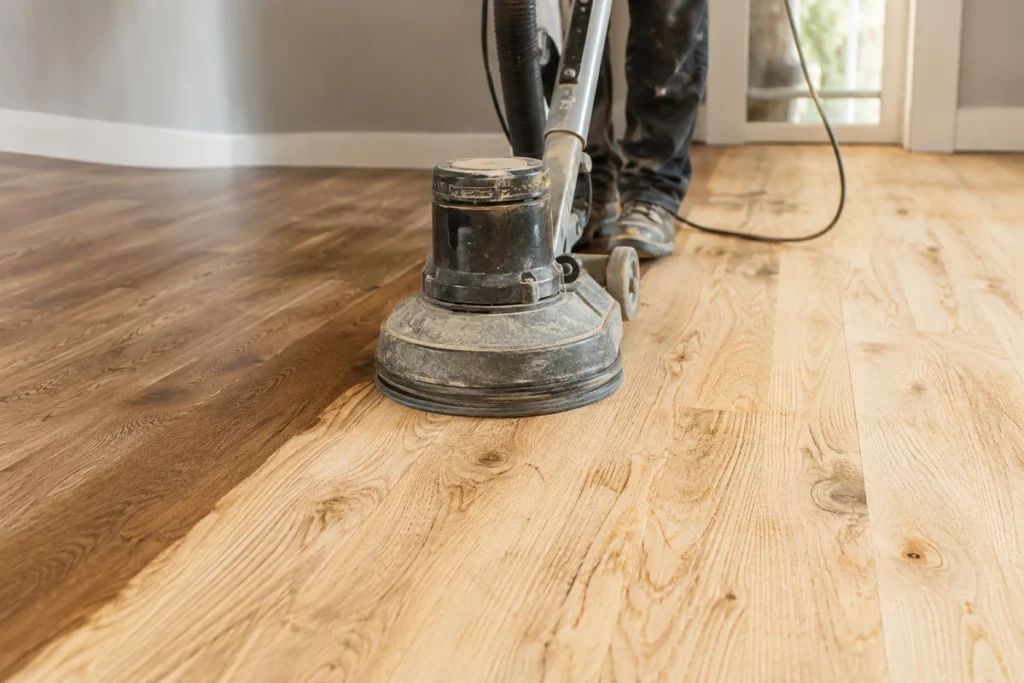
Can You Refinish Engineered Wood Floors?
Yes, many engineered wood floors can be refinished, but not all of them. The deciding factor is the thickness and condition of the real hardwood wear layer on top of the plank. If that layer is thick enough and has not already been heavily sanded, refinishing can remove scratches, worn finish and uneven colour. If it is too thin, sanding can expose the core and permanently damage the boards.
That is why refinishing engineered wood floors should start with assessment, not sanding. In some cases, a lighter screen-and-recoat is the safer option because it renews the protective finish without removing a meaningful amount of wood
Can Engineered Wood Floors Be Refinished?
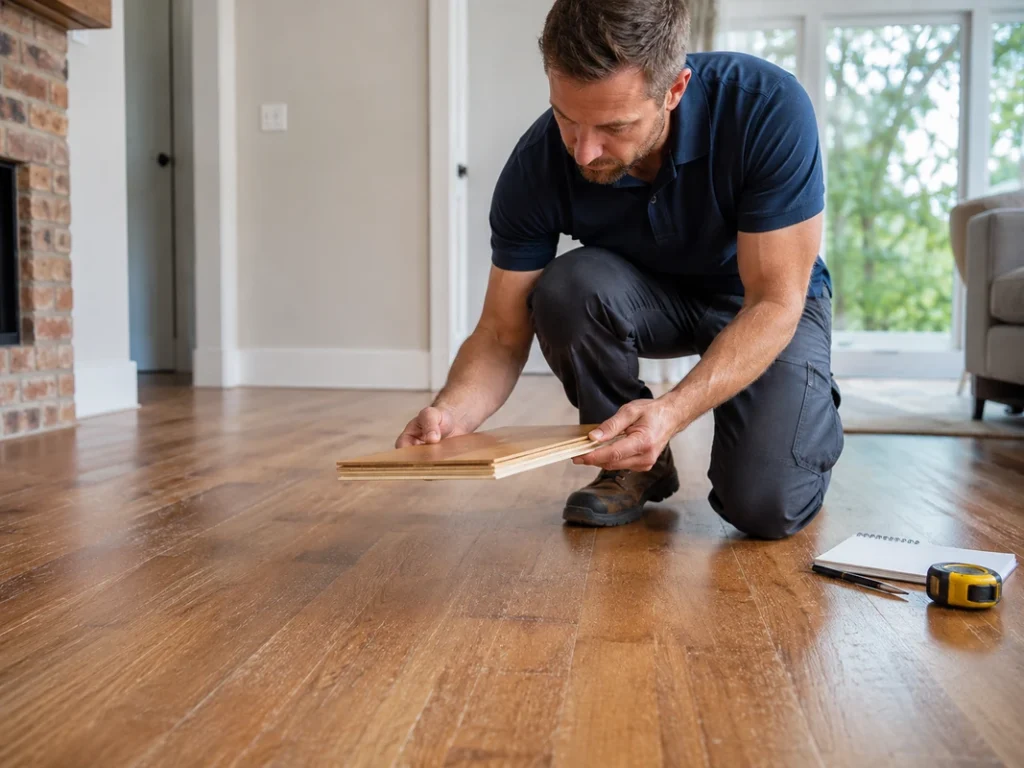
Engineered floors have a real hardwood surface bonded to a stable core. Because the visible layer is genuine wood, it can often be restored similarly to solid timber.
The National Wood Flooring Association defines refinishing as sanding a previously finished floor to bare wood and then applying new stain or finish. The key point is that total plank thickness does not determine refinishability; the real-wood top layer does.
Before refinishing engineered wood floors, check the manufacturer’s specification for wear-layer thickness and find out whether the floor has been sanded before.
Very thin veneers should not be fully sanded. Guidance varies by product, but manufacturers and flooring specialists commonly treat thin wear layers cautiously, while thicker layers may allow one or more careful refinishes. Product-specific guidance should take priority
Refinishing vs Screening and Recoating: Which One Do You Need?
A full refinish is not always the best treatment. If the wood itself is damaged or the colour needs to change, sanding may be necessary. If the problem is mainly a dull or lightly scratched finish, screening and recoating can preserve more of the wear layer.
| Method | What It Does | Best For | Removes Wood? |
|---|---|---|---|
| Full refinishing | Sands to bare wood before new stain and/or finish | Deeper scratches, worn areas, colour changes | Yes |
| Screening and recoating | Lightly abrades the existing coating before a new topcoat | Dull finish, light scratches, routine renewal | Usually no meaningful wood removal |
| Replacement | Replaces damaged boards or the entire floor | Delamination, severe damage or sand-through risk | Not applicable |
Use the least aggressive process that can solve the problem. Preserving the wear layer gives engineered wood flooring more options for future maintenance
How to Refinish Engineered Wood Floors Step by Step
1. Clean and inspect the floor
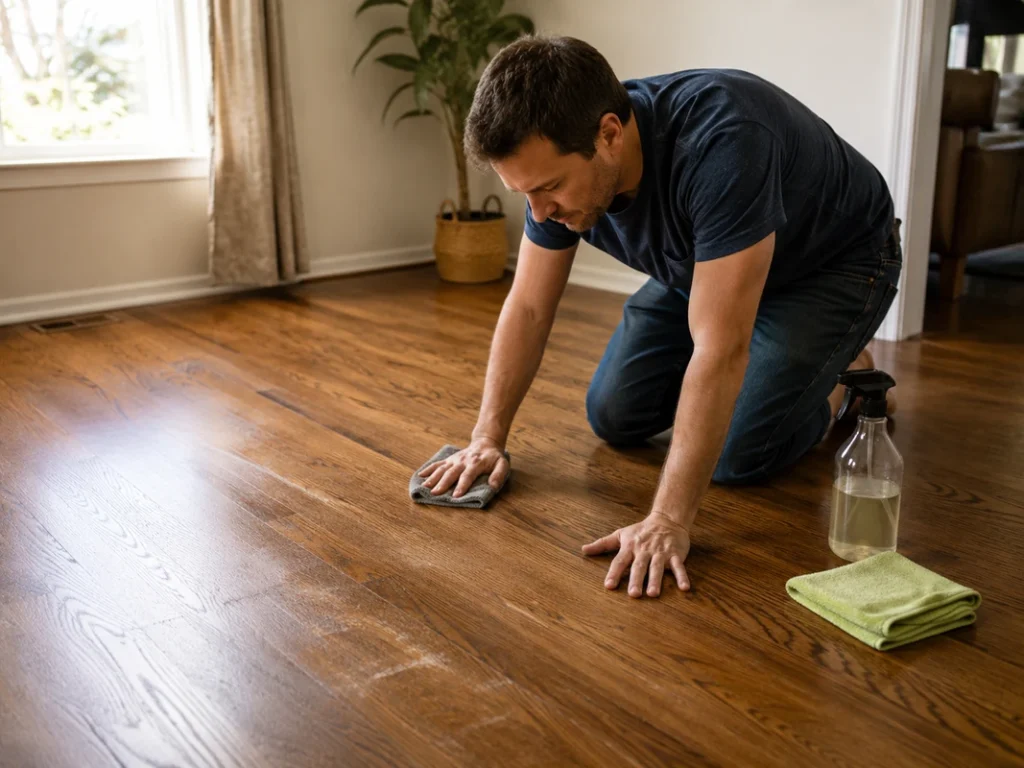
Remove furniture, rugs and loose dirt, then clean the surface with a product suitable for the existing finish. Let it dry completely.
Inspect the boards for deep gouges, cupping, water staining, loose boards, exposed core material or delamination. Confirm the wear-layer thickness before sanding. If the floor has been refinished before, do not assume the original specification represents what remains today
2. Sand carefully or screen the surface
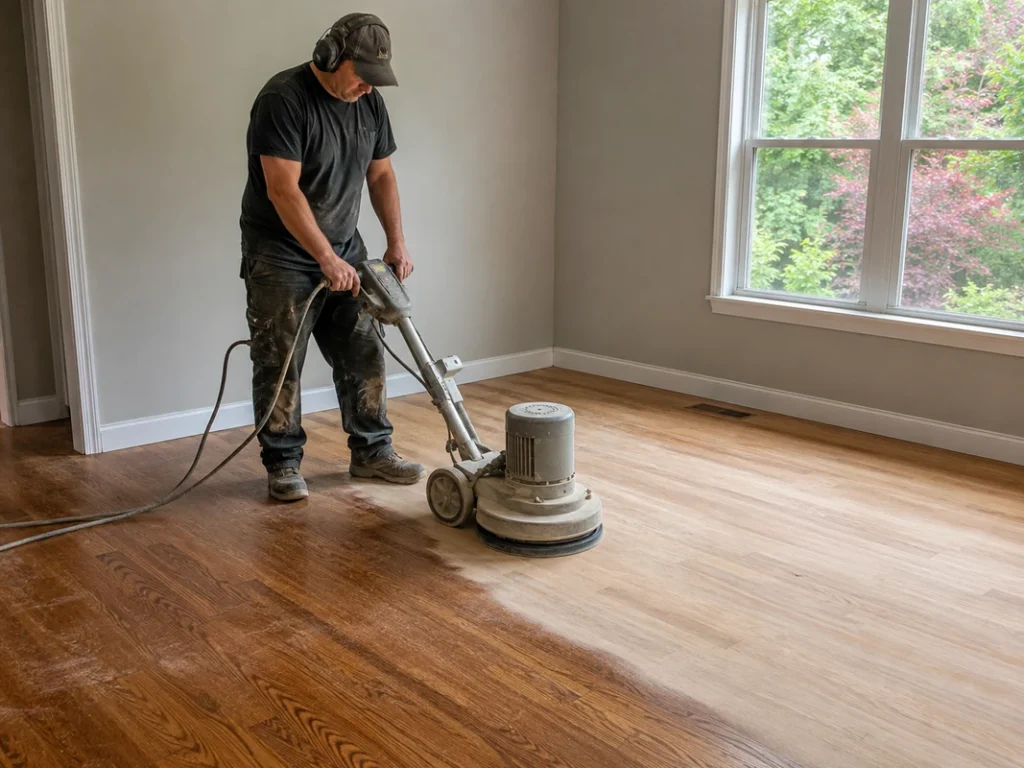
Choose the method according to the damage. Screening lightly abrades the coating and is suitable when the finish is tired but the wood underneath is still in good condition.
Full sanding removes the existing finish and a small amount of hardwood. This is the highest-risk stage when refinishing engineered wood floors. Heavy sanding, uneven pressure or too many passes can cut through the veneer, especially on high spots. Professional assessment is sensible when the remaining wear layer is unknown
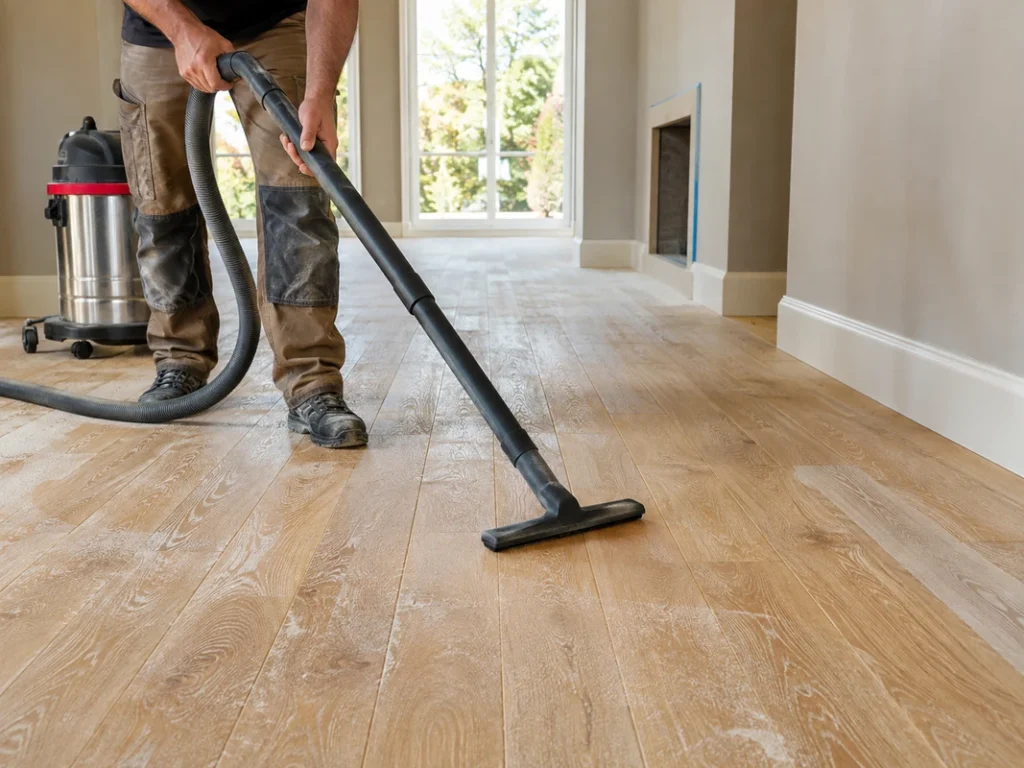
3. Vacuum and remove all dust
Dust trapped beneath a new coating can create a rough, uneven finish. Vacuum the entire floor carefully, including edges and corners, then follow the finish manufacturer’s instructions for final surface preparation.
Do not rush from sanding into coating. Cleanliness affects both appearance and adhesion
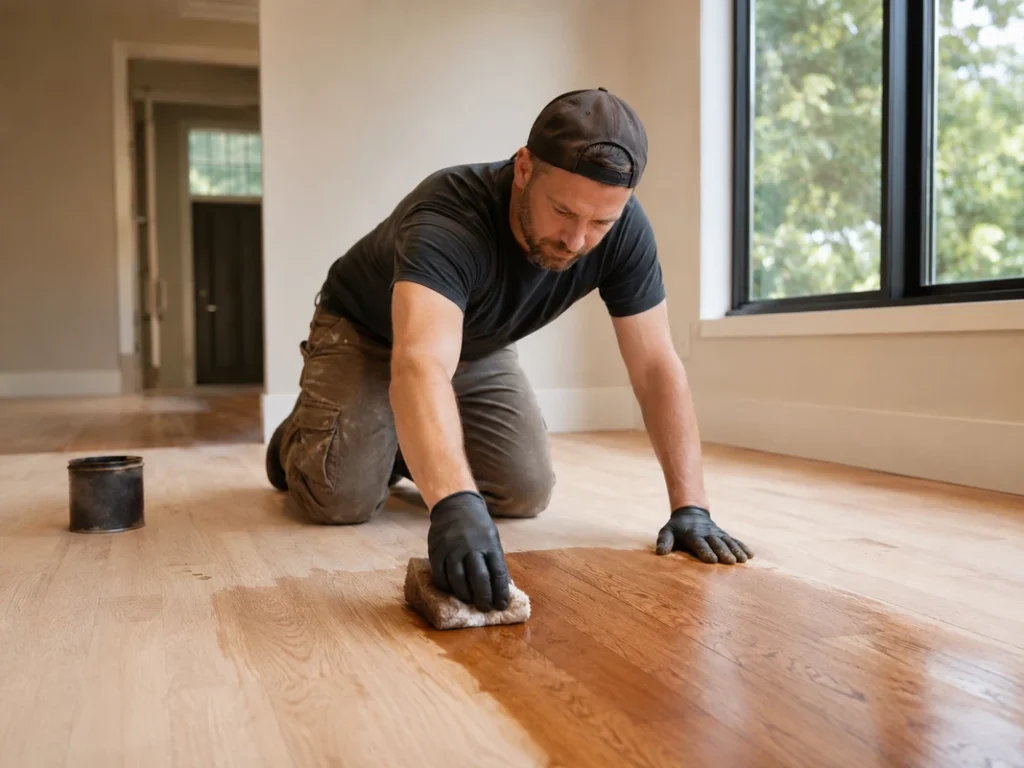
4. Apply stain only if the floor can handle it
Stain is optional. If the goal is simply to restore protection, the existing colour can remain.
Changing colour usually requires evenly sanded bare wood, which can mean removing more material than a light renewal. On a floor with a limited wear layer, trying to remove deep marks or old stain completely may create more damage than it solves.
Test stain on a spare board or inconspicuous area first because wood species, previous coatings and sanding quality can affect the final colour
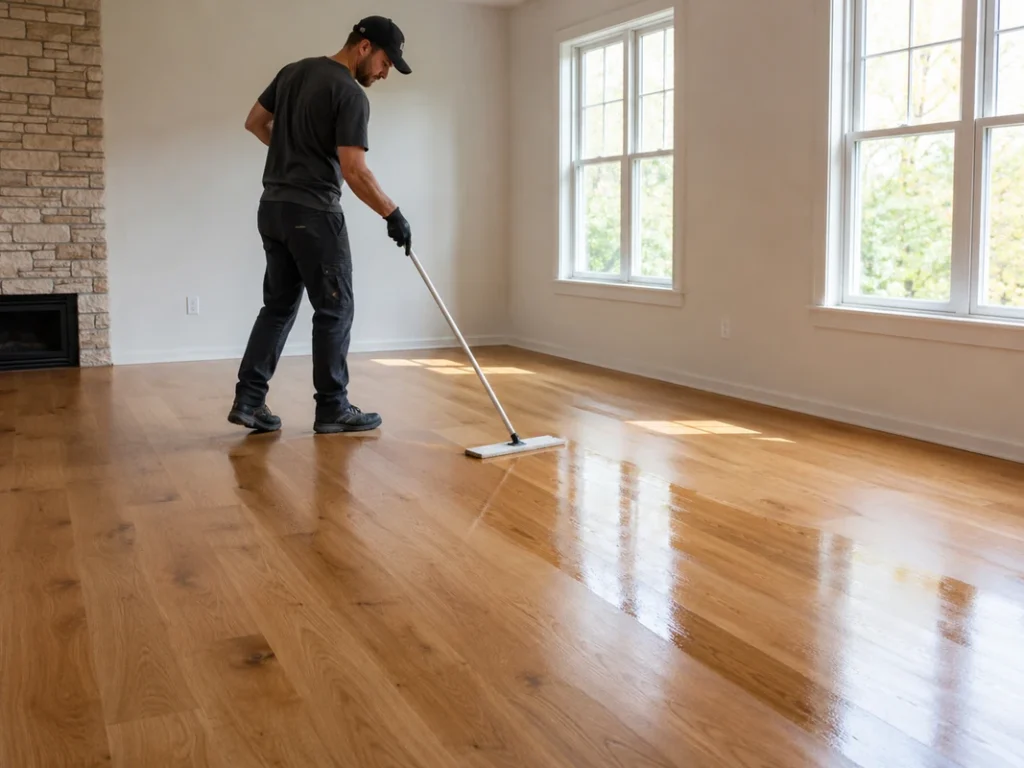
5. Apply a durable finish
Apply a compatible wood-floor finish according to the manufacturer’s instructions. The finish forms the protective layer that takes everyday wear instead of the timber itself.
Choose the coating based on the existing system, desired appearance, traffic level and maintenance needs. Make sure the new finish is compatible with the prepared surface and any stain used
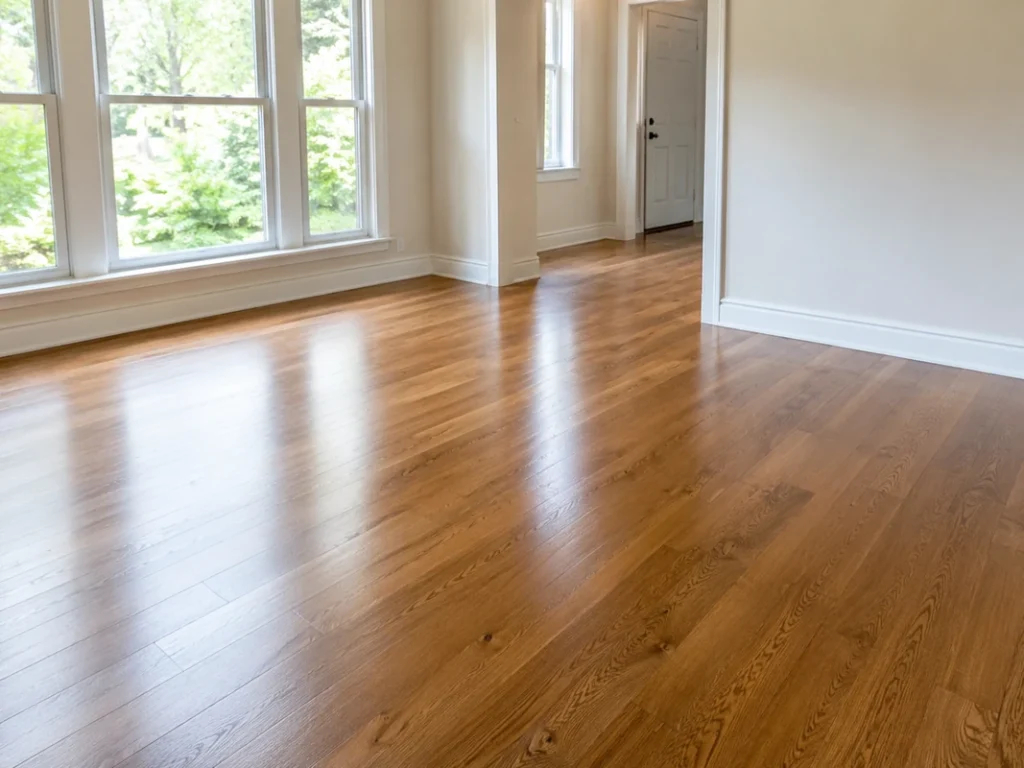
6. Let the floor cure properly
Dry-to-touch does not mean fully cured. Avoid rugs, heavy furniture, cleaning and normal traffic until the finish manufacturer says the surface is ready.
Follow the specific recoat, light-traffic and full-cure times for the product used rather than relying on a universal waiting period
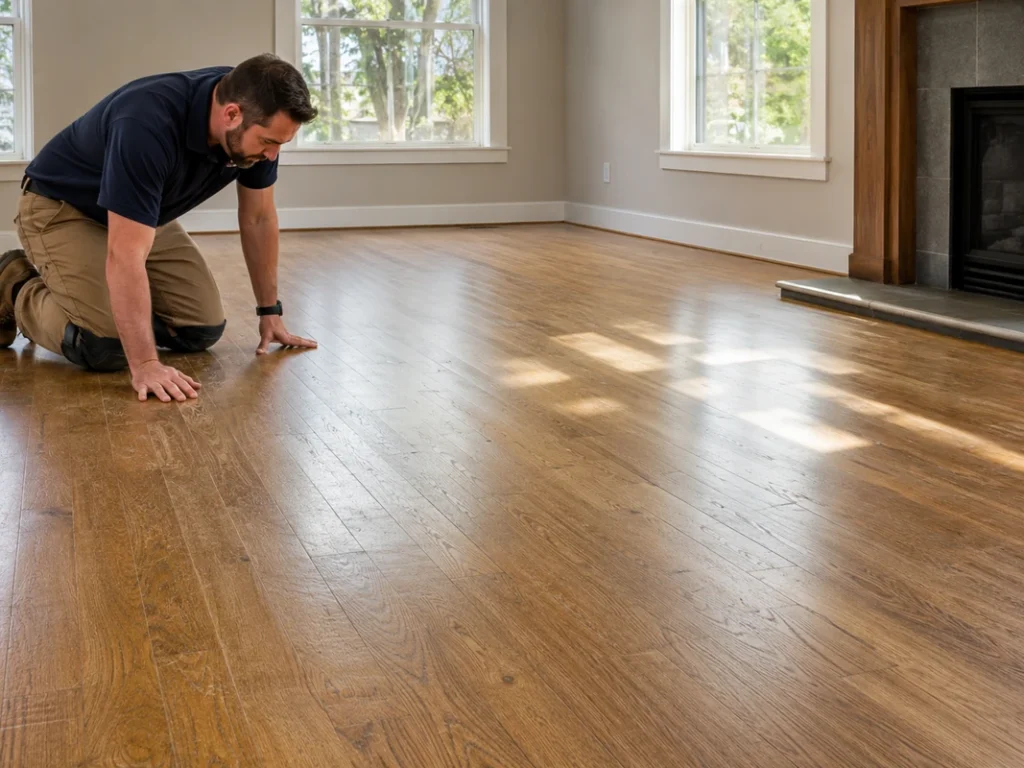
When Refinishing Engineered Wood Floors Is a Good Idea
Surface scratches, dull finish, and light wear
Refinishing or recoating makes sense when the floor is structurally sound but has lost its original appearance. Light scratches, traffic lanes and dullness are surface problems, so replacement may be unnecessary.
For minor wear, screening and recoating is often preferable because it refreshes the protective layer while conserving the hardwood veneer.
Fading or uneven color
Sunlight, rugs, furniture placement and normal ageing can make sections of wood flooring change colour at different rates. Refinishing can create a more consistent appearance when the unevenness is within the wood surface and enough wear layer remains.
A major colour change usually requires more complete sanding, so the wear layer should be checked first.
Old finish that no longer protects the wood
A worn coating can leave timber more vulnerable to stains, moisture and abrasion. Restoring the finish before damage reaches deeper into the wood is usually easier than waiting until aggressive sanding is required.
This is why preventive maintenance matters with engineered hardwood flooring: protecting the finish also protects the limited hardwood layer beneath it
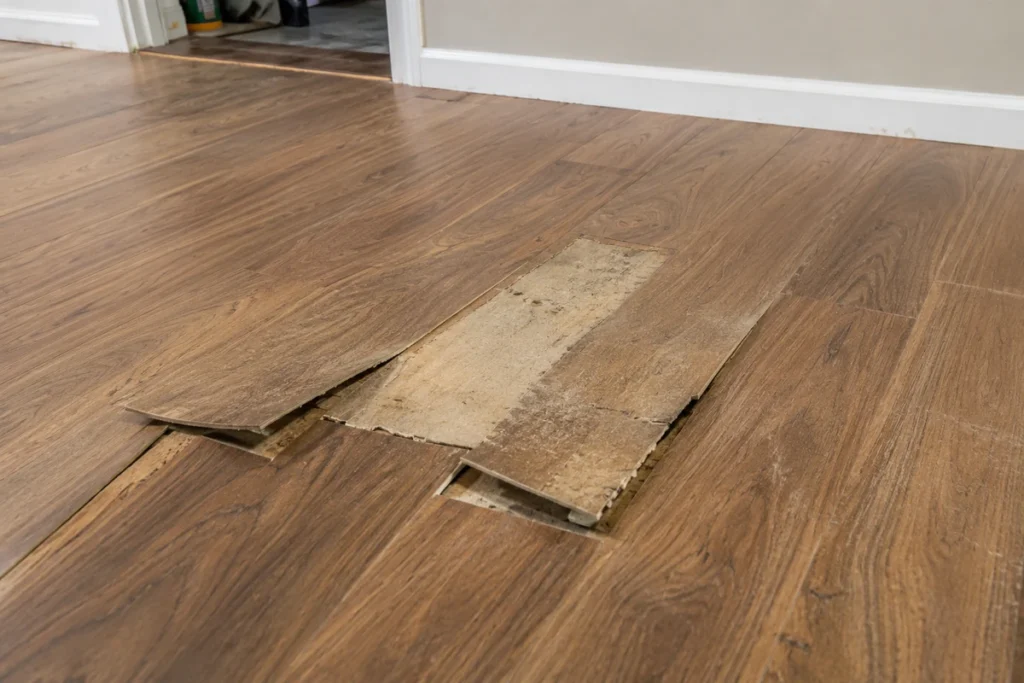
When You Should Not Refinish Engineered Wood Flooring
Do not treat sanding as the solution to every damaged engineered floor. Refinishing may be unsuitable when the wear layer is too thin, the core is already visible or previous sanding has left too little hardwood for another safe pass.
Severe water damage, widespread delamination, major cupping, broken joints or boards separating from the core are also different problems. Sanding may improve appearance without fixing the underlying failure.
Be cautious with hand-scraped, distressed or heavily textured products. Sanding can remove the factory-created texture and permanently change the look.
If only a few boards are damaged, local replacement may make more sense than sanding the whole room. When wear-layer thickness is uncertain, assess safer options before choosing full sanding
conclusion
Refinishing engineered wood floors can extend their usable life, restore appearance and avoid unnecessary replacement. The important question is not simply whether engineered wood can be sanded, but whether your floor has enough real hardwood remaining to be sanded safely.
For dullness and light surface wear, screening and recoating may be enough. For deeper scratches, significant colour changes or a badly worn finish, full refinishing may be appropriate when the wear layer allows it. If the veneer is thin or the floor has structural or moisture-related damage, repair or replacement is usually safer
FAQs
Is refinishing engineered wood floors worth it?
Yes, when the boards are structurally sound and have enough remaining wear layer. Refinishing can restore appearance and protection without replacing the entire floor. For light wear, a screen-and-recoat may provide better value.
What happens if you sand engineered wood too much?
Excessive sanding can cut through the hardwood veneer and expose the plywood, fibreboard or other core below. Once that happens, stain and finish cannot restore the lost veneer, so affected boards may need replacement
Can all engineered hardwood floors be refinished?
No. Refinishability depends on the thickness and remaining condition of the real-wood wear layer, previous sanding, floor construction and manufacturer guidance. Thin veneers may not be suitable for full refinishing.
Is it better to refinish or replace engineered wood flooring?
Refinishing is usually more logical when damage is cosmetic and the wear layer is adequate. Replacement is more appropriate when the veneer is too thin, the core is damaged, boards are delaminating or moisture problems affect a significant area.
Can you refinish engineered wood floors without sanding?
Yes, in some cases. A screen-and-recoat lightly abrades the existing finish so a new protective coat can bond without sanding back to bare wood. It works best for dullness, minor scratches and light wear, but it will not remove deep damage or completely change the floor colour.