
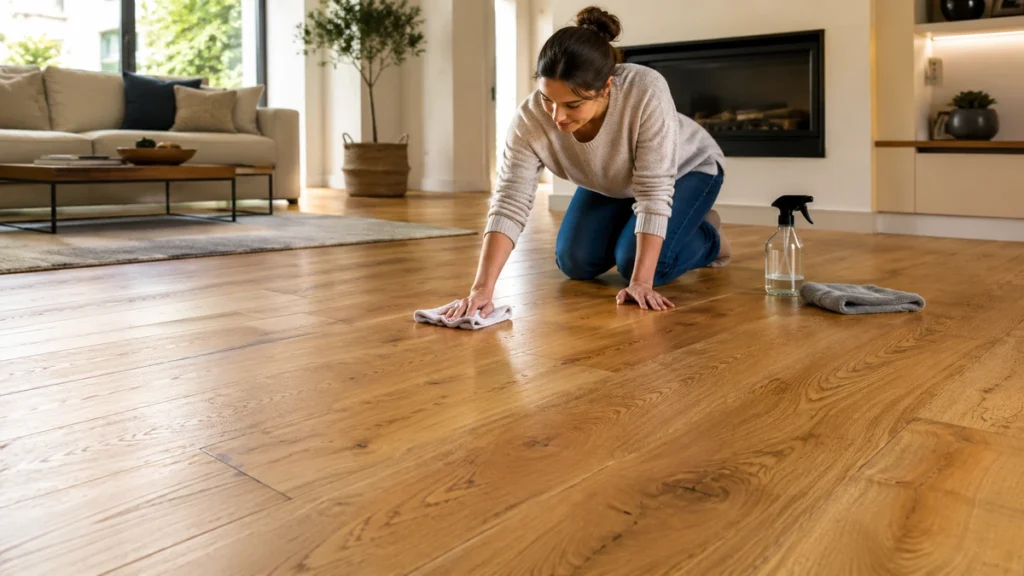
Maintenance of Wood Flooring: Cleaning and Care Guide
Wood flooring brings warmth, character, and long-term value to a home or commercial space, but it only stays beautiful when it is cared for properly. The maintenance of wood flooring is not complicated, but it does require the right habits, the right cleaning method, and the right products. A wood floor can last for decades, but poor cleaning routines, excess water, harsh chemicals, sand, furniture scratches, and neglected spills can damage the surface much faster than most people expect.
Good wood floor care is about prevention first and cleaning second. You do not need to wash the floor aggressively every day. In fact, over-cleaning or using too much water can do more harm than good. The goal is to remove dust, dirt, and stains safely while protecting the finish, the wood grain, and the natural beauty of the material.
Whether you have solid hardwood, engineered wood, oak parquet flooring, or another type of natural wood surface, this guide explains how to care for a wood floor properly, how to clean it without damaging the finish, and what mistakes to avoid
Why Maintenance of Wood Flooring Matters
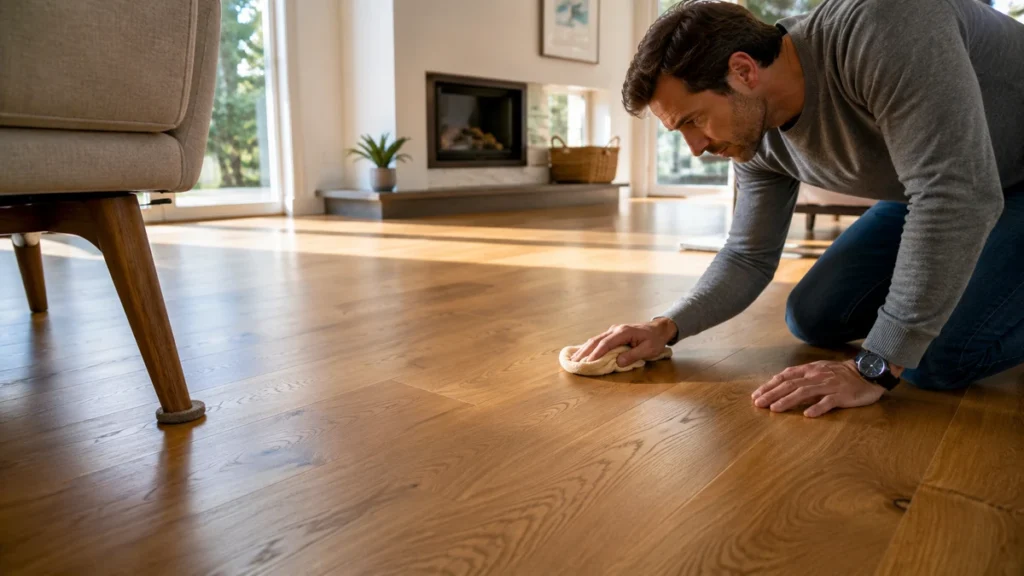
Wood is a natural material. Even when it is sealed, finished, or engineered for better stability, it can still react to moisture, dirt, sunlight, furniture movement, and daily traffic. Regular maintenance helps preserve the appearance of the floor, prevents premature wear, and reduces the need for expensive sanding, refinishing, or replacement.
Proper hardwood floor maintenance also protects the surface coating. Most wood floors are not damaged directly at first; the finish wears down before the wood itself becomes exposed. Once the protective layer is scratched, dull, or weakened, moisture and dirt can reach deeper into the flooring and cause stains, swelling, or discoloration.
Well-maintained wood flooring also looks cleaner and more premium. Dusty, scratched, or cloudy floors make even a beautiful interior look neglected. With simple care, the floor can remain smooth, elegant, and suitable for both modern homes and high-end commercial spaces
What Can Damage Wood Flooring Over Time?
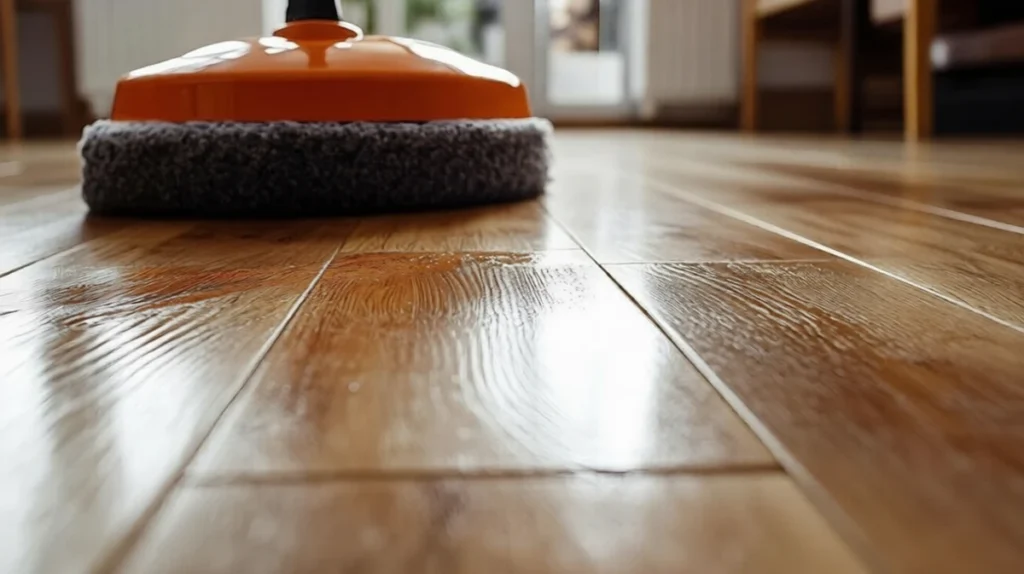
Several everyday problems can damage wood flooring if they are ignored. Dirt, sand, and small stones act like abrasive particles under shoes, slowly scratching the finish. Water and liquid spills can seep into joints or edges, especially if left for too long. Heavy furniture can leave dents or drag marks. Pet nails, high heels, and sharp objects may also damage the surface.
Humidity is another important factor. Too much moisture can cause wood to swell, while very dry air can lead to shrinking or small gaps between boards. Direct sunlight may also fade or change the tone of natural wood over time. This is why maintenance is not only about cleaning the floor; it is also about controlling the conditions around it
Daily Wood Floor Care: Simple Habits That Prevent Damage
Daily wood floor care does not need to be difficult. Small habits can prevent most common problems before they start.
- Use doormats at entrances to keep dirt, sand, and grit outside. This is one of the simplest and most effective ways to protect wood flooring. Outdoor particles are rough, and when they are carried inside, they can scratch the floor as people walk.
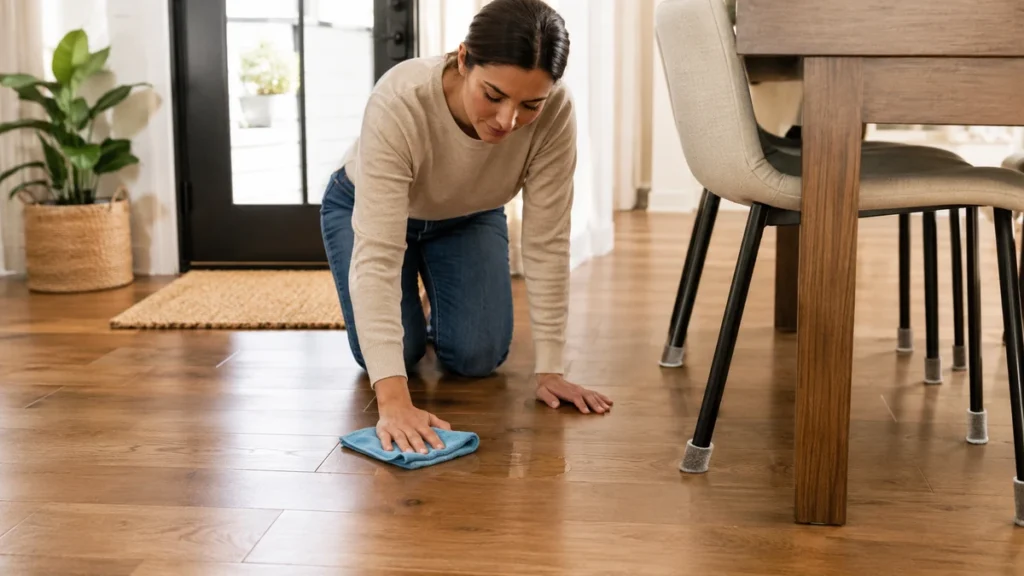
- Add furniture pads under chairs, tables, sofas, and cabinets. Furniture legs can create deep scratches, especially when chairs are moved often. Felt pads are inexpensive, but they protect the finish from constant friction.
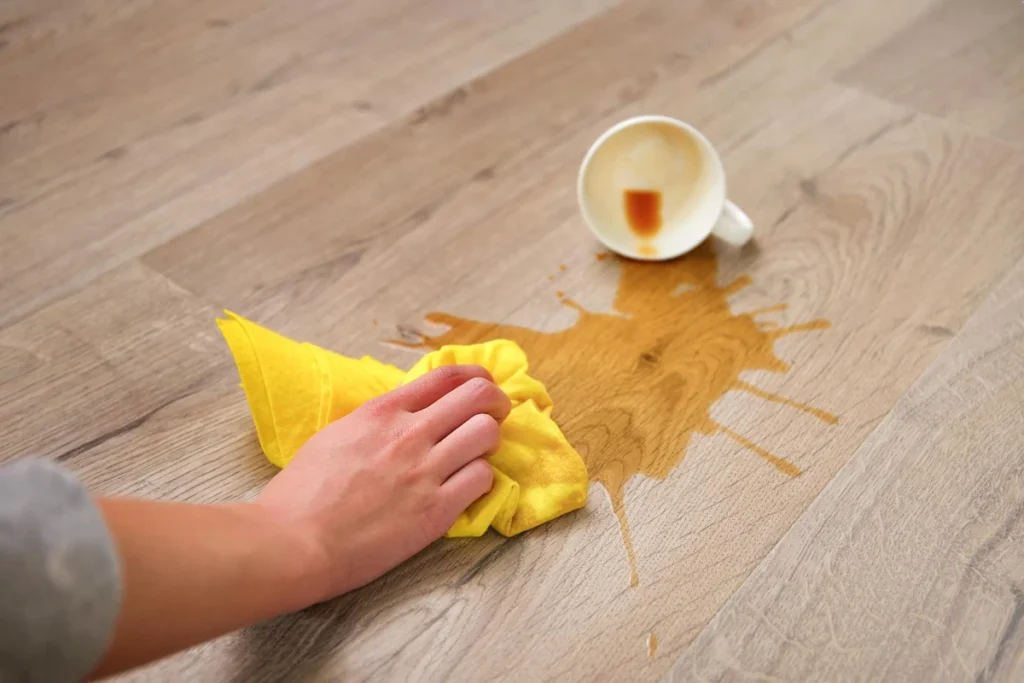
- Clean spills immediately. Even if your floor has a strong protective coating, standing water or liquid can still cause problems. Wipe spills with a soft, dry, or slightly damp cloth as soon as possible.
- Avoid walking with wet or muddy shoes. Moisture and mud are both harmful to wood surfaces. Shoes can carry water, grit, and chemicals from outside. In homes, a no-shoes policy can significantly reduce floor damage.
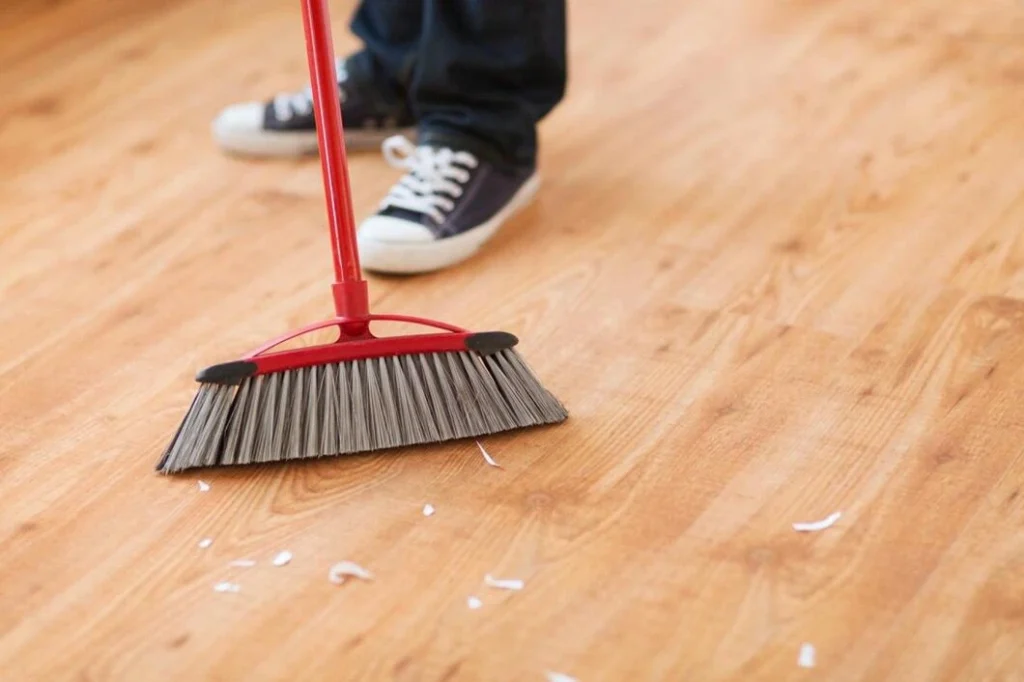
- For daily cleaning floors made of wood, use a soft broom, microfiber dust mop, or vacuum with a hard-floor setting. Avoid vacuum heads with rotating brush bars unless they are designed for wood floors, because stiff bristles may scratch the finish
The Safe Way to Clean Without Damaging the Finish
The safest way to clean wood flooring is to remove dry dust first, then use a slightly damp mop only when necessary. Dry cleaning should always come before wet cleaning. If you mop over dust or grit, you may spread dirt across the surface and create fine scratches.
Start by sweeping or vacuuming the floor. Then use a microfiber mop with a wood-floor-safe cleaner. The mop should be damp, not wet. If water is dripping from the mop, it is too wet for wood flooring. After cleaning the floor, it should dry quickly within a few minutes.
Avoid steam cleaners. Steam may look like a deep-cleaning solution, but it can force moisture and heat into the wood joints. Over time, this can cause swelling, cupping, peeling finish, or gaps.
Also avoid general household cleaners that are not made for wood. Some products leave residue, dull the finish, or make the floor slippery. A pH-neutral cleaner designed for wood floors is usually the safest choice.
For routine wood floor care, do not polish too often. Polishing can improve shine when used correctly, but too much product can create buildup. Always check whether your floor has an oil, lacquered, matte, or polyurethane finish before using any treatment
How to Wash Oak Floors Safely
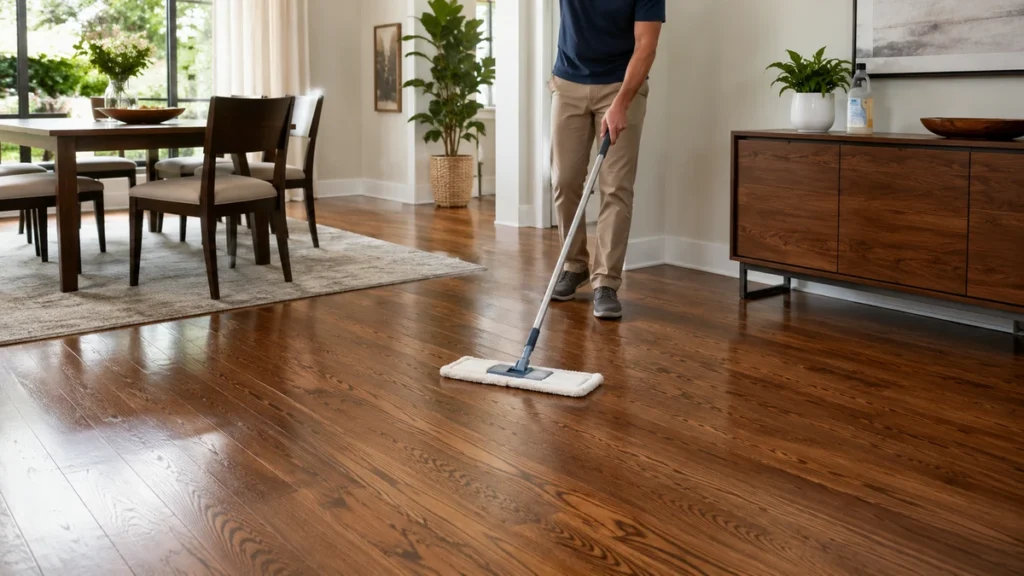
Oak is one of the most popular choices for premium wood flooring because it is strong, durable, and naturally attractive. However, many people search for how to wash oak floors because they are unsure how much water is safe. The answer is simple: oak floors can be cleaned with a damp method, but they should never be soaked.
Is Oak Flooring Water-Resistant?
Oak flooring is more durable than many softer woods, but it is not fully waterproof. The surface finish provides protection against light moisture and daily cleaning, but water can still enter through joints, edges, scratches, or worn areas. This is especially important for oak parquet flooring because the pattern contains more joints than standard plank flooring.
Engineered oak floors usually offer better dimensional stability than solid oak because of their layered structure, but they still need careful cleaning. Water resistance depends more on the finish and installation quality than on the wood species alone
Step-by-Step Guide to Washing Oak Floors
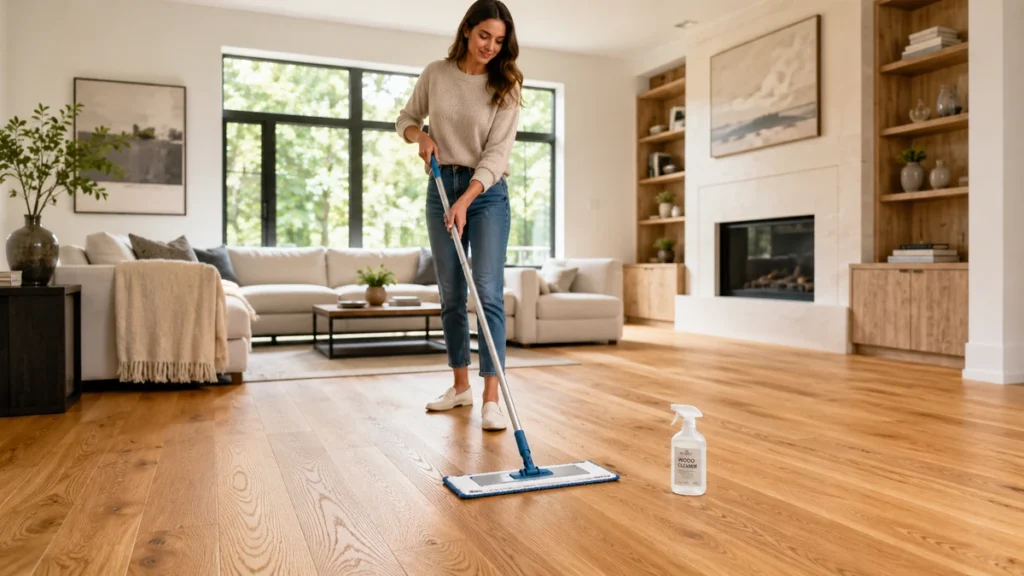
- First, remove dust and loose dirt with a microfiber mop or vacuum. Never begin wet cleaning before removing dry debris.
- Second, prepare a wood-floor-safe cleaning solution. Use a cleaner recommended for oak or hardwood surfaces. Do not mix random chemicals, bleach, vinegar, or abrasive detergents.
- Third, dampen a microfiber mop and wring it out very well. The mop should feel only slightly damp. Clean along the grain or pattern of the floor rather than scrubbing aggressively.
- Fourth, work in small sections. This prevents moisture from staying on the surface for too long. If any area looks wet after mopping, dry it immediately with a clean cloth.
- Fifth, allow the floor to air dry naturally, but make sure no puddles or damp patches remain. Good ventilation can help the floor dry faster.
This method is the safest answer for how to wash oak floors without damaging the surface or reducing the life of the finish
How to Remove Stains, Marks and Scuffs from Wood Floors
Different marks need different cleaning methods. Do not attack every stain with the strongest cleaner you can find. That is how good floors get ruined.
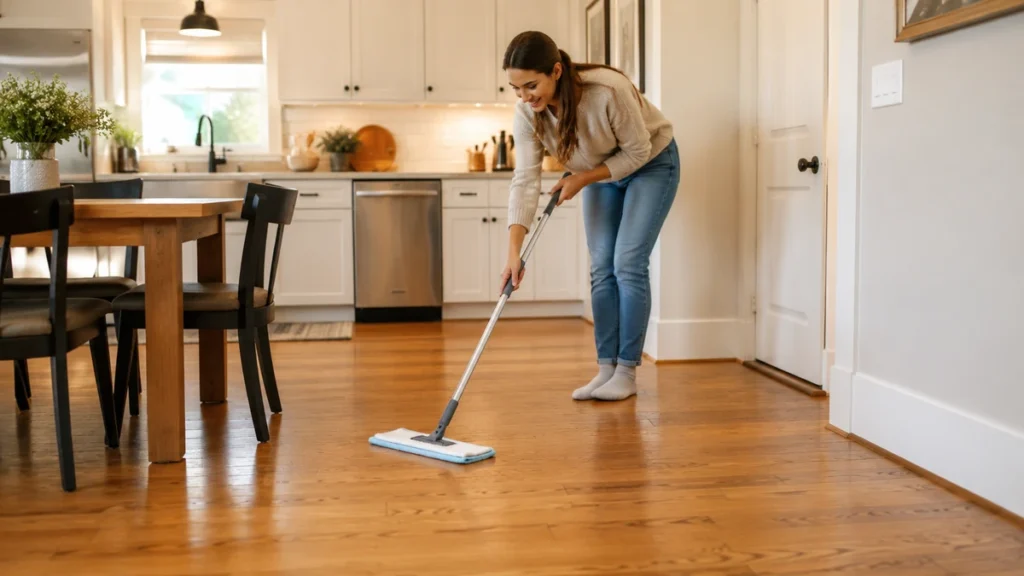
For light scuffs from shoes or rubber soles, use a soft microfiber cloth and gently rub the mark. A slightly damp cloth may help. For stubborn scuffs, use a cleaner made for wood flooring and avoid abrasive pads.
For food or drink spills, wipe immediately with a dry cloth, then clean the area with a damp cloth and wood-safe cleaner. Dry the area afterward and For oil or grease marks, use a cleaner suitable for finished wood. Avoid strong degreasers unless the product specifically says it is safe for wood floors.
For pet stains or dark water stains, the problem may have reached below the finish. In that case, surface cleaning may not be enough. If the stain remains after gentle cleaning, professional repair or refinishing may be needed
For sticky residue, do not scrape the floor with a knife or metal tool. Use a plastic scraper carefully, then clean with a wood-safe product. Harsh scraping can permanently damage the finish
The rule is simple: start gentle. If that fails, move carefully to a stronger wood-approved solution. Do not guess
Common Wood Floor Cleaning Mistakes to Avoid
The biggest mistake is using too much water. Wood and water are not friends. A damp mop is acceptable; a wet mop is a problem.
Another mistake is using vinegar too often. Vinegar is commonly recommended online, but it is acidic and may dull or weaken some finishes over time. It is not the best long-term solution for cleaning wood floors.
Steam cleaning is another serious mistake. Steam may damage the finish and push moisture into the boards.
Using abrasive tools is also risky. Steel wool, rough scrub pads, and hard brushes can scratch the surface. Even if the floor looks cleaner at first, the finish may become dull and damaged.
Some people use furniture polish, wax, or oil without knowing the floor’s finish type. This can create a sticky layer, uneven shine, or future refinishing problems. Always match the product to the floor finish.
Ignoring manufacturer instructions is another weak habit. Different types of wood flooring may need different maintenance methods. Solid hardwood, engineered wood, lacquered flooring, oiled flooring, and natural wood surfaces are not always cleaned the same way
Wood Floor Maintenance Schedule
| Frequency | Maintenance Task | Why It Matters |
|---|---|---|
| Daily | Sweep, dust mop, or vacuum high-traffic areas | Removes dirt and grit before they scratch the floor |
| Immediately | Wipe spills, mud, or wet footprints | Prevents stains, swelling, and moisture damage |
| Weekly | Clean with a microfiber mop and wood-safe cleaner | Keeps the surface fresh without over-washing |
| Monthly | Check furniture pads and entrance mats | Reduces scratches and dirt entering the room |
| Every 3–6 months | Inspect for dull areas, scuffs, gaps, or finish wear | Helps catch small issues before they become expensive |
| Yearly | Deep clean using approved wood floor products | Restores cleanliness without damaging the finish |
| As needed | Recoat, polish, or refinish depending on floor condition | Extends the life of the floor and improves appearance |
Conclusion
Maintenance of wood flooring is not about aggressive cleaning. It is about consistent care, smart prevention, and using the right cleaning method for the floor type. Dirt, water, harsh chemicals, and furniture movement are the main enemies of wood floors, but they are easy to control with simple habits.
For daily wood floor care, remove dust and grit, use doormats, protect furniture legs, and clean spills quickly. For deeper cleaning, use a damp microfiber mop and a cleaner designed for wood flooring. Oak floors, hardwood floors, engineered wood, and parquet patterns can all stay beautiful for many years when they are cleaned correctly.
The floor does not need complicated treatment every day. It needs discipline. Keep it dry, keep it clean, avoid shortcuts, and your wood flooring will keep its natural warmth, shine, and value for a long time
FAQs
What is the best way to clean wood floors?
The best way to clean wood floors is to remove dust first with a soft broom, microfiber mop, or vacuum, then clean with a slightly damp microfiber mop and a wood-floor-safe cleaner. Avoid soaking the floor
Can I mop hardwood floors with water?
Yes, but only with a lightly damp mop. Never use a wet mop or leave standing water on hardwood floors. Too much water can damage the finish and cause swelling
How often should wood floors be cleaned?
High-traffic areas should be dusted daily or several times a week. A damp clean with a wood-safe cleaner is usually enough once a week or when the floor looks dirty
Can I use vinegar for cleaning wood floors?
Vinegar is not the best choice for regular hardwood floor maintenance. Because it is acidic, it may dull or weaken some finishes over time. A pH-neutral wood floor cleaner is safer
What is the best cleaner for oak floors?
The best cleaner for oak floors is a pH-neutral cleaner made specifically for wood or hardwood floors. Avoid bleach, steam, abrasive cleaners, and strong chemicals
How do I keep wood floors shiny?
Keep wood floors shiny by removing dust regularly, using the correct cleaner, avoiding residue buildup, and protecting the finish from scratches. If the shine has faded badly, the floor may need polishing, recoating, or professional refinishing