
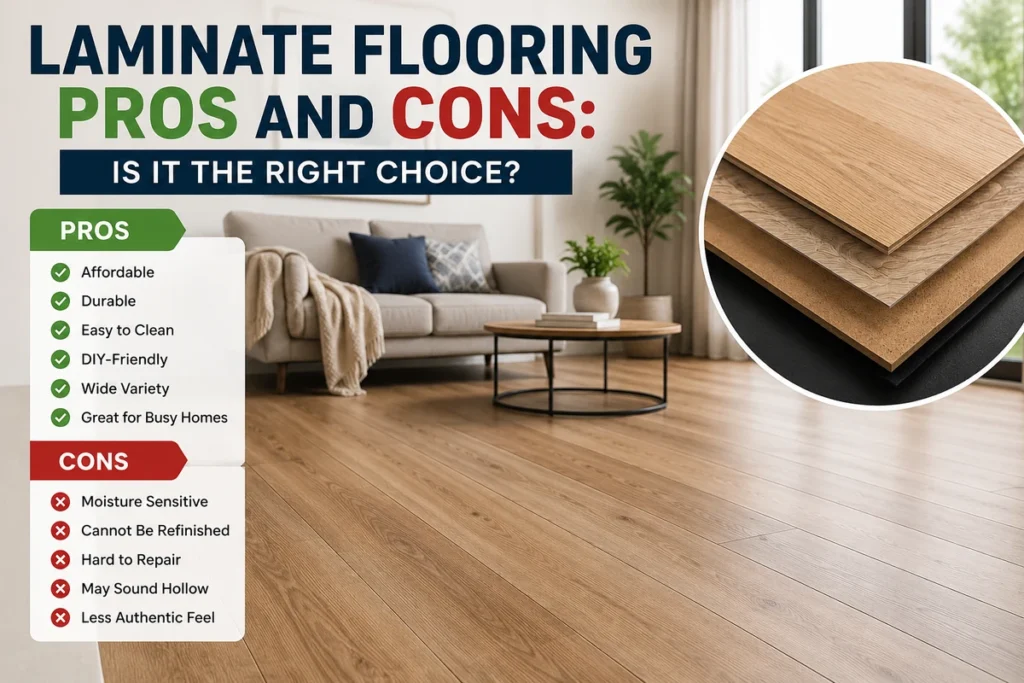
Laminate Flooring Pros and Cons: Is It the Right Choice?
Laminate flooring is an economical, hassle-free option for homeowners who want the appearance of timber without the higher cost or maintenance of natural wood. Its main weaknesses are moisture sensitivity and limited repair options: once a plank is badly swollen, chipped, or deeply scratched, it usually needs replacement rather than refinishing. Even so, a good product can be durable, attractive, and practical in suitable rooms. Before comparing the laminate flooring pros and cons, read our guide to laminate flooring to understand its layered construction, wear surface, decorative layer, and core
Laminate Flooring Pros and Cons at a Glance
| Pros | Cons |
|---|---|
| Lower upfront cost than many natural floors | Standard products can be damaged by standing water |
| Good resistance to scratches, stains, and fading | Damaged boards cannot usually be refinished |
| Easy to clean and maintain | Serious damage often requires plank replacement |
| Click-lock systems allow faster installation | Lower-quality products may sound hollow |
| Wide choice of wood, stone, and tile effects | Does not feel exactly like natural timber |
| Practical for children, pets, and busy homes | Usually has a shorter lifespan than premium hardwood |
Advantages of Laminate Flooring
Lower Upfront Cost
Cost is one of laminate’s strongest advantages. It can imitate oak, walnut, wide-plank timber, and other premium finishes for less than solid hardwood or many engineered floors.
Installation may also cost less. Most products use a floating click-lock system, which can reduce labour and does not usually require nails or adhesive. This makes laminate useful for budget-conscious renovations, rental properties, and rooms that need a visual upgrade without a major investment.
The cheapest option is not always the best value. Low-grade boards may have weak joints, a thin wear layer, poor edge sealing, or obvious pattern repetition. Paying slightly more can provide better durability, moisture protection, and realism
Good Resistance to Everyday Wear
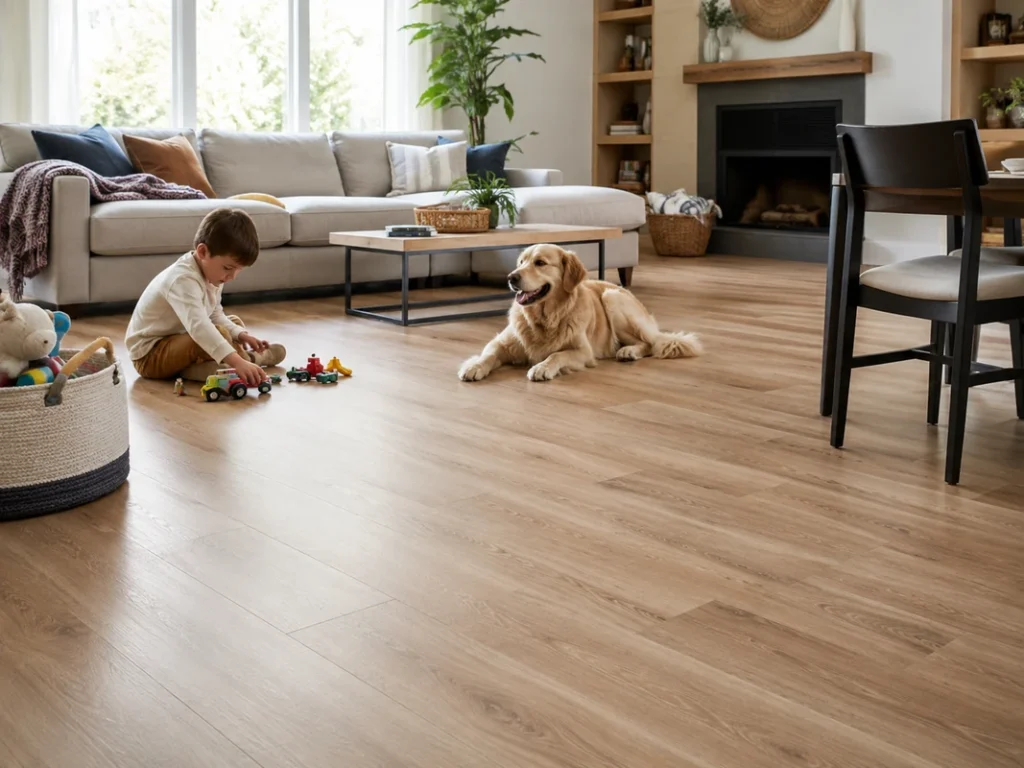
Laminate has a protective wear layer that helps it resist ordinary scratches, stains, fading, and foot traffic. It works well in living rooms, bedrooms, hallways, and home offices where a softer surface might mark more easily.
Durability still varies between products. Buyers should check the usage or abrasion rating and choose a specification suitable for the room. Heavy furniture, sharp impacts, grit, and dragging objects can still damage the surface, so entrance mats and furniture pads remain important
Easy Cleaning and Low Maintenance
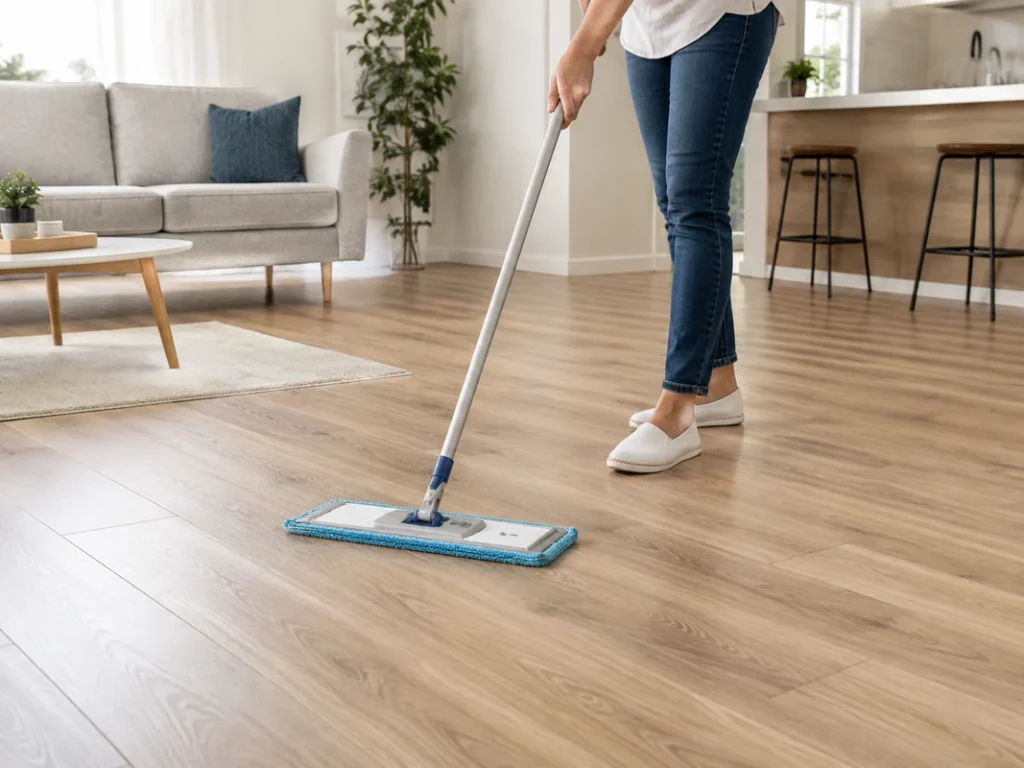
Routine care is simple. Laminate normally needs sweeping, vacuuming with a suitable floor head, and occasional cleaning with a lightly damp microfibre mop.
It does not require waxing, oiling, polishing, or sanding. This makes laminate wood flooring appealing to people who want a timber-style finish without demanding upkeep.
Excess water is the main cleaning risk. Wet mops can push moisture into the joints, particularly on products with limited edge protection. Spills should be removed quickly, and steam cleaning should only be used when the manufacturer permits it
DIY-Friendly Installation
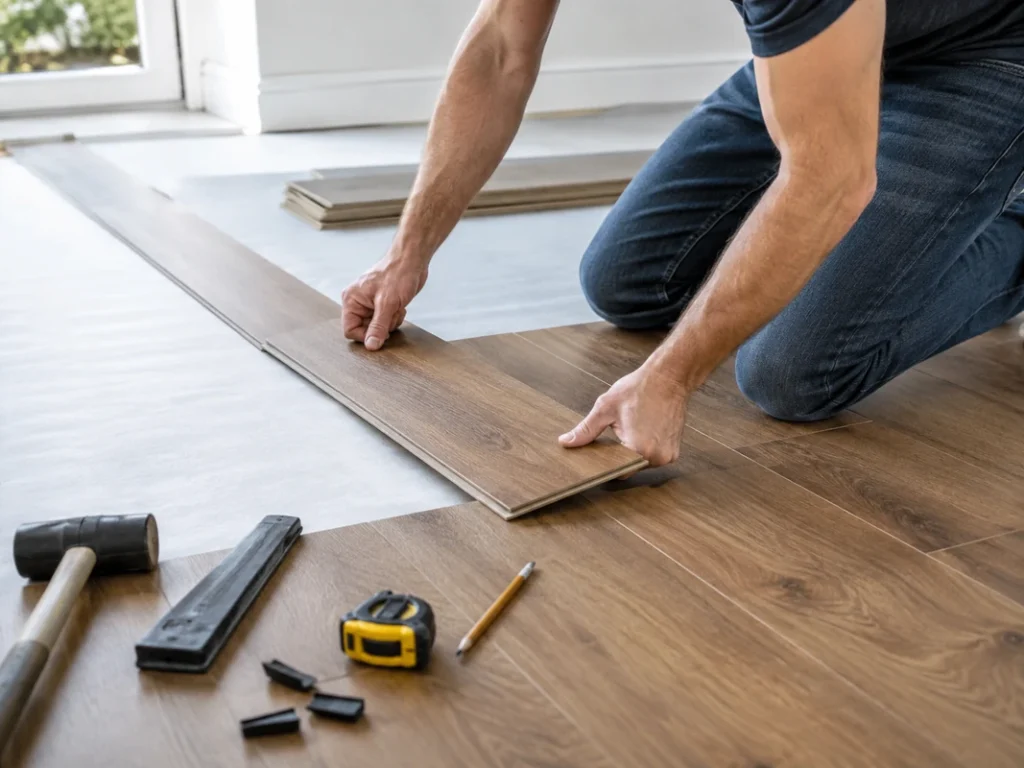
Many laminate boards connect through a click-lock system and float over an underlay. An experienced DIY homeowner may therefore install them more easily than traditional hardwood.
However, the subfloor must be dry, clean, stable, and level. Correct expansion gaps are essential, and some products need acclimatisation before fitting. Poor preparation can cause movement, open joints, noise, or raised edges.
Professional installation is safer for large spaces, complicated layouts, stairs, or properties with possible moisture problems
Wide Range of Designs
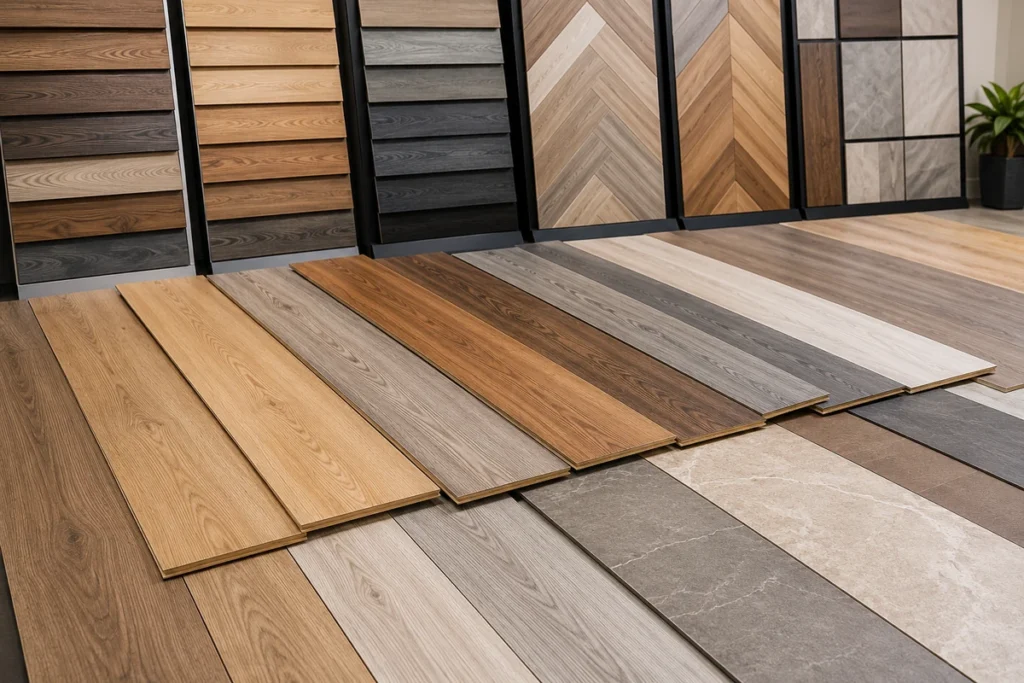
Laminate is available in light and dark woods, grey tones, stone effects, different plank widths, and textured finishes. Modern printing and embossing can create a convincing natural appearance.
This variety makes it easier to coordinate the floor with modern apartments, family villas, offices, and traditional interiors. Premium ranges usually look more realistic because they use deeper textures, bevelled edges, varied grain patterns, and fewer repeated images
Practical for Busy Households
Laminate suits many homes with children, pets, guests, and frequent daily activity. Its sealed surface is easy to clean, while a matte or textured finish can hide minor marks and provide better grip than a glossy surface.
It performs best in busy but generally dry areas. Living rooms, corridors, bedrooms, and playrooms are usually safer choices than bathrooms or wet utility spaces
Disadvantages of Laminate Flooring
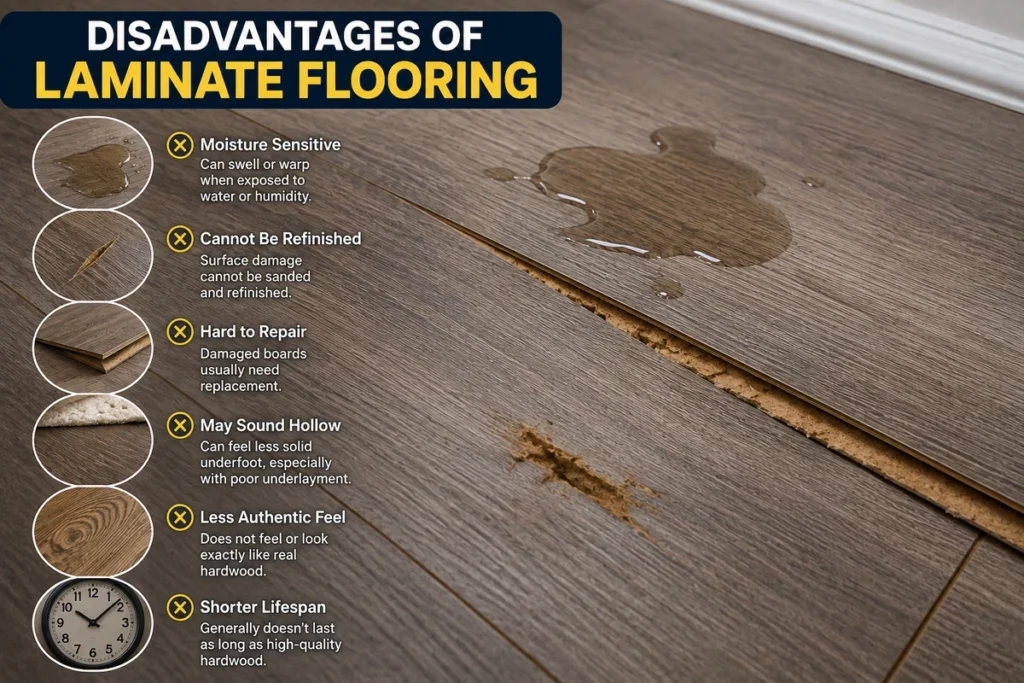
Moisture is the most important limitation. Water-resistant and waterproof products have improved, but the protection level varies. Some resist surface spills for a limited period, while others use tighter joints and a more moisture-resistant core. Neither claim means standing water can be ignored.
Humidity and subfloor moisture also matter. In the UAE, inadequate climate control, missing moisture tests, or insufficient expansion gaps can contribute to swelling and joint movement. Homeowners researching wood flooring Dubai options should ask about moisture testing, underlay, acclimatisation, and warranty conditions before choosing a product.
Repair restrictions are another drawback. Unlike natural wood, laminate cannot normally be sanded and refinished. Small marks may be hidden with a repair kit, but swollen, chipped, or deeply scratched boards usually need replacement. Matching the same design later may be difficult, so keeping spare planks is sensible.
Laminate can also feel or sound hollow when installed over an uneven subfloor or poor underlay. Better acoustic underlay improves comfort, but it will not make the floor identical to real timber.
Appearance varies as well. High-quality laminate can look realistic, but it remains a printed decorative surface. Homeowners who value unique grain, long-term refinishing, and a premium natural feel may prefer wood flooring.
Finally, the quality gap between products is large. A strong laminate floor can last for years, while a poor one may chip, fade, separate at the joints, or repeat the same printed pattern too frequently
Is Laminate Flooring Right for Your Home?
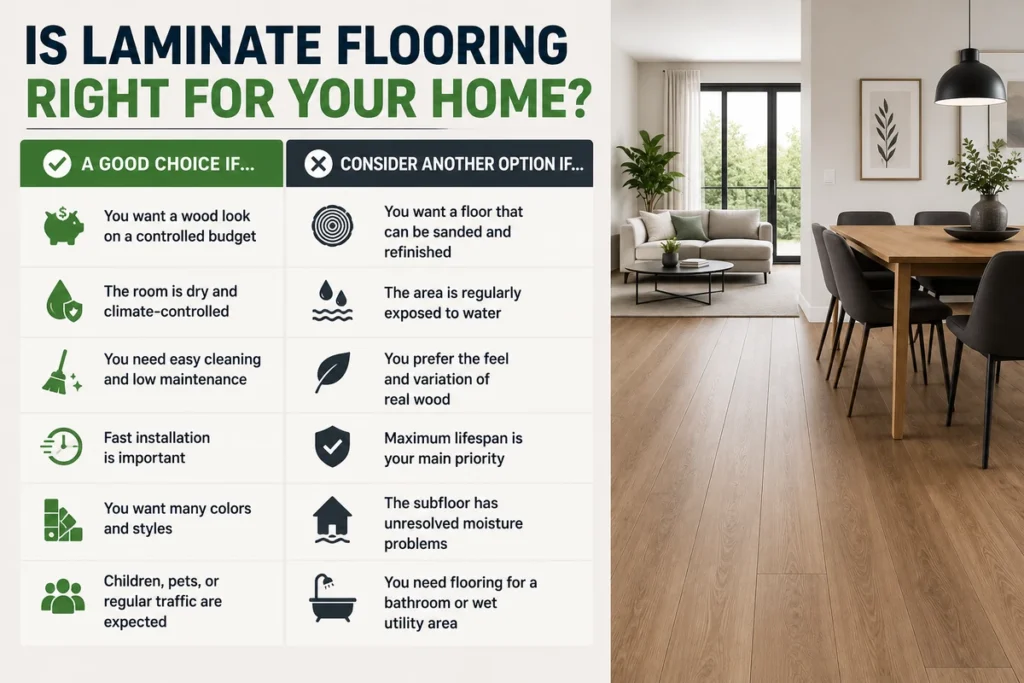
| Laminate is a good fit when… | Consider another flooring option when… |
|---|---|
| You want a wood-style appearance on a controlled budget | You want a floor that can be sanded and refinished |
| The room is dry and climate-controlled | The area is regularly exposed to water |
| You need easy cleaning and low maintenance | You prefer the feel and variation of real timber |
| Children, pets, or regular traffic are expected | Maximum lifespan is your main priority |
| Fast installation is important | The subfloor has unresolved moisture problems |
| You want many colours and styles | You need flooring for a bathroom or wet utility area |
The decision should be made room by room. Laminate may be an excellent choice in bedrooms and living areas but a poor choice in a bathroom. Combining different flooring materials is often more sensible than forcing one product into every space.
Is Laminate Flooring Worth It?
Laminate is worth considering when affordability, visual variety, low maintenance, and everyday durability matter most. A suitable mid-range or premium product can provide strong value in a dry, properly prepared room.
It is less worthwhile when you need exceptional moisture resistance, repeated refinishing, or the authentic feel and long lifespan of premium hardwood. Choosing the cheapest floor without considering room conditions can become a false economy.
So, is laminate flooring good? Yes, when the product quality, installation method, subfloor, and room conditions are appropriate. A good laminate installed correctly is practical. A weak product installed over a damp or uneven base is not
conclusion
The main laminate flooring pros and cons are straightforward. It is affordable, durable against normal wear, easy to clean, quick to install, and available in many realistic designs. Its weaknesses are moisture sensitivity, restricted repairs, variable quality, and a shorter potential lifespan than premium natural wood.
Choose it for dry, busy rooms where practicality and budget matter. Before buying, check the core quality, wear rating, moisture claim, underlay requirements, warranty, and installation conditions. The right laminate in the right room can deliver excellent value; the wrong one in a damp or badly prepared space may fail early
FAQs
Is Laminate Flooring Waterproof?
Some products are marketed as waterproof, while others are only water-resistant. Protection depends on the core, locking system, edge sealing, and warranty conditions. Even waterproof-labelled laminate should not be left under standing water. Check the manufacturer’s technical specification before using it in a moisture-prone room.
Can Laminate Flooring Be Repaired or Refinished?
Laminate cannot normally be sanded or refinished because its visible design is a printed layer. Minor scratches may be disguised, but swollen, cracked, or deeply damaged boards usually require replacement.
Is Laminate Flooring Good for Pets and Children?
Yes. Good-quality laminate is often suitable for pets and children because it resists common stains, scratches, and wear. Choose a textured, slip-resistant finish, use furniture pads, clean spills quickly, and select an appropriate wear rating.
What Is the Biggest Disadvantage of Laminate Flooring?
Its biggest disadvantage is that serious moisture or surface damage cannot usually be corrected by refinishing. Once the core swells or the decorative layer is badly damaged, the affected plank normally needs replacement.