
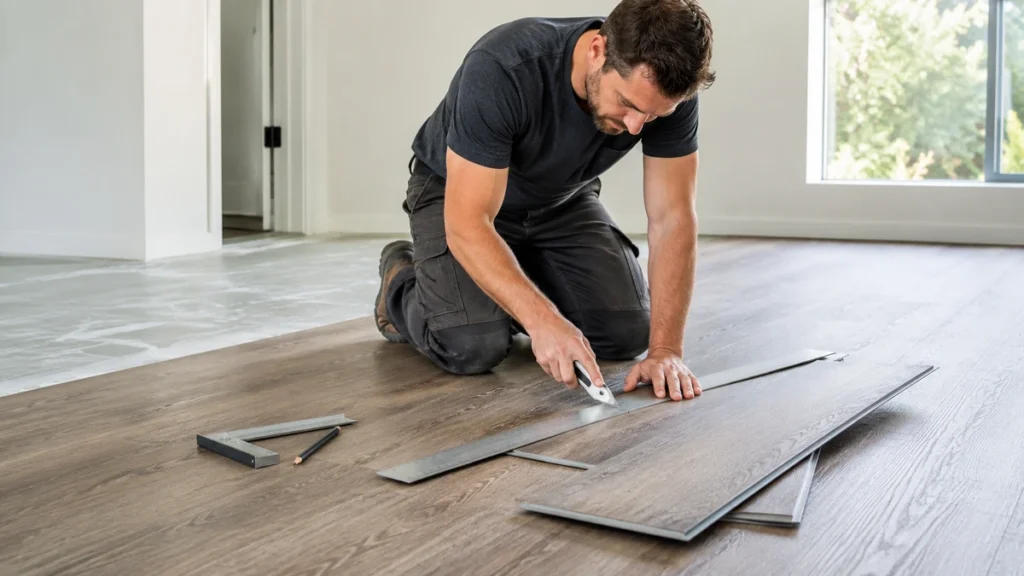
How to Cut LVT Flooring: Tools and Step-by-Step Methods
Learning how to cut LVT flooring starts with matching the method to the product. Many flexible or thinner planks can be cut using score and snap, while rigid-core boards, long rip cuts, curves, and internal notches often require a plank cutter, jigsaw, circular saw, or multi-tool. Check the manufacturer’s instructions first, mark the waste side clearly, and test your chosen tool on an offcut before cutting a full plank
Choose the Right Method and Tool for Your LVT
Not every luxury vinyl tile product cuts the same way. Flexible glue-down tiles, click planks, and rigid-core boards differ in thickness and construction, so one tool will not suit every job
| LVT type or cut | Suitable tool | Best use | Main caution |
|---|---|---|---|
| Flexible or thin LVT | Utility knife and steel straightedge | Straight cross cuts | Use controlled passes rather than force |
| Click LVT designed for score and snap | Utility knife or plank cutter | End cuts and repeated straight cuts | Protect the locking edge |
| Rigid-core LVT | Plank cutter, jigsaw, or circular saw | Cross cuts and rip cuts | Some cores will not snap cleanly |
| Long rip cut | Circular saw or jigsaw with guide | First and last rows | Support the full plank |
| Curves and notches | Jigsaw with a suitable blade | Pipes, corners, and vents | Test blade direction and speed |
| Door-frame adjustment | Oscillating multi-tool | Local undercuts | Check cutting depth |
| Pipe opening | Drill or hole saw, then jigsaw if needed | Circular or connected openings | Leave the required movement gap |
Choose the tool that offers the best control for the specific plank.
How to Cut LVT Flooring Step by Step
Accuracy depends on careful measuring, stable support, and controlled tool movement.
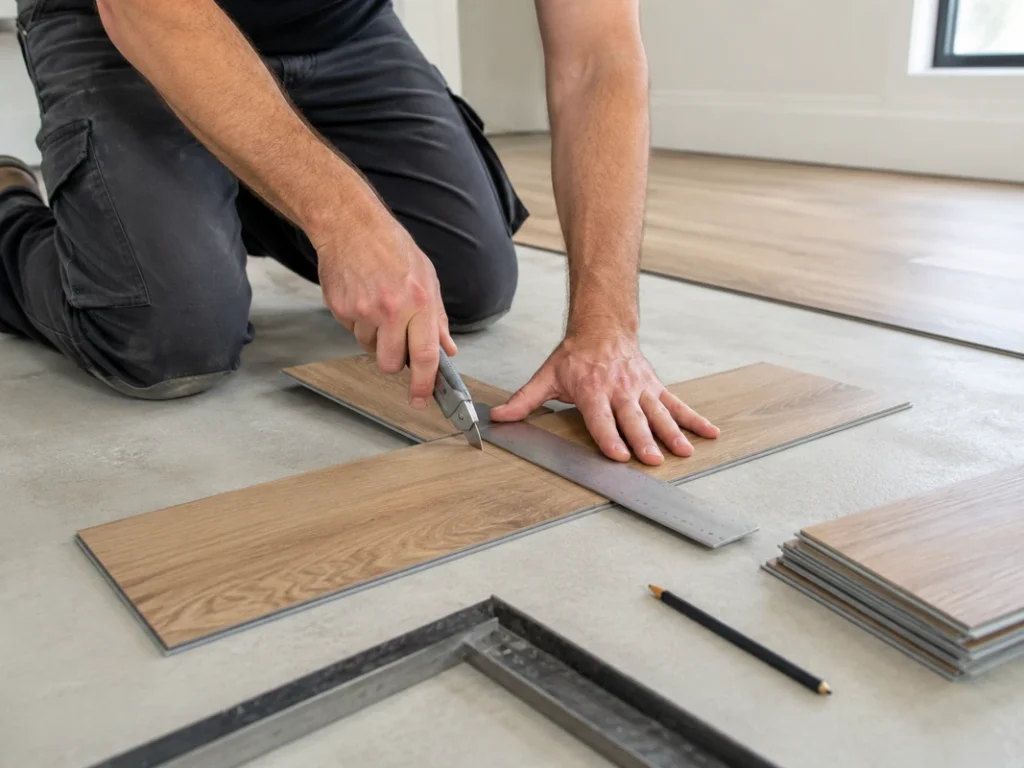
Straight Cross Cuts: Score and Snap
Straight cross cuts are usually made at the end of a row. For many thinner products, score and snap is the fastest way to cut vinyl flooring with minimal dust.
- Measure the required length while allowing for the perimeter gap stated by the manufacturer.
- Mark the installed section and the waste side.
- Use a square or steel straightedge to mark the cutting line.
- Place the plank on a stable, flat surface.
- Run a sharp utility knife along the same line with several controlled passes until the top layer is properly scored.
- Support the plank close to the line and snap the waste section away.
- Cut through any remaining backing layer.
- Dry fit the piece before locking or gluing it into place.
Do not use a fixed number of knife passes for every product. Some planks score easily, while others need additional controlled passes because of their wear layer or core. Forcing the knife through in one movement makes it harder to control and increases the risk of slipping.
A compatible plank cutter can speed up repeated cuts
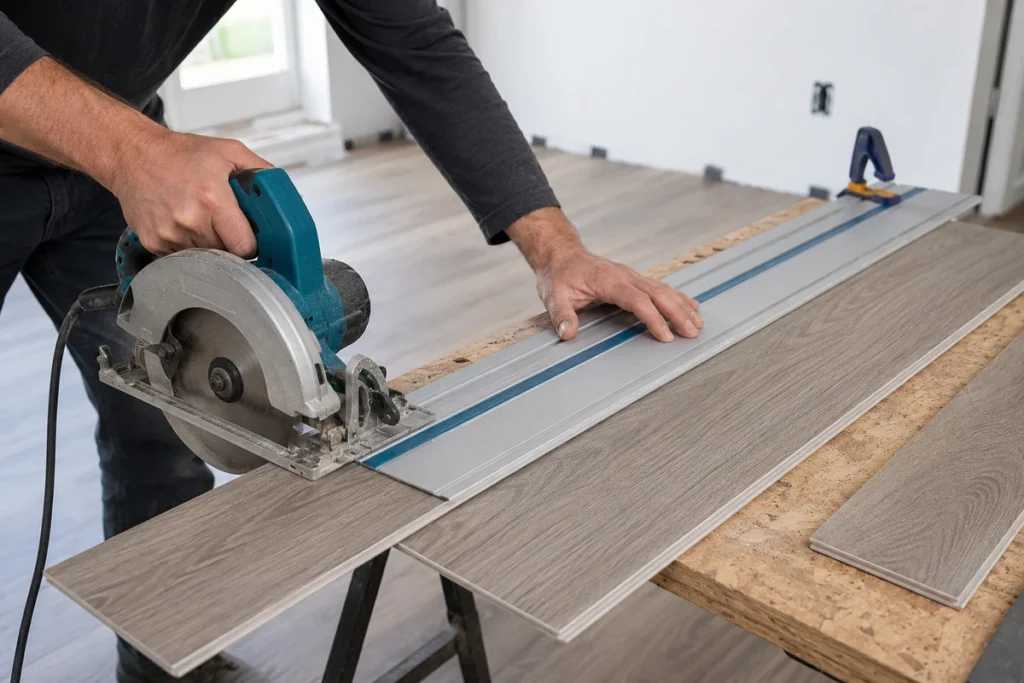
Long Rip Cuts
Long rip cuts run parallel to the plank and are commonly needed on the first or last row. They require extra care because walls are rarely perfectly straight.
Measure the required width at several points along the wall. Transfer those measurements to the plank and connect them with a straightedge. Mark the waste side, and when using a saw, keep the blade on that side of the line so the finished piece retains the correct width.
Support the plank on a stable workbench or sacrificial board. Use clamps where practical, but keep them away from the cutting path and click profile. A saw guide or straightedge helps prevent the blade from drifting.
The decorative face may need to face up or down depending on the saw and blade direction. Some tools create more breakout on the upper face, while others chip underneath. Test the setup on an offcut before cutting the required plank.
For narrow strips, use full support and keep your hands clear of the blade
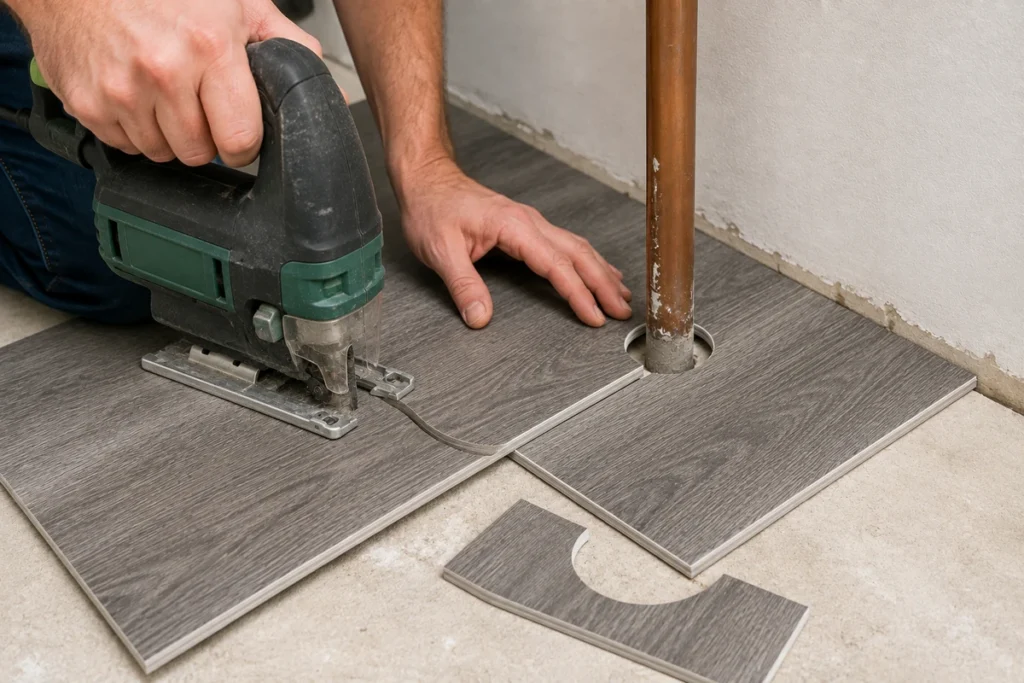
Curves, Notches and Pipe Cuts
The hardest part of learning how to cut vinyl flooring around objects is transferring the shape accurately. Guessing usually produces oversized gaps or repeated recutting.
For irregular walls, corners, door trims, or pipe locations, use a cardboard template or profile gauge. Transfer the shape to the plank and mark the waste area.
For an internal notch, drill a starter hole large enough for the jigsaw blade. Use a suitable fine-tooth blade, moderate speed, and steady pressure. For restricted cuts around a door frame, an oscillating multi-tool is often easier to control than a jigsaw.
For pipe openings:
- Measure the pipe position from two fixed edges.
- Transfer the centre point to the plank.
- Add the clearance specified by the manufacturer.
- Drill the opening with an appropriate bit or hole saw.
- If needed, create a connecting cut from the hole to the nearest plank edge.
- Dry fit the plank and cover the final gap with a pipe collar.
Never cut the hole tightly around the pipe. LVT needs room for movement, and a tight opening can contribute to lifting or distortion
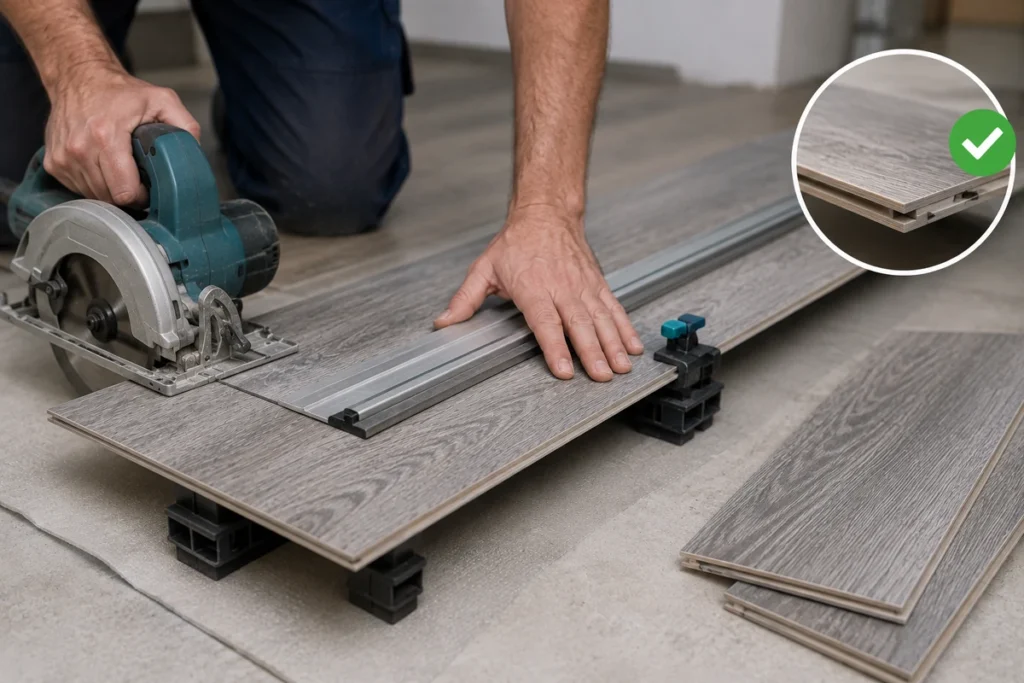
How to Cut Click LVT Without Damaging the Locking Edge
Click LVT relies on the tongue-and-groove profile remaining intact. A clean surface cut is useless if the locking edge is crushed, split, or shortened.
Identify the waste side before cutting. Keep the finished click profile fully supported, position clamps away from it, and never rest the plank directly on the tongue.
When using a saw, let the blade reach full speed before entering the material. Avoid twisting the tool because sideways pressure can damage both the edge and the joint.
After cutting, remove loose debris and inspect the profile for burrs or deformation. Dry fit the plank without forcing it. If it does not engage smoothly, inspect the cut rather than striking the joint harder.
For LVT flooring Dubai projects, follow the manufacturer’s acclimation and expansion-gap requirements because temperature changes can affect the floor
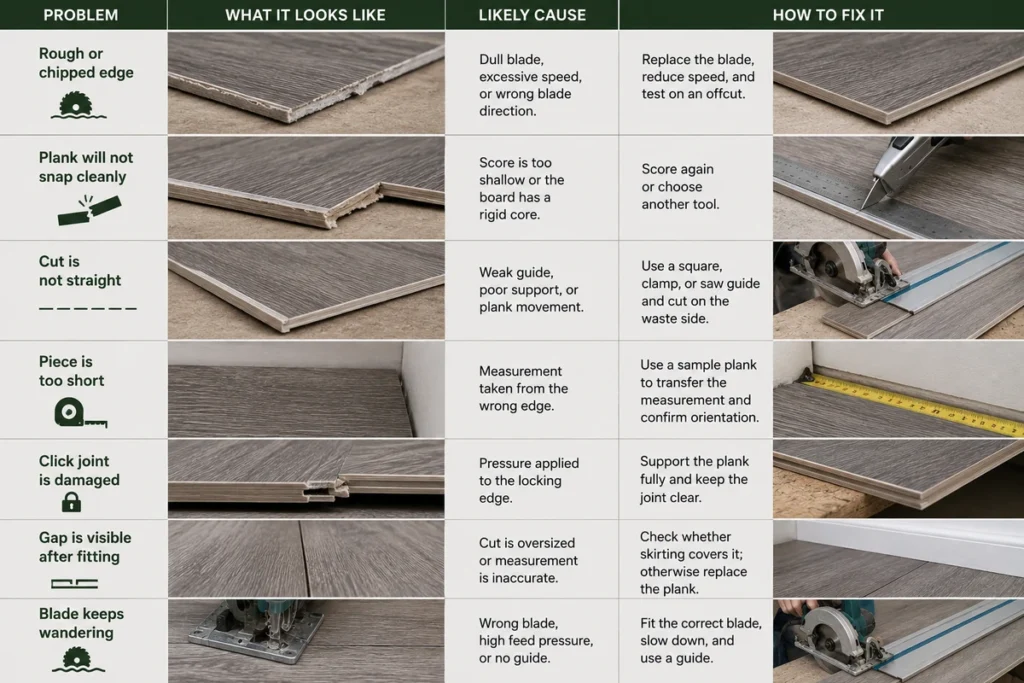
Common LVT Cutting Problems and Fixes
| Problem | Likely cause | Fix |
|---|---|---|
| Rough or chipped edge | Dull blade, excessive speed, or wrong blade direction | Replace the blade, reduce speed, and test on an offcut |
| Plank will not snap cleanly | Score is too shallow or the board has a rigid core | Score again or choose another tool |
| Cut is not straight | Weak guide, poor support, or plank movement | Use a square, clamp, or saw guide and cut on the waste side |
| Piece is too short | Measurement taken from the wrong edge | Use a sample plank to transfer the measurement and confirm orientation |
| Click joint is damaged | Pressure applied to the locking edge | Support the plank fully and keep the joint clear |
| Gap is visible after fitting | Cut is oversized or measurement is inaccurate | Check whether skirting covers it; otherwise replace the plank |
| Blade keeps wandering | Wrong blade, high feed pressure, or no guide | Fit the correct blade, slow down, and use a guide |
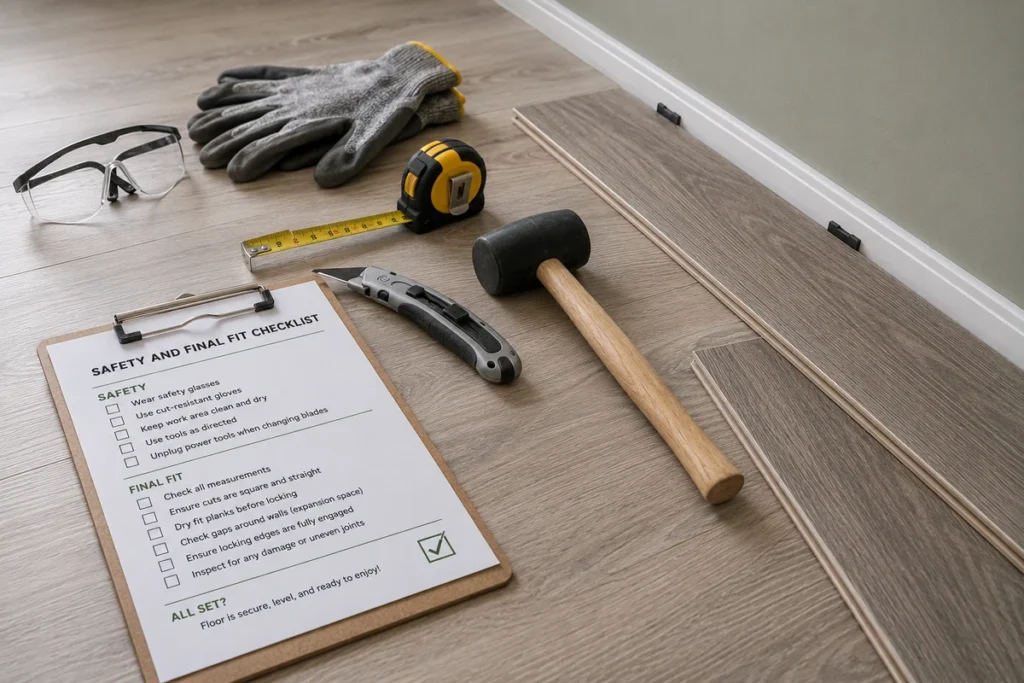
Safety and Final Fit Checklist
Use a sharp blade. A dull utility knife requires more force and is more likely to slip. Cut away from your body and keep your free hand outside the cutting path.
Wear eye protection when using powered tools. Hearing protection and dust control may also be necessary when sawing rigid-core products. Follow the tool manufacturer’s safety guidance and keep guards in place.
Before installation, confirm that:
- The waste side is clearly marked.
- The plank is fully supported.
- The blade is suitable and in good condition.
- The cutting line has been checked twice.
- The required expansion gap has been included.
- The cut piece has been dry fitted.
- The locking edge is clean and undamaged.
- Skirting, trims, or pipe collars will cover the intended gap.
Accurate cutting is only one part of a successful floor. The subfloor, layout, installation direction, and movement space also matter, especially where LVT meets wood flooring, cabinetry, or thresholds. An experienced wood flooring Dubai installer may help with complex transitions
FAQs
Can You Cut LVT Flooring With a Utility Knife?
Yes. Many thin or flexible LVT products can be cut with a sharp utility knife using the score-and-snap method. Some rigid-core boards, however, require a plank cutter, jigsaw, or saw
What Is the Best Tool for Cutting Rigid Core LVT?
The right tool depends on the plank thickness and core structure. Common options include a compatible plank cutter, jigsaw, or circular saw. The manufacturer’s installation guide should take priority
Which Side of LVT Should Face Up When Cutting?
For score and snap, the decorative face is usually marked and scored. For saw cuts, the correct orientation depends on blade direction and tool design. Test a spare piece first
How Do You Cut LVT Around Pipes?
Create an accurate template, mark the pipe centre, drill an opening with the required clearance, and use a jigsaw if a connecting cut is needed. Dry fit the plank and cover the finished gap with a pipe collar