How to Clean Oak Wood Floors Safely: A Step-by-Step Guide
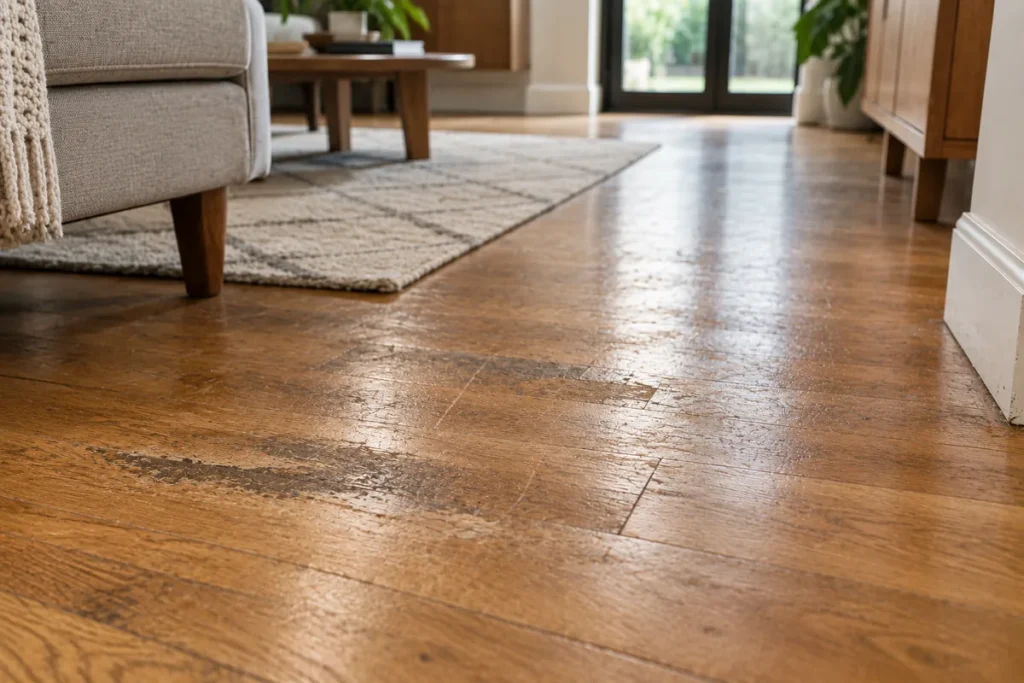
Oak flooring is durable, but cleaning it incorrectly can damage the finish long before the wood itself wears out. Too much water, steam, harsh chemicals, and abrasive tools can dull the surface, leave residue, or allow moisture to reach the joints.
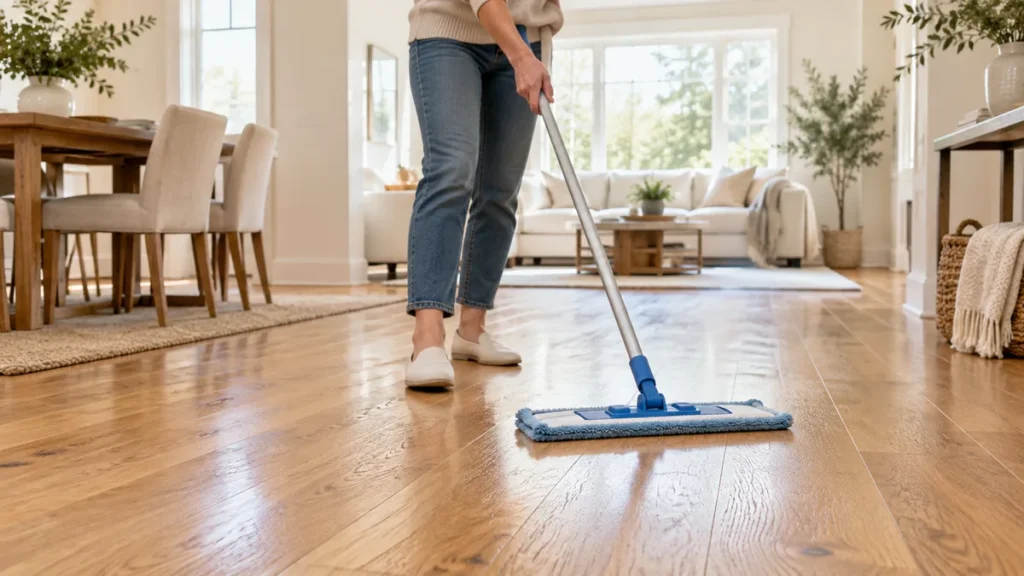
The safest way to clean oak wood floors is to remove loose dirt first, then use a lightly damp microfiber mop with a cleaner designed for the floor’s specific finish. Work in small sections, avoid soaking the boards, and dry any remaining moisture promptly.
If you are learning how to clean oak wood floors for the first time, the most important rule is simple: identify the finish before choosing the cleaning method. The same oak timber may be lacquered, oiled, waxed, or used as part of engineered oak wood flooring, and each surface can require slightly different care
Check Your Oak Floor’s Finish Before Cleaning
Oak is the wood species, not the surface treatment. The finish is what determines how much moisture the floor can tolerate and which cleaning products are appropriate.
If the flooring manufacturer or installer provided maintenance instructions, follow those first. This is especially important with prefinished boards and engineered oak wood, where proprietary coatings may have specific care requirements
Do not choose a product simply because it says “wood cleaner.” The best cleaner for oak floors is one that is compatible with the actual finish and does not leave a sticky or oily residue.
What You Need to Clean Oak Wood Floors
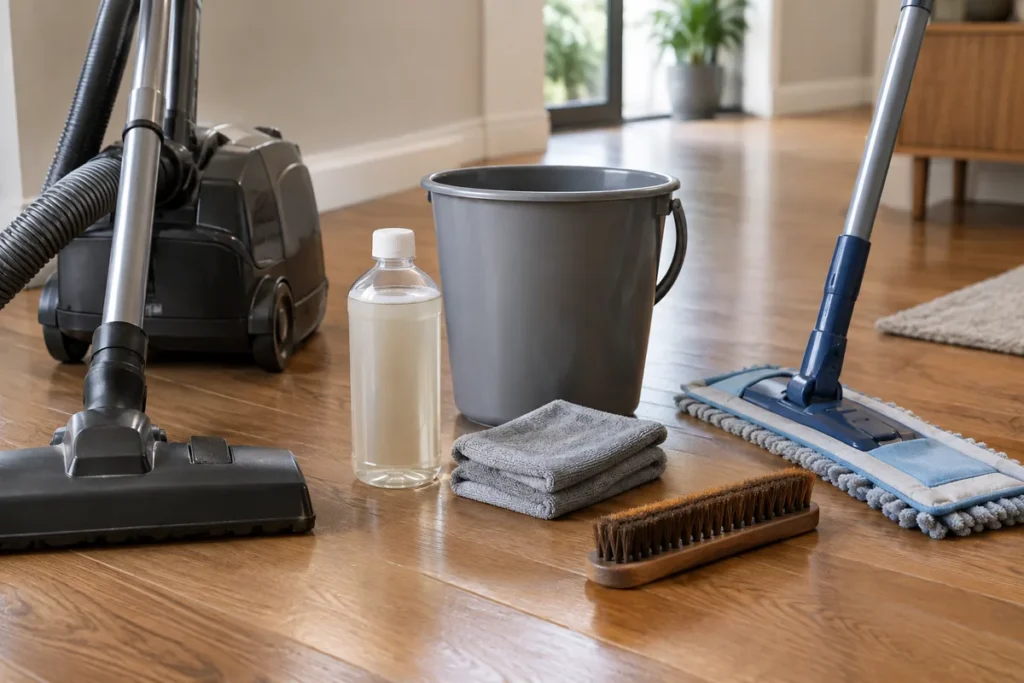
For normal oak floor care, you usually need only a few items:
A vacuum with a hard-floor setting or soft brush attachment
A soft broom or microfiber dust mop
A clean microfiber mop
A bucket or spray bottle, depending on the cleaner
A pH-neutral cleaner approved for wood flooring
Clean microfiber cloths for spills and spot cleaning
Avoid steel wool, rough scrubbers, bleach, ammonia-based cleaners, and abrasive powders. Steam cleaners are also a poor choice for most oak floors because heat and moisture can affect finishes, joints, and adhesive systems
How to Clean Oak Wood Floors Step by Step
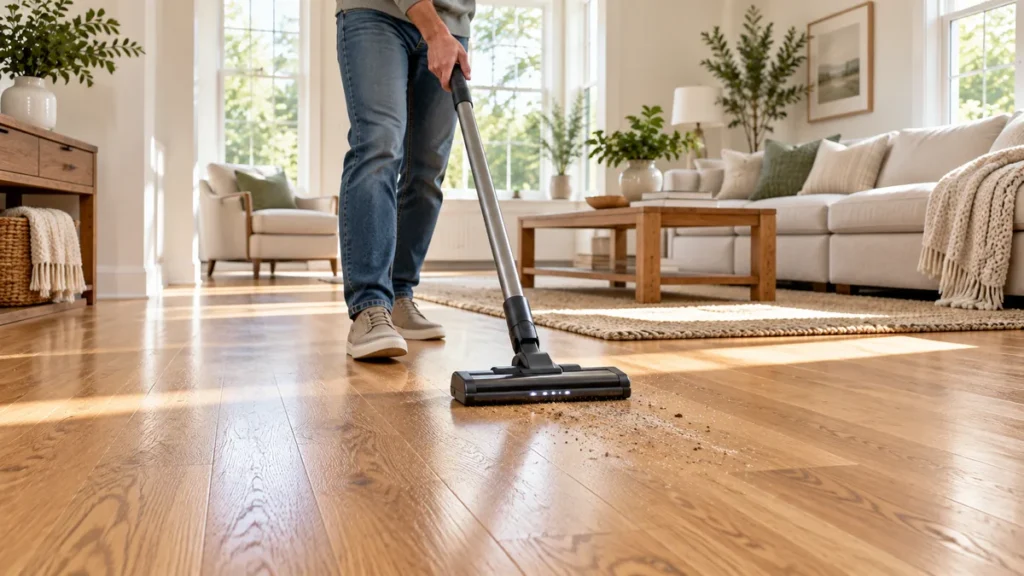
- Remove dust, grit, and loose debris
Start by vacuuming or sweeping the entire floor. Pay particular attention to entrances, under furniture, and along board joints.
This step matters because fine grit acts like sandpaper when dragged beneath a mop or shoes. Regular dry cleaning is therefore one of the most effective ways to protect both solid hardwood flooring and oak surfaces with factory-applied finishes
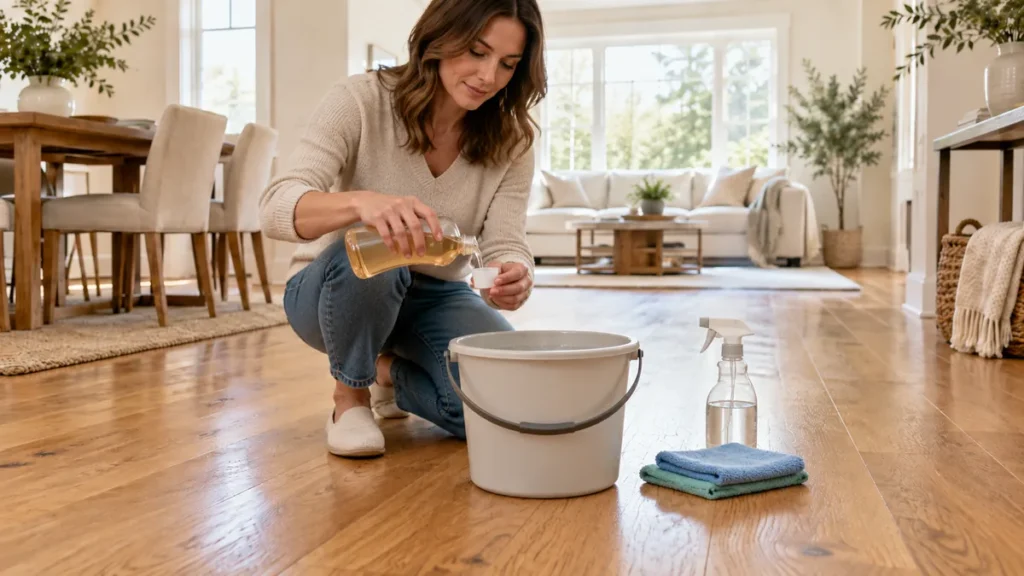
- Prepare the correct cleaning solution
Use a manufacturer-approved cleaner or a mild pH-neutral product specifically formulated for finished wood floors.
Follow the dilution instructions on the label. Using extra cleaner does not make the floor cleaner; it can leave residue that attracts dirt or makes the surface look cloudy.
For routine cleaning oak wood floors, avoid homemade mixtures containing large quantities of vinegar, strong soap, bleach, or detergent unless the flooring manufacturer specifically recommends them
- Mop with as little moisture as possible
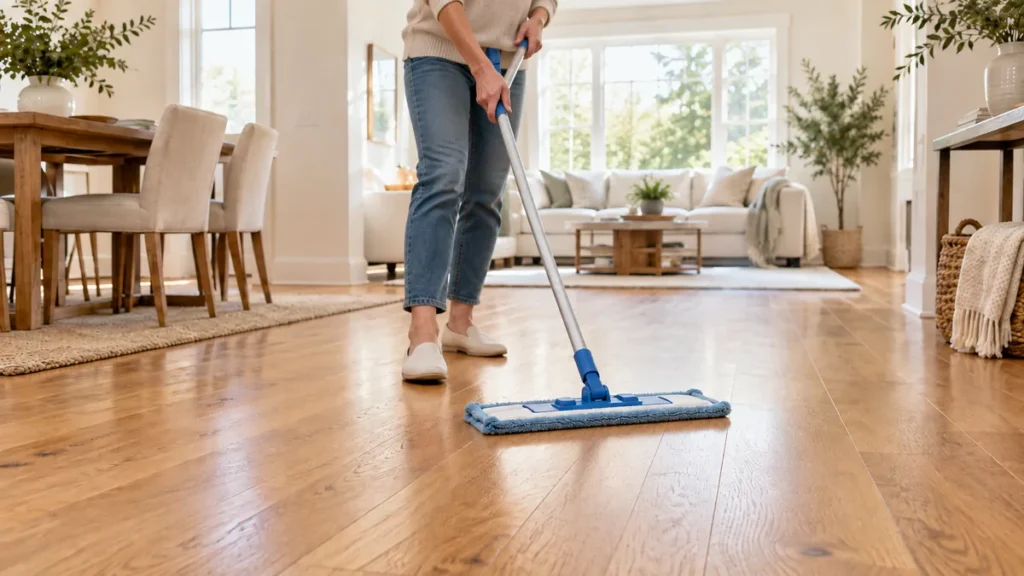
Lightly dampen the microfiber mop rather than soaking it. The mop should feel damp to the touch but should not leave standing water behind.
Clean in manageable sections, moving with the direction of the boards where practical. Do not pour cleaning solution directly onto the floor.
Oak can tolerate normal household cleaning when properly finished, but repeated exposure to excess water may cause swelling, staining, edge damage, or changes around board joints
- Deal with dirty areas without aggressive scrubbing
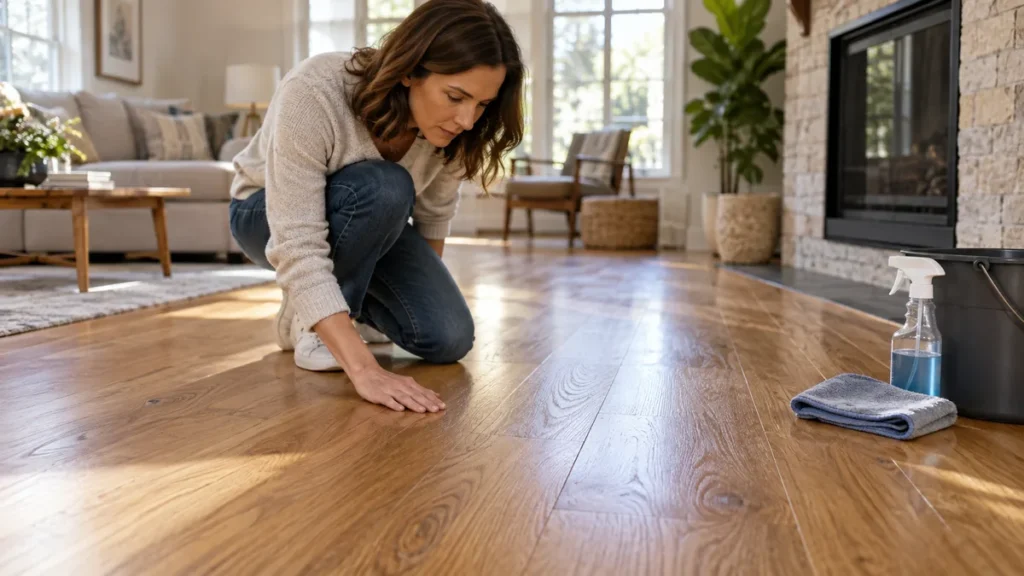
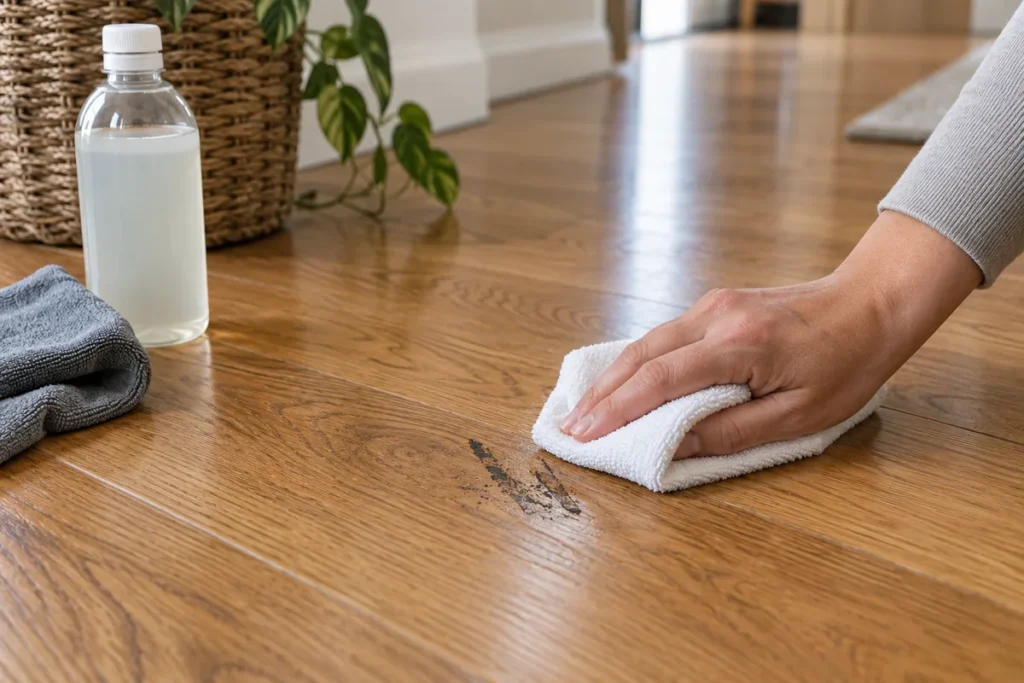
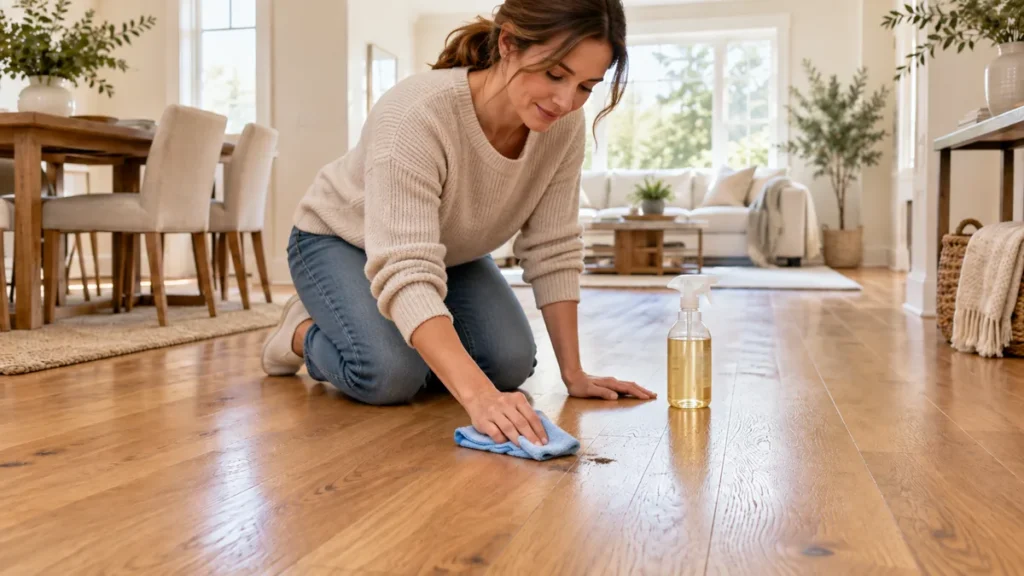
For marks that remain after normal mopping, apply a small amount of suitable cleaner to a microfiber cloth and work gently on the affected area.
Do not immediately reach for a stronger chemical or abrasive pad. A mark on the finish is different from a stain that has penetrated the wood, and aggressive treatment can turn a minor cleaning problem into permanent surface damage
- Allow the floor to dry completely
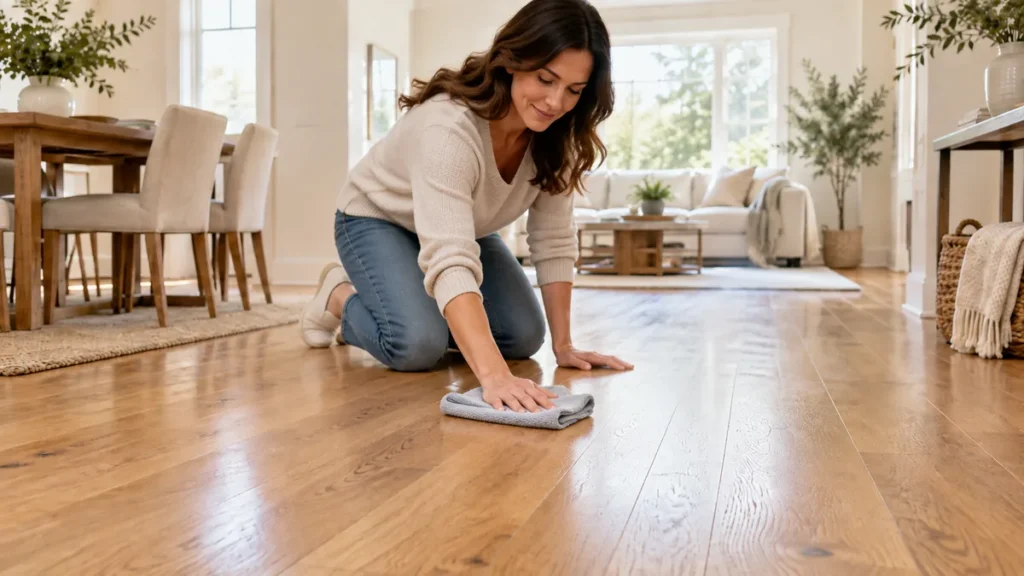
After cleaning, check for visible moisture, particularly around edges, joints, and furniture legs. Wipe away any remaining dampness with a dry microfiber cloth.
Normal ventilation is usually enough for a correctly damp-mopped floor. Avoid covering the surface with rugs or moving heavy furniture back into place until it is dry
This simple process is suitable for most routine oak floor care, but always adjust the method to the manufacturer’s instructions and the condition of the finish.
How to Remove Stains and Marks From Oak Floors
Not every mark needs the same treatment. Start with the least aggressive method and avoid sanding or chemical stain removal unless you know the finish can tolerate it
With hardwood parquet flooring, take extra care around joints and patterned sections because water can collect along the numerous board edges.
If a stain remains after appropriate surface cleaning, repeatedly applying stronger products is usually the wrong move. Persistent discoloration may indicate finish damage, moisture penetration, or a stain inside the timber rather than dirt sitting on top
When Your Oak Floor Needs More Than Regular Cleaning
Cleaning removes dirt. It does not repair a worn finish.
An oak floor may need maintenance or refinishing when you notice widespread dullness, exposed timber, deep scratches, worn traffic lanes, persistent staining, or areas where water is no longer being adequately repelled by the finish.
The correct oak flooring treatment depends on the surface. An oiled floor may need periodic maintenance oil, while a lacquered floor may eventually require screening, recoating, or refinishing. Deep damage may require sanding, but not every engineered floor has enough wear layer to be sanded safely.
This is where the distinction between cleaning and broader wood floor maintenance becomes important. Routine cleaners preserve a healthy surface; they cannot replace missing oil, lacquer, wax, or damaged timber.
If the floor is severely worn, do not try to restore it by applying random oils, waxes, or polishes. Incompatible products can interfere with future recoating and may make professional restoration more difficult
How Often Should You Clean Oak Wood Floors?
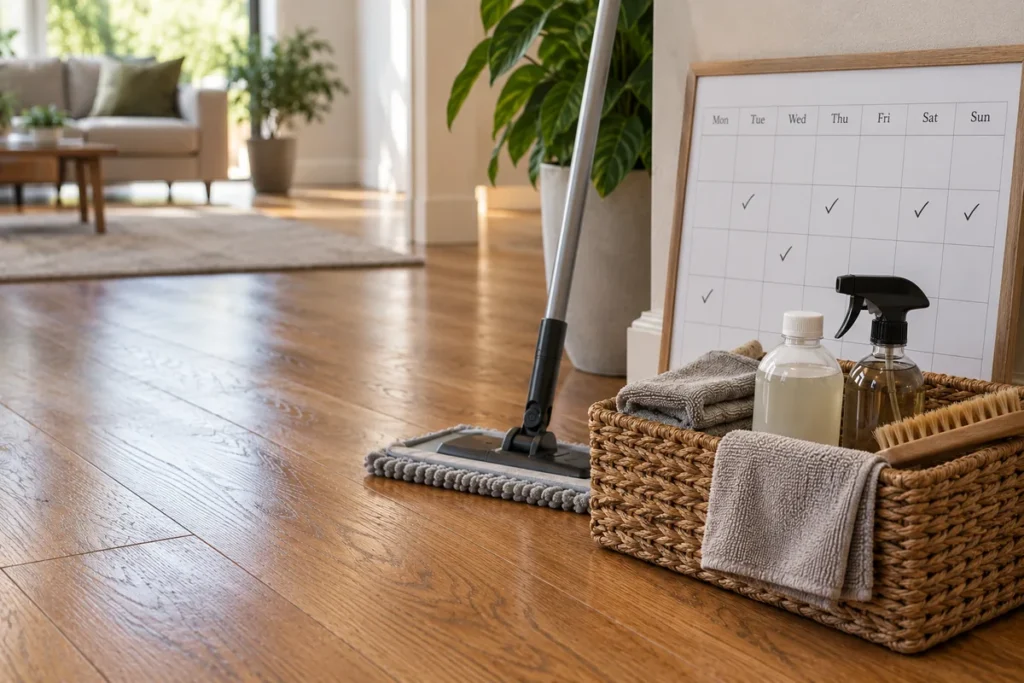
There is no single cleaning schedule for every home. Frequency depends on foot traffic, pets, outdoor dust, footwear, and how quickly debris accumulates.
Homes in dusty environments may require more frequent dry cleaning. This is particularly relevant when maintaining wood flooring in high-traffic properties or choosing flooring Dubai homeowners can maintain easily in conditions where sand and fine outdoor particles are regularly carried indoors.
Frequent vacuuming is usually safer than frequent wet cleaning
FAQs