
Engineered Wood vs LVT: Which Flooring Is Better?
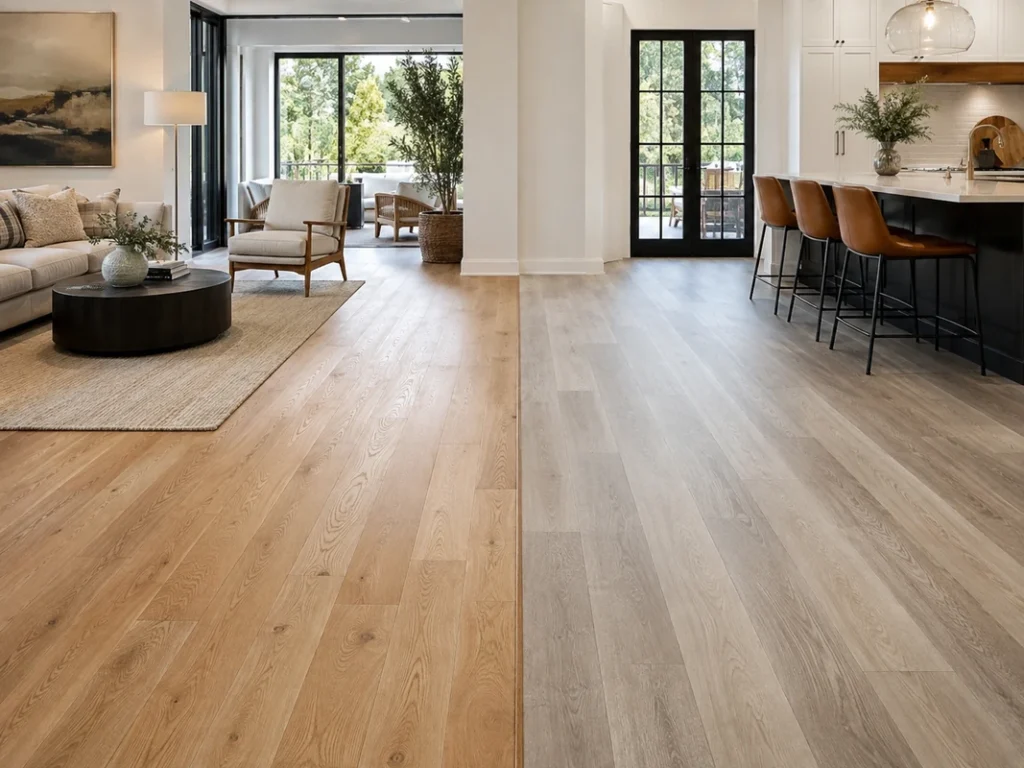
Choosing between engineered wood and LVT depends on whether you value natural materials or everyday practicality more. Engineered wood has a genuine timber surface bonded to a stable layered core, giving it the appearance, texture and character of real wood. LVT, meaning luxury vinyl tile, is a synthetic floor available in tiles or wood-effect planks designed to reproduce timber, stone and other materials.
In general, LVT offers better water resistance, easier maintenance and a lower initial cost. Engineered wood usually delivers a more authentic appearance, a warmer feel and stronger long-term appeal. Neither option is universally better. The right choice depends on the room, expected foot traffic, moisture exposure, renovation budget and how much maintenance you are prepared to manage
Engineered Wood vs LVT at a Glance
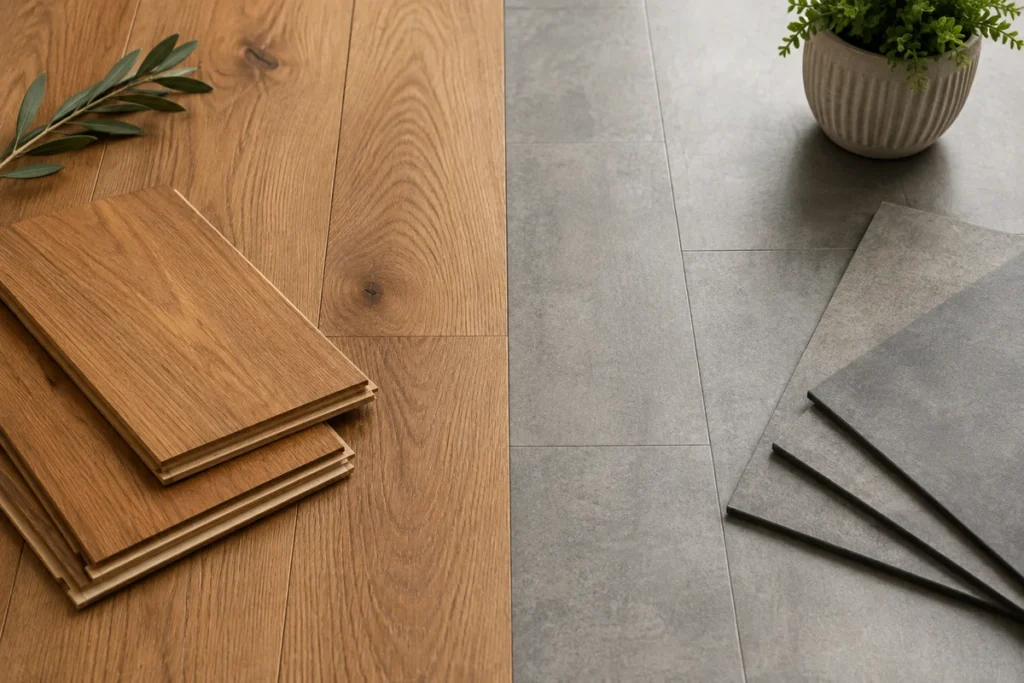
The main difference between engineered wood flooring and LVT is the material beneath your feet. Engineered boards have a real timber veneer, while LVT uses a photographic design layer protected by a transparent wear layer.
That construction difference affects appearance, moisture resistance, repair options, cost and expected lifespan. The following table provides a practical summary
| Criterion | LVT | Engineered Wood |
|---|---|---|
| Construction | Printed design and protective wear layer over a vinyl-based core | Real wood veneer bonded to a multilayer core |
| Appearance and feel | Reproduces the appearance of timber | Provides the natural grain and texture of real wood |
| Water resistance | Usually better suited to moisture-prone areas, depending on the product and installation | Tolerates limited moisture but is not intended for prolonged water exposure |
| Scratches and impact | Many products offer strong surface resistance | Can scratch, although some floors may be restored |
| Repair | A damaged tile or plank may sometimes be replaced individually | Sanding or refinishing may be possible, depending on veneer thickness |
| Maintenance | Generally easier to clean and maintain | Requires more careful control of water and cleaning products |
| Installation | Usually click-lock or glue-down | Floating, glue-down, nail-down or other approved methods |
| Initial price | Usually lower | Usually higher |
| Best spaces | Kitchens, utility areas, entrances and busy households | Living rooms, bedrooms and design-led interiors |
| Final choice | Practicality and easier upkeep | Authenticity, natural character and long-term appeal |
This engineered vs LVT pros and cons comparison shows why the decision should not be based on appearance alone. A realistic-looking vinyl plank may suit a busy family better, while a real timber floor may be worth the additional care in a premium living space
What Are LVT and Engineered Wood Made From?
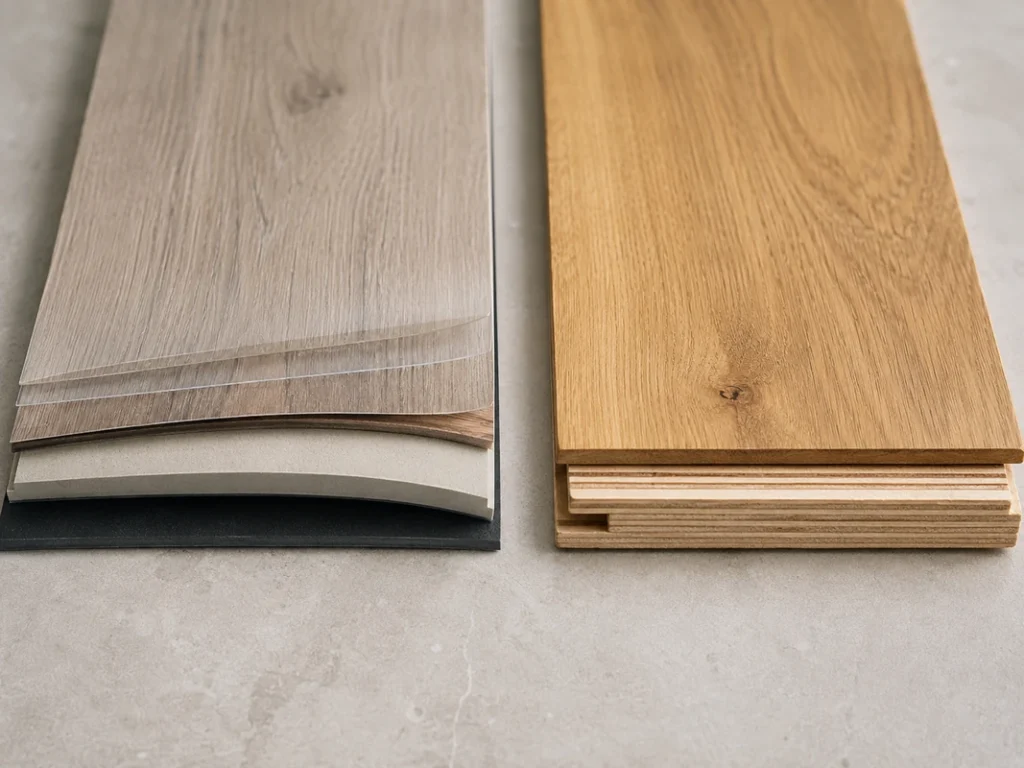
Both products use multiple layers, but their surfaces and core materials are fundamentally different. Understanding those layers helps explain why the floors react differently to water, wear, heat and repairs
How LVT Is Constructed
LVT is a manufactured resilient flooring product. Most designs include a backing layer, a stable core, a printed decorative film and a transparent wear layer. Some products also include an attached underlay or additional protective coating.
The printed layer can reproduce oak, walnut, concrete, marble and other surfaces. Higher-quality products use detailed printing, surface embossing and varied plank patterns to create a more convincing finish.
The wear layer protects the design from routine foot traffic, staining and minor abrasion. Its thickness and quality strongly influence performance, so two visually similar products may have very different durability.
LVT is sold in both tile and plank formats. In discussions about luxury vinyl plank vs engineered hardwood, LVP usually refers to rectangular vinyl boards designed to imitate timber. LVT is the broader category and can include both planks and square or rectangular tiles
How Engineered Wood Is Constructed
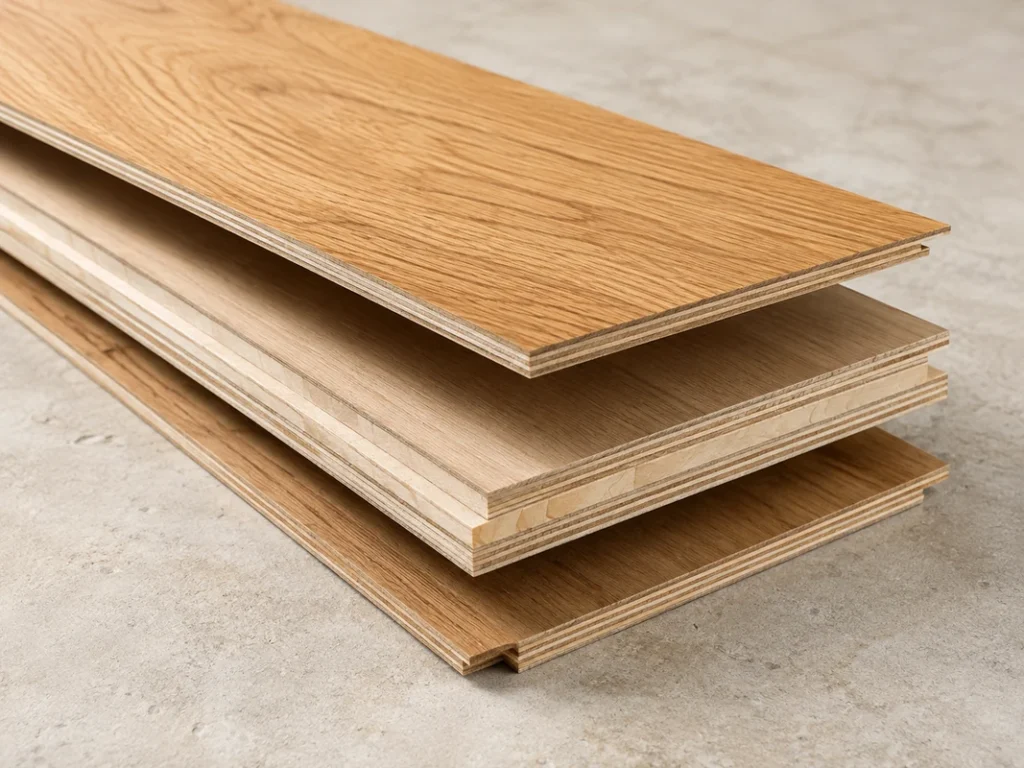
Engineered wood flooring consists of a real hardwood veneer attached to a layered core, usually made from plywood, softwood or high-density fibre materials. The layers are arranged to improve dimensional stability and reduce the movement associated with solid timber.
The top layer determines the visible species, grade, colour and grain. Oak is common, although walnut, maple and other species are also available. Because the surface is genuine timber, each board has natural variation rather than a repeated printed pattern.
The thickness of the veneer matters. A thin top layer may only allow light surface repair, while a thicker veneer may support professional sanding and refinishing. Product specifications must be checked before assuming restoration is possible
Durability, Water Resistance and Maintenance
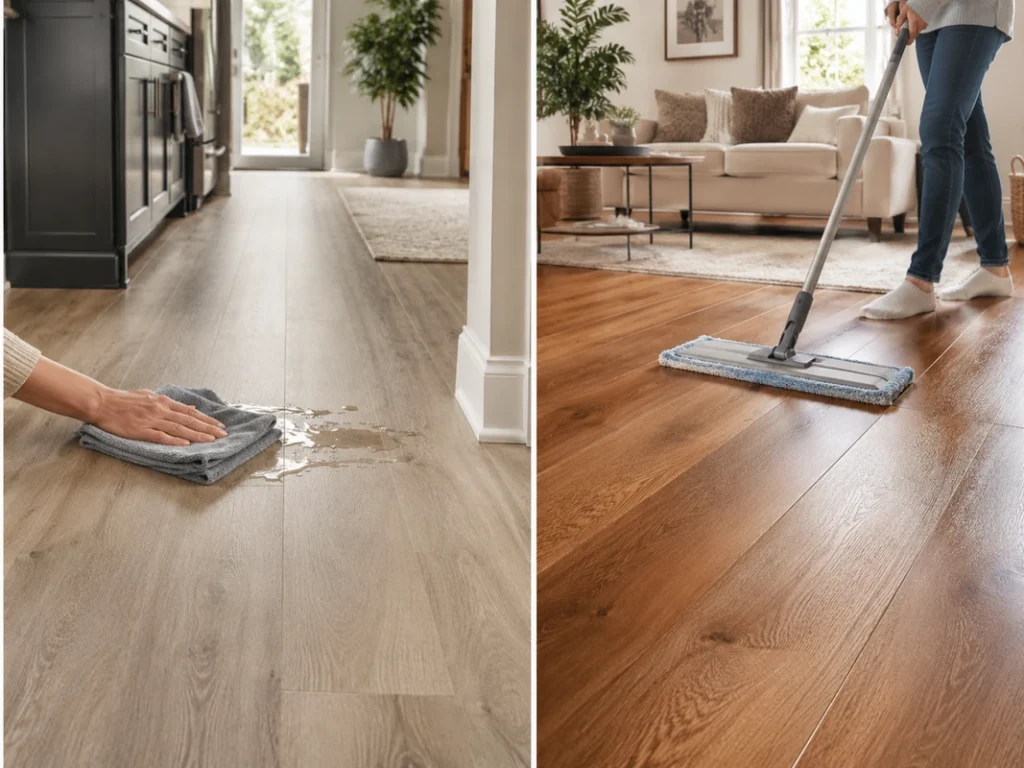
LVT is often the more forgiving choice for households where spills, muddy shoes, pets or frequent cleaning are expected. Many products resist stains and surface wear well, although sharp objects, heavy furniture and dragging appliances can still damage the floor.
Engineered wood can remain attractive for many years when maintained correctly, but it is less tolerant of standing water. Spills should be cleaned promptly, and wet mopping should be avoided unless the manufacturer specifically permits it.
Neither floor should automatically be described as indestructible or completely waterproof. Even when the vinyl surface resists water, moisture may still reach joints, edges, adhesives or the subfloor. Product approval and correct installation remain essential.
Daily maintenance is generally simpler with LVT flooring. Dust, grit and loose dirt should be removed regularly, followed by damp cleaning with an approved product. Abrasive pads, steam cleaners and aggressive chemicals can damage some finishes.
Engineered timber should also be vacuumed or swept frequently because grit can scratch the surface. Cleaning should use minimal moisture and a solution approved for finished wooden flooring. Furniture pads and entrance mats help protect both materials.
Repair is another important difference. A damaged click or glue-down vinyl plank may be replaceable, although access and adhesive conditions can complicate the work. Engineered boards may be repaired, recoated or refinished, but the available options depend on the finish, installation method and veneer thickness
Which Flooring Is Best for Each Room and Lifestyle?
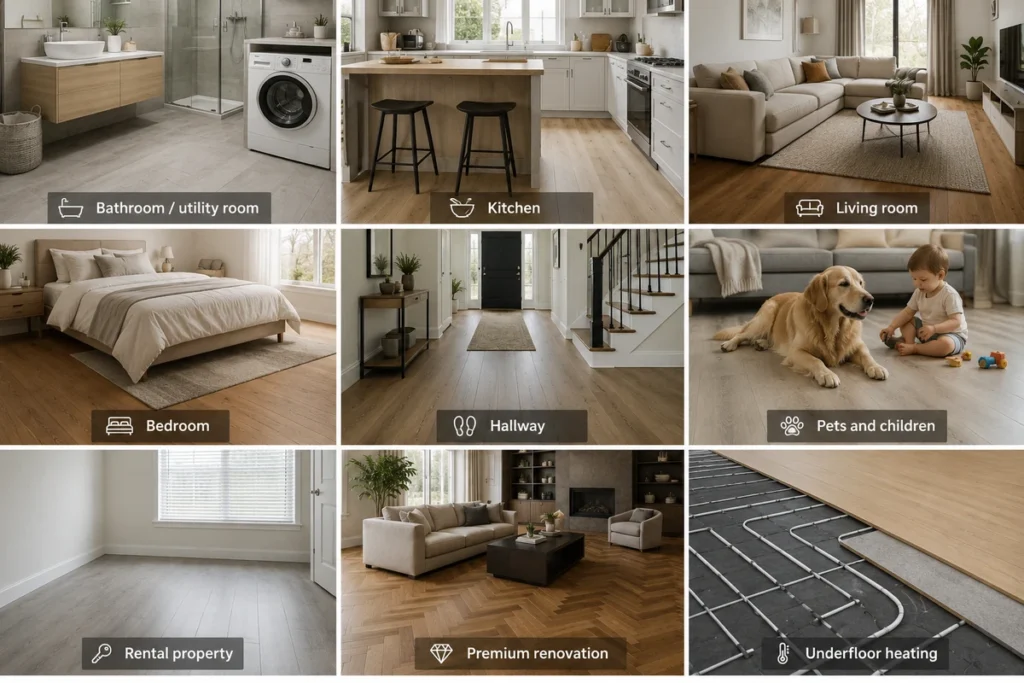
A floor that performs well in a bedroom may not be suitable for a utility room. Moisture, traffic, cleaning frequency, acoustic requirements and design priorities should all influence the decision
| Space or condition | Recommended choice | Reason |
|---|---|---|
| Bathroom or utility room | Appropriately approved LVT | Better suited to high moisture levels |
| Kitchen | Usually LVT; engineered wood only under suitable conditions | Frequent spills, stains and foot traffic |
| Living room | Engineered wood or premium LVT | Choice depends on appearance, comfort and budget |
| Bedroom | Engineered wood | Natural appearance and a warmer character |
| Hallway | Durable LVT or suitably finished engineered wood | Repeated traffic, dirt and abrasion |
| Pets and children | Usually LVT | Easier cleaning and better tolerance of everyday accidents |
| Rental property | LVT | Lower maintenance and replacement cost |
| Premium renovation | Engineered wood | Genuine timber appearance and restoration potential |
| Underfloor heating | Either, with manufacturer approval | Suitability depends on construction, underlay and temperature limits |
LVT is often the safer practical choice for rental properties, kitchens and active family homes. It reduces anxiety around routine spills and usually requires less specialist care.
Engineered wood is more suitable when the floor is a central design feature. It works particularly well in living rooms, bedrooms and open-plan interiors where natural variation and tactile quality matter.
Both products may be compatible with underfloor heating, but compatibility should never be assumed. Maximum surface temperatures, thermal resistance, subfloor preparation and installation methods must follow the flooring and heating manufacturers’ instructions
Appearance, Comfort, Home Value and Sustainability
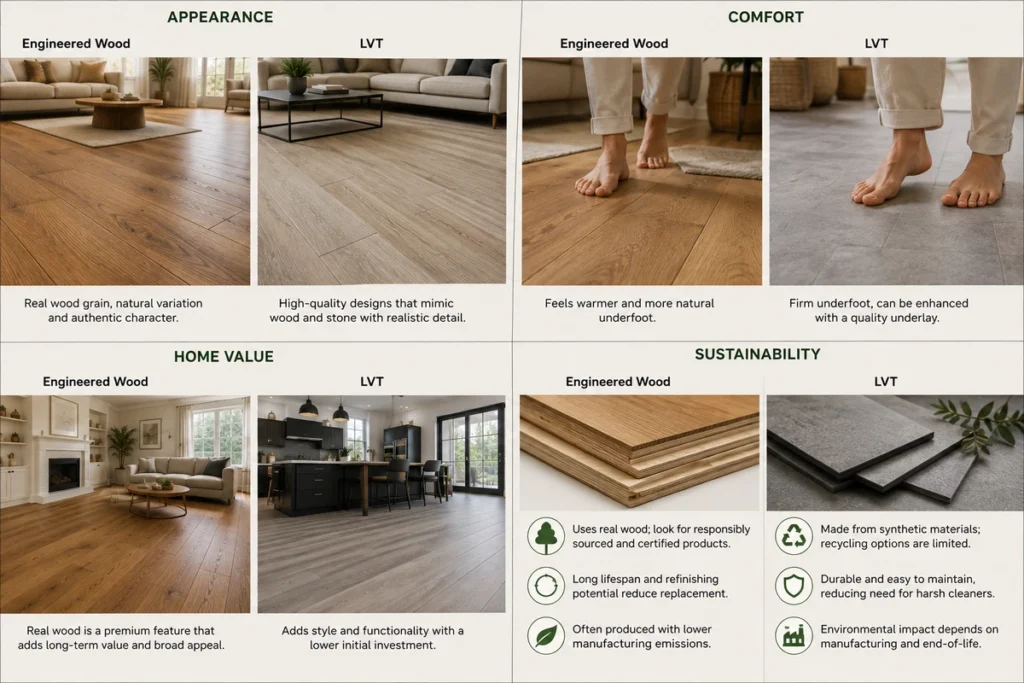
Engineered wood has the advantage in authenticity because its top surface is genuine timber. Natural grain, knots, tonal variation and ageing create a finish that printed vinyl can imitate but not fully reproduce.
Premium vinyl has improved significantly. Registered embossing can align surface texture with the printed grain, and larger pattern libraries reduce obvious repetition. However, close inspection usually reveals the difference between luxury vinyl tile vs engineered hardwood.
Comfort depends on the full floor build-up. Engineered timber often feels warmer and more natural, while LVT can feel firm unless paired with a suitable underlay. Acoustic performance also depends on the subfloor, installation method and surrounding construction.
From a property-positioning perspective, engineered wood generally has stronger appeal in premium renovations because buyers recognise it as a real timber product. LVT may not add the same perceived material value, but a high-quality installation can still improve appearance and functionality.
Environmental performance is not simple. Engineered wood uses real timber but also contains adhesives, finishes and core materials. Responsible sourcing, certification, product lifespan and the possibility of refinishing should be considered.
LVT is largely synthetic and may be harder to recycle through ordinary local waste systems. However, durability, low maintenance and the ability to replace individual sections can reduce waste in some situations. Buyers should examine product declarations, emissions testing, recycled content and manufacturer take-back programmes rather than relying on broad sustainability claims
Engineered Wood vs LVT Price and Long-Term Value
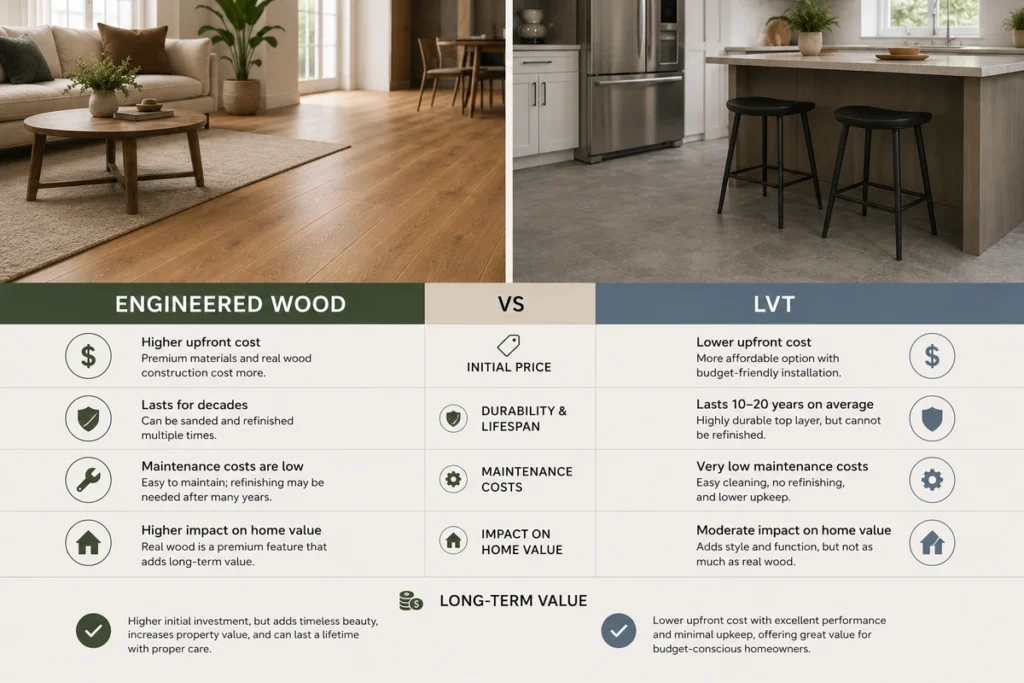
The engineered vs LVT price comparison usually favours vinyl at the purchasing stage. Standard LVT products typically cost less than quality engineered boards, and installation may also be cheaper when the subfloor is already suitable.
However, material price alone gives an incomplete picture. The final budget may include floor preparation, moisture testing, underlay, trims, adhesives, removal of the existing floor and professional labour.
LVT flooring cost also varies significantly according to wear-layer quality, core construction, surface detail, brand and installation type. Cheap vinyl may save money initially but can look repetitive or wear sooner in demanding areas.
Engineered wood usually requires a larger upfront investment, but thicker, well-maintained products may offer longer service and some refinishing potential. That can improve long-term value, especially in owner-occupied homes where natural wood is part of the design strategy.
For buyers comparing wood flooring with luxury vinyl flooring Dubai suppliers offer, quotations should be compared on full installed cost rather than price per square metre alone
FAQs
Is LVT the Same as LVP?
LVP is a type of LVT. LVP means luxury vinyl plank and usually refers to vinyl boards designed to look like wood. LVT is the broader category and may include wood-effect planks, stone-effect tiles and other formats
Is Every LVT Floor Completely Waterproof?
No. Many products have highly water-resistant surfaces or waterproof cores, but the complete installation may still be vulnerable at joints, edges and transitions. Always check the manufacturer’s room-use approval
Can Engineered Wood Be Sanded and Refinished?
Some engineered floors can be sanded and refinished, but not all. The answer depends mainly on the thickness of the real wood veneer, the condition of the floor and the installation method
Can LVT and Engineered Wood Be Used Together in One Home?
Yes. Many homes use engineered wood in living rooms and bedrooms while installing LVT in kitchens, utility rooms or moisture-prone spaces. Colours, plank widths, direction and transition profiles should be coordinated to create a consistent design
Ultimately, engineered wood vs LVT is a choice between natural authenticity and practical resilience. Choose LVT when moisture resistance, easier care and budget control are the priorities. Choose engineered wood when genuine timber, tactile character and long-term design value matter more