
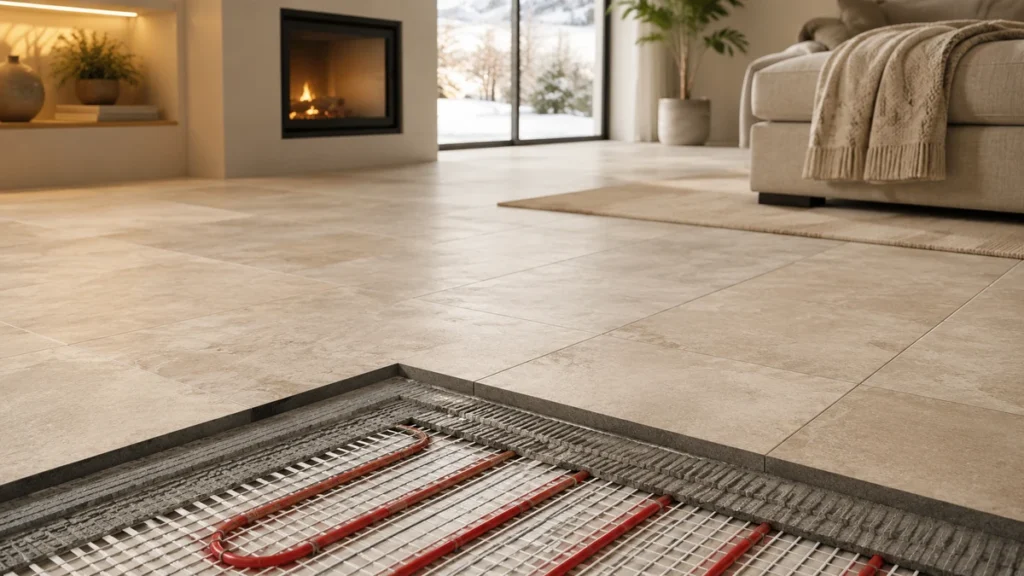
Best Floor Tiles for Underfloor Heating: Porcelain, Ceramic or Natural Stone?
The best floor tiles for underfloor heating are usually porcelain, ceramic and natural stone because they transfer heat efficiently and tolerate temperature changes when the system is correctly designed and installed. For most homes, porcelain is the strongest all-round choice: it is dense, durable, has low water absorption and is available in a wide range of finishes. Ceramic is often the more affordable option, while natural stone offers excellent heat retention and a premium appearance. Tile and stone are widely recommended for radiant heating because of their low thermal resistance and ability to conduct and retain heat.
The right choice, however, is not only about the tile itself. Thickness, adhesive, substrate preparation, movement joints and heating-system type all affect performance. Understanding these factors makes it easier to choose flooring suitable for underfloor heating without sacrificing durability or comfort
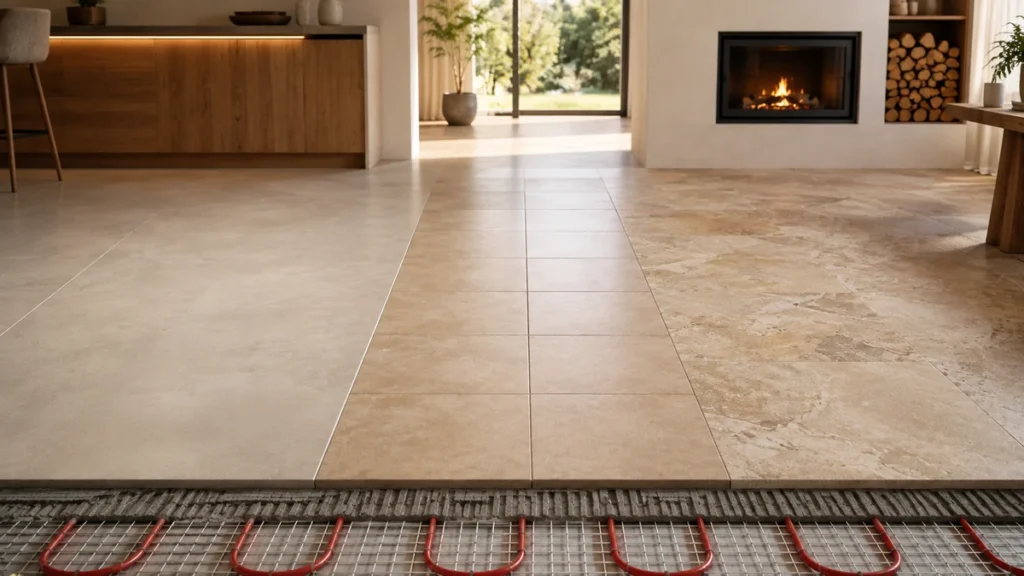
What Are the Best Tiles for Underfloor Heating?
Tile and stone are among the most effective finishes for underfloor heating because they allow heat to move from the heating system into the room efficiently. Their thermal mass also helps them store and gradually release warmth. Warmup identifies tile and stone as highly suitable coverings for radiant floor heating for these reasons.
The best floor tiles for underfloor heating are therefore not limited to one material. Porcelain is usually the strongest option for overall durability and versatility, ceramic works well when budget is important, and natural stone is attractive when appearance and heat retention are priorities
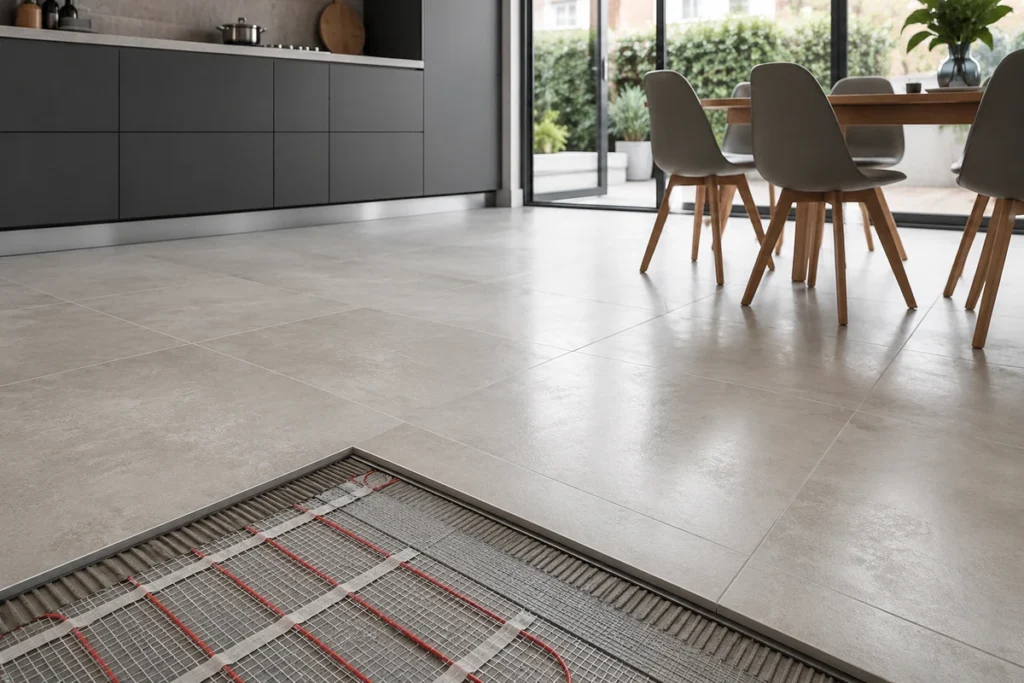
Porcelain Tiles – Best Overall Choice
Porcelain is the best overall option for many heated floors. Its dense, low-porosity structure provides strong resistance to moisture and everyday wear. The Tile Association also describes porcelain as an excellent conductor of heat and well suited to underfloor heating.
This combination makes porcelain particularly suitable for kitchens, bathrooms, hallways and open-plan living areas where both heating performance and durability matter. It is also available in stone, concrete, marble and timber-look designs, giving homeowners considerable freedom when choosing a finish.
Porcelain does not make an underfloor heating system more powerful. Its advantage is that it places relatively little thermal resistance between the heat source and the room. For someone wondering what type of flooring can you use with underfloor heating and looking for a dependable all-round solution, porcelain is difficult to beat
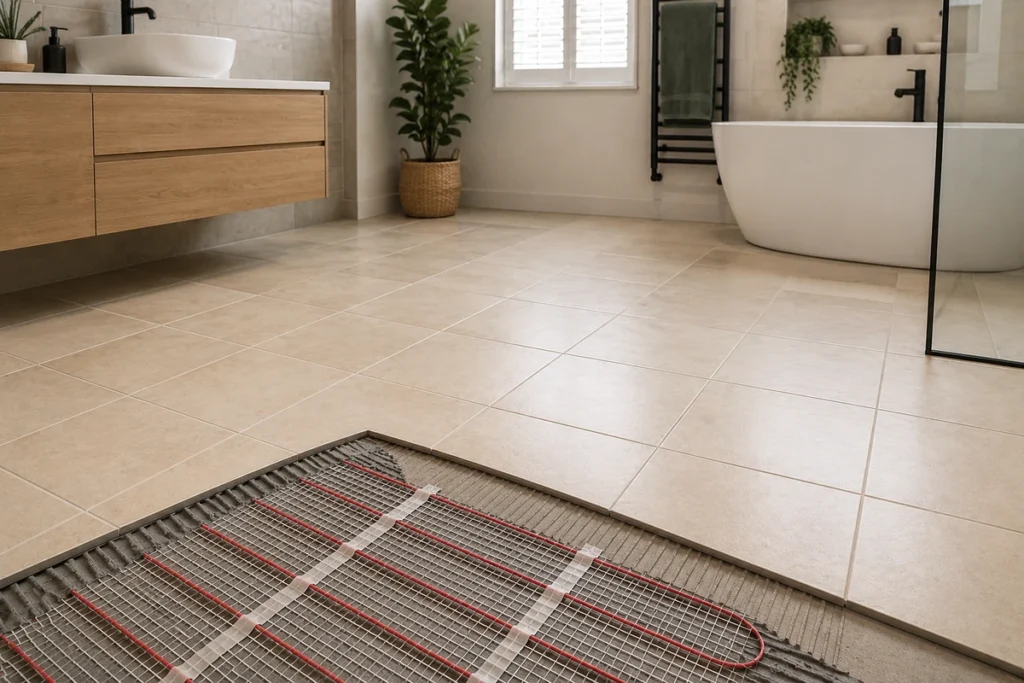
Ceramic Tiles – Best Budget-Friendly Option
Ceramic tiles can also perform very well over underfloor heating. Like porcelain, they transfer heat effectively and respond relatively quickly as the heated floor warms.
Traditional ceramic is generally more porous and less dense than porcelain, so the individual product’s specification becomes particularly important in wet or heavily used spaces. The Tile Association notes the lower porosity and greater durability associated with porcelain compared with conventional ceramic products.
For many dry interior rooms and normal residential applications, good-quality floor-rated ceramic can therefore be a cost-effective choice. The important distinction is floor-rated: a ceramic tile designed only for walls should not automatically be treated as suitable flooring.
Ceramic is a strong option when the aim is to find the best floor for underfloor heating while controlling material costs. Correct installation will ultimately have a greater influence on long-term performance than simply choosing the most expensive tile available
Natural Stone Tiles – Best Premium Option
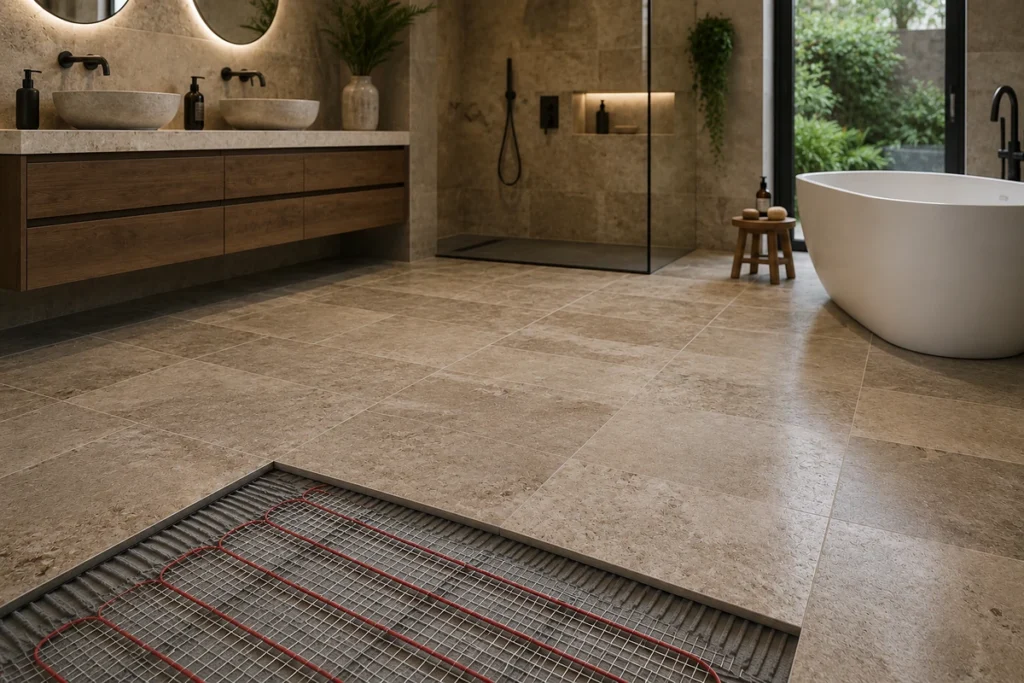
Natural stone such as marble, limestone, slate and granite can work extremely well with underfloor heating because stone transfers and stores heat effectively. Warmup includes stone alongside tile among the finishes particularly well suited to radiant heating.
Natural stone does require more careful specification. Different stones vary in porosity, thickness and moisture sensitivity, and some require sealing or a specific adhesive system. MAPEI, for example, differentiates between compatible natural stone and moisture-sensitive stone when specifying installation products.
Natural stone should therefore be viewed as the premium choice rather than automatically the technical winner. When the correct stone and installation system are selected, it can combine strong heating performance with a distinctive high-end finish
What Makes a Tile Good for Underfloor Heating?
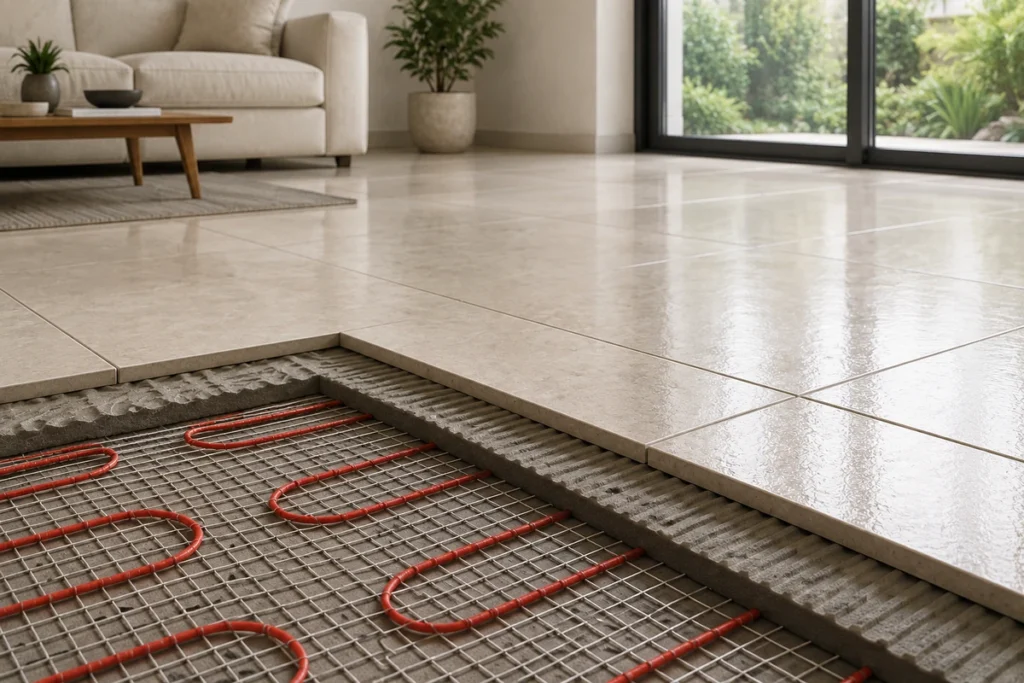
A suitable heated-floor covering should transfer heat without adding unnecessary thermal resistance. Tile and stone perform particularly well because they are conductive materials, allowing heat generated below the surface to reach the room effectively.
Durability is equally important. Repeated heating and cooling create movement within the complete floor build-up. The tile, adhesive, screed and substrate must therefore function as a system rather than as unrelated layers. Schlüter explains that uncoupling systems can isolate movement between the substrate and tile layer and reduce the transfer of stresses into the finished covering.
Thickness affects heating response as well. A thicker tile or stone assembly contains more mass to heat, so it can take longer to reach the desired surface temperature. This does not automatically make thicker material unsuitable; the complete build-up simply needs to be considered when the heating system is specified.
Tiles are not the only option. Some wood flooring systems are compatible, particularly products made from engineered wood, and manufacturers also produce laminate flooring suitable for underfloor heating. Some vinyl flooring suitable for underfloor heating, including approved lvt flooring, can also be installed when product temperature limits are followed. Approved spc flooring may offer another alternative. MAPEI lists tile, stone, engineered wood flooring, laminate and luxury vinyl among finishes that can be used with its heating systems. Solid hardwood flooring generally requires more careful product-specific assessment because natural timber is more responsive to environmental changes.
Even where these alternatives are compatible, tile and stone remain leading candidates for the best flooring for underfloor heating when efficient heat transfer is the main priority
Does the Best Tile Change for Electric vs Water Underfloor Heating?
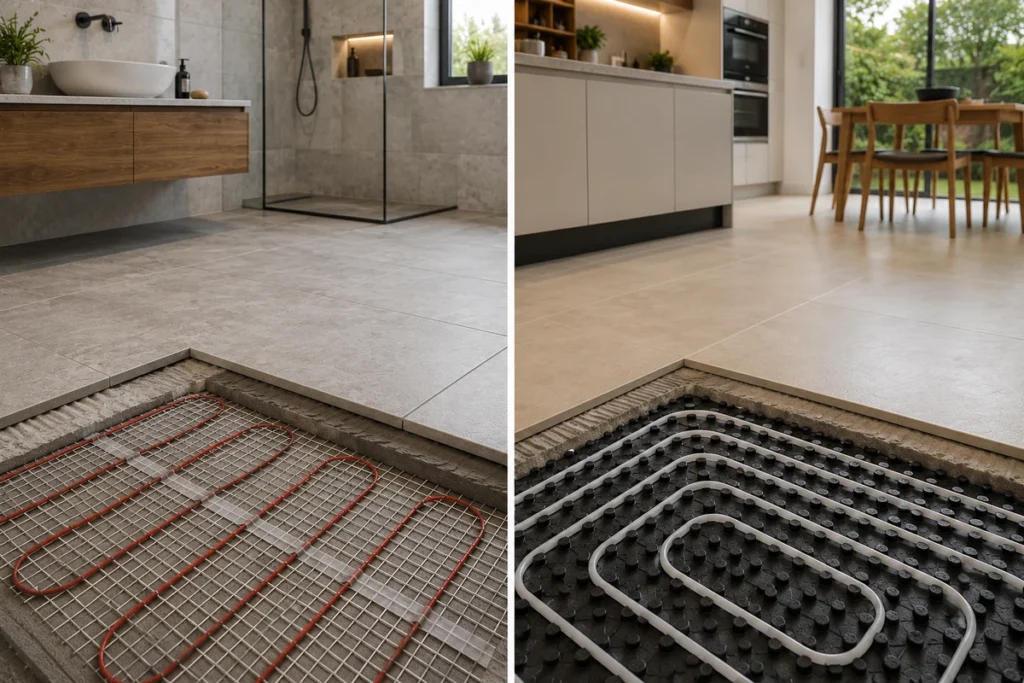
The best tile does not change dramatically between electric and water-based systems. Porcelain, ceramic and suitable natural stone can all work with either type when the complete floor construction has been designed correctly.
Electric underfloor heating normally uses heating cables or mats positioned relatively close to the finished surface. This allows the floor to react comparatively quickly. Systems such as Schlüter-DITRA-HEAT combine electric heating with an uncoupling layer intended to reduce stresses between the substrate and tiled surface.
Water underfloor heating circulates warm water through pipes installed within or beneath the floor build-up. Systems such as Schlüter-BEKOTEC-THERM incorporate heating pipes within a heated screed construction. Because there is often more heated mass, hydronic floors may respond more gradually while delivering stable heat across larger areas.
When comparing underfloor heating best flooring options, it therefore makes little sense to select porcelain purely because the heating is electric or ceramic purely because it is water-based. The better approach is to choose according to the room, required durability, moisture exposure and appearance, then verify compatibility with the heating and tile manufacturers
Installation Factors That Matter as Much as the Tile
Even the best floor tiles for underfloor heating can develop problems if the floor beneath them is poorly prepared. Heated floors experience thermal movement, making substrate stability and product compatibility especially important.
The substrate should be stable, level and appropriate for tiling. Where movement could transfer stress to the finished surface, an uncoupling or anti-fracture system may be specified. Schlüter explains that uncoupling membranes allow the substrate and tile covering to move more independently, reducing the risk of movement being transferred directly into the tiled surface.
Movement joints also matter. Adding underfloor heating does not eliminate the need for them. Schlüter states that movement joints remain essential because tile installations must accommodate stresses associated with temperature, moisture and loading changes.
The adhesive must also be approved for the tile, substrate and heated application. A standard adhesive should not automatically be assumed suitable. MAPEI, for example, produces flexible cementitious adhesives specifically approved for ceramic and porcelain tiles used with underfloor heating. Natural stone may require a different system depending on the particular material.
Finally, the heating should be commissioned according to the installation-product and heating-system manufacturers’ instructions. MAPEI specifically requires its floor heating to remain off during tile installation and for the required curing period afterwards. Bringing a newly installed floor to operating temperature too early can interfere with the installation system.
Correct installation is therefore part of selecting the best floor tiles for underfloor heating, not something to consider only after choosing the tile
FAQs
Are porcelain tiles better than ceramic for underfloor heating?
Yes, porcelain is usually the better all-round choice, although both porcelain and ceramic work well with underfloor heating. Porcelain’s denser, less porous construction gives it an advantage in bathrooms, kitchens, high-traffic areas and other demanding spaces. Ceramic remains an effective and often more affordable choice for suitable indoor applications.
How thick should tiles be for underfloor heating?
There is no single tile thickness that is correct for every underfloor-heating installation. Compatibility of the complete floor build-up matters more than choosing a universal number. Tile or stone thickness, adhesive, membranes and screed all affect how quickly heat reaches the surface. A thicker finish may warm more slowly because more material must be heated, but it can still work effectively when the system is designed for it. Always check the limits specified by the tile and heating-system manufacturers.
Can tiles crack over underfloor heating?
Yes, tiles can crack, but cracking should not be considered an unavoidable consequence of underfloor heating. Problems are more likely when movement from the substrate reaches the tile layer, movement joints are inadequate or the underlying floor is poorly prepared. Uncoupling systems are designed to reduce stress transfer, while appropriate movement joints remain necessary in heated tile installations.
Do I need special tile adhesive for underfloor heating?
You need an adhesive explicitly approved for the tile, substrate and heated-floor application. Do not assume that a general-purpose adhesive is suitable. Flexible or deformable cementitious adhesives are commonly used because the floor undergoes repeated thermal movement. MAPEI, for example, specifies flexible products for ceramic, porcelain and compatible natural stone installations used with underfloor heating