
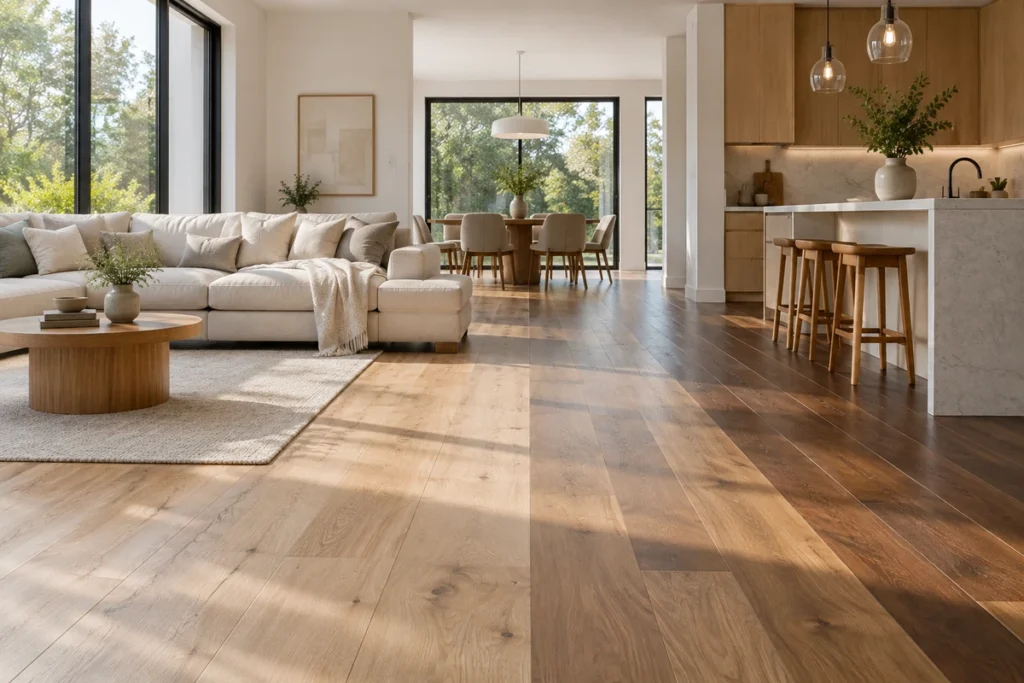
Best Floor Colors: How to Choose the Right Color
Choosing the best floor colors is less about following a trend and more about creating the right relationship between the floor, light, walls, furniture and room size.
If you are comparing floor colour ideas, ask four questions: How much natural light does the room receive? Is the room small or open? Are the fixed finishes warm or cool? And should the floor blend in or become a visual feature? This flooring color guide uses those factors to make the decision easier
| Floor color | Best suited to | Main effect | Watch for |
|---|---|---|---|
| Light natural wood | Small rooms, modern interiors, lower-light spaces | Brighter, more open feel | Very pale schemes can look washed out |
| Warm medium wood | Living rooms and family spaces | Balanced warmth and versatility | Strong orange undertones can clash with cool finishes |
| Dark brown or walnut | Large, bright rooms | Depth, contrast and a formal look | Can make small rooms feel heavier |
| Greige, gray or cool tones | Contemporary interiors | Calm, restrained palette | Too many cool finishes can feel flat |
What Are the Best Floor Colors?
There is no single best color flooring for every home. The most versatile choices are light natural wood, balanced medium browns, dark walnut tones and carefully selected greige or cool neutrals.
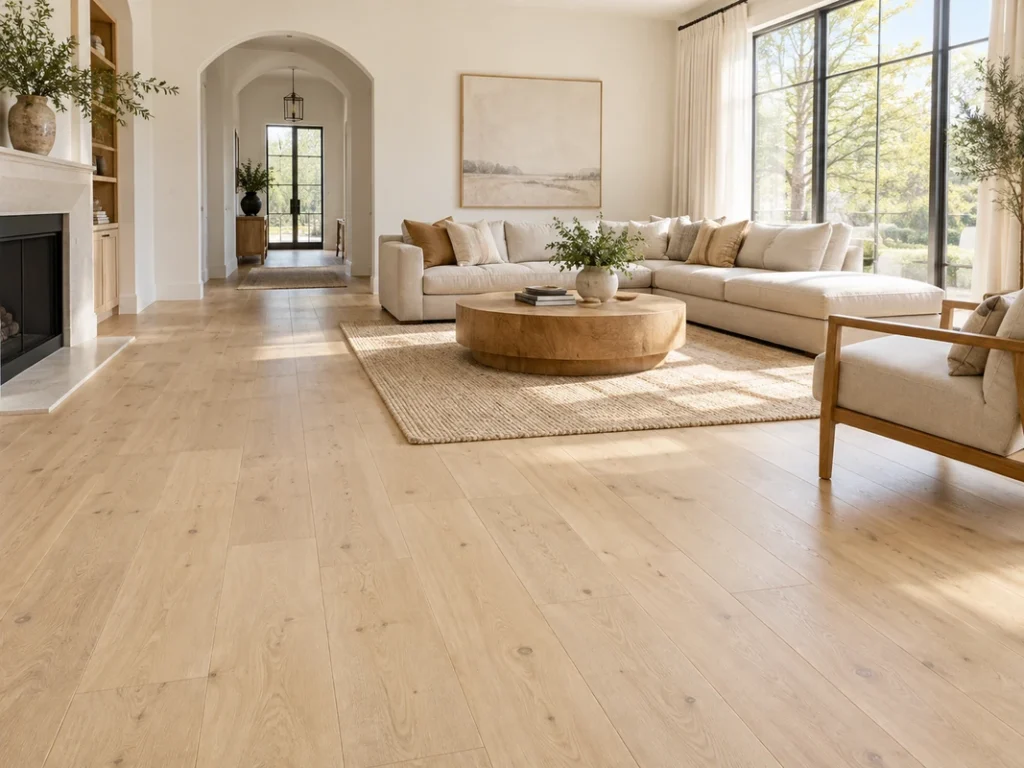
Light Natural Wood
Light oak, pale beige and natural timber tones are among the safest best wood floor colors for interiors that need brightness and visual space. They reflect more light than dark floors and work well in compact rooms, open-plan homes and spaces with soft neutral walls.
Light wooden flooring also gives furniture more flexibility. White, cream, taupe and natural fabrics coordinate easily with pale oak. In coastal interiors, the best color floor for a beach house is often a light natural timber tone because it supports an airy look without competing with daylight and natural materials
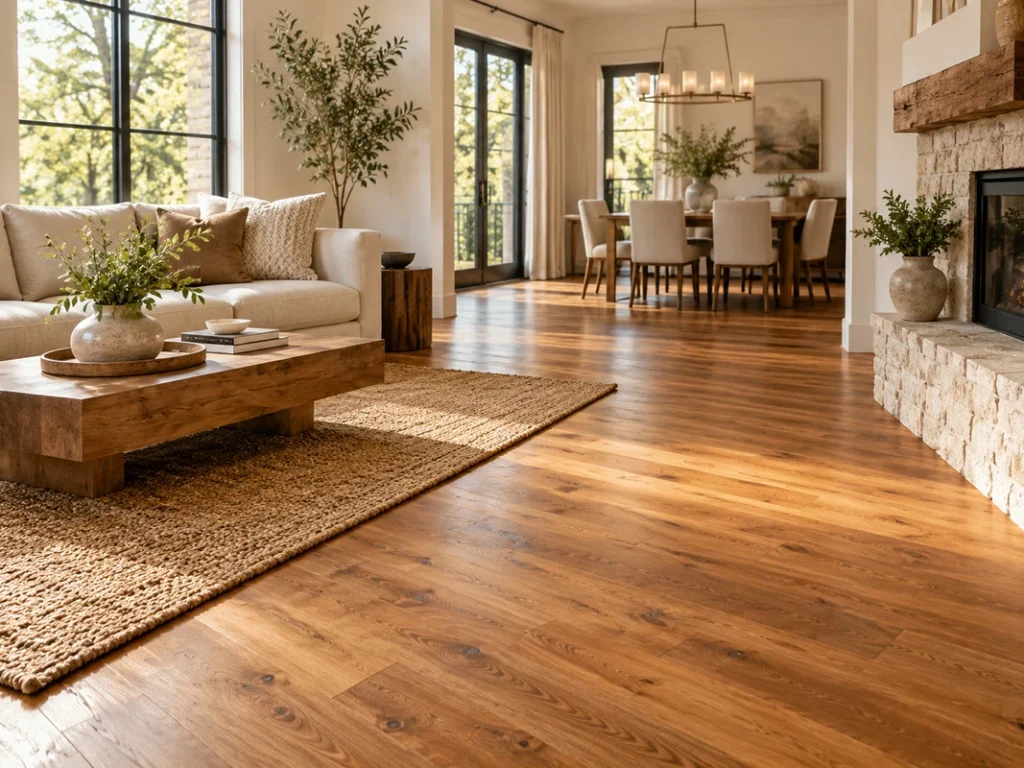
Warm Medium Wood Tones
Warm medium browns sit between pale oak and dark walnut, making them some of the most adaptable popular floor colors. Honey oak, caramel, chestnut and medium brown tones add warmth without making the room feel heavy.
These shades are available across parquet flooring, engineered wood and many laminate flooring ranges, making them useful when a project needs a consistent tone across different materials
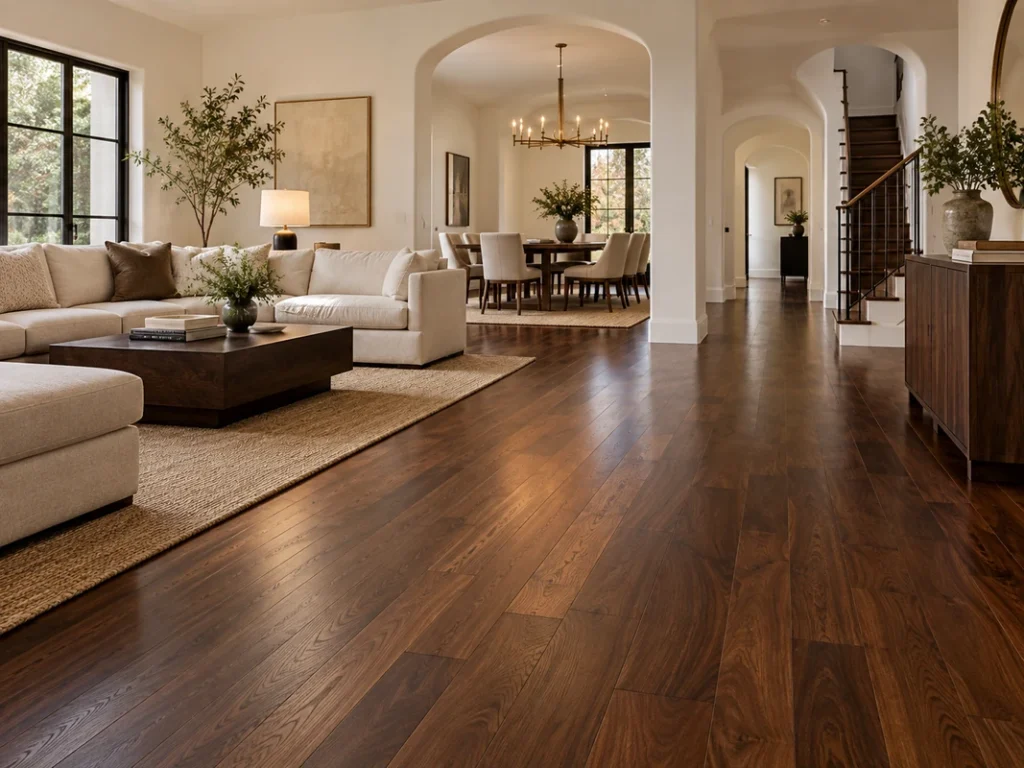
Dark Brown and Walnut Floors
Dark brown and walnut floors create stronger contrast and visual weight. In a large room with good daylight, they can make white or pale walls feel sharper and more architectural.
For the best floor color for white walls, dark walnut works when bold contrast is intentional, while light or medium wood creates a softer result. Dark floors need more care in dim spaces because they absorb light and tend to show dust and footprints more quickly
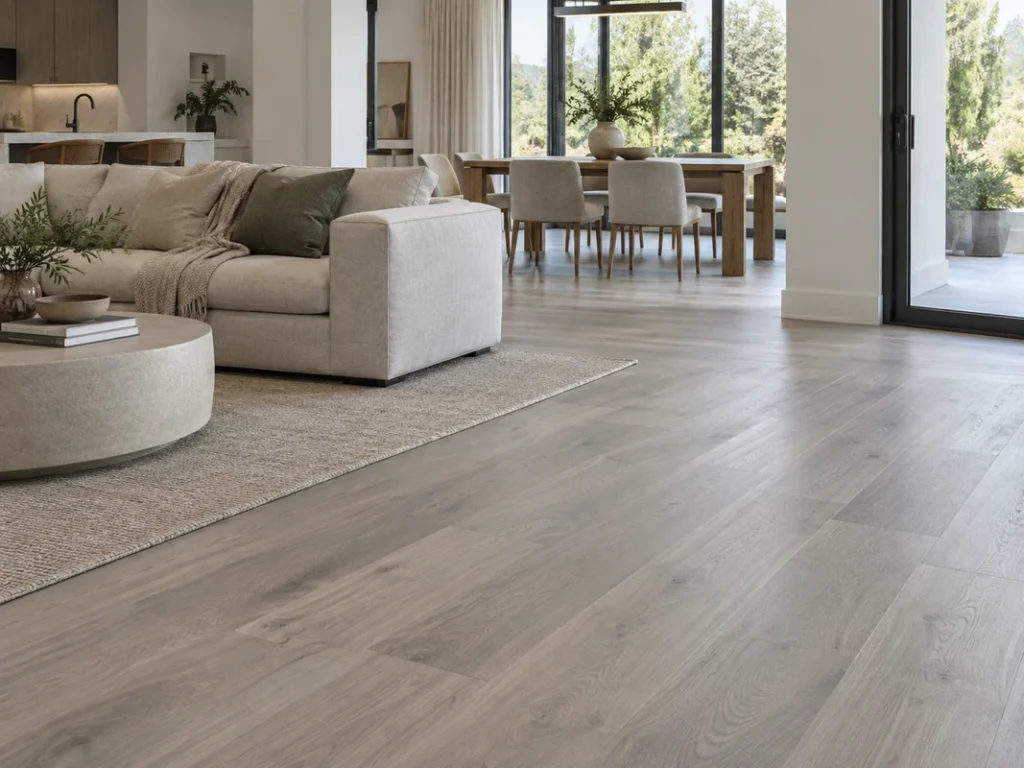
Greige, Gray and Cool-Toned Floors
Greige combines gray and beige, while cool gray floors lean toward neutral or blue undertones. These colors suit modern interiors with white, charcoal, stone, black metal or cool-toned cabinetry.
Gray flooring paired with cool walls and little texture can feel sterile. Balance it with timber furniture, textiles, warmer lighting or natural materials
How to Choose the Right Flooring Colour
Knowing how to choose flooring colour means judging the room as a whole rather than choosing a sample in isolation.
Start With Light, Room Size and Undertone
Begin with natural light. Lower-light rooms usually benefit from lighter or warmer flooring, while bright rooms can handle deeper colors. Small bedrooms and narrow spaces often feel more open with light to medium floors, while larger rooms can support richer walnut shades.
Then check undertones. A beige wall may have yellow, pink or gray undertones; wood may lean golden, reddish or cool brown. Exact matching is unnecessary, but obvious undertone conflicts should be avoided.
For the best floor color for bedroom spaces, calm light oak, natural beige or balanced medium wood is usually easier to live with than very dark or highly contrasting flooring.
Match the Floor With Walls, Cabinets and Existing Wood
Compare flooring with fixed elements that are expensive to change: wall paint, kitchen cabinetry, doors, built-in furniture and existing timber.
With white walls, almost any floor can work, but the effect changes: light wood feels open, medium wood adds warmth, and dark wood creates graphic contrast.
In kitchens, the best colour for kitchen floor tiles depends heavily on cabinet and worktop undertones. Warm beige or stone tones usually suit warm cabinetry, while greige and cooler neutrals work better with gray or white schemes.
If several wood finishes already exist, do not try to match them perfectly. Choose a compatible undertone and enough contrast to look intentional
Best Floor Color by Room and Lifestyle
| Space or lifestyle | Floor colors that usually work well | Why |
|---|---|---|
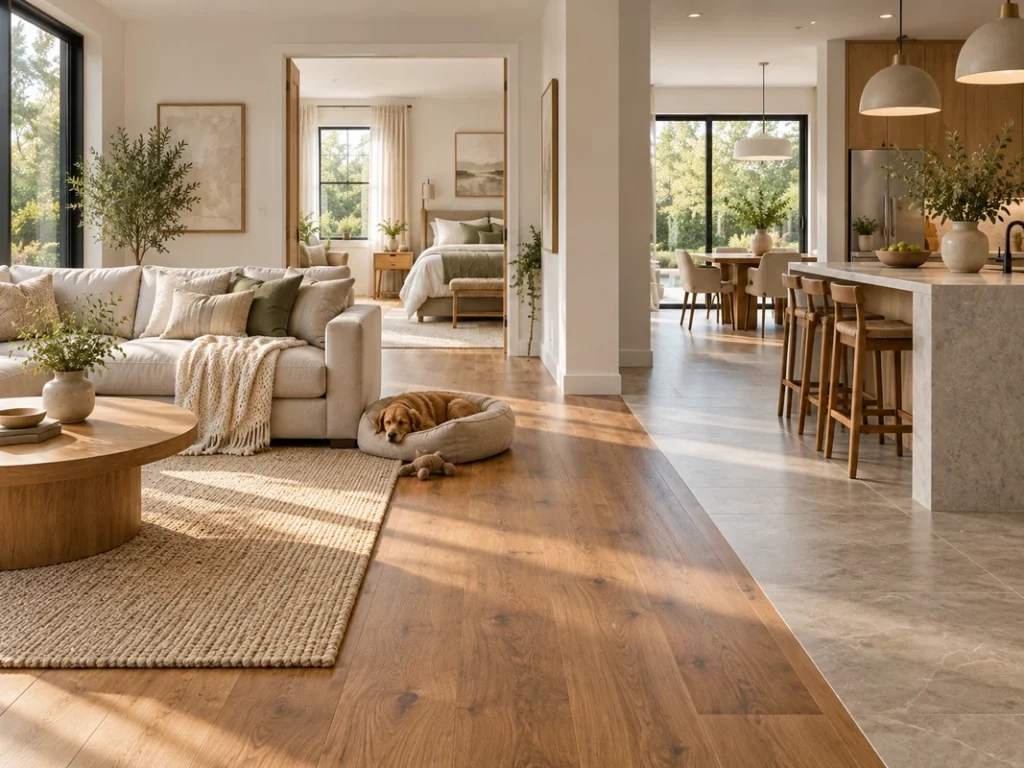
| Living room | Light oak, medium natural brown, walnut | Flexible with furniture and large visual areas |
| Bedroom | Pale oak, beige wood, soft medium brown | Calm and easy to coordinate |
| Kitchen | Warm beige, greige, natural wood tones | Works with common cabinet palettes |
| Small apartment | Light natural wood, pale greige | Helps maintain brightness |
| Large bright home | Medium brown, walnut | Can absorb stronger contrast |
| Beach house | Pale oak, sand, driftwood neutrals | Supports a relaxed coastal palette |
| Living room with tile | Beige, greige or warm stone | Useful when choosing the best floor tiles color for living room spaces |
| Garage | Mid-gray or speckled neutral epoxy | Practical when considering the best epoxy color for garage floor areas because it disguises dust better than extremes |
For homes using more than one flooring material, consistency matters more than making every room identical. When comparing flooring in Dubai, you may see tile in moisture-prone areas with engineered wood or laminate in living spaces. If you are researching wood flooring Dubai options specifically, keep the undertones related across rooms so the home still feels connected
Wood Floor Stain Colors: Choose the Tone, Not Just the Name
Popular hardwood floor stain colors can be misleading because names such as “walnut,” “honey” or “espresso” vary between manufacturers and can look different on different wood species. Choose by actual tone and undertone rather than the stain name alone.
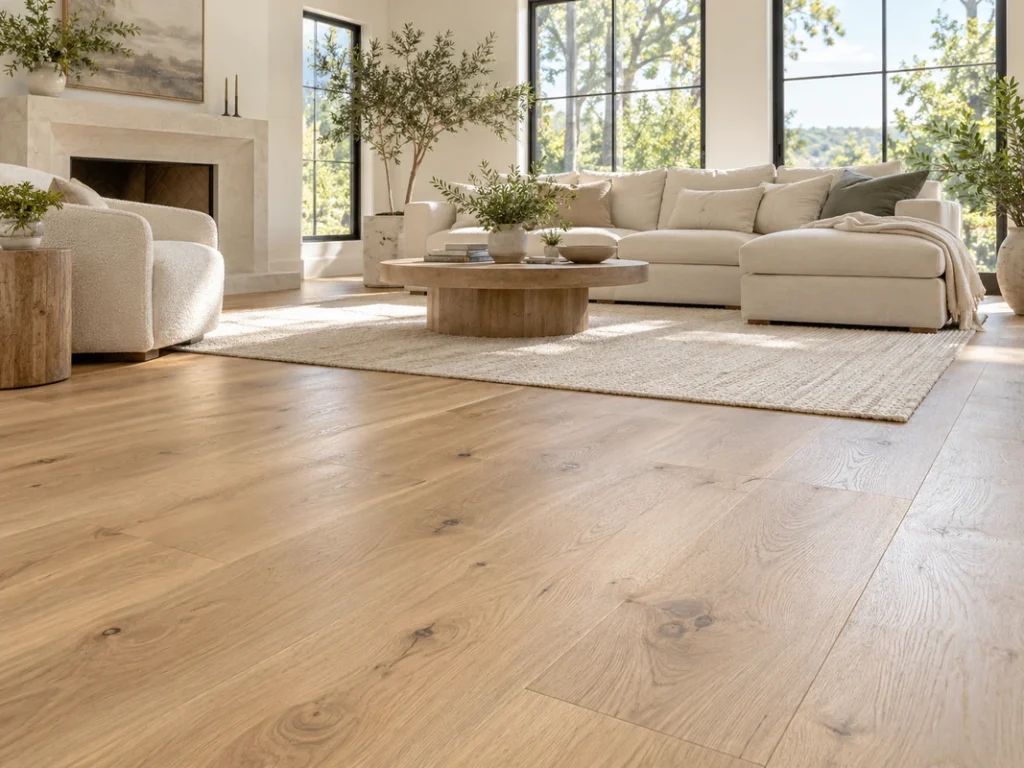
Natural and Clear Finishes
Natural and clear finishes preserve more of the wood’s original color and grain. They work especially well on oak and other attractive species where the material itself should remain visible. For many homeowners, this is the best wood floor color when longevity and flexibility matter more than creating a dramatic stain.
Natural finishes also suit solid hardwood flooring and high-quality engineered wood because they allow the real timber surface to remain visually dominant
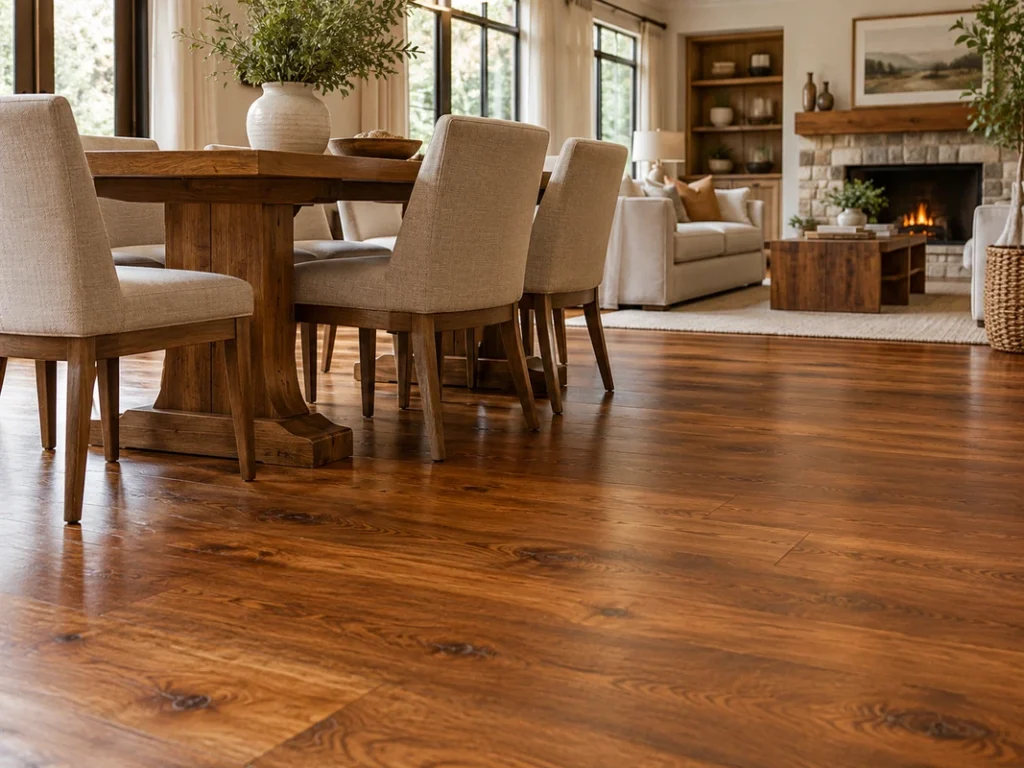
Warm Honey and Medium Brown Stains
Honey, caramel and medium brown stains create a warmer appearance without becoming as heavy as dark espresso. They pair well with cream, warm white and beige interiors.
The main issue is undertone. A stain that looks balanced on a small sample may appear much warmer across an entire floor, especially under warm artificial lighting
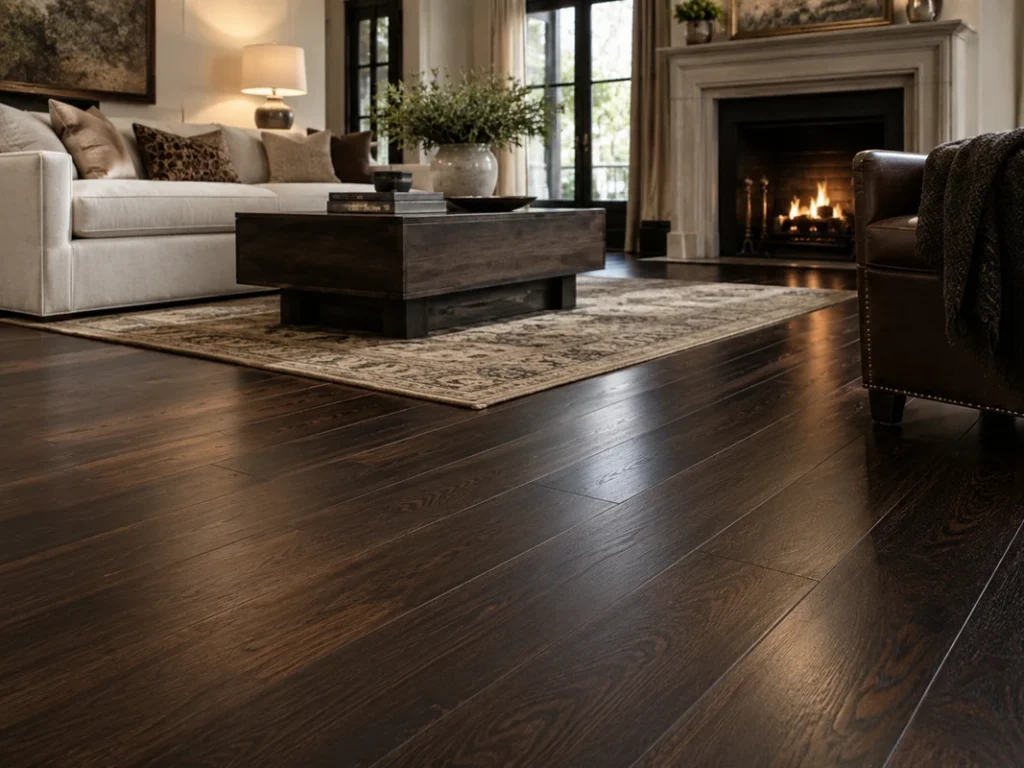
Dark Walnut and Espresso Stains
Dark walnut and espresso stains suit rooms where contrast and depth are deliberate design choices. They pair effectively with white walls, pale furniture and formal interiors.
However, dark stain is less forgiving. Scratches, dust and surface wear may be easier to notice, and the room needs enough light to prevent the floor from visually dominating the space
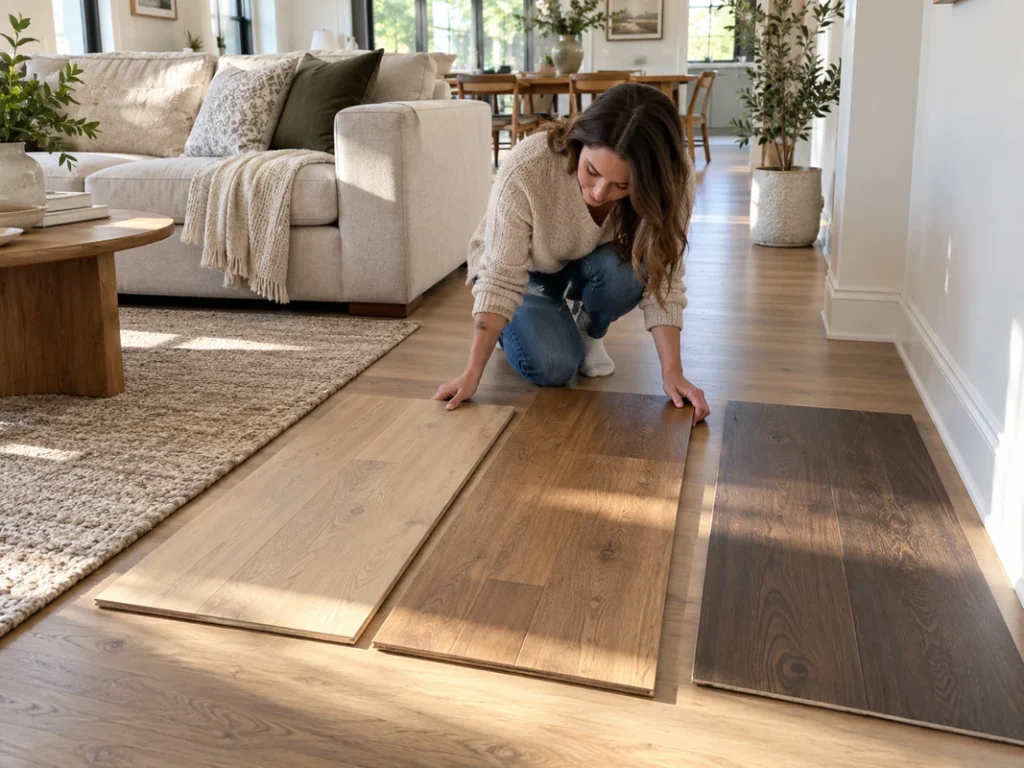
Before You Commit: Test the Color in the Actual Room
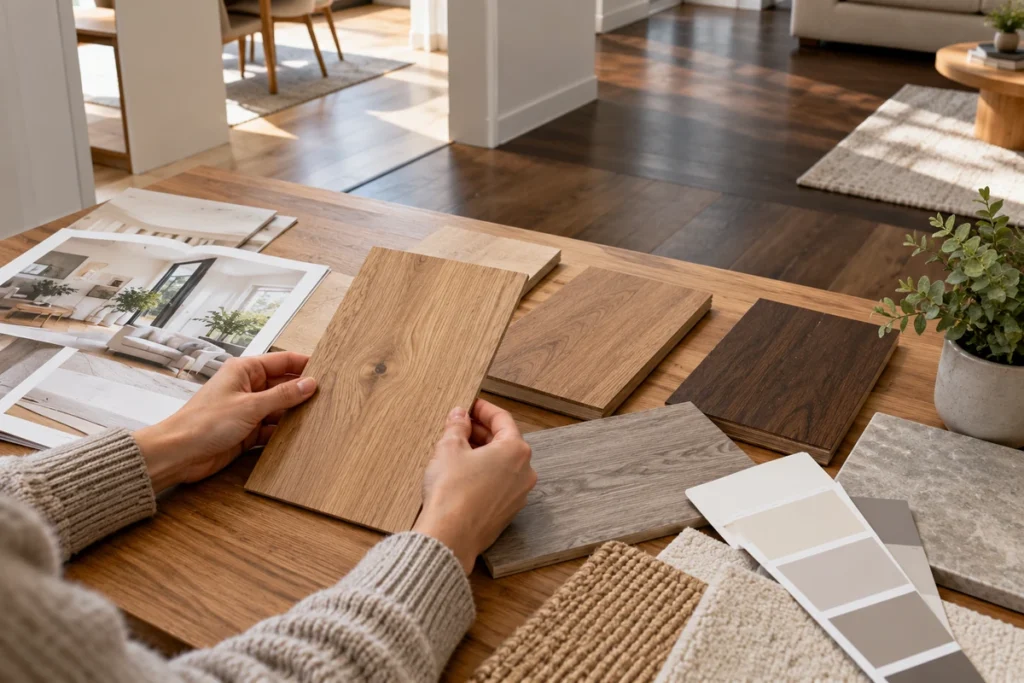
Never approve a flooring color from a showroom sample alone. Place several samples in the actual room and observe them in morning light, afternoon light and artificial lighting at night. Move them beside walls, cabinets and major furniture pieces.
For wood floors, evaluate more than one plank because natural grain and color variation can change the result. If you are comparing wooden flooring, parquet flooring or engineered wood, inspect a larger sample area whenever possible.
For stained floors, test the stain on the same wood species and, ideally, the same product that will be installed
Final Checklist: Which Floor Color Is Right for You?
Before making the final decision, check five things:
- Does the floor work with the room’s natural and artificial light?
- Does its undertone coordinate with walls, cabinets and fixed finishes?
- Is the color appropriate for the room size?
- Will visible dust, scratches and maintenance suit your lifestyle?
- Have you tested the real sample in the room at different times of day?
The best floor colors are the ones that support the room rather than fight it. Light natural woods are reliable for brightness, medium browns offer flexibility, dark walnut creates stronger contrast, and greige or cool floors suit carefully balanced contemporary interiors.
If you are planning a wider renovation, exploring broader wood flooring design ideas can also help you coordinate color with plank direction, pattern and room proportions. Greenwood can then help you compare suitable flooring options once you know the tone and visual effect your space needs