
Balcony Flooring in Dubai & UAE: Best Materials, Costs, and Expert Guide
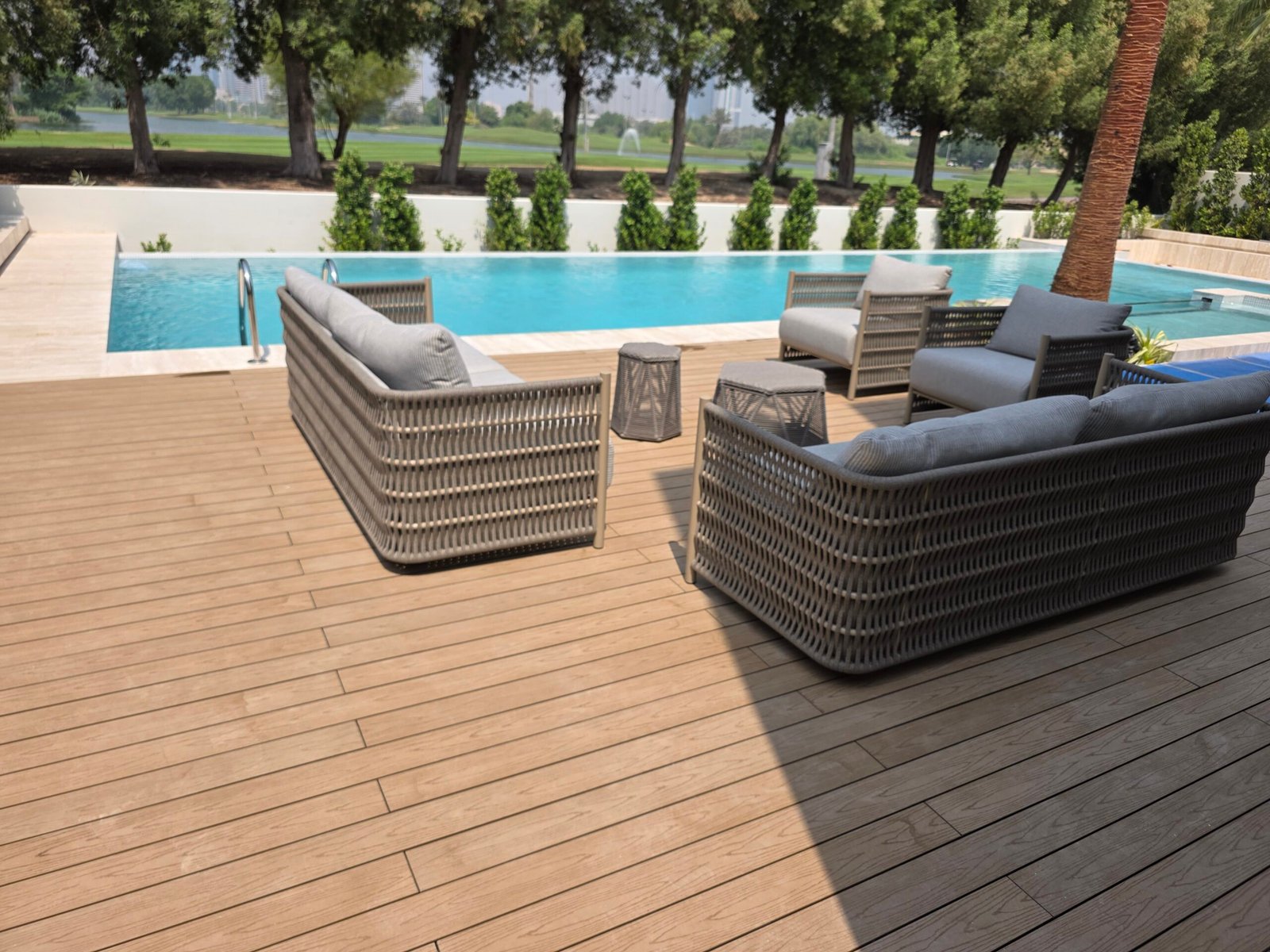
Choosing the right balcony flooring in Dubai or anywhere in the UAE is not just about appearance. A balcony floor must handle harsh sun, humidity, dust, temperature changes, and daily outdoor use while still looking elegant and staying safe underfoot. That is why many homeowners, apartment residents, designers, and developers look for flooring materials that combine durability, low maintenance, and a refined finish. In the UAE market, Green Wood positions itself around premium European flooring, outdoor decking, expert installation, and local project guidance, which makes it relevant for balcony and terrace applications where technical performance matters.
If you are searching for the best balcony flooring solution, this guide explains which materials work best, what to avoid, and how to choose a system that fits your property, your lifestyle, and the UAE climate.
Why Is Balcony Flooring Important in the UAE?
Balcony flooring in the UAE faces more stress than many people expect. Unlike indoor floors, balcony surfaces are constantly exposed to direct sunlight, heat build-up, humidity, occasional rain, dust, and frequent cleaning. In buildings near the coast, moisture and salt exposure can also affect long-term performance. The result is simple: choosing the wrong outdoor floor can lead to fading, slipping, swelling, cracking, or unnecessary maintenance.
This is exactly why material selection matters. Green Wood highlights its local experience with UAE climate conditions, subfloor issues, and project execution, alongside technical checks such as moisture testing and subfloor assessment before installation. Those are important signals for balcony projects, where performance matters just as much as design.
What Should Good Balcony Flooring Offer?
The best balcony flooring should deliver a balance of style and performance. In practical terms, that means it should:
resist water and humidity
tolerate strong UV and heat exposure
offer a safe, anti-slip surface
require manageable maintenance
suit the building type, whether apartment, villa, terrace, or rooftop
work with the condition of the existing subfloor
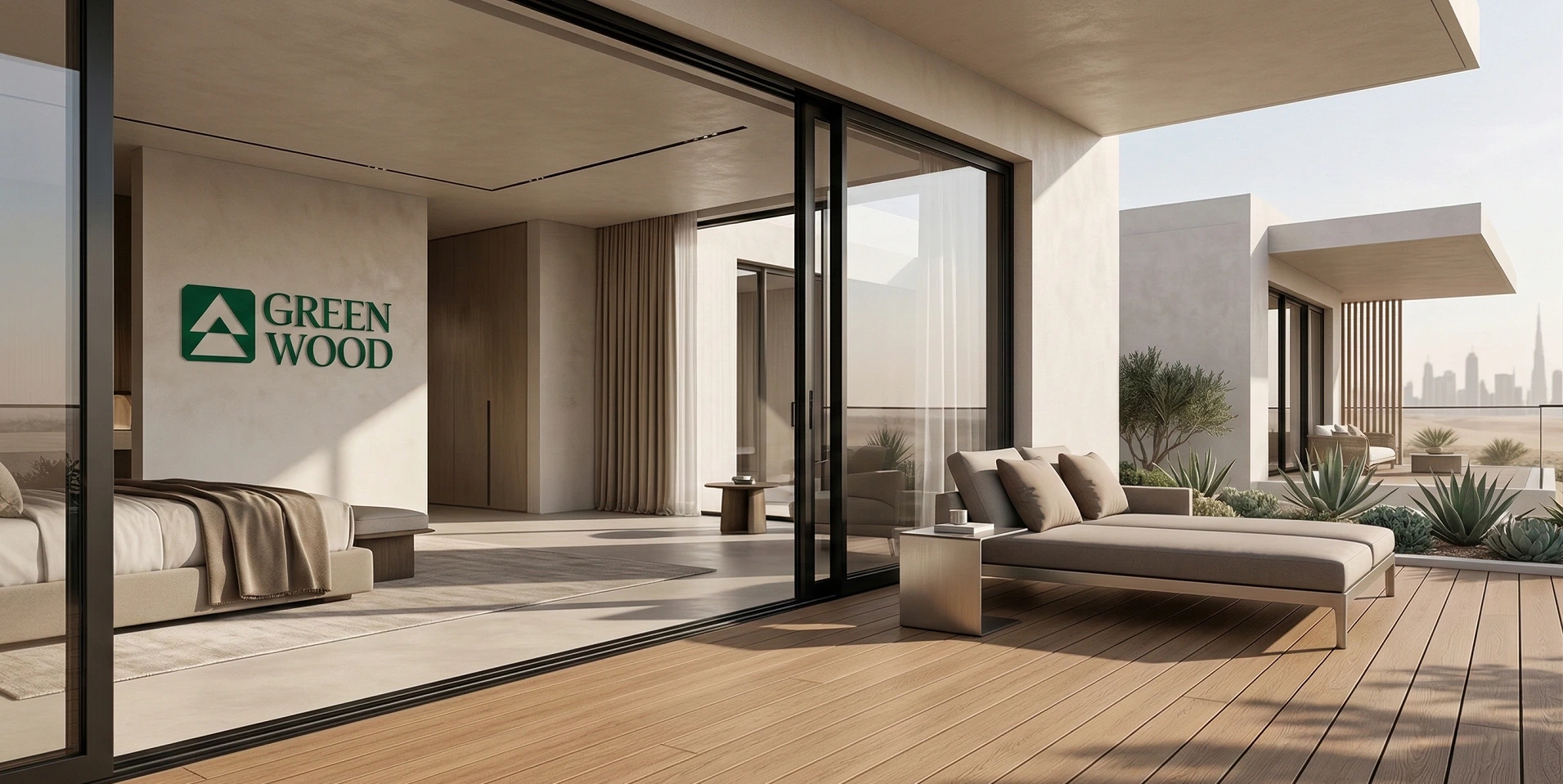
In premium projects, homeowners also want balcony flooring that feels warm and upscale rather than purely functional. That is one reason outdoor decking systems remain popular in Dubai and other UAE cities. Green Wood’s site specifically presents outdoor decking for balconies, terraces, and poolsides, and mentions weather-resistant WPC exterior solutions through its featured brands.
Best Types of Balcony Flooring in the UAE
1) WPC Decking for Balconies
WPC, or wood-plastic composite, is one of the strongest options for modern balcony flooring in the UAE. It gives a wood-like appearance while offering better resistance to moisture and outdoor wear than natural wood in many situations. WPC is especially attractive for exposed balconies, terraces, and poolside areas because it is designed for exterior use and tends to be easier to maintain than traditional timber.
For Dubai apartments and villas, WPC balcony flooring works well when you want a warm, premium aesthetic without the constant upkeep of natural wood. Green Wood specifically highlights outdoor decking solutions, including WPC and natural wood, for balconies, terraces, and poolsides, and also features EPW as a specialist in weather-resistant outdoor flooring solutions.
Best for: exposed balconies, terraces, outdoor living spaces, modern villas
Main advantage: outdoor durability with a premium wood-style look
Things to check: substructure, drainage, slip resistance, installation quality
2) Outdoor Porcelain or Ceramic Tiles
Tiles remain a classic option for balcony flooring because they are widely available, durable, and easy to clean. However, not every tile is suitable for balconies in the UAE. For outdoor use, you need products with the right surface finish, water resistance, and slip rating. The wrong tile can become too hot, too slippery, or visually flat compared to warmer deck-style materials.
Porcelain often performs better than standard ceramic outdoors because it is denser and more resistant to water absorption. Still, the finish matters. A textured, outdoor-rated tile is a smarter choice than a polished interior tile.
Best for: practical balconies, contemporary apartments, minimalist exterior design
Main advantage: durability and easy cleaning
Things to check: anti-slip rating, heat behaviour, grout quality, drainage design
3) Vinyl for Covered or Semi-Covered Balconies
Vinyl is often chosen for its waterproof qualities, comfort underfoot, and broad range of finishes. On Green Wood’s site, vinyl is described as waterproof and long lasting, which explains why it is attractive for certain residential use cases. But for balcony flooring, there is an important distinction: not every vinyl product is suitable for direct outdoor exposure. In very hot, sun-exposed balcony conditions, product specification becomes critical.
That means vinyl can be a strong option for covered balconies, shaded terraces, or semi-outdoor spaces, but it should not automatically be treated as the default solution for fully exposed outdoor areas. The selection must be based on technical suitability, not appearance alone.
Best for: covered balconies, shaded apartment terraces, low-maintenance semi-outdoor spaces
Main advantage: comfort, softer feel, easy upkeep
Things to check: UV suitability, exposure level, manufacturer specification
4) Natural Wood Decking
Natural wood decking gives a rich, high-end look that many luxury property owners love. It feels warm, organic, and architecturally strong. But in the UAE, natural wood for balconies requires responsible specification, proper installation, and a realistic approach to maintenance. Green Wood’s overall positioning strongly emphasizes premium wood flooring, European material quality, and project guidance, which fits well with clients seeking a more natural outdoor finish rather than a generic solution.
Natural wood balcony flooring can be beautiful, especially in premium villas or design-led projects, but it usually demands more maintenance than WPC. For many clients, the right decision depends on whether they value authentic wood character enough to accept the upkeep that comes with it.
Best for: luxury villas, design-led terraces, premium outdoor concepts
Main advantage: authentic natural character
Things to check: maintenance commitment, oiling or finishing cycle, species suitability, installation method
5) Modular Deck Tiles or Mat Systems
For renters or fast cosmetic upgrades, modular systems can be useful. They are easier to install, often removable, and can improve the appearance of an older balcony without major structural work. These are not always the most premium long-term solution, but they can be practical for apartments where the user wants a fast improvement without a full flooring replacement.
Best for: rental properties, quick balcony upgrades, temporary use
Main advantage: flexibility and speed
Things to check: movement, drainage, UV durability, long-term stability
What Is the Best Balcony Flooring for Apartments in Dubai?
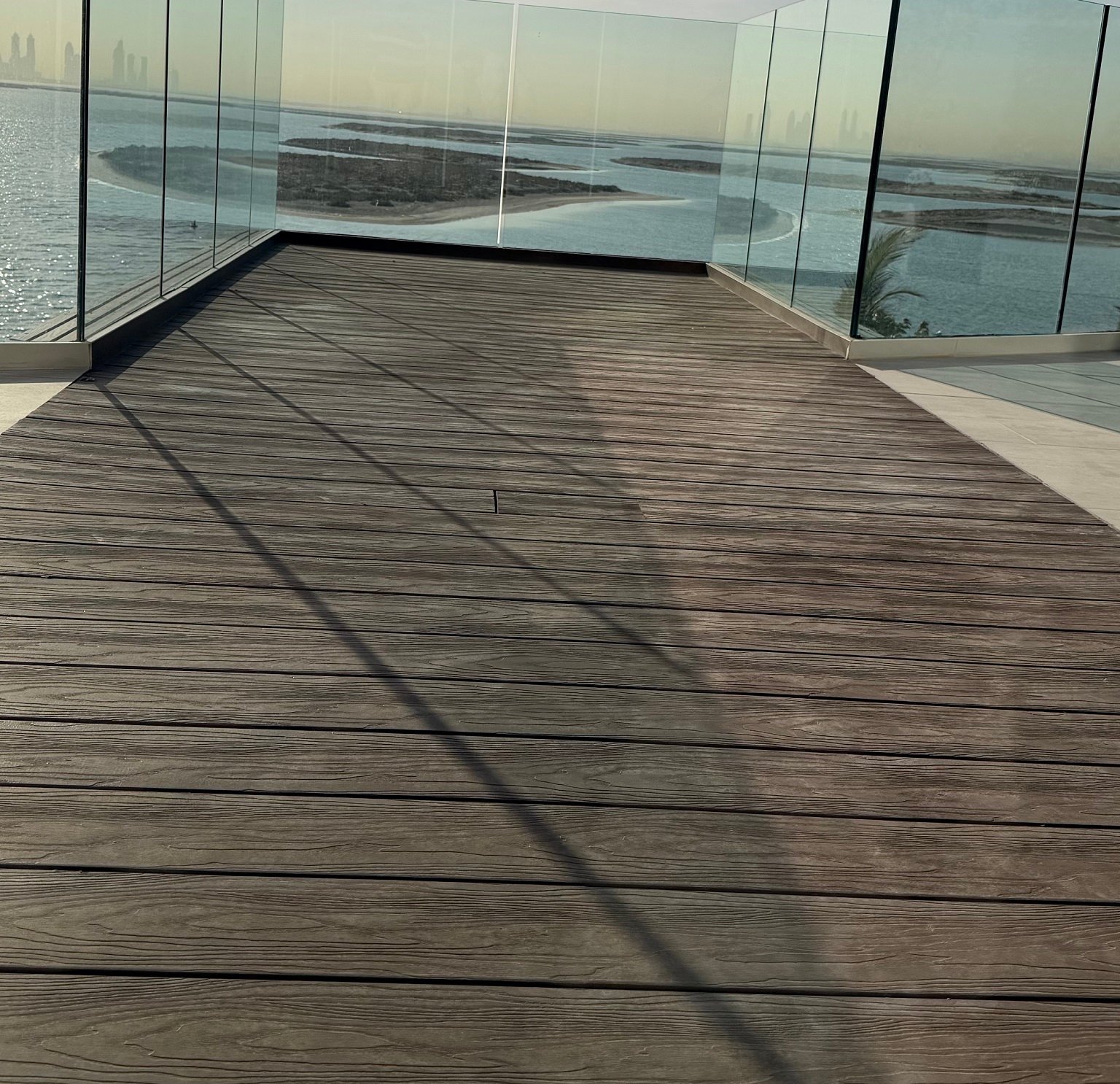
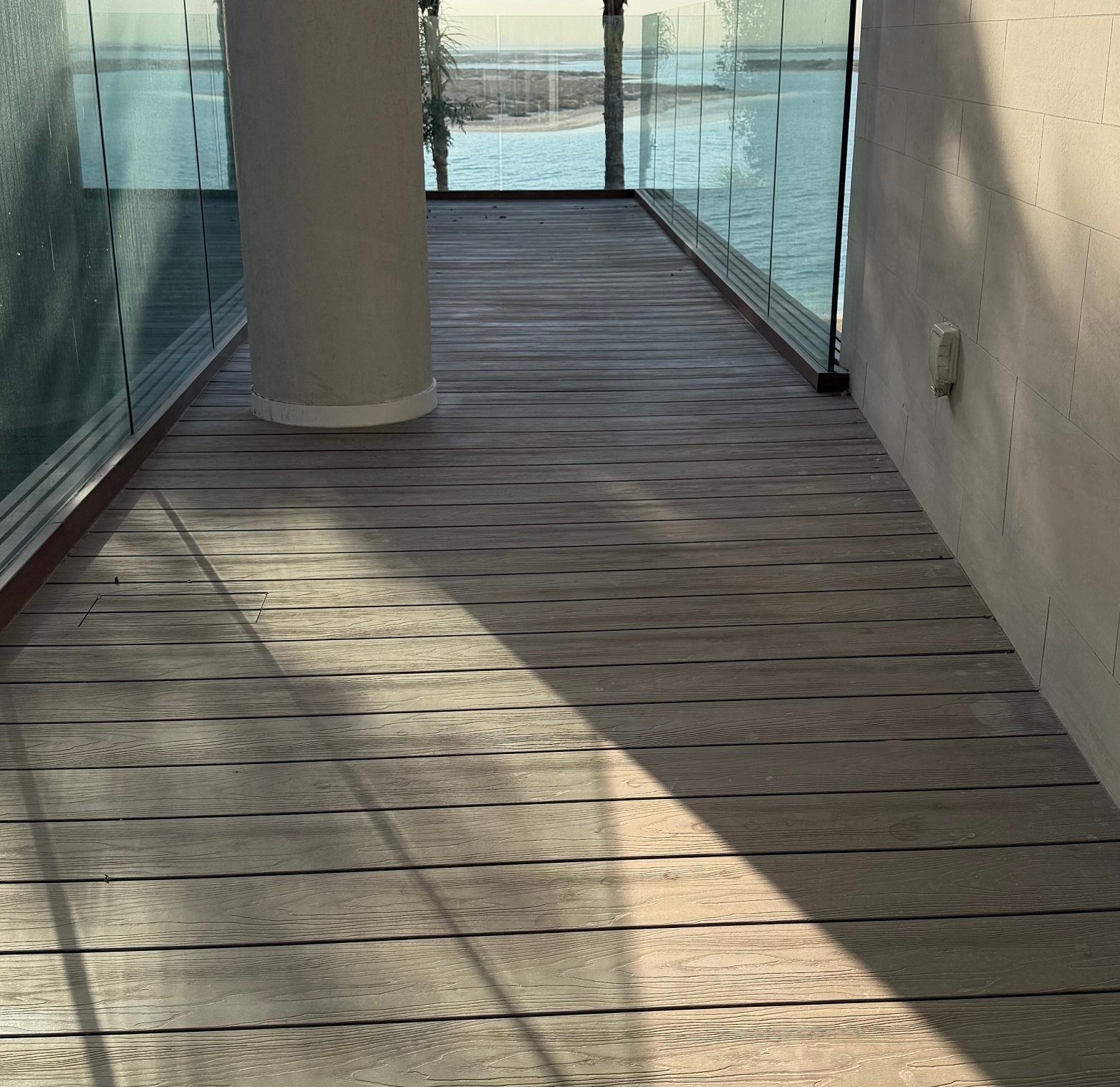
For many apartment owners in Dubai, the best balcony flooring is usually one of these two options:
WPC decking if the balcony is open, sun-exposed, and design quality matters
Outdoor-rated tile if the goal is practical durability and easier budget control
For covered balconies, carefully selected vinyl or other resilient materials may also work. The right answer depends on sunlight, building rules, drainage, usage pattern, and whether you want a warmer or more architectural look.
Green Wood’s positioning for homeowners and design professionals is helpful here because the company combines material selection, sample support, subfloor assessment, site checks, and installation guidance rather than treating flooring as a simple product sale. Their site also emphasizes fast quotes, samples, and consultation-based support, which is useful for clients comparing multiple balcony flooring directions.
Balcony Flooring: WPC vs Tile
One of the most common questions in the UAE is whether to choose WPC decking or tile for a balcony.
Choose WPC if you want:
a more premium and warmer visual feel, a deck-style look, and a more lifestyle-oriented outdoor space
Choose tile if you want:
a simpler hard surface, easier matching with building finishes, and a more conventional flooring system
In many premium residential projects, WPC creates a more inviting outdoor living experience. In more functional settings, tiles may still be the practical answer. The key is not to follow trends blindly. Good balcony flooring should match the balcony’s real exposure conditions and the user’s expectations.
How Green Wood Can Help With Balcony Flooring in the UAE
When choosing balcony flooring, materials alone are not enough. The installation method, subfloor condition, slope, drainage, movement allowance, and finish details all affect the final result. Green Wood’s site repeatedly emphasizes project support elements such as site assessment, moisture testing, subfloor evaluation, standardized installation, technical guidance, fast samples, and expert consultation. The brand also highlights European-quality materials and outdoor decking systems for balconies and terraces.
That matters because a balcony floor must perform outdoors, not just look attractive in a catalogue. If you are comparing options for a villa terrace, an apartment balcony, or an outdoor hospitality area, working with a company that understands local project conditions can reduce costly mistakes.
Common Mistakes to Avoid When Choosing Balcony Flooring
A lot of balcony flooring problems begin before installation even starts. The most common mistakes include:
choosing a material based only on appearance
using indoor products outdoors
ignoring drainage and slope
selecting a slippery finish
underestimating sun exposure
skipping subfloor inspection
hiring installers without exterior flooring experience
These issues are especially relevant in the UAE, where heat and exposure are not minor details. Green Wood’s own messaging around measurement, subfloor assessment, moisture testing, and in-house installation reflects the importance of getting these basics right from the beginning.
Is Balcony Flooring Worth Upgrading?
Yes — in many cases, upgrading balcony flooring is one of the simplest ways to improve both visual value and daily usability. A well-finished balcony feels more like an extension of the home. It can improve comfort, aesthetics, and even the perceived quality of the property.
For homeowners, that means better outdoor living. For landlords, it can support a more attractive presentation. For developers and designers, it helps the exterior feel as considered as the interior.
Final Thoughts
The best balcony flooring in Dubai and the UAE is the one that fits the climate, the exposure level, and the way the space will actually be used. WPC decking is often one of the strongest choices for stylish and durable outdoor living. Outdoor-rated porcelain tiles remain a reliable practical option. Covered balconies may allow for other materials, including selected resilient surfaces. Natural wood can be stunning in the right premium project, but it requires the right specification and care.
If you want a balcony floor that looks refined and performs properly over time, a consultation-led approach is better than choosing by photo alone. Green Wood’s focus on European materials, outdoor decking, project guidance, and technical checks makes it a relevant partner for clients in the UAE who want a more reliable path from selection to installation.
Frequently Asked Questions
What is the best balcony flooring for Dubai weather?
For many projects in Dubai, WPC decking and outdoor-rated porcelain tiles are among the best options because they can handle heat, humidity, and outdoor wear better than many indoor flooring products
Is vinyl good for balcony flooring?
Vinyl can work for covered or semi-covered balconies, but not every vinyl product is suitable for direct sun and full outdoor exposure. Product specification is critical.
Is WPC better than tile for balcony flooring?
WPC is often better when you want a warmer, more premium outdoor-living look. Tile can be better when you want a hard, practical, and easy-clean surface.
Can I use indoor flooring on a balcony?
In most cases, no. Balcony flooring should be selected specifically for outdoor conditions, including moisture, UV, temperature fluctuation, and slip safety.
Does Green Wood provide balcony flooring solutions in the UAE?
Green Wood presents outdoor decking, WPC and natural wood solutions for balconies, terraces, and poolsides, and also highlights consultation, sample support, technical checks, and installation guidance on its website.