
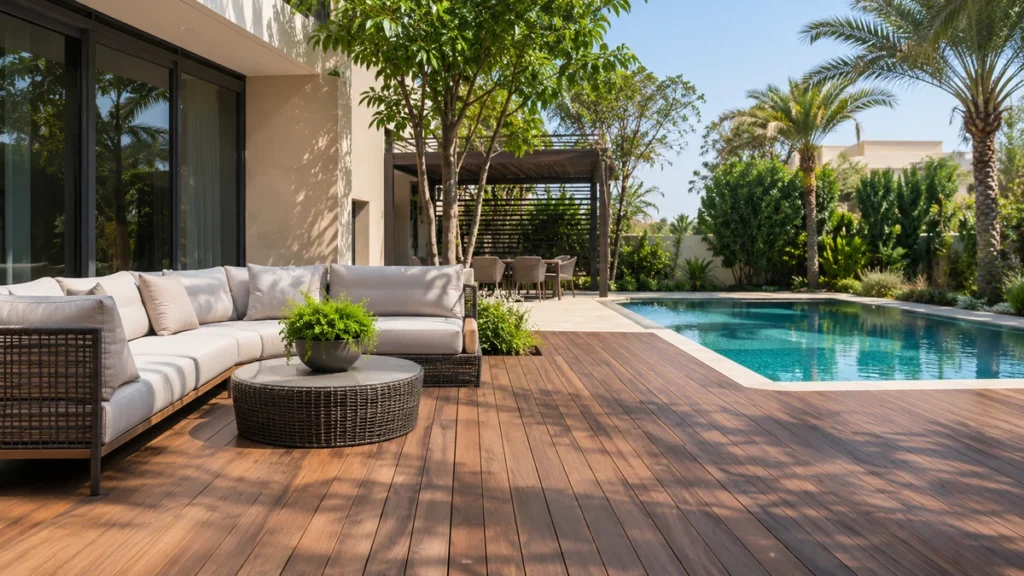
Best Outdoor Decking Materials for Dubai Climate
Choosing the best outdoor decking material for Dubai means considering extreme summer heat, intense sunlight, humidity, and occasional water exposure. High-quality wood-plastic composite (WPC) is often a practical low-maintenance option for villas, terraces, and pool areas. However, natural hardwood offers authentic timber character, thermally modified wood provides improved dimensional stability, PVC resists moisture without wood fibres, and porcelain offers a durable alternative to decking boards. The right choice depends on surface temperature, slip resistance, maintenance expectations, installation conditions, and budget—not simply which material is advertised as the most durable.
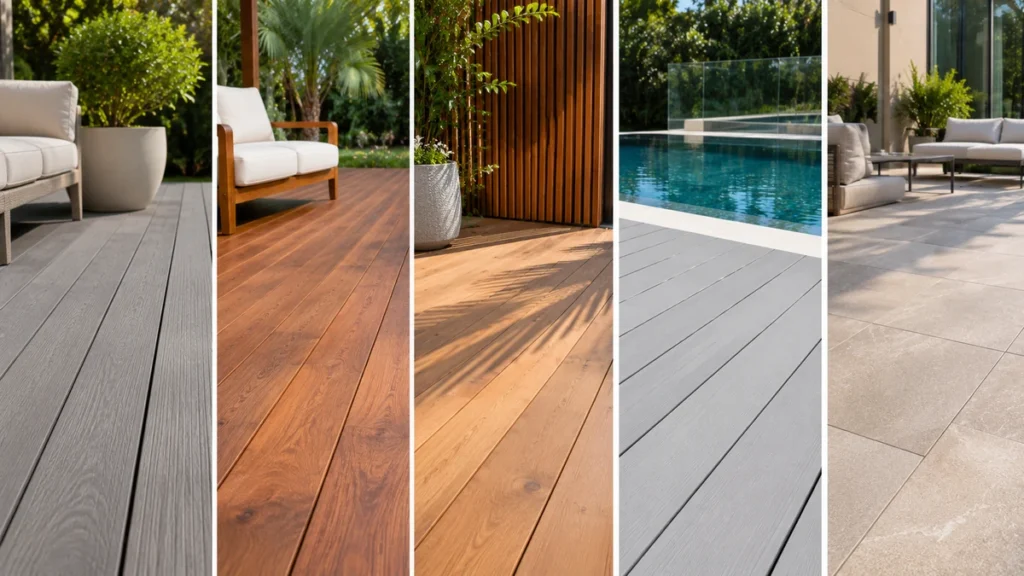
Best Outdoor Decking Materials Compared
The table below compares five popular outdoor flooring options for Dubai's climate.
| Material | Dubai suitability | Heat and barefoot comfort | Moisture and UV resistance | Maintenance | Relative cost | Ideal application |
|---|---|---|---|---|---|---|
| WPC composite | Good with suitable product specifications | Can become hot; colour and surface technology matter | Good moisture resistance; UV performance varies | Low | Medium–High | Villas, gardens, pool areas |
| Natural hardwood | Good with durable species | Varies with colour and exposure | Naturally durable species resist decay; UV changes appearance | Medium–High | High–Premium | Luxury patios, villa decks |
| Thermowood | Good when correctly specified | Product and colour dependent | Improved moisture stability; surface weathers | Medium | Medium–High | Patios, shaded terraces |
| PVC | Good with UV-stabilised products | Can heat up; thermal movement matters | High moisture resistance; UV protection varies | Low | Medium–High | Wet areas, terraces |
| Porcelain pavers | Very good with exterior-rated products | Can become hot in direct sunlight | Excellent moisture resistance; colour generally stable | Low | Medium–High | Pool surrounds, patios, rooftops |
Cost categories are indicative rather than Dubai market quotations. Product quality, substructure, site preparation, and installation complexity can significantly change the final price.
Pressure-treated timber is another budget-friendly option, but it generally requires more frequent inspection, surface maintenance, and attention to weathering than premium composite alternatives.
Which Outdoor Decking Material Is Best for Dubai?
The best decking materials serve different priorities. Some minimise ongoing maintenance, others emphasise natural appearance, while certain options are better suited to wet environments or specific installation systems.
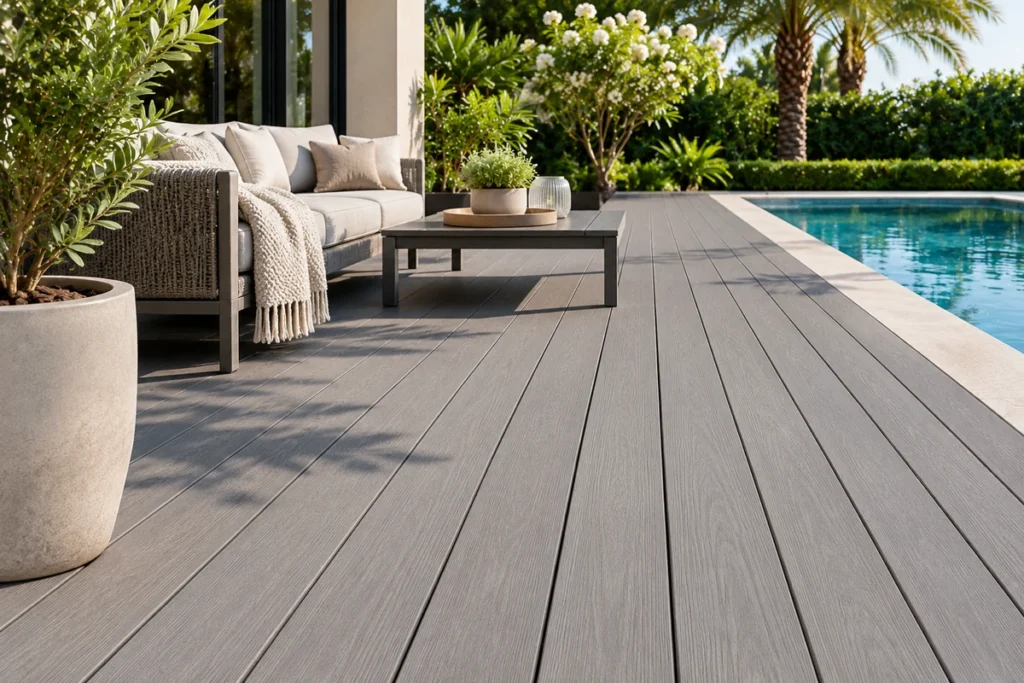
WPC Composite Decking — Best for Low-Maintenance Projects
Wood-plastic composite combines wood fibres or flour with thermoplastic polymers and additives. Quality wpc decking can resist moisture-related deterioration, splintering, and routine weather exposure without the regular staining typically associated with natural timber.
For Dubai homeowners, its main advantage is convenience. Routine cleaning usually involves removing debris and washing the surface according to the manufacturer’s instructions.
However, not all WPC boards perform equally. Protective surface caps, UV stabilisers, core composition, board profiles, and manufacturing quality influence fading, staining, expansion, and durability.
WPC can also become uncomfortable under direct summer sunlight, particularly in darker finishes. Selecting lighter colours, evaluating heat-reducing technologies, and incorporating shade can improve usability.
Best suited for: Villa gardens, residential patios, pool surrounds, and commercial projects where predictable maintenance is a priority.
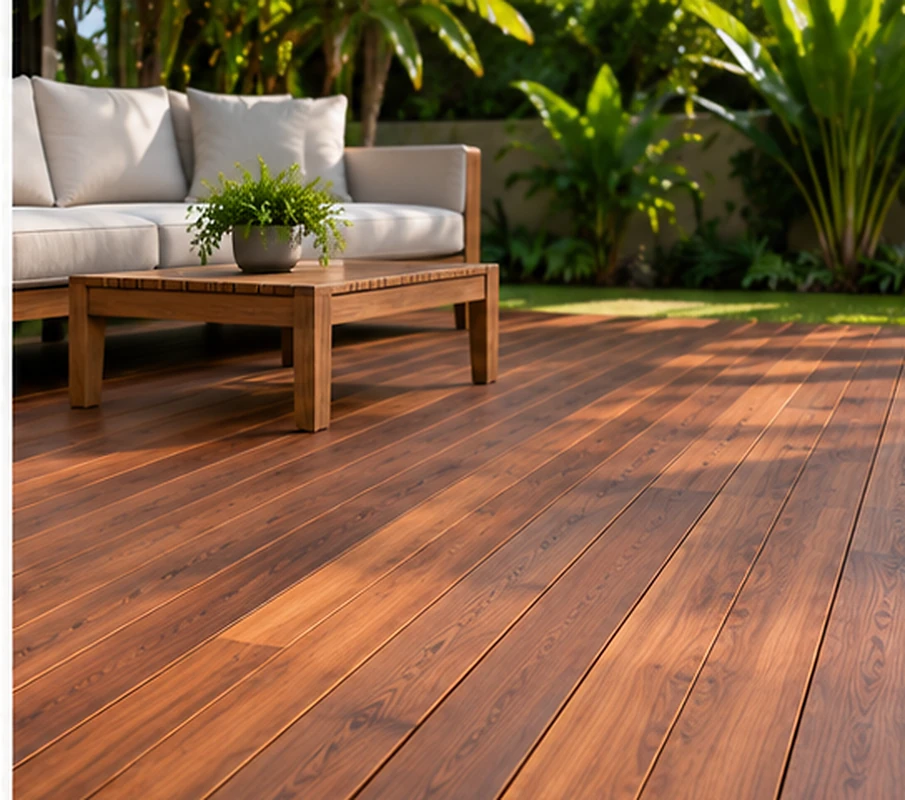
Natural Hardwood Decking — Best for Authentic Wood Appearance
Natural hardwood remains attractive for projects where genuine grain, texture, and timber character matter more than minimal maintenance.
Teak and ipe are two established outdoor wood decking material options, although their properties differ.
Teak: Naturally oily, relatively dimensionally stable, and valued for its warm golden-brown appearance. It is commonly selected for premium outdoor environments.
Ipe: Exceptionally dense and hard, with strong natural resistance to decay and wear. Its density makes cutting, drilling, and installation more demanding.
Both can weather towards a grey appearance under sunlight. Maintaining their original colour generally requires suitable cleaning and finishing treatments.
Hardwood is particularly effective when creating a visual connection between outdoor spaces and interior wooden flooring, although exterior decks require appropriately rated timber and different installation detailing.
Best suited for: Premium villas, architectural terraces, and projects prioritising natural materials.
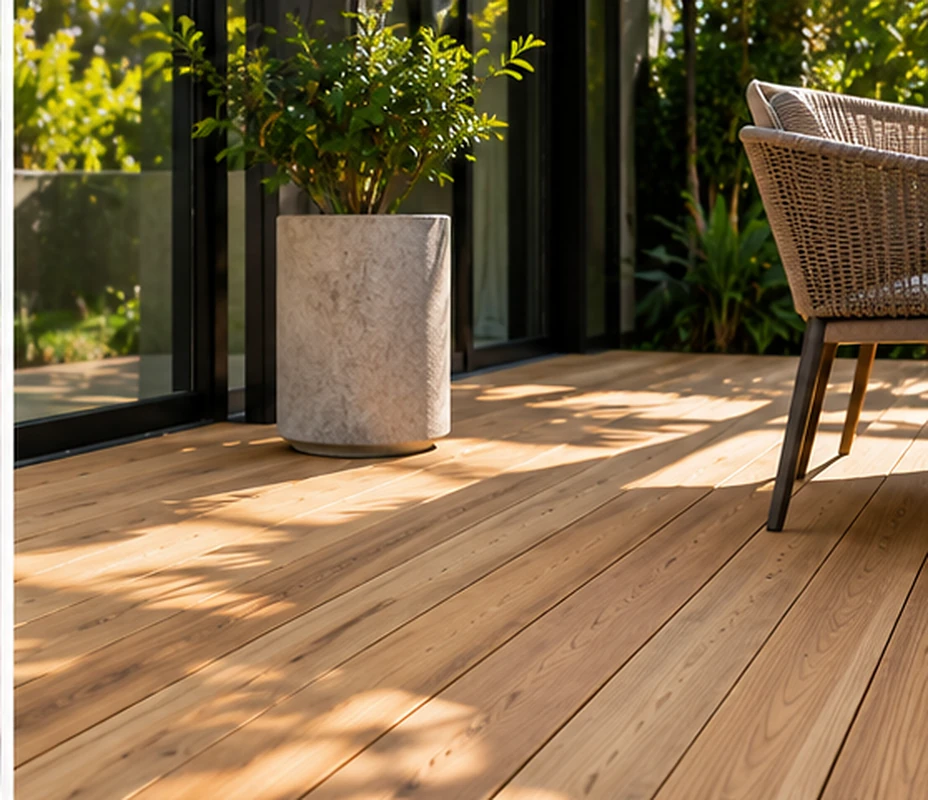
Thermally Modified Wood — Natural Timber with Improved Stability
Thermally modified wood, often called Thermowood, undergoes controlled heat treatment that alters its moisture-related properties.
The process generally reduces moisture absorption and improves dimensional stability compared with untreated timber of the same species. This can help limit swelling and shrinking under changing environmental conditions.
However, thermal modification does not make timber waterproof or maintenance-free. The surface can gradually turn grey under UV exposure, and some treatments may reduce mechanical strength.
Performance also depends on the original wood species and treatment process. Only products approved for exterior decking should be considered.
Best suited for: Residential terraces and garden decks where natural timber appearance and improved stability are priorities.
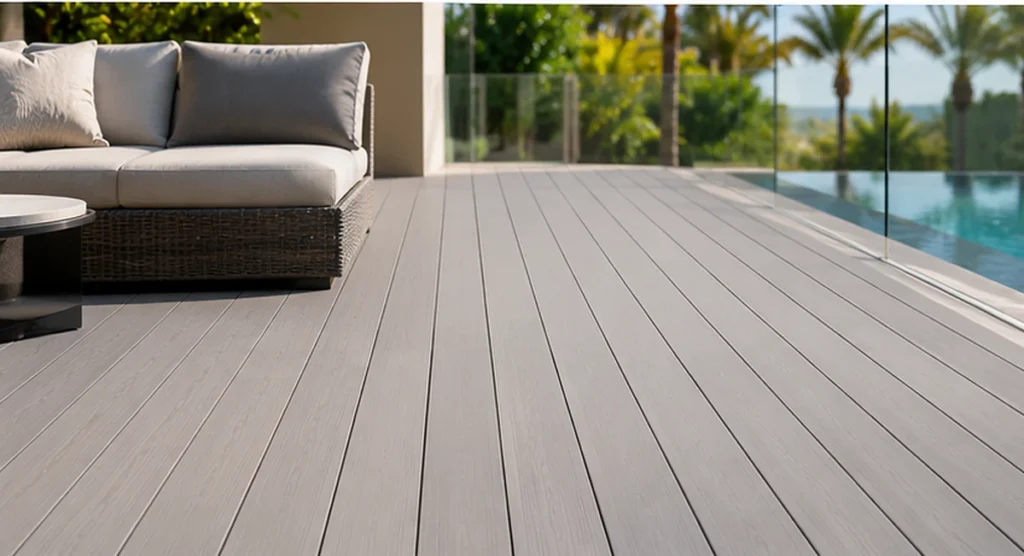
PVC Decking — A Wood-Free Alternative
PVC decking uses polyvinyl chloride rather than the wood-fibre and plastic mixture found in conventional WPC.
Its wood-free composition provides strong resistance to moisture absorption and makes it useful for wet environments. Modern products may include protective technology to improve resistance to UV-related fading.
Nevertheless, PVC expands and contracts with temperature changes. Dubai’s intense sunlight makes correct fastening, expansion allowances, and product-specific installation instructions particularly important.
PVC is also not automatically cooler than composite decking. Colour, construction, and surface technology influence heat buildup.
Best suited for: Moisture-exposed terraces and low-maintenance residential outdoor areas.
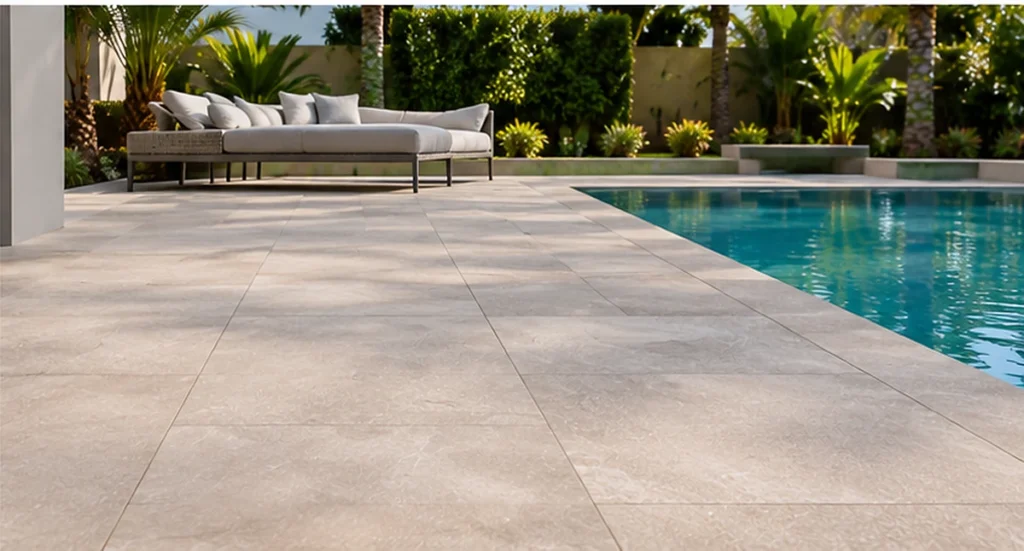
Porcelain Pavers — An Alternative to Decking Boards
Exterior-grade porcelain pavers provide a durable alternative when a conventional raised deck-board appearance is unnecessary.
Porcelain has very low water absorption and can offer strong resistance to staining, sunlight, and routine wear.
For pool areas, selecting a tested wet-slip-resistant finish is essential. Smooth indoor porcelain tiles should not automatically be considered suitable for outdoor use.
Porcelain also requires an appropriate installation system, whether bonded to a prepared substrate or installed as compatible raised pavers.
Best suited for: Modern patios, swimming pool surroundings, and rooftop spaces with suitable structural support
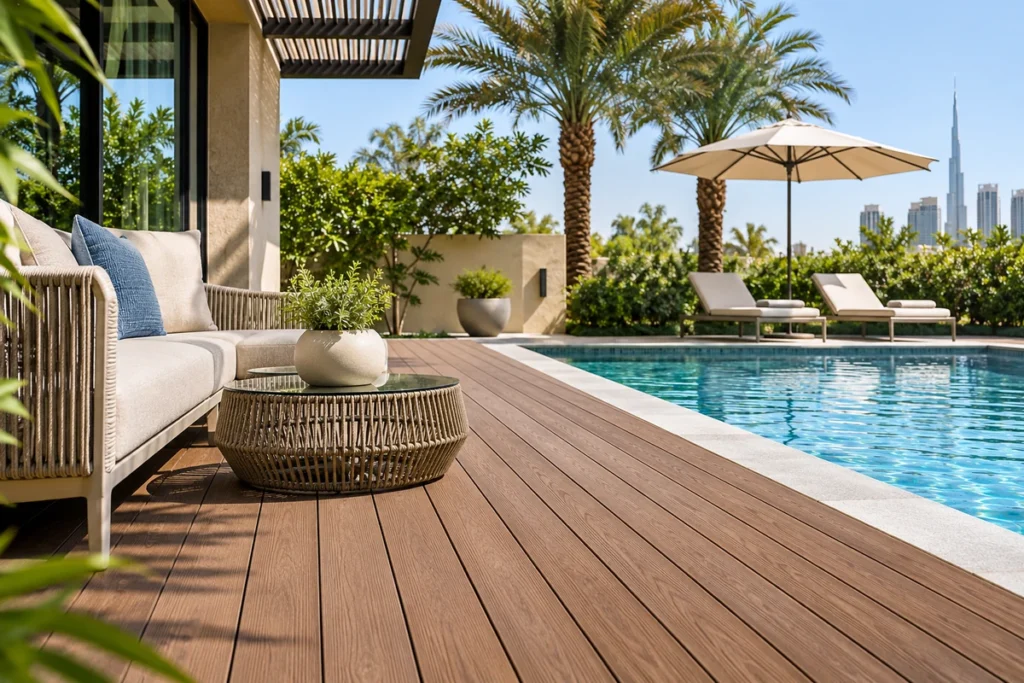
Which Decking Performs Better in Dubai's Heat and Around Pools?
Heat exposure and poolside conditions introduce different performance requirements. A material that withstands outdoor weather may still become uncomfortably hot or slippery during daily use.
Surface Temperature and Barefoot Comfort
Surface temperature depends on more than whether a deck is made from wood, WPC, or PVC.
Dark colours generally absorb more solar energy, while lighter finishes may remain comparatively cooler. Direct sunlight, shade, board construction, airflow, and heat-reflective surface technologies also affect the result.
No conventional decking material can be guaranteed comfortable for bare feet during Dubai’s peak summer conditions.
For meaningful comparisons, place actual product samples in similar sunlight and exposure conditions. Compare their surface temperatures and barefoot comfort while following appropriate safety precautions.
Where children frequently use the space, shaded routes and footwear precautions are more reliable than claims that any particular deck stays cool.
Slip Resistance, UV Exposure and Poolside Safety
Swimming pool decking must accommodate splashing water, wet feet, cleaning products, and repeated sunlight exposure.
A textured surface may provide better traction, but texture alone does not prove adequate wet-slip resistance.
Request product-specific test results using a relevant method, such as EN 16165, particularly for wet barefoot applications.
Also consider:
Drainage that prevents standing water.
Resistance to appropriate pool-water exposure.
Documented UV and colour-stability performance.
Surface cleaning requirements to prevent slippery deposits.
For pool surrounds, evaluate the complete installed system rather than selecting boards based solely on appearance.
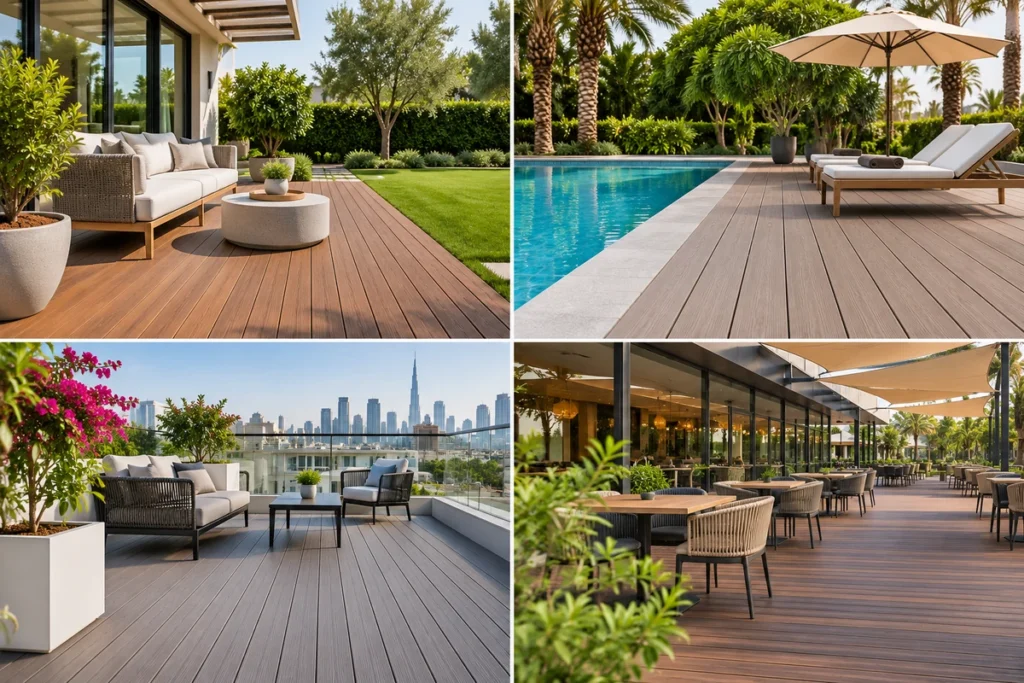
Best Outdoor Decking Material for Different Applications
Different outdoor environments demand different priorities. This decision matrix provides a practical shortlist
| Application | Recommended shortlist | Main priority | Important limitation |
|---|---|---|---|
| Villa gardens and patios | WPC, hardwood, Thermowood | Appearance, comfort, maintenance | Timber needs ongoing care |
| Swimming pool surrounds | WPC, PVC, exterior porcelain | Wet-slip resistance and drainage | All surfaces may heat up |
| Rooftop terraces and balconies | WPC, PVC, porcelain pavers | Weight, waterproofing, thermal movement | Structural approval and suitable support are essential |
| Hotels and high-traffic commercial areas | Premium WPC, ipe, commercial-grade porcelain | Wear resistance and cleaning | Product ratings must match traffic and usage |
For residential projects, aesthetics and maintenance often determine the shortlist. Commercial spaces additionally require attention to loading, safety documentation, replacement accessibility, and any applicable project specifications.
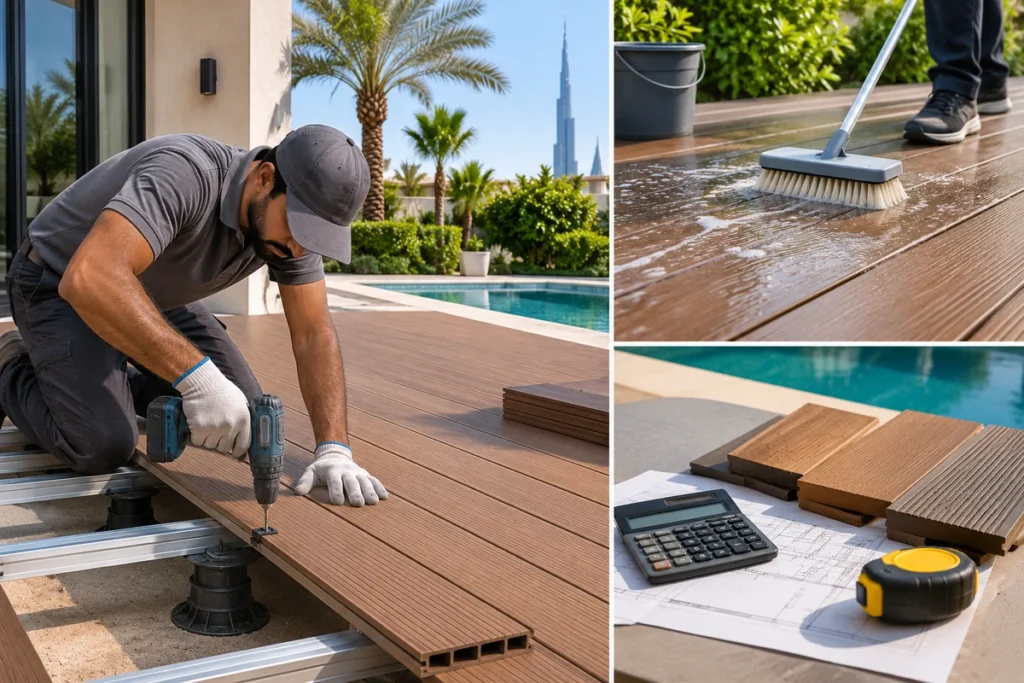
Outdoor Decking Cost, Maintenance and Installation in Dubai
Compare Total Cost, Not Just Board Price
The cheapest decking board does not necessarily deliver the lowest long-term cost.
A complete comparison should account for material supply, substructure, labour, accessories, surface preparation, and ongoing maintenance.
Natural timber may require periodic cleaning, refinishing, or replacement of damaged boards. WPC and PVC generally reduce finishing requirements but still need cleaning and inspection.
Porcelain may offer low routine maintenance, although substrate preparation and specialist installation can increase initial costs.
Compare written warranties carefully, including exclusions for fading, staining, improper installation, and commercial use.
Realistic service life depends on product quality, exposure, installation, and maintenance—not warranty length alone.
Installation Details That Affect Long-Term Performance
Even a premium outdoor decking material can fail prematurely when the installation system is unsuitable.
A correctly designed system should address:
Substructure: Adequate structural support, appropriate spacing, and corrosion-resistant components.
Drainage: Water must escape without becoming trapped beneath the deck.
Ventilation: Sufficient airflow helps manage moisture and heat buildup.
Expansion gaps: Board spacing must follow the selected manufacturer’s thermal movement requirements.
Fasteners: Compatible clips, screws, and fixings must suit the material and environment.
Waterproofing: Rooftop and balcony systems must protect existing membranes and drainage outlets.
Manufacturer installation guidance should always take precedence over generic spacing recommendations.
FAQs
Is WPC decking suitable for Dubai's extreme summer heat?
Yes. High-quality WPC designed for exterior use can perform well in Dubai, provided its UV resistance, thermal movement, and installation requirements are addressed.
However, durability under heat does not guarantee barefoot comfort. Light-coloured boards, suitable surface technologies, and shade should be evaluated before installation.
Can outdoor decking be installed over existing tiles?
Yes, provided the existing surface is stable, drainage is adequate, and the manufacturer permits the proposed installation method.
Deck boards generally require a suitable supporting substructure rather than direct attachment to tiles. Check available height, door clearances, waterproofing, and structural conditions before proceeding.
What should I check before choosing an outdoor decking supplier in Dubai?
Ask for technical datasheets, physical samples, documented UV and slip-resistance performance, installation specifications, warranty conditions, and examples of comparable completed projects.
Request an itemised quotation covering materials, substructure, accessories, labour, and any necessary preparation. The supplier should also explain how the proposed system accommodates drainage, thermal expansion, and ongoing maintenance.
Ultimately, the best choice depends on where the deck will be installed and how it will be used. WPC is a strong starting point for low-maintenance projects, while hardwood, Thermowood, PVC, and porcelain suit different design and performance needs. To compare suitable finishes and profiles for your project, explore Greenwood’s outdoor decking collection before making a final selection.