
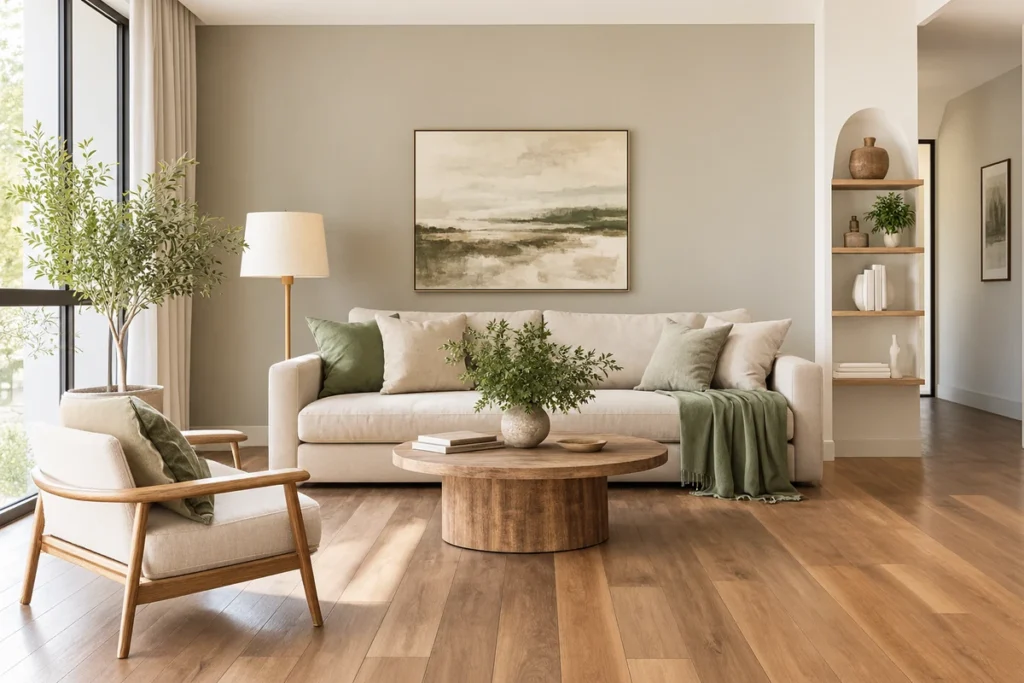
Wall Colors for Wood Floors: Best Paint Colors & Combinations
The best wall colors for wood floors include warm white, greige, beige, taupe, sage green, and muted blue. However, the right choice depends on your flooring’s color, undertones, the contrast you want, and the room’s lighting.
Light oak often pairs beautifully with soft neutrals, while dark walnut benefits from lighter walls that create contrast. For warmer or reddish woods, carefully selected greens and greiges can help balance the overall appearance
| Wood Floor Color | Recommended Wall Colors | Best For |
|---|---|---|
| Light Oak | Warm White, Soft Greige, Sage Green | Bright, minimalist interiors |
| Natural Oak | Cream, Warm Greige, Soft Taupe | Warm, balanced living spaces |
| Honey Oak | Creamy White, Warm Ivory, Muted Olive | Cozy, welcoming interiors |
| Red or Cherry Wood | Balanced Greige, Muted Sage, Soft Blue-Gray | Balancing reddish undertones |
| Dark Walnut | Warm Off-White, Pale Taupe, Muted Sage | Elegant, contemporary interiors |
| Gray Wood | Cool White, Blue-Gray, Muted Sage | Calm, modern spaces |
Best Wall Colors for Different Wood Floor Tones
Choosing paint colors that go with wood floors starts with understanding the flooring’s actual color. Even two floors made from the same wood species can look different because of their finish, stain, and natural grain
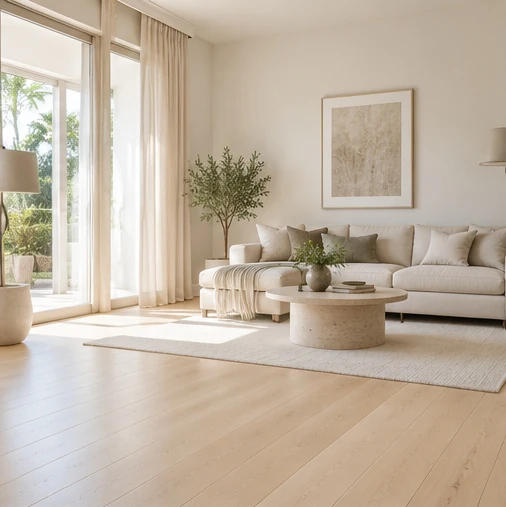
Wall Colors with Light Wood Floors
Light oak, white oak, maple, and similar pale finishes work particularly well with warm white, soft greige, light beige, sage green, and muted blue.
For bright, airy interiors, warm white creates a clean backdrop without making the room feel overly cold. Soft greige adds gentle contrast, highlighting the natural wood grain while maintaining a neutral appearance.
Sage green introduces a subtle connection to nature, while muted blue can create a calmer, more contemporary atmosphere.
Recommended combination: Light Oak Flooring + Soft Greige Walls
This pairing works especially well in modern living rooms and open-plan apartments where a balanced, understated appearance is preferred.
However, not all light woods have cool undertones. Some maple and oak finishes contain noticeable yellow or golden tones. Pairing these floors with strongly blue-based white paint may exaggerate the difference between the surfaces.
For engineered wood with a pale finish, examine an actual plank sample before deciding whether warm or cool wall colors will work best
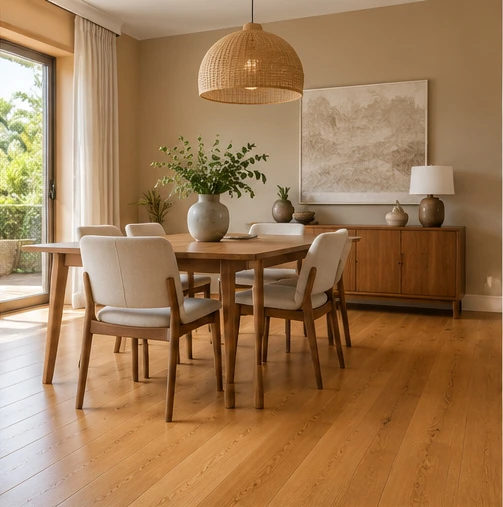
Best Wall Colors for Natural and Honey Oak Floors
Natural oak and honey oak typically feature warm yellow, amber, or golden-brown tones.
The most suitable wall colors include cream, warm greige, soft taupe, warm ivory, and muted olive.
These shades work because they support the flooring’s natural warmth without necessarily adding more yellow to the room.
Recommended combination: Honey Oak Flooring + Warm Greige Walls
Warm greige is particularly useful when honey oak appears too golden. Its balanced gray-beige character can soften the overall palette while preserving a welcoming atmosphere.
Creamy white is another reliable option for living rooms and dining areas, especially when combined with natural fabrics and lighter furniture.
Avoid choosing strongly yellow wall paint simply because the floor has golden undertones. Excessive yellow across both surfaces can make the space appear visually overwhelming.
The same principle applies to other types of wooden flooring with warm finishes: balance the dominant undertone rather than automatically repeating it
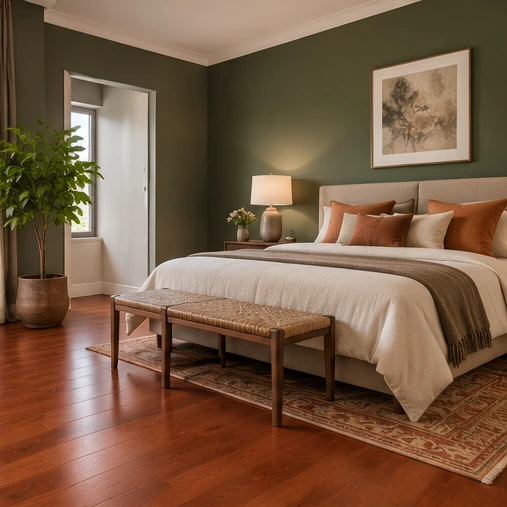
Wall Colors for Red-Toned and Cherry Wood Floors
Cherry wood, red oak, and reddish-brown flooring often contain strong red or orange undertones.
Balanced greige, muted sage, warm neutral white, and subtle blue-gray are useful options for controlling how prominent those undertones appear.
Recommended combination: Cherry Wood Flooring + Muted Sage Walls
Muted sage creates a restrained contrast with reddish wood. Because green sits opposite red on the traditional color wheel, carefully selected green-gray shades can provide visual balance.
If you prefer a neutral interior, balanced greige offers a quieter alternative. Warm neutral white can also work when the flooring is already a strong visual feature.
For a more contemporary look, subtle blue-gray may be suitable, provided its coolness does not clash with other warm elements.
Avoid overly saturated greens, bright blues, or strong orange-based wall colors unless you intentionally want a bold interior. These combinations can compete with the flooring rather than complement it
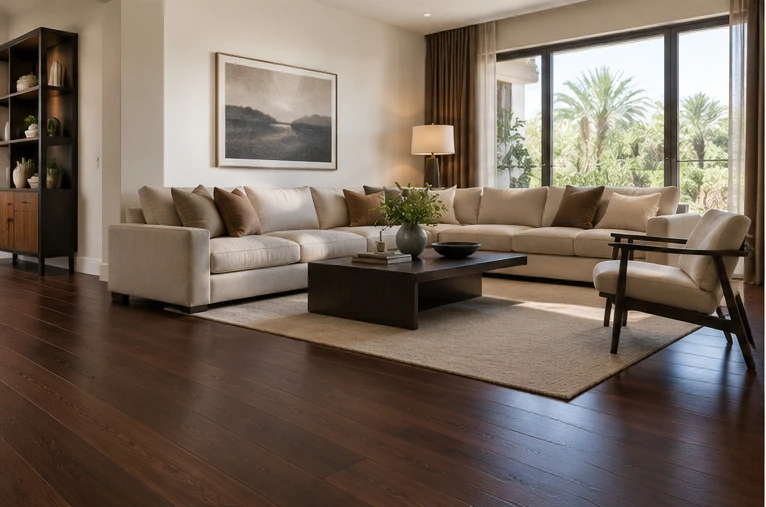
Paint Colors for Dark Walnut and Espresso Floors
Dark walnut, espresso, and deep brown wood floors introduce strong visual weight into a room.
Soft white, warm off-white, pale taupe, and muted sage are excellent starting points because they create contrast without making the interior feel disconnected.
Recommended combination: Dark Walnut Flooring + Warm Off-White Walls
This pairing highlights the richness of the dark flooring while keeping the walls visually light. It works particularly well in contemporary living rooms, formal dining spaces, and sophisticated residential interiors.
Darker wall colors are also possible.
Deep navy or forest green can create a dramatic atmosphere when the room has sufficient lighting, lighter furniture, or architectural details that prevent the space from feeling enclosed.
However, combining dark floors with dark walls in a poorly lit room may make the interior appear smaller and heavier.
Dark semi solid flooring, like other dark timber finishes, should be evaluated under evening lighting as well as daylight because its appearance can change considerably
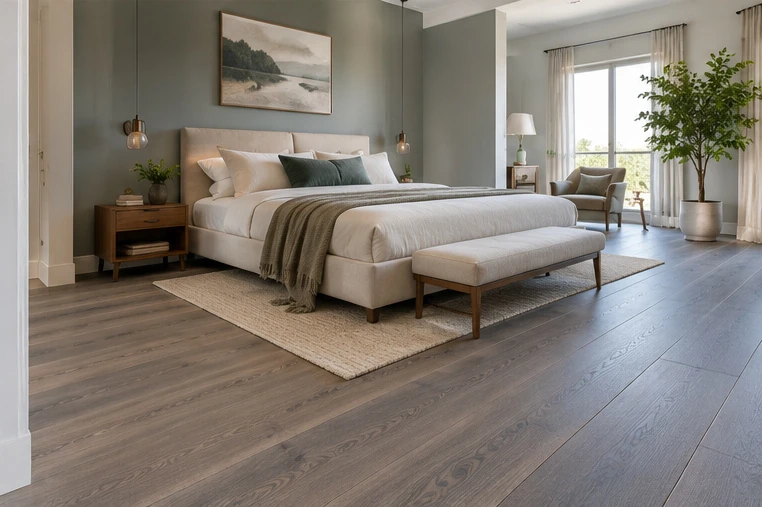
Wall Colors for Gray and Cool-Toned Wood Floors
Gray oak, ash-toned wood, and gray-washed flooring generally complement cool white, soft gray, blue-gray, muted sage, and cool taupe.
These colors can reinforce the clean appearance associated with contemporary interiors.
Recommended combination: Gray Oak Flooring + Muted Sage Walls
Muted sage adds a natural element that helps prevent gray flooring from feeling overly cold or industrial.
Cool white can create a crisp, minimalist appearance, while blue-gray provides a more coordinated tonal palette.
However, combining gray floors, gray walls, and cool-colored furniture without variation can produce a flat appearance.
Introduce warmth through timber furniture, textured fabrics, or carefully selected neutral accents.
Also, remember that gray-looking flooring does not always have exclusively cool undertones. Some finishes combine gray pigments with underlying beige or brown tones, making an exact sample comparison essential
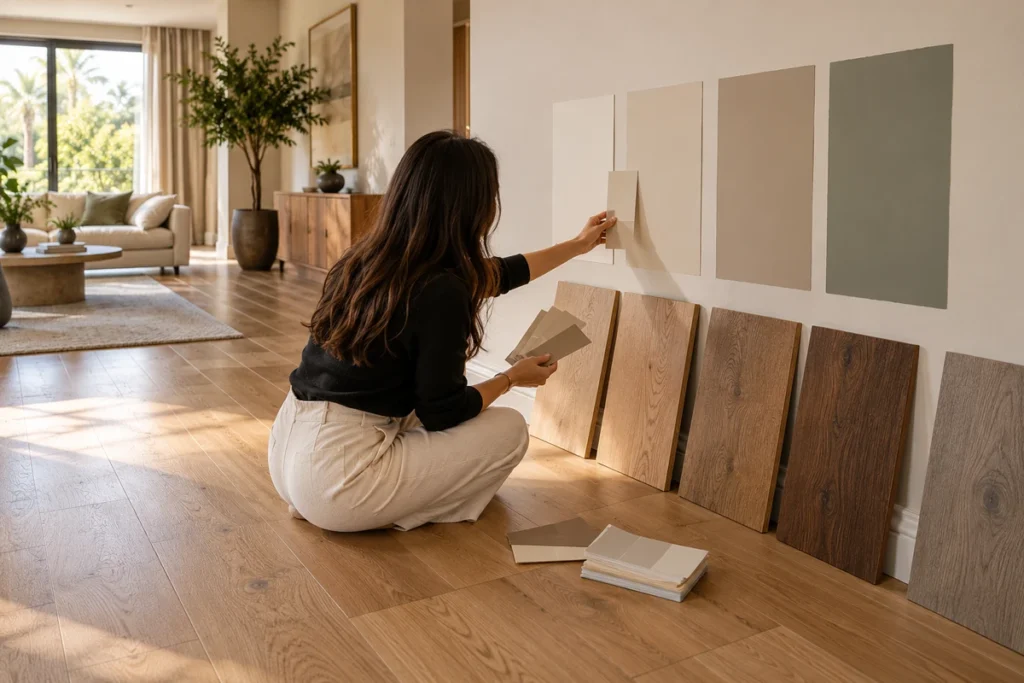
How to Match Wall Paint with Wood Flooring
The best wall color for wood floors is not determined by flooring color alone. Three factors help you make a more reliable decision: undertones, contrast, and lighting.
1. Identify Your Wood Floor’s Undertone
Wood flooring generally displays warm, cool, or neutral undertones.
Warm undertones include yellow, orange, and reddish hues. Cool undertones lean toward gray, blue-gray, or ashy shades. Neutral finishes have a more balanced appearance.
To identify the undertone, examine your flooring in natural daylight alongside neutral white and gray samples. Comparing several planks can reveal subtle colors that are difficult to notice individually.
Do not rely on wood species or product origin alone.
For example, European flooring collections may contain pale natural oak, smoked brown finishes, or gray-washed surfaces. The visible finish matters more than the geographical label.
2. Create the Right Amount of Contrast
Contrast determines how clearly the floors and walls appear as separate design elements.
Light floors with light walls create a continuous, open appearance. Light floors with darker walls provide stronger definition and can make the flooring more noticeable.
Dark floors with light walls produce an elegant contrast, while dark floors with dark walls create a more enclosed, dramatic atmosphere.
Neither approach is automatically better.
Choose contrast according to the atmosphere you want and consider whether your furniture will add enough visual separation.
3. Consider Natural Light and Room Size
Lighting can noticeably change the appearance of wall paint.
In Dubai homes with large windows and strong daylight, pale colors may appear brighter than expected. The same paint can look warmer or darker under evening artificial lighting.
Light Reflectance Value (LRV) helps explain these differences. Measured on a scale from 0 to 100, LRV indicates how much visible light a surface reflects. Higher-LRV paints generally reflect more light.
For darker rooms, lighter wall colors can help maintain brightness. In well-lit spaces, deeper shades may provide comfortable contrast.
Always evaluate your chosen color alongside the room’s trim, cabinetry, and furniture rather than treating the flooring and walls as isolated surfaces
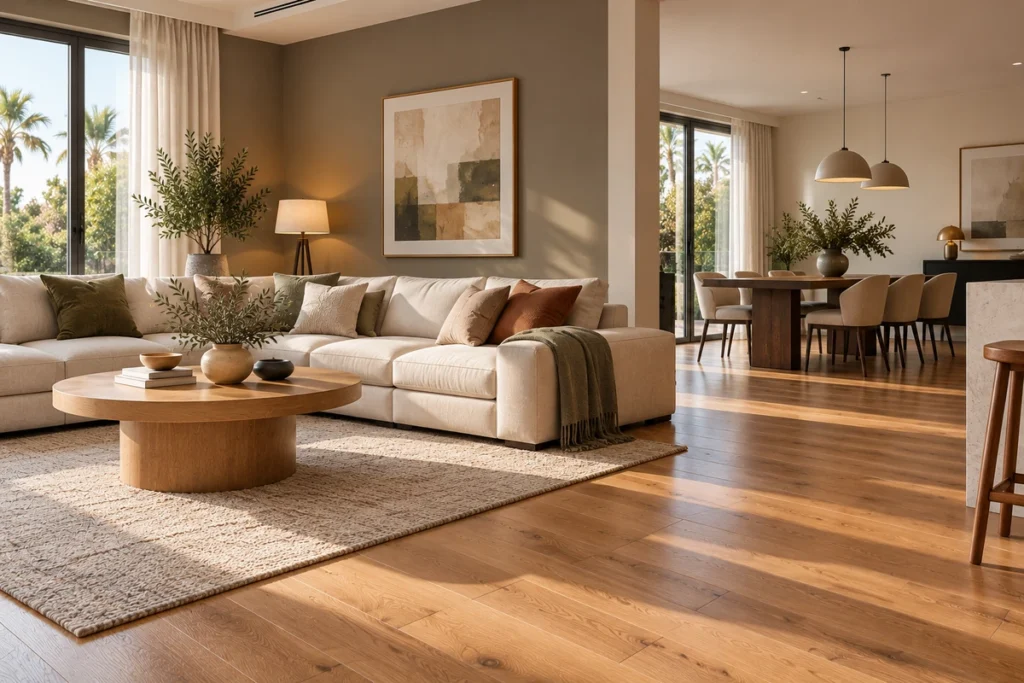
Floor and Wall Color Combinations That Work
The most successful floor and wall color combinations balance the flooring’s undertones with the desired atmosphere of the room.
Here are four practical combinations for different residential interiors
| Flooring | Wall Color | Visual Effect | Recommended Space |
|---|---|---|---|
| Light Oak | Soft Greige | Warm, balanced, understated | Modern living rooms |
| Honey Oak | Creamy White | Bright, comfortable, welcoming | Living and dining areas |
| Dark Walnut | Warm Off-White | Elegant, contrasting, sophisticated | Contemporary interiors |
| Gray Oak | Muted Sage | Calm, natural, harmonious | Bedrooms and home offices |
Light Oak + Soft Greige
This combination suits minimalist interiors where natural materials are the main decorative feature. Linen upholstery, light-colored furniture, and simple black accents can add definition without disrupting the neutral palette.
Honey Oak + Creamy White
Creamy white complements golden flooring while keeping the room bright. Natural textiles, warm neutral furniture, and understated decorative elements create a comfortable atmosphere for everyday living.
Dark Walnut + Warm Off-White
The contrast between deep brown flooring and light walls creates a sophisticated foundation. Mid-tone furniture and textured fabrics can connect the two surfaces and prevent the palette from feeling overly divided.
Gray Oak + Muted Sage
This pairing is particularly suitable for bedrooms and home offices where a calm atmosphere is preferred. Warm wood furniture and cream-colored textiles help balance the cooler flooring.
These combinations are starting points rather than fixed design rules. The final result depends on the exact flooring finish, paint formulation, and surrounding materials.
For broader inspiration involving furniture, room layouts, and flooring styles, explore additional wood flooring design ideas before finalizing your interior palette
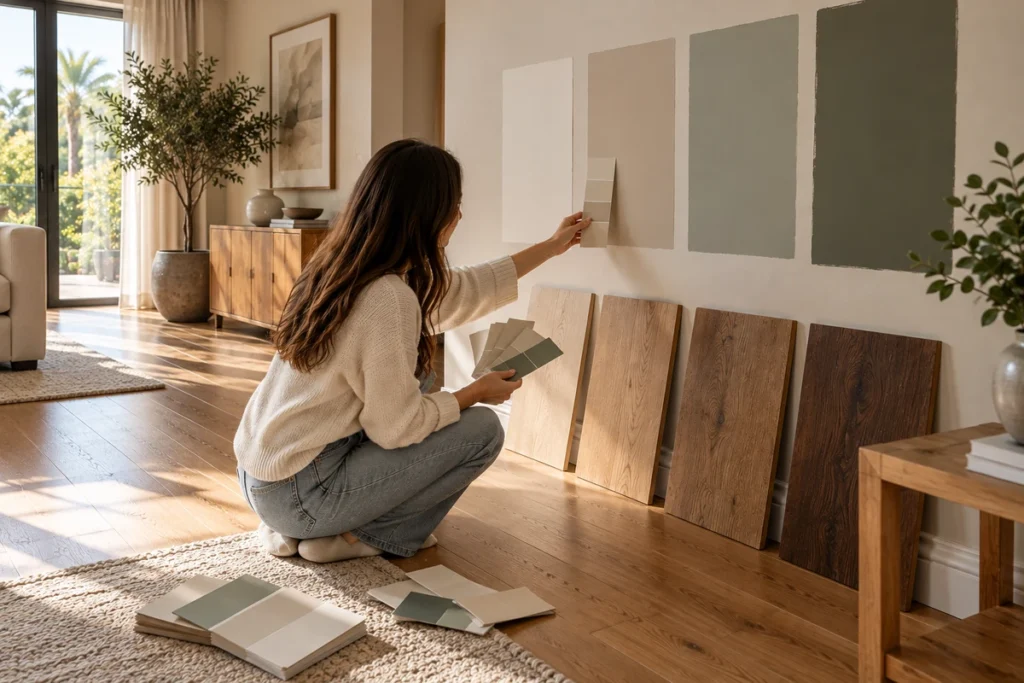
How to Test Wall Paint Colors Against Wood Floors
Even a carefully selected wall color may look different once applied inside your home.
Before committing to a paint color, follow these four steps:
Shortlist two or three colors. Choose shades that complement your flooring’s undertones and suit the contrast you want.
Use large physical samples. Apply test patches or position painted sample boards close to the actual flooring. Small color chips are often insufficient for judging the final appearance.
Check different lighting conditions. Examine each sample in the morning, afternoon, and evening. Include artificial lighting because colors can shift noticeably after sunset.
Compare surrounding materials. Evaluate the samples against skirting boards, doors, cabinets, furniture, and other permanent elements.
Avoid selecting paint exclusively from online images or digital color swatches. Screen settings, photography, and lighting can distort color representation.
Whether your home has solid timber or engineered flooring, testing paint against the actual installed surface provides a more reliable result than comparing product photographs
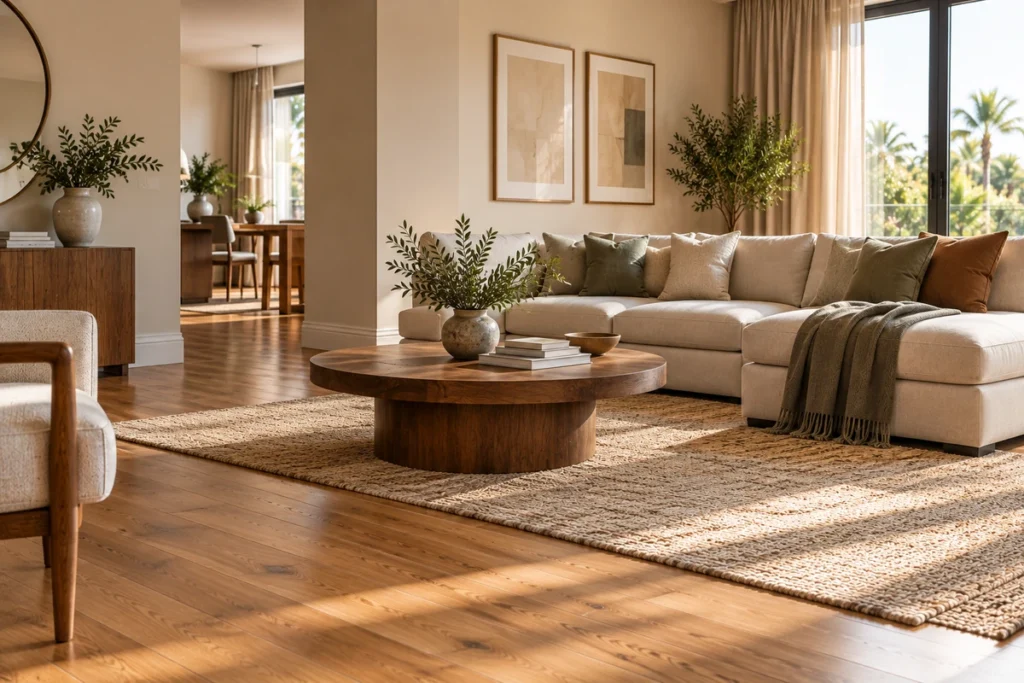
FAQs About Wall Colors for Wood Floors
What wall colors go with most wood floors?
Warm white, greige, and soft beige are among the most versatile wall colors for wood floors. They complement many light, medium, and dark wood finishes while providing a neutral background. However, their suitability still depends on the flooring’s undertones and the room’s lighting conditions.
Should walls be lighter or darker than wood floors?
Both approaches can work. Lighter walls generally create more contrast with dark flooring and help maintain a bright appearance. Darker walls can add depth and drama, particularly alongside lighter wood floors. Consider room size, daylight, and furniture before deciding.
Do wall paint and wood flooring need matching undertones?
No. Matching undertones is a useful starting point, but intentional warm-cool contrasts can also create attractive interiors. For example, muted sage may balance reddish wood, while warm furnishings can soften cool gray floors. The goal is visual harmony rather than an exact undertone match
conclusion
Choosing wall colors for wood floors becomes easier when you consider the flooring’s undertones, the contrast you prefer, and the available light.
Start with versatile neutrals, explore muted colors when appropriate, and always test physical samples before making a final decision.
If you’re planning a flooring and interior color update, Greenwood can help you explore wood flooring finishes that complement your preferred design style and overall room palette