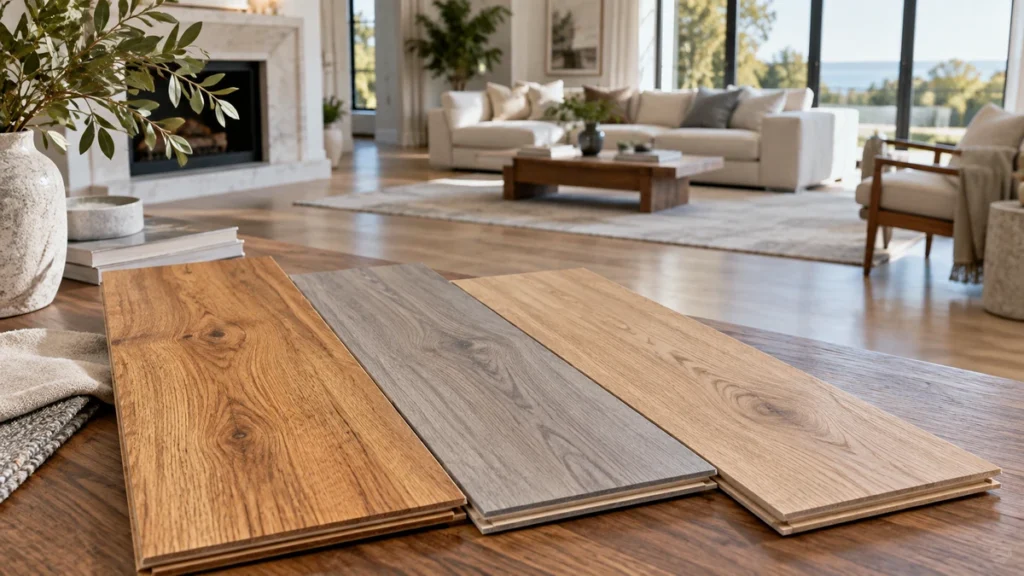
Warm vs Cool Tone Wood Flooring, How to Choose
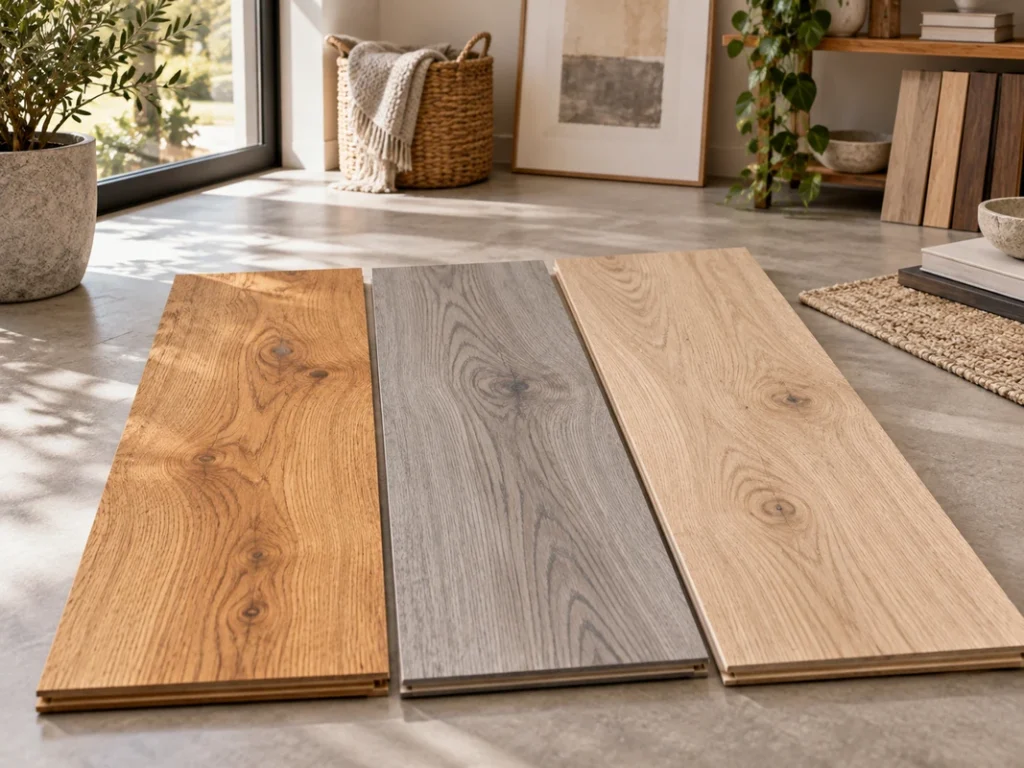
Choosing between warm vs cool tone wood flooring is less about following a colour trend and more about understanding what already exists in your room. Warm wood floors usually show yellow, golden, honey, red, or orange undertones, while cool floors lean toward gray, taupe, muted brown, or slightly ashy tones. Neutral floors sit between the two and are often easier to coordinate with changing interiors.
The right choice depends on your fixed finishes, natural and artificial light, wall colours, furniture, and the amount of contrast you want. Before ordering a floor, compare real samples inside the room at different times of day rather than relying on showroom lighting or online photographs
Warm vs Cool Wood Flooring: The Difference at a Glance
The main difference between warm vs cool wood tones is the undertone beneath the visible surface colour. Two floors can both look brown at first glance yet behave very differently once placed beside paint, stone, cabinetry, or furniture.
Neither warm tone wood floors nor cool tone flooring is automatically better. The stronger option is the one that relates properly to the permanent colours and materials already in the space.
This is also why colour should be considered as part of the broader wood flooring decision rather than as an isolated design choice
How to Tell if Your Wood Floor Is Warm, Cool, or Neutral
Wood floor undertones are not always obvious, especially when the surface has natural grain, knots, colour variation, or a stained finish. These three tests are more reliable than simply looking at a product photo
1. Compare the Sample With Pure White
Place the flooring sample beside a plain white sheet of paper, white board, or another genuinely neutral white surface.
The white reference removes some of the visual confusion created by surrounding colours. If the floor suddenly looks golden, yellow, orange, or reddish, it is probably warm. If it appears gray, slightly blue-gray, taupe, or ashy, it is likely cool.
If neither family clearly dominates, the floor may have a neutral undertone.
Do not use cream or warm white as your reference because it can make a relatively neutral floor appear cooler than it really is.
2. Compare Several Samples Side by Side
Undertones become easier to recognise through comparison.
Place three or four flooring samples beside each other. A floor that seemed neutral on its own may suddenly look noticeably warm next to an ash-toned board. Likewise, a gray-brown floor may reveal warmer beige notes when compared with a genuinely cool sample.
This test is particularly useful with engineered wood, where finishing techniques, stains, brushing, smoking, and surface treatments can significantly affect the visible tone.
3. Test the Floor in the Actual Room
Move the sample around the room and check it in morning light, afternoon light, and under your normal evening lighting.
Natural light direction, window size, bulb temperature, wall colours, and reflective surfaces can all change how a floor appears. A sample that looks neutral in a showroom may appear considerably warmer under warm artificial lighting.
For the most reliable result, place a reasonably large sample flat on the floor rather than holding a small plank vertically
How Warm and Cool Wood Floors Affect a Room
Floor tone influences how the other colours and materials in a room are perceived.
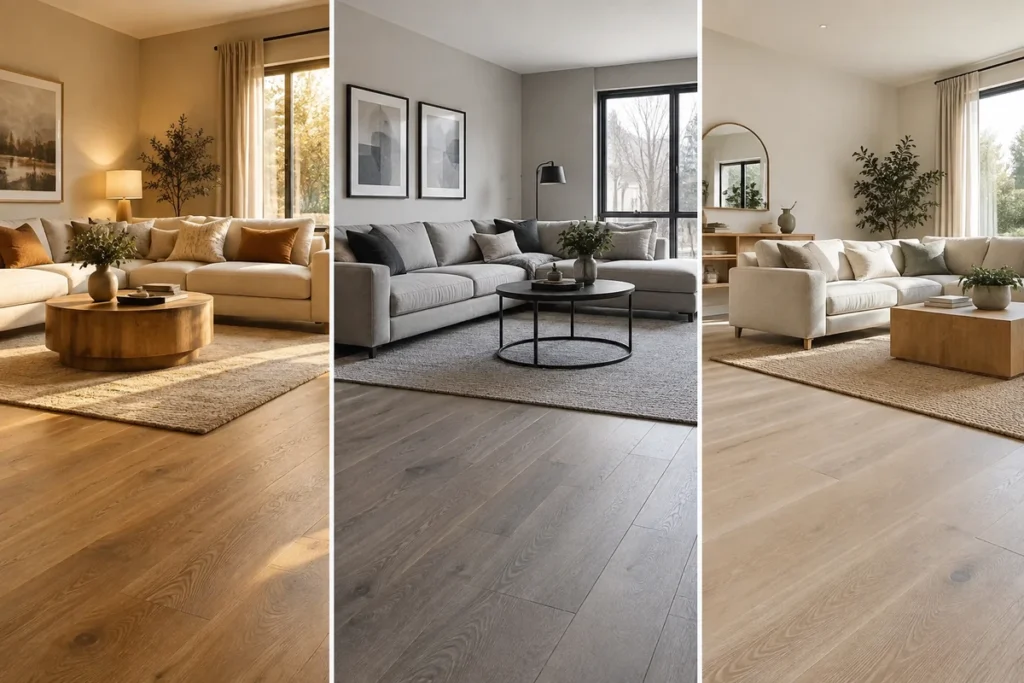
Warm flooring can make an interior feel more grounded, softer, and visually warmer. Golden, honey, caramel, and warm brown tones often work comfortably with cream walls, beige upholstery, earthy colours, leather, timber furniture, and other natural materials.
Warm tone wood floors can also give large or minimal spaces more visual softness. However, combining strongly yellow flooring with yellow lighting, cream cabinetry, and warm beige walls can sometimes create more warmth than intended.
Cool flooring usually works more naturally with gray, white, black, chrome, brushed metal, concrete, blue-gray, and many contemporary palettes. Cool tone flooring can create a cleaner and more restrained appearance, especially when paired with simple furniture and crisp finishes.
The risk is the opposite of an overly warm room: too many gray or cool elements can make the space feel visually flat.
Neutral flooring provides greater flexibility. It is particularly useful when the room contains both warm and cool fixed finishes or when the homeowner expects to change furniture, paint colours, and accessories over time.
For that reason, neutral finishes can be practical when selecting long-term wooden flooring for a home whose interior style is likely to evolve.
How to Choose Warm or Cool Wood Flooring for Your Space
The safest way to choose warm vs cool tone wood flooring is to work from the permanent parts of the room outward
1. Start With Fixed Finishes
Begin with the elements that are difficult or expensive to replace.
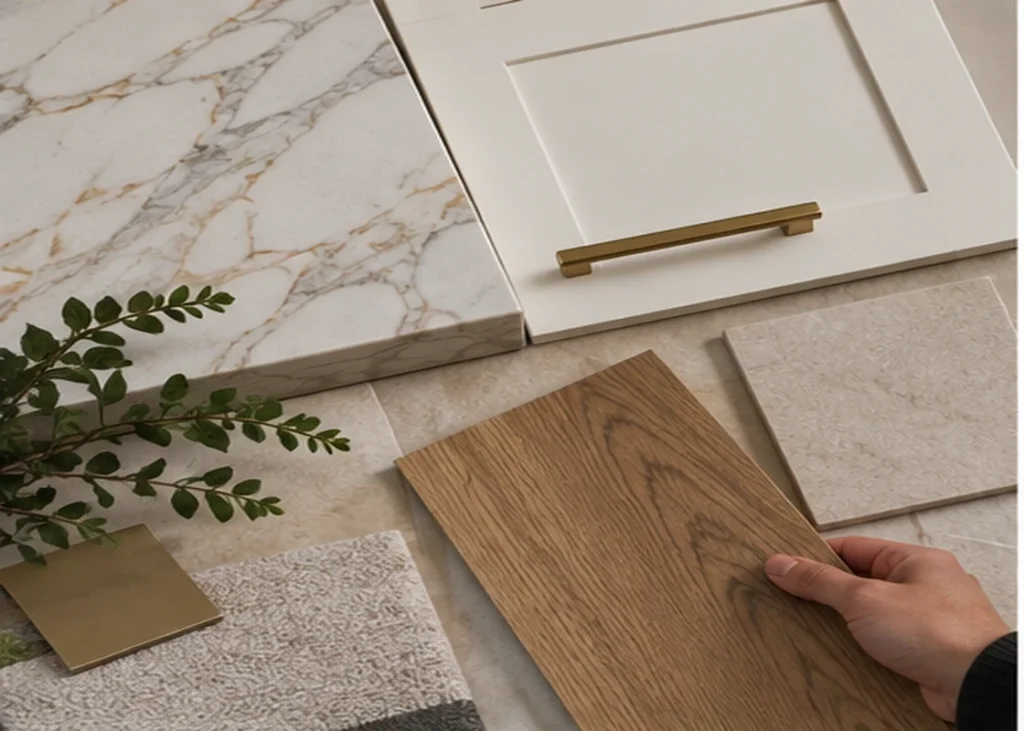
These may include kitchen cabinets, countertops, wall tiles, stone, built-in furniture, staircases, fireplaces, doors, or large architectural finishes.
Look for their dominant undertones. A beige stone with golden veining will usually relate more naturally to warm or neutral flooring than to a strongly ashy gray floor. A kitchen dominated by cool white, charcoal, and gray stone may support a cooler floor more easily.
The floor does not need to match these materials exactly. It simply needs to avoid an obvious undertone conflict
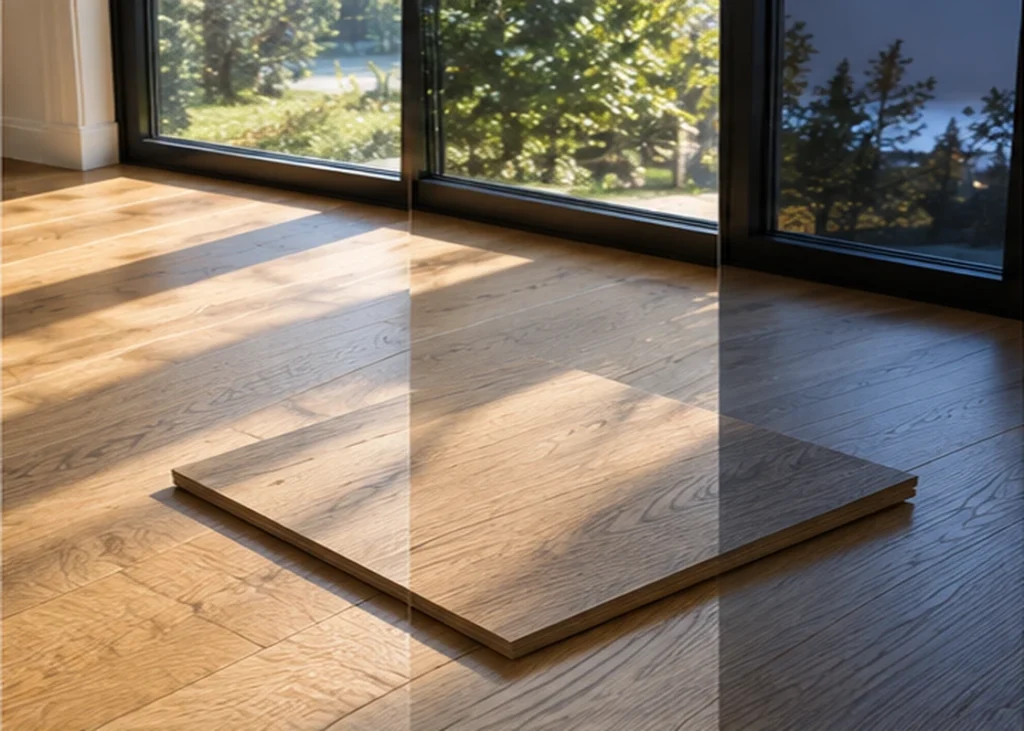
2. Check the Room’s Actual Light
Light can change the appearance of wood dramatically.
Rooms receiving strong warm sunlight may intensify yellow and golden tones. Cooler daylight or limited direct sunlight can make gray and taupe finishes more noticeable.
Artificial lighting matters too. Warm bulbs can make warm floors look richer but may push yellow-toned floors too far toward orange. Cooler lighting can reduce some warmth and emphasize gray undertones.
Always inspect physical samples in the exact room where the flooring will be installed
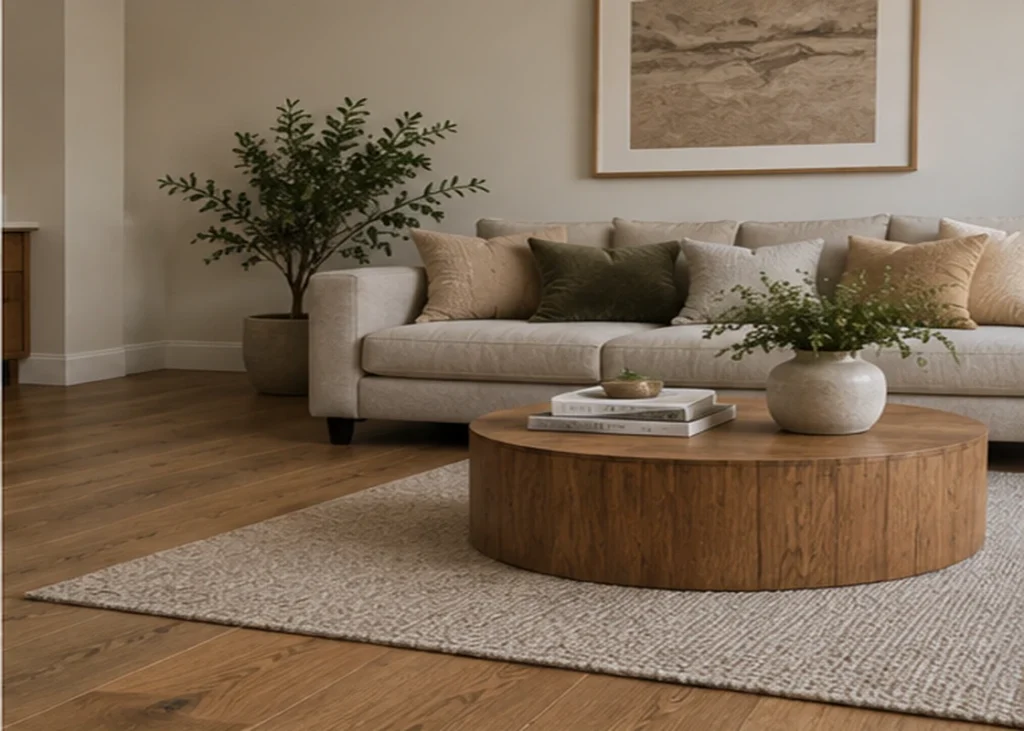
3. Look at Walls and Furniture Together
Do not choose a floor based only on wall paint.
Walls are relatively easy to repaint. Large furniture, fitted cabinetry, curtains, stone finishes, and expensive furnishings may remain much longer.
Compare the flooring sample with the overall combination.
For example, warm timber furniture does not automatically require an equally warm floor. A slightly more neutral floor may provide separation between the furniture and the surface below it.
This same principle applies whether you are choosing wide boards, parquet flooring, or another natural wood format
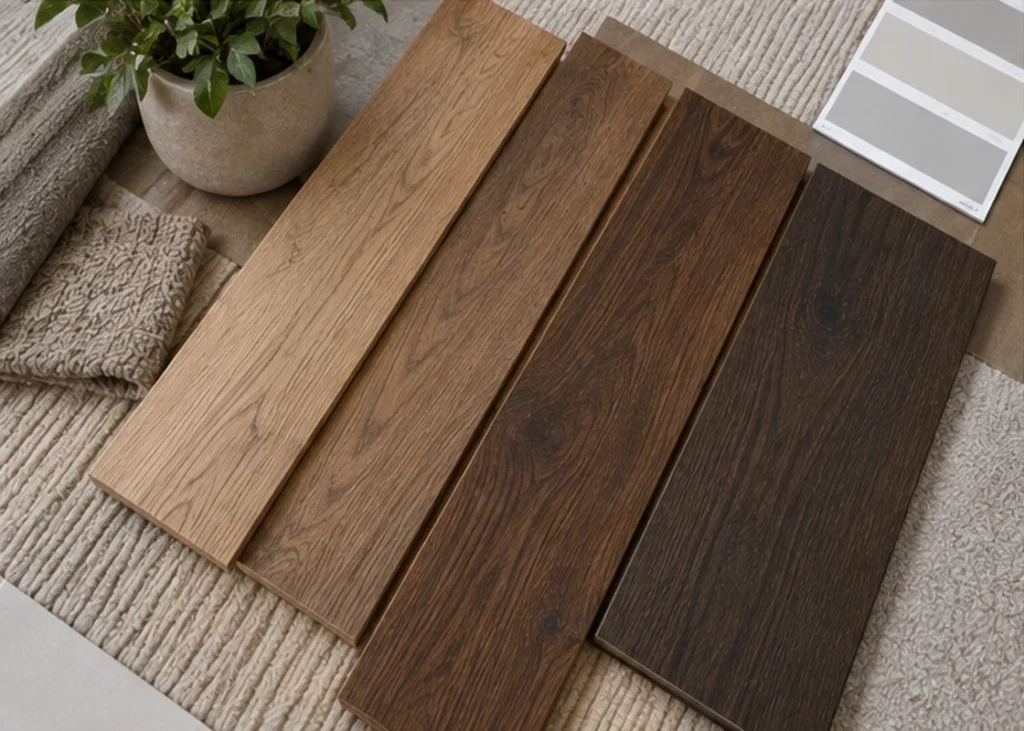
4. Decide How Much Contrast You Want
Matching undertones usually produces a calmer result, while controlled contrast can create more visual definition.
A warm floor with cream and earthy furnishings can feel cohesive and soft. A neutral floor beneath warm furniture can create subtle contrast without introducing an obvious clash.
Contrast becomes risky when both the floor and surrounding finishes have strong but opposing undertones.
The goal is not to make every element the same colour. It is to make the differences look intentional
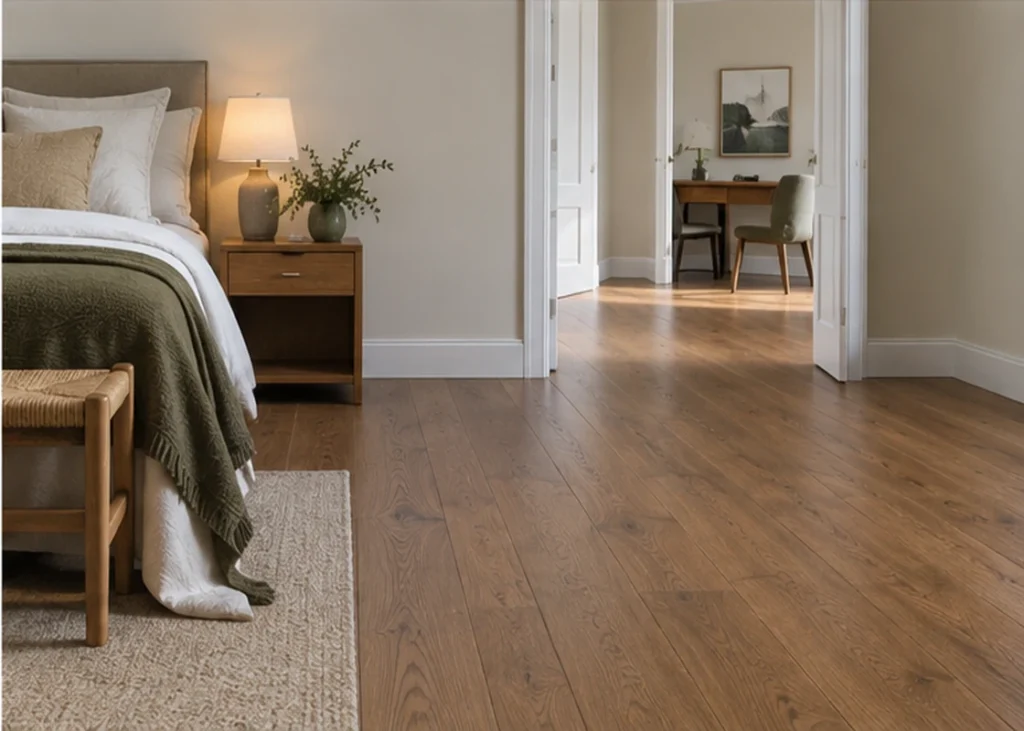
5. Think Beyond Today’s Decor
Flooring normally stays in place far longer than rugs, sofas, paint colours, or decorative accessories.
If your current interior contains a very specific trend-driven colour palette, avoid choosing a permanent floor solely to match that moment.
Homeowners who change décor frequently may find neutral or moderately warm natural tones easier to work with over time. This is especially relevant with long-life materials such as solid hardwood flooring, where replacing the floor simply because the colour palette has changed would make little practical sense.
For broader style inspiration, a guide to wooden flooring ideas can help you compare colours, plank formats, patterns, and design directions before narrowing the decision to a specific undertone
Common Mistakes When Choosing a Wood Floor Tone
One of the biggest mistakes is choosing flooring from a small online image. Screens, photography, editing, and surrounding colours can all distort undertones.
Another common mistake is matching the floor too closely to furniture or cabinetry. Similar colours without enough variation can cause the room to lose definition. Coordinating undertones is usually more important than finding identical shades.
Do not judge a sample under only one lighting condition. A floor that looks balanced in bright daylight may appear much warmer under evening lighting.
It is also risky to follow current colour trends without considering the fixed finishes already present in the property. A fashionable gray floor can still look disconnected beside strongly cream stone, warm cabinetry, or red-toned timber.
Finally, avoid assuming that every board within a wood collection will look identical. Real wood naturally varies in grain and colour. Review several boards or a larger display whenever possible so you understand the overall appearance rather than judging the entire floor from one unusually light or dark plank
Conclusion
The best way to approach warm vs cool tone wood flooring is to identify the room’s existing undertones first, then test real flooring samples against those finishes under different lighting conditions. Warm floors generally complement softer and earthier palettes, cool floors work naturally with many contemporary gray and white schemes, and neutral floors offer the greatest flexibility when a room contains mixed undertones.
Before making a final decision, compare several full-size samples inside the property rather than relying on photographs alone. Greenwood can also help you compare real wood finishes and evaluate how different tones relate to the materials already present in your space
FAQs