
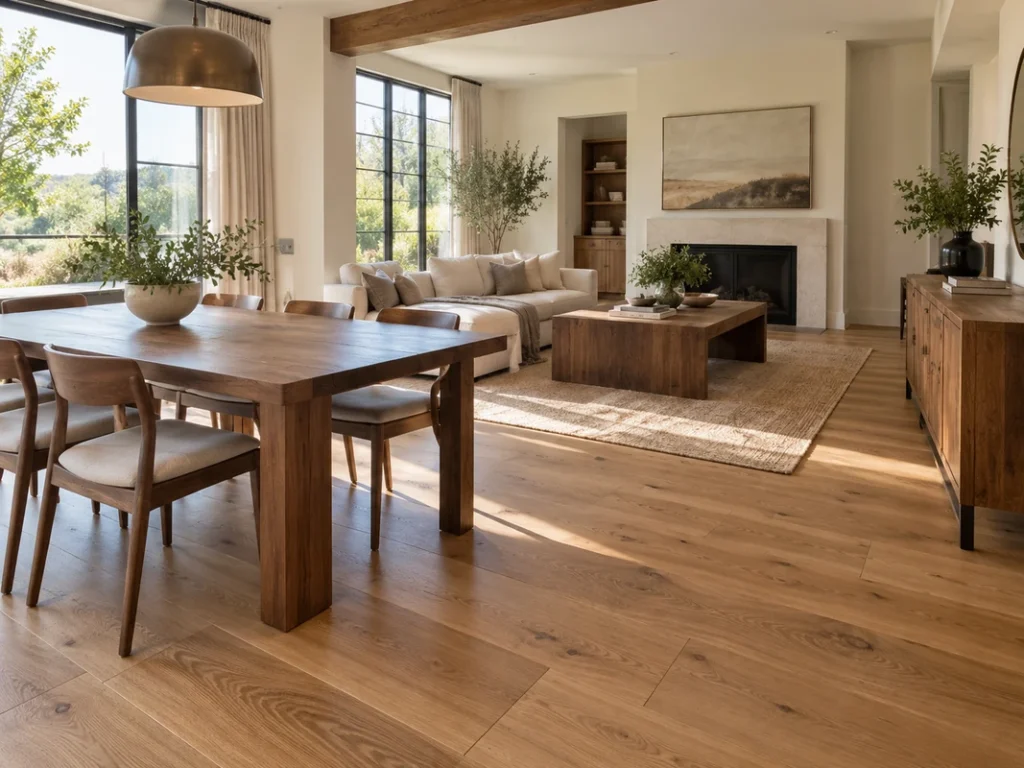
Matching Wood Floors and Furniture: Get the Perfect Balance
Matching wood floors and furniture is less about finding identical shades and more about creating controlled contrast. Start by identifying the floor’s undertone, choose one dominant wood tone, and add one or two supporting tones that either share that undertone or contrast with it intentionally.
A balanced room should feel coordinated, not copied. If every wooden surface has the same color, grain, and finish, the space can look flat. If every piece is different, it can feel random. The floor should act as the visual base, while the furniture complements it. This principle works across most types of wood flooring and makes future furniture changes easier
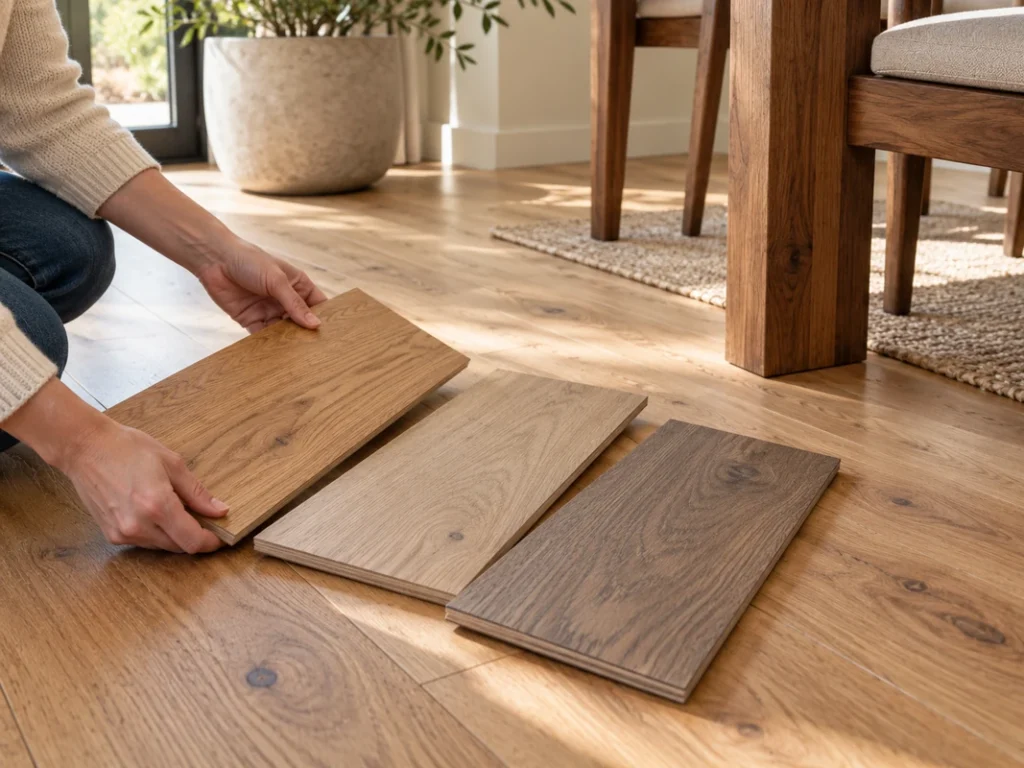
Start With Your Wood Floor’s Undertone
Before choosing furniture, look beyond whether the floor is light, medium, or dark. The more important detail is its undertone.
Most wood floors lean warm, cool, or neutral. Warm woods often show yellow, honey, red, or orange notes. Cool woods may appear grey, taupe, muted brown, or slightly ashy. Neutral woods sit between the two and are usually easier to coordinate.
Undertones matter because two woods can be similar in darkness but still clash. A reddish-brown table on a grey-brown floor may feel disconnected, while a light oak floor and darker walnut table can work well if their warmth is compatible
Should Furniture Match or Contrast With Wood Floors?
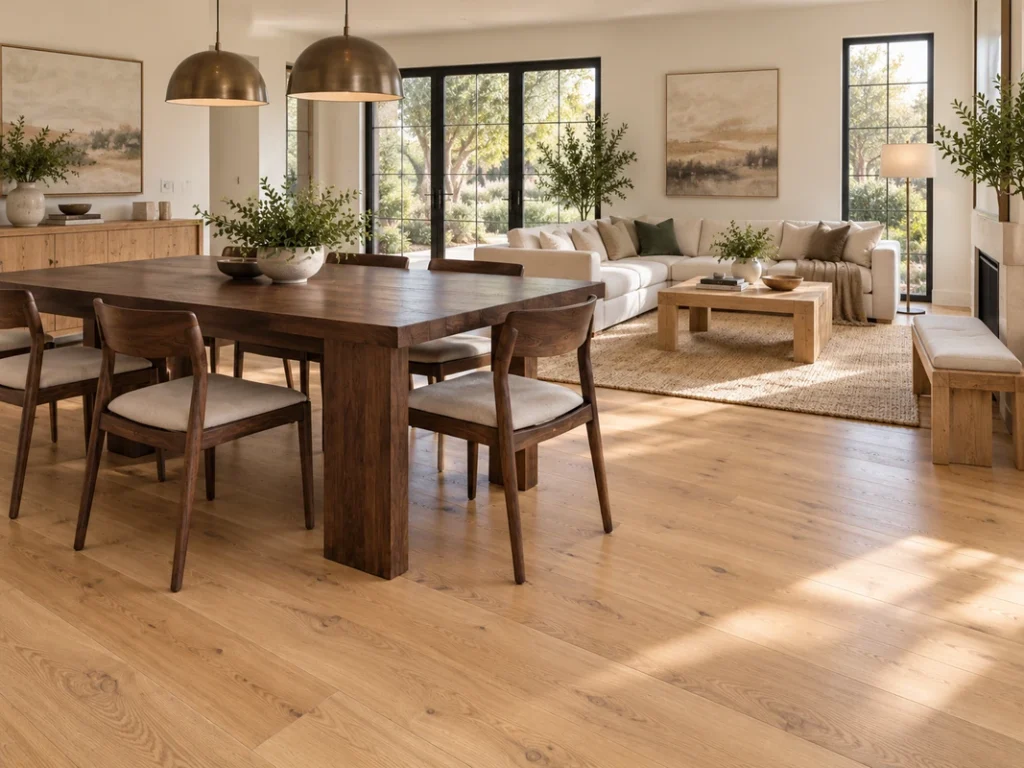
Furniture does not need to match the floor exactly. In most rooms, some contrast creates a stronger and more intentional result.
If a wood floor with wood furniture is almost identical in color, the furniture can visually disappear into the floor. Slight contrast helps define large pieces such as dining tables, sideboards, beds, and cabinets.
Contrast can come from color depth, undertone, grain, or finish. For example, pale engineered wood flooring can work with medium walnut furniture because the difference in depth creates separation while the natural wood character keeps the room cohesive.
The practical rule is simple: coordinate rather than imitate
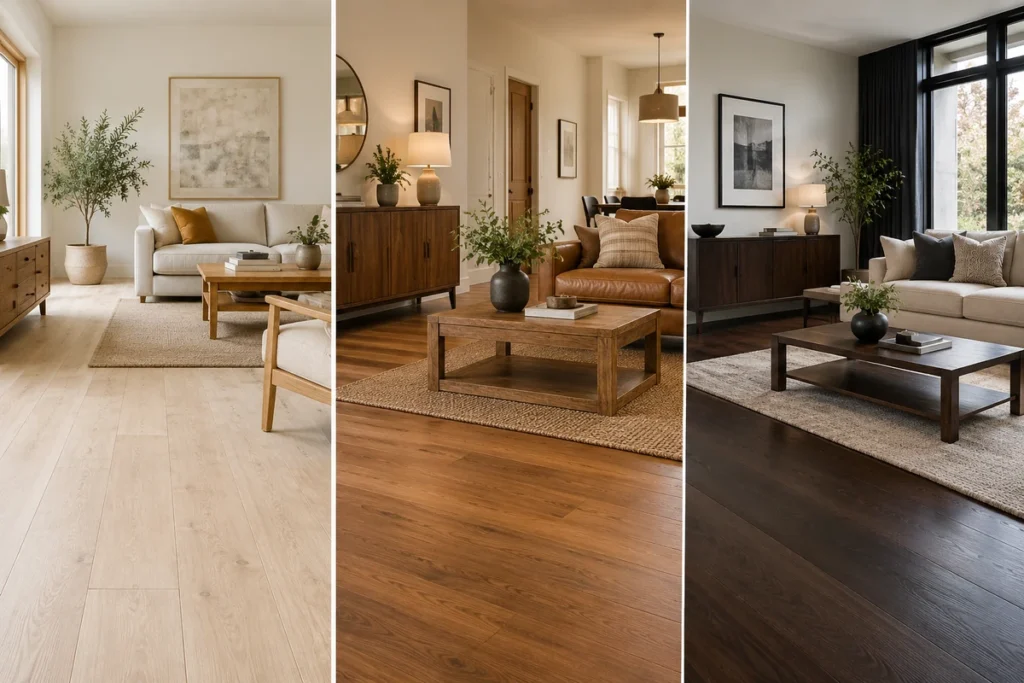
What Furniture Colors Work With Light, Medium, and Dark Wood Floors?
The best furniture color depends on both the floor’s depth and undertone
| Floor tone | Furniture colors that usually work well | Best effect | What to avoid |
|---|---|---|---|
| Light wood floors | Medium oak, walnut, soft brown, black, off-white | Clean contrast and airy balance | Too many pale woods with identical grain |
| Medium wood floors | Light oak, cream, dark brown, charcoal | Flexible and balanced | Several medium browns with conflicting undertones |
| Dark wood floors | Light oak, beige, cream, pale grey, medium walnut | Brightens the room and defines furniture | Too much dark furniture |
With light floors, darker furniture usually gives the easiest contrast. Medium floors are the most flexible because they can move lighter or darker. Dark floors often benefit from lighter or mid-tone furniture so the room does not feel visually dense.
This same principle applies when choosing wooden flooring Dubai homes often use in bright, contemporary interiors: stronger floor tones usually need more visual separation from major furniture pieces
How to Mix Different Wood Tones Without Making the Room Look Mismatched
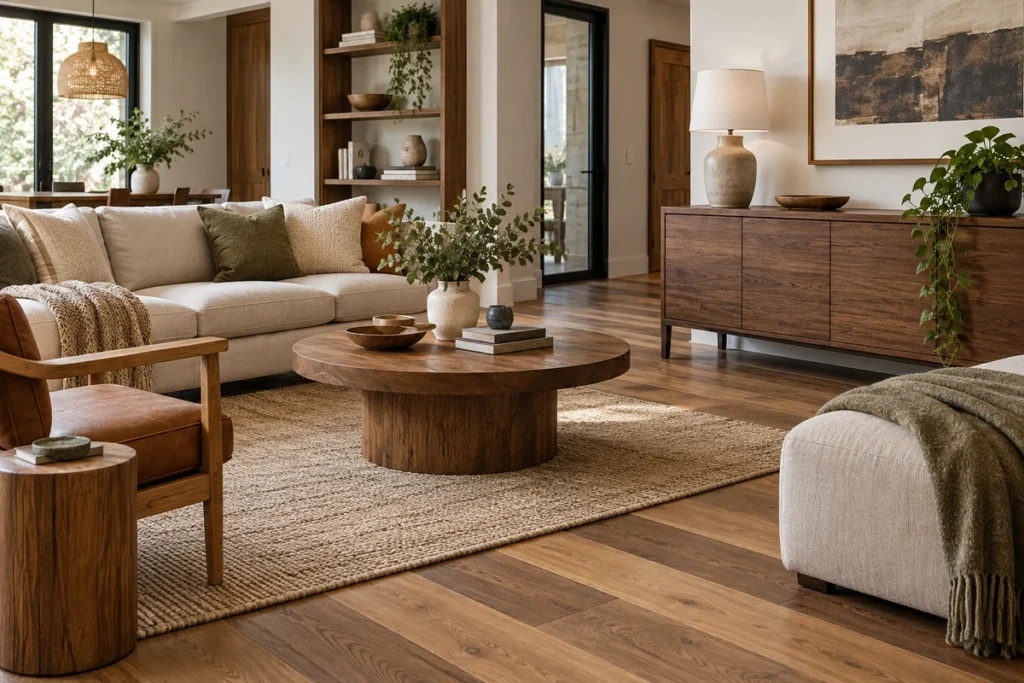
You can mix wood furniture and flooring successfully, but the mix needs a clear hierarchy.
Start with one dominant wood tone. In most rooms, that is the floor because it covers the largest surface area. Furniture becomes the secondary and accent tones.
Matching wood tones does not mean finding identical colors. Warm woods generally combine more easily with other warm woods, while cooler or greyed woods tend to pair better with similarly muted finishes.
Grain matters too. If the floor has a strong grain pattern, simpler furniture can keep the room calm. If the floor is subtle, a more expressive piece can add character. This is especially useful with patterned materials such as engineered hardwood parquet, where the floor already creates visual movement.
A practical version of the “rule of three” is to use no more than three noticeable wood tones: one dominant tone, one secondary tone, and one smaller accent tone. It is not a strict law, but it helps prevent visual clutter. A rug can also create separation when placing wood furniture on wood floors with similar tones
Common Wood Floor and Furniture Matching Mistakes
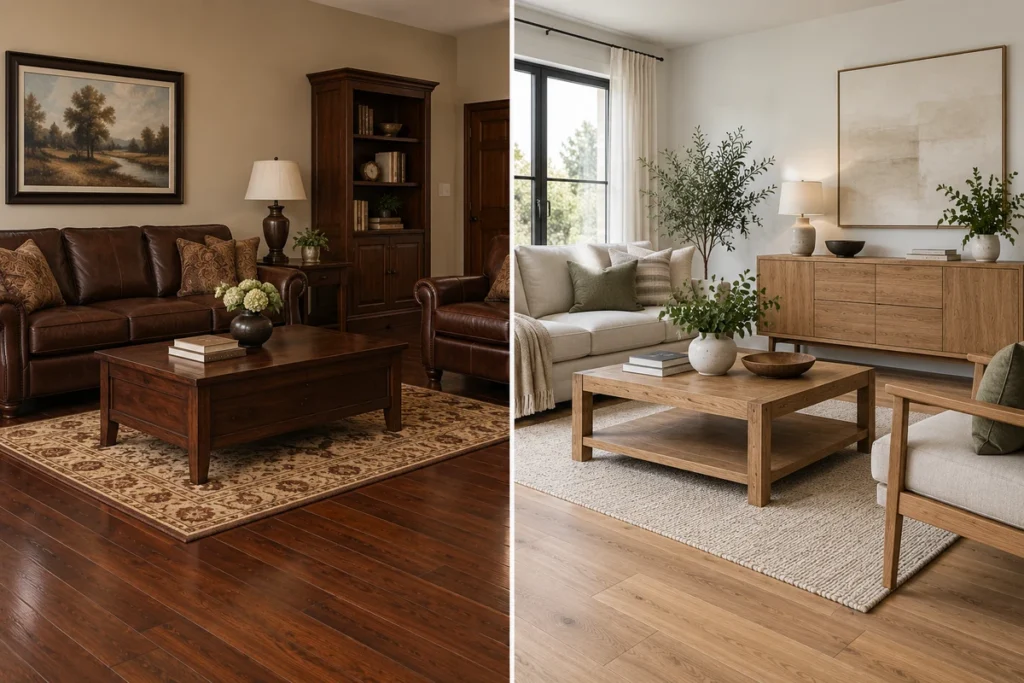
Most mismatched interiors are not caused by using different woods. They are caused by using differences without a clear pattern
| Mistake | Why it looks wrong | Better fix |
|---|---|---|
| Matching every wood exactly | The room can look flat | Use one or two shades of contrast |
| Ignoring undertones | Similar-depth woods can still clash | Compare warm, cool, and neutral notes |
| Using too many wood tones | The room loses hierarchy | Limit the main palette to two or three tones |
| Choosing all-dark finishes | The space can feel heavy | Add lighter furniture or textiles |
| Combining several strong grains | Patterns compete | Let either the floor or furniture carry the stronger grain |
| Buying from small samples only | Lighting can change the appearance | Check larger samples in the actual room |
Another mistake is assuming that premium materials automatically coordinate. Solid wood parquet flooring and expensive furniture can still look disjointed if their undertones conflict or both have dominant grain patterns.
A Quick Checklist Before You Buy Furniture or Flooring
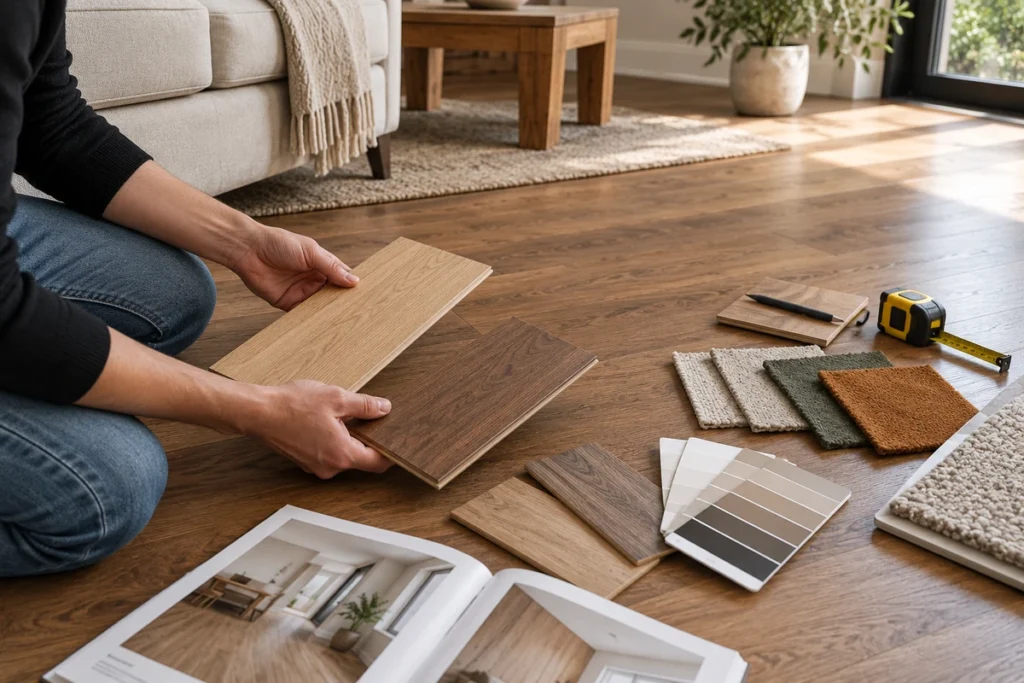
Before making a final purchase, check the combination in the actual room rather than relying only on showroom displays or product photos.
- Identify whether the floor is warm, cool, or neutral.
- Decide which wood tone will dominate the room.
- Choose furniture that clearly contrasts or deliberately coordinates.
- Compare samples in daylight and evening lighting.
- Check grain as well as color.
- Keep noticeable wood tones under control.
- Use rugs, upholstery, metal, stone, or painted finishes for separation.
- Consider how the combination looks from adjoining rooms.
If you are still choosing the floor itself, think about long-term flexibility. A highly distinctive floor can limit furniture options later, while more balanced finishes are easier to redesign around. The same applies to solid hardwood flooring: consider how the tone will work with both current and future furniture
conclusion
Matching wood floors and furniture works best when you stop trying to make every wooden surface identical. Start with the floor’s undertone, build intentional contrast, keep one dominant tone, and limit competing finishes.
If you are planning a broader redesign, exploring different wooden flooring ideas can help you choose a floor that works with both current furniture and future changes. Greenwood can help you compare flooring styles, tones, and materials before making a final choice
FAQs
Should your wood furniture match your wood floors?
No. Wood furniture does not need to match wood floors exactly. Coordinated undertones with some difference in color depth, grain, or finish usually look better. Exact matching can feel flat, while controlled contrast gives furniture more definition
What color furniture goes well with wooden floors?
Light wood floors often work well with walnut, medium brown, black, cream, and darker finishes. Medium floors can handle both lighter and darker furniture. Dark wood floors often look best with lighter woods, cream, beige, or medium tones.
The floor’s undertone matters as much as its darkness. Warm floors generally pair best with warm or neutral furniture, while cooler floors often suit muted or greyed finishes
Can you mix different wood tones in the same room?
Yes. Different wood tones can make a room look richer and more natural when they share a relationship. Use one dominant tone, repeat at least one secondary tone, and avoid introducing too many unrelated finishes.
The key to matching wood floors and furniture is hierarchy, undertone, and repetition rather than using the same wood species everywhere
What is the rule of three for mixing wood tones?
The rule of three means limiting the room to roughly three visible wood tones: one dominant tone, one secondary tone, and one accent tone.
For example, the floor might be light oak, the main furniture medium walnut, and smaller decorative pieces a darker brown. It is a guideline rather than a fixed requirement, but it helps create variety without visual clutter