
What Is LVT Flooring? A Practical Guide to Luxury Vinyl Tile
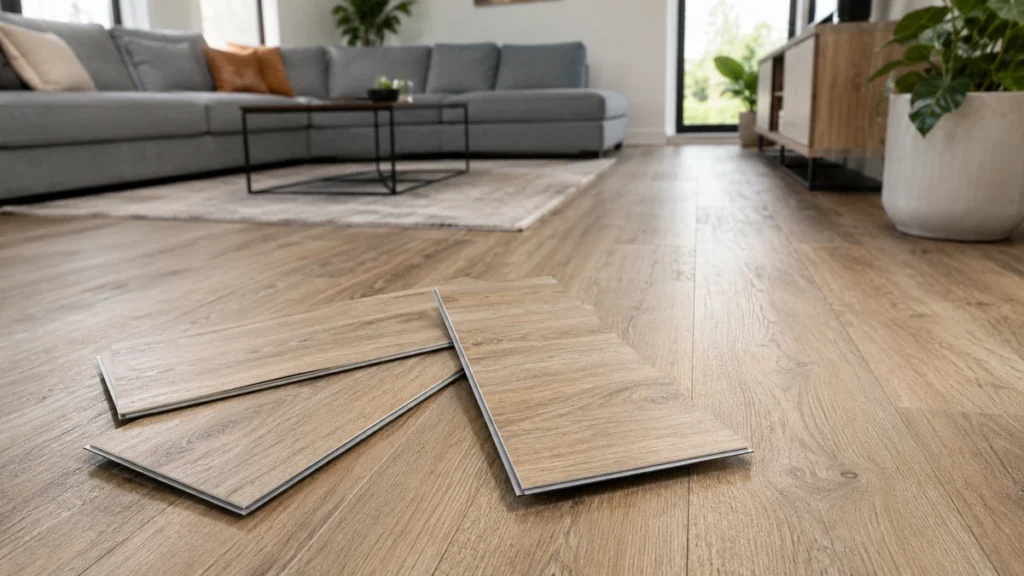
LVT stands for luxury vinyl tile. It is a multi-layer synthetic flooring designed to reproduce the look of materials such as wood, stone and ceramic while offering easier maintenance and strong everyday durability. Unlike traditional sheet vinyl, LVT is normally supplied as individual planks or tiles.
If you are looking for the LVT flooring meaning, the simplest definition is this: LVT is decorative vinyl flooring built from several layers, typically including a backing, core, printed design layer and protective wear layer. Depending on the product, it can be glued to the subfloor or installed with a click-lock system.
LVT is commonly used in homes, offices, shops and hospitality spaces. However, products differ in thickness, wear layer, core construction and installation method, so the right choice depends on the room and expected traffic.
What Is LVT Flooring Made Of?
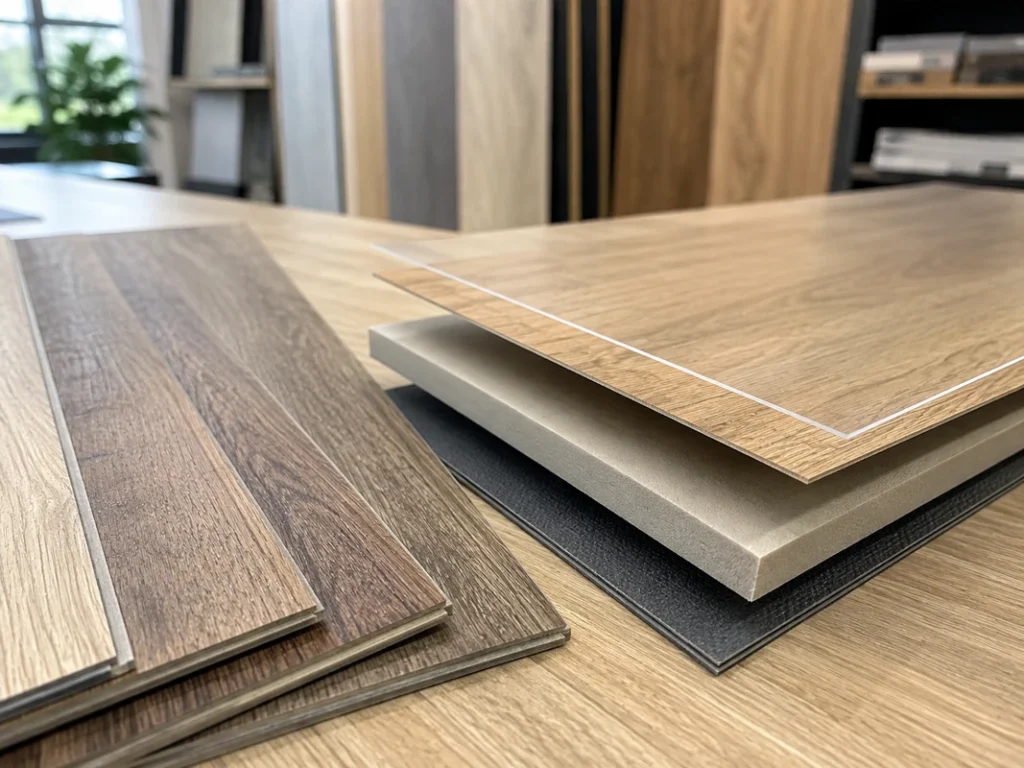
Most LVT flooring is made from several engineered layers rather than one solid material. A typical product includes a backing layer, vinyl or composite core, printed decorative film, transparent wear layer and protective surface coating.
The backing and core provide stability. Flexible glue-down LVT usually uses a vinyl-based construction, while rigid-core products use a denser core for additional dimensional stability.
Above the core is a printed design layer that creates the appearance of timber, stone or tile. A transparent wear layer protects that image from scratches, stains and daily traffic, while some products add a factory-applied surface coating for easier cleaning.
This layered construction is why LVT can imitate wood parquet or stone without using the natural material itself
What Types of LVT Flooring Are There?
The two main categories are glue-down LVT and click or rigid-core LVT. Their biggest differences are installation method, rigidity and subfloor requirements
Glue-Down LVT
Glue-down LVT is fixed directly to a prepared subfloor with adhesive. It is usually thinner and more flexible than rigid-core LVT.
Because it closely follows the surface below, good subfloor preparation is essential. When installed correctly, it creates a stable, low-profile floor and is often suited to larger or high-traffic areas
Click / Rigid Core LVT
Click LVT uses interlocking edges, so the planks connect to one another as a floating floor. Many click products have a rigid core that improves stability and can tolerate minor subfloor irregularities better than flexible LVT
| Type | Installation | Main Advantage | Typical Use |
|---|---|---|---|
| Glue-down LVT | Adhesive | Stable, low-profile finish | Large or busy spaces |
| Click / rigid-core LVT | Floating click system | Faster installation, rigid construction | Homes and renovations |
Installation type alone does not determine quality. Wear layer, construction and intended use also matter when choosing the best LVT flooring.
Is LVT a Practical Flooring Choice?
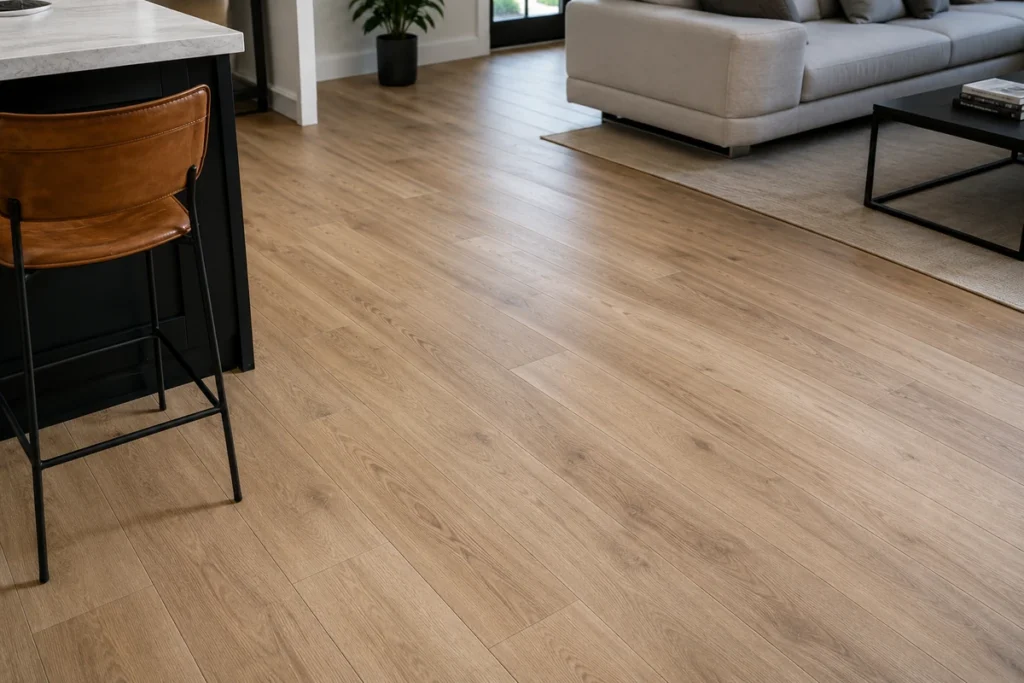
LVT is popular because it combines design flexibility, moisture resistance and relatively simple maintenance. It is available in many wood and stone effects, feels less hard underfoot than some mineral surfaces and can work in both residential and commercial interiors.
Its main advantages include easy cleaning, good resistance to daily wear and the ability to replace individual damaged planks or tiles in many installations.
There are drawbacks. LVT is synthetic, so it does not have the same natural texture, ageing characteristics or refinishing potential as real timber. Flexible products can reveal imperfections in a poorly prepared subfloor, while incorrect installation may cause gaps, lifting or movement.
Because performance differs between products, a detailed review of LVT flooring pros and cons should consider the specific wear layer, core, room and installation system rather than treating all LVT as identical
Where Can LVT Flooring Be Used?
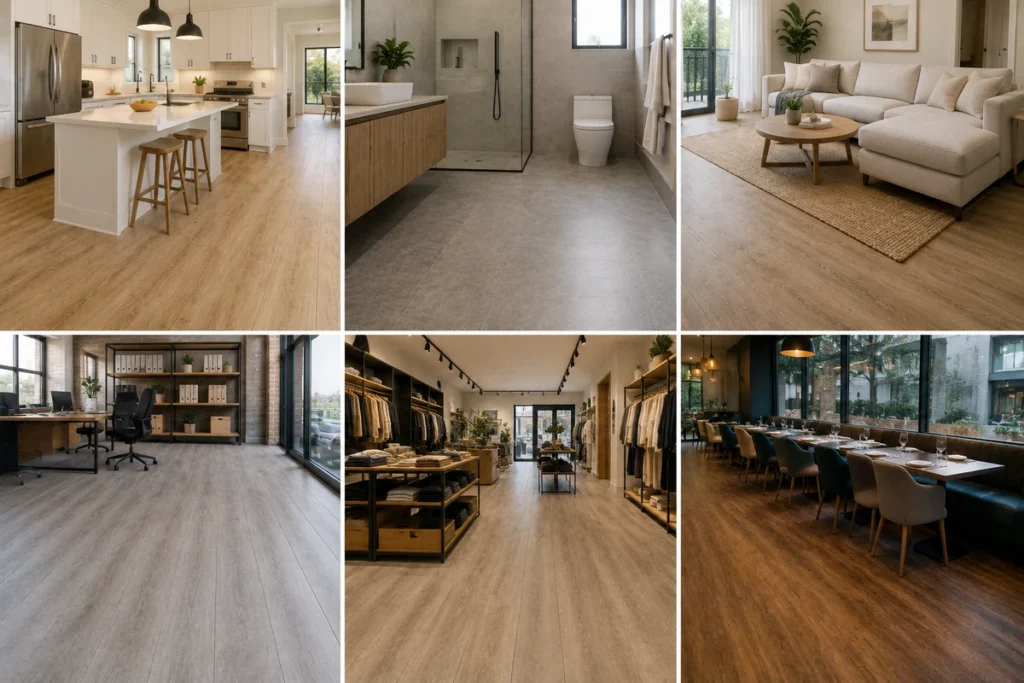
LVT can be used in many residential and commercial areas if the selected product is approved for the conditions. Moisture, traffic, direct sunlight and floor temperature should all be considered
| Area | Suitability | What to Check |
|---|---|---|
| Living rooms | Excellent | Appearance and wear layer |
| Bedrooms | Excellent | Comfort and acoustics |
| Kitchens | Very good | Water resistance |
| Bathrooms | Product-dependent | Wet-area approval |
| Offices | Very good | Traffic rating |
| Shops | Very good | Commercial durability |
| Hotels | Very good | Acoustic and traffic requirements |
When comparing LVT flooring UAE products, check the manufacturer’s technical specifications rather than assuming every product performs the same. The same applies to LVT flooring Dubai options for residential and commercial projects
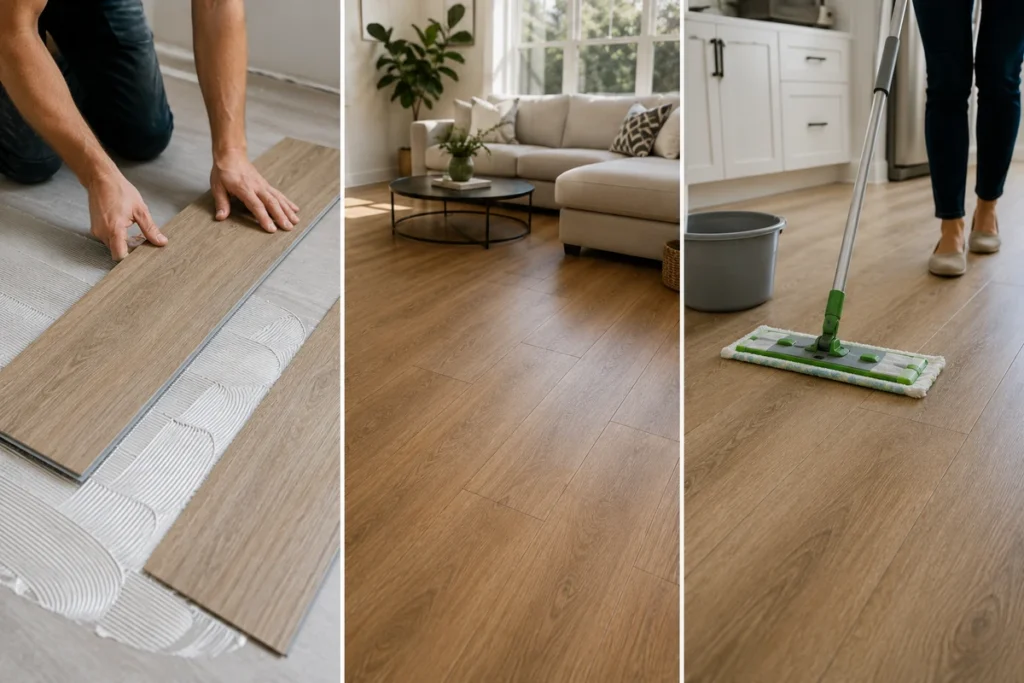
LVT vs Vinyl vs Laminate: What’s the Difference?
LVT is a type of vinyl flooring, but “vinyl flooring” is a broader category that can also include sheet vinyl and standard vinyl tiles. LVT usually refers to layered planks or tiles designed to provide a more realistic decorative finish.
Laminate is different. It commonly uses a wood-fibre-based core with a printed decorative layer, whereas LVT is primarily vinyl or composite based. That difference generally gives LVT stronger moisture resistance
| Feature | LVT | Sheet Vinyl | Laminate |
|---|---|---|---|
| Format | Planks or tiles | Large sheets | Planks |
| Core | Vinyl/composite | Vinyl | Fibreboard-based |
| Water resistance | Usually high | High | Product-dependent |
| Installation | Glue or click | Usually glued | Usually click |
| Repair | Individual pieces can often be replaced | More difficult | Individual planks possible |
For people comparing an LVT floor with wooden flooring Dubai options, the decision usually comes down to priorities. LVT is easier to manage in moisture-prone areas, while real wood flooring Dubai products provide genuine timber character and a different long-term appearance
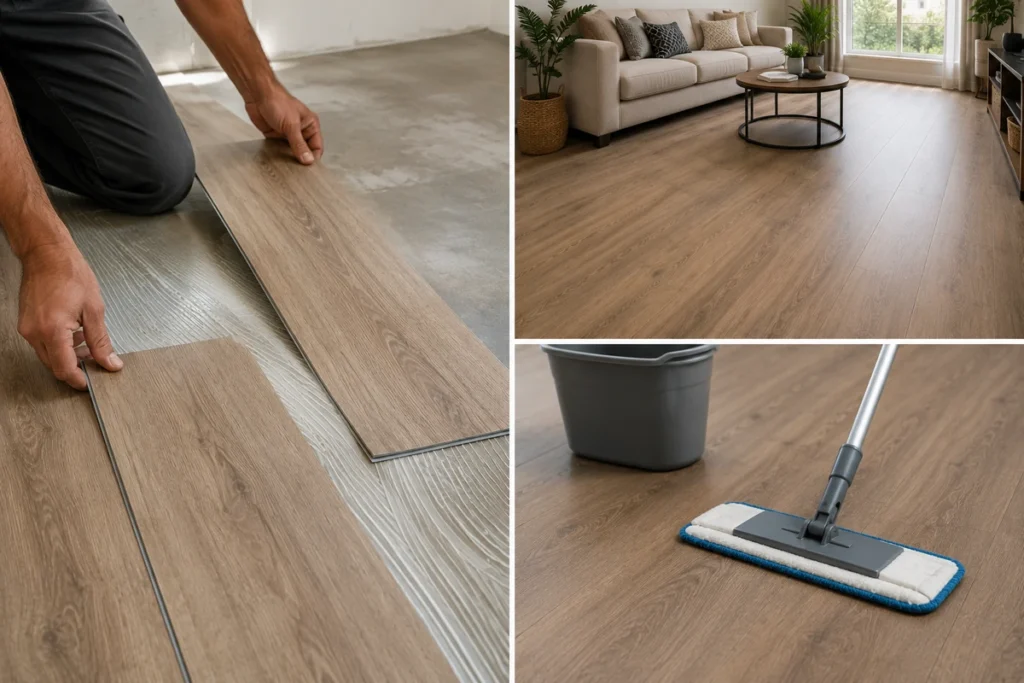
Installation, Lifespan and Maintenance of LVT
Installation quality and routine care have a major effect on how an LVT floor performs. The basics are straightforward, while detailed fitting techniques are better covered separately
LVT Installation Basics
LVT is normally installed with adhesive or a click-lock system. In both cases, the subfloor should be clean, dry, stable and sufficiently level.
Glue-down products are bonded directly to the floor. Click products are assembled as a floating surface with the required expansion space. Some systems need underlay, some have attached backing, and others should not be installed over a separate layer
For detailed installation, refer to guides on how to install vinyl tiles or how to fit LVT flooring. Cutting around walls and door frames is a separate practical skill, so how to cut LVT flooring should also be handled as its own step-by-step topic
How Long Does LVT Flooring Last?
There is no single lifespan for every LVT product. Longevity depends on wear-layer specification, traffic, maintenance, sunlight exposure and installation quality.
A bedroom and a busy retail entrance place very different demands on flooring. Instead of judging durability only by total thickness, check the manufacturer’s usage classification, warranty and wear-layer specification
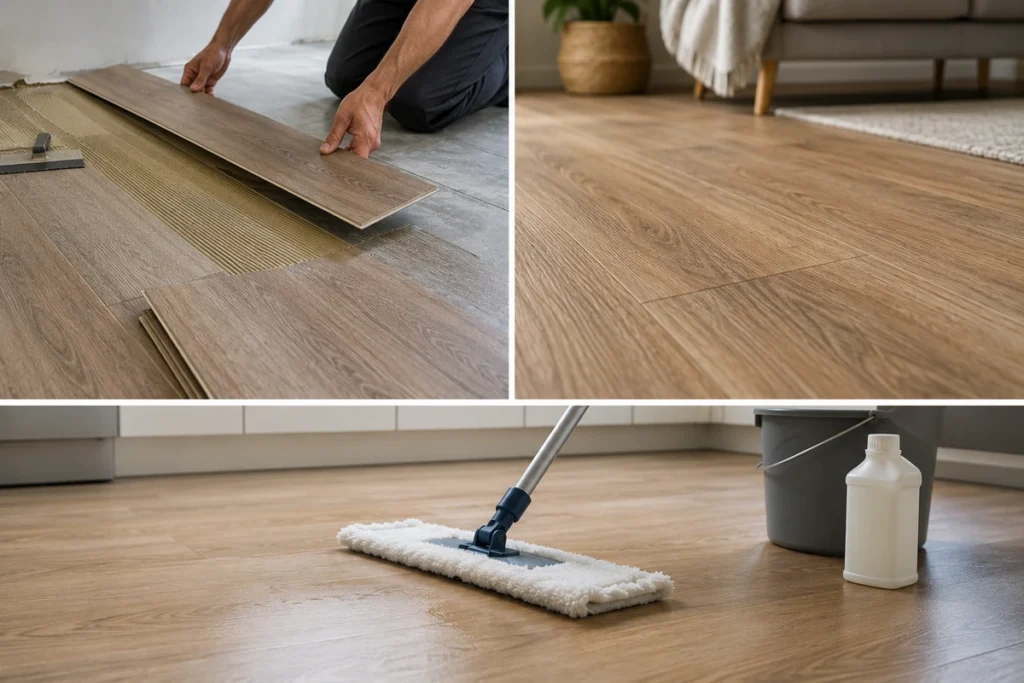
How Do You Clean LVT Flooring?
Remove dust and grit with a soft broom or vacuum, then clean with a damp mop and a cleaner approved for vinyl flooring.
Avoid abrasive pads, harsh solvents and excessive water unless the manufacturer allows them. Entrance mats and furniture pads can also reduce scratching and everyday wear
conclusion
LVT is a layered vinyl flooring designed to reproduce wood, stone or tile while offering practical benefits such as moisture resistance, easy cleaning and flexible installation choices. The right product depends on the room, subfloor, traffic level and required finish.
If you are comparing LVT with SPC flooring Dubai products, laminate or natural timber, focus on performance requirements rather than appearance alone. Greenwood can help match the flooring specification to the intended space and use
FAQs
Is LVT flooring waterproof?
Many LVT products are waterproof at the material level, but that does not automatically make the entire installed floor waterproof. Water can still reach joints, edges or the subfloor, so wet-area suitability should be confirmed in the manufacturer’s instructions.
Is LVT the same as vinyl flooring?
LVT is a type of vinyl flooring, but not all vinyl flooring is LVT. Vinyl is the broader category; luxury vinyl tile refers to planks or tiles designed with layered construction and realistic decorative surfaces.
Is LVT better than laminate?
Neither is universally better. LVT is usually preferable when moisture resistance and low-maintenance cleaning are priorities, while laminate may appeal to people who want a rigid plank with a convincing wood appearance. The best choice depends on the room and product specification.
Can LVT be used with underfloor heating?
Many LVT products are compatible with underfloor heating, but only within the temperature limits and installation conditions set by the manufacturer. The heating system, adhesive and any underlay must also be compatible. Choosing the best underlay for LVT flooring therefore depends on the complete floor system, not the underlay alone.