How to Clean Floors Properly: A Step-by-Step Guide
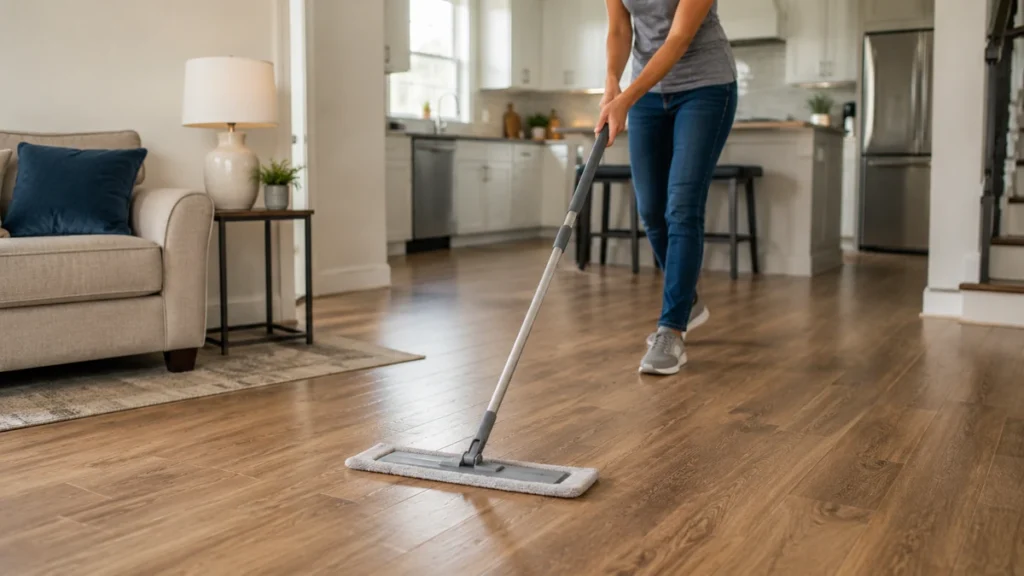
Knowing how to clean floors properly is not simply about using a mop and cleaner. Different flooring materials react differently to water, heat, chemicals, and scrubbing, so a cleaning method that works well on tile may damage hardwood, laminate, or natural stone.
The safest approach is to identify your flooring first, remove loose dirt before introducing moisture, and then use the least aggressive cleaning method that gets the surface clean. This floor cleaning guide explains the general process and shows how to adjust it for wood, laminate, vinyl, tile, and stone flooring
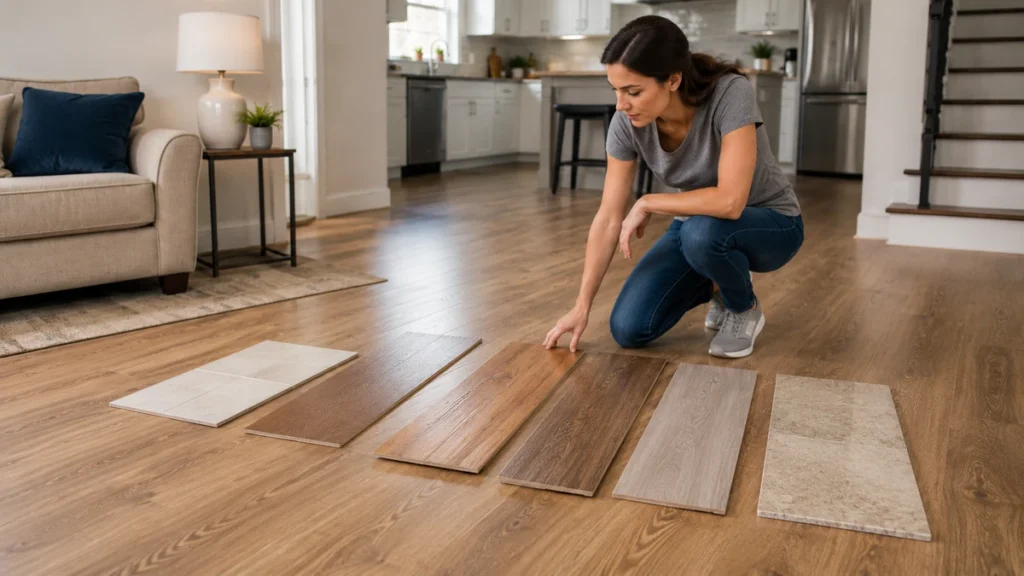
Before You Start: Identify Your Floor Type
Before deciding on the best way to wash floors, confirm what material you are cleaning. Moisture tolerance is one of the biggest differences between flooring types.
The manufacturer’s care instructions should always take priority, particularly for specialty finishes, sealed surfaces, and products with specific warranty requirements.
How to Clean Floors Step by Step
The basic process for how to clean flooring is similar across most materials. What changes is the amount of moisture, type of cleaner, and cleaning tool you use.
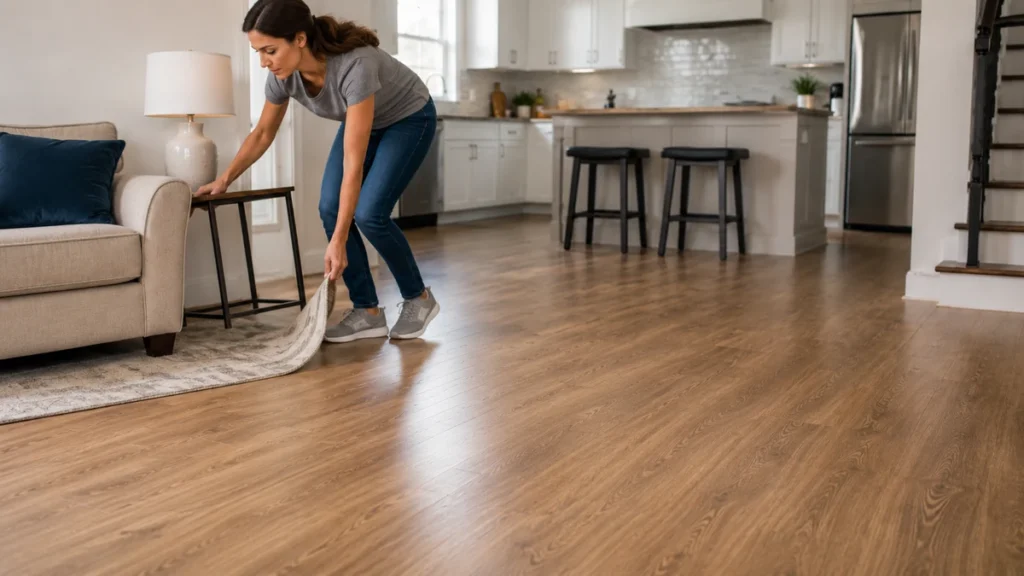 Clear the Floor
Remove rugs, lightweight furniture, toys, cables, and other objects from the area. Cleaning an unobstructed surface makes it easier to reach corners and prevents dirt from being pushed underneath furniture.
If furniture cannot be moved, clean carefully around its legs rather than soaking the surrounding floor
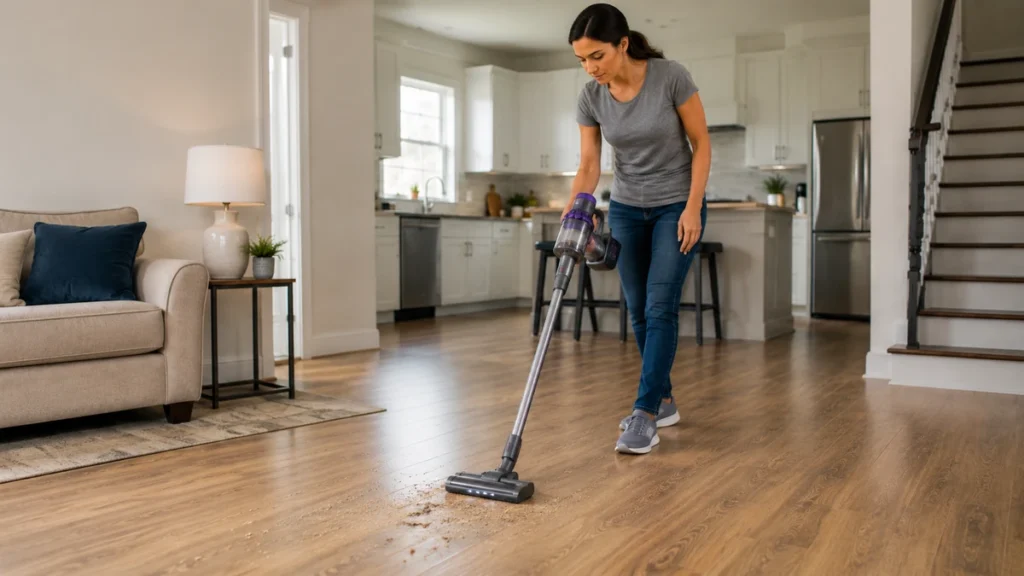
- Sweep or Vacuum First
Always remove loose dust, sand, hair, crumbs, and grit before mopping.
Mopping a dusty floor often turns dry debris into dirty residue that gets spread across the surface. Fine grit may also scratch certain finishes when dragged underneath a mop.
Vacuuming is particularly useful for textured flooring and gaps between boards. On wood and laminate floors, use a suitable hard-floor attachment and avoid aggressive rotating brushes unless the manufacturer approves them
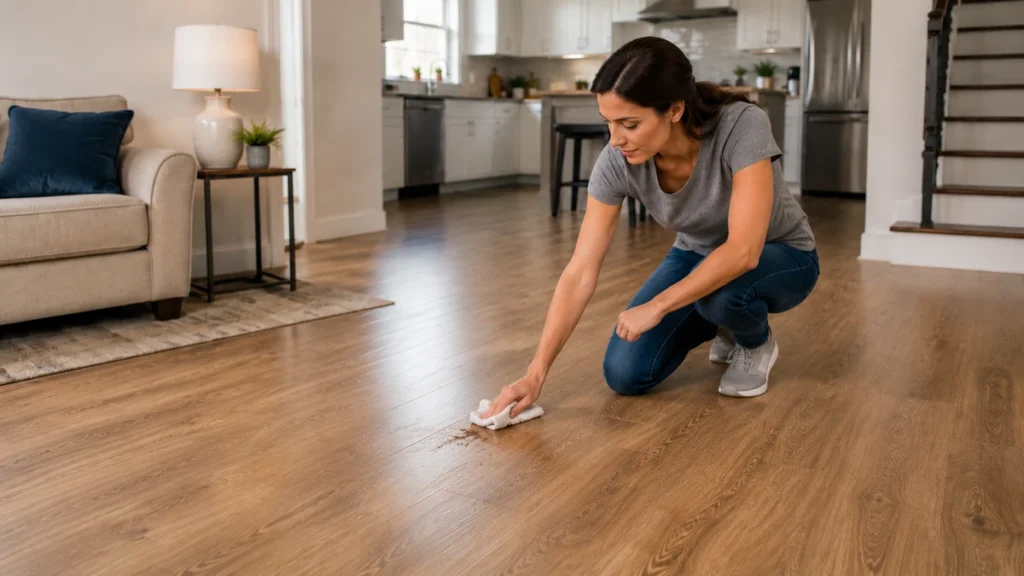
- Spot-Clean Spills and Stubborn Dirt
Treat concentrated dirt before cleaning the entire floor.
Fresh spills should usually be wiped up immediately, especially on wood-based flooring. For dried marks, apply a compatible cleaner to a soft cloth or mop rather than flooding the area.
Avoid attacking stubborn stains with abrasive pads before checking what your flooring can tolerate. Aggressive scrubbing can damage protective finishes even when the flooring material underneath is durable
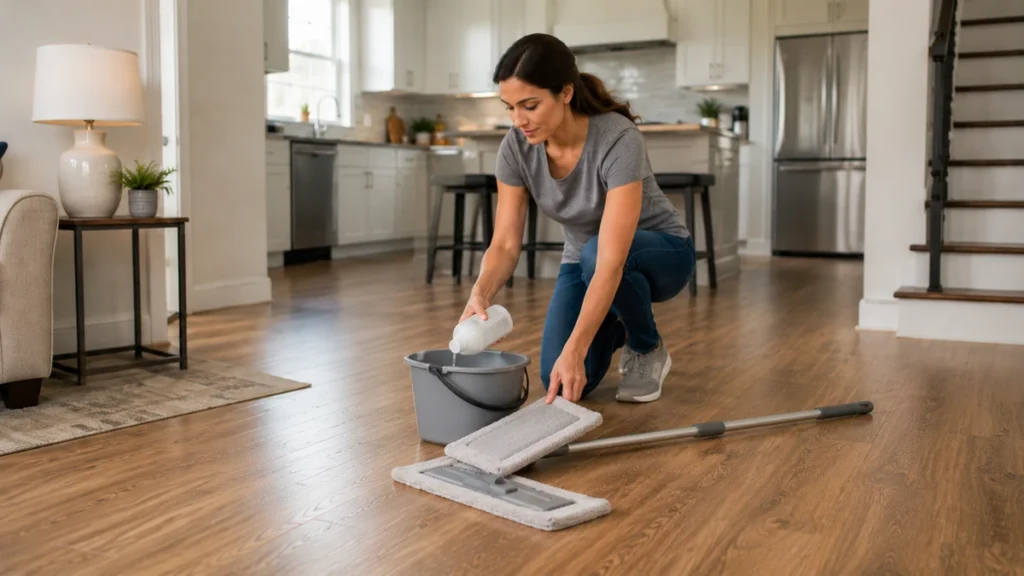
- Prepare the Right Cleaner and Clean Tools
Choose a cleaner specifically suitable for your floor type and dilute concentrated products according to their instructions.
More cleaner does not mean a cleaner floor. Excess detergent can leave a sticky film that attracts new dirt and makes the surface appear dull.
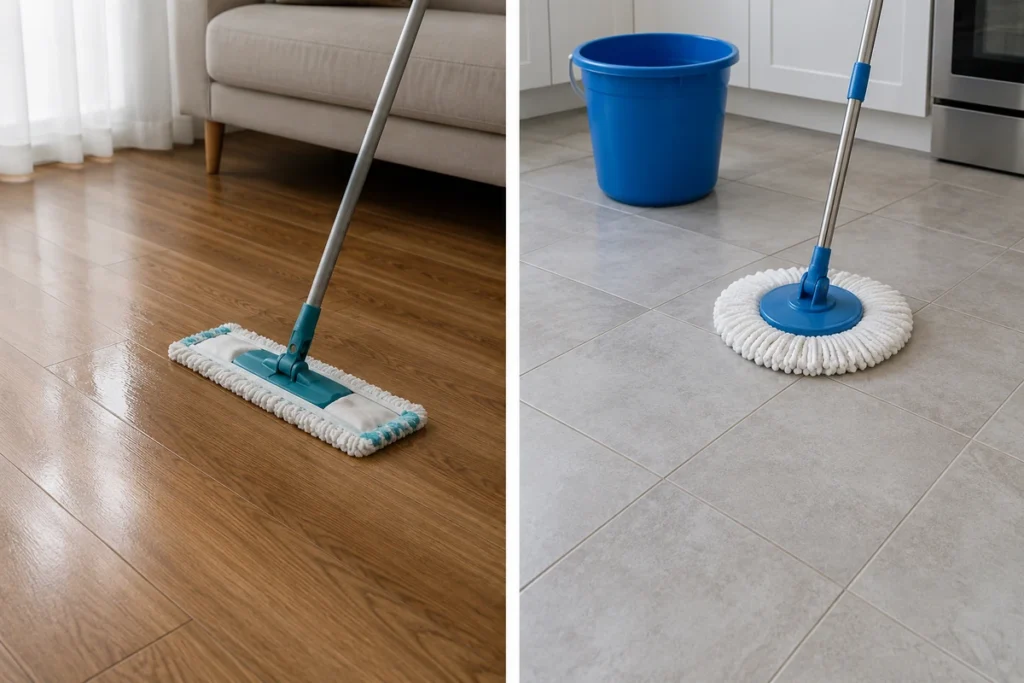
Your mop should also be clean before you begin. Microfiber mops are useful for many flooring types because they can pick up fine dirt while working effectively with relatively little water
- Mop in Small Sections
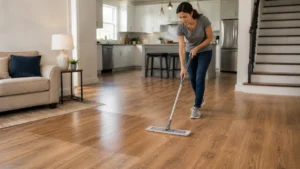
Instead of soaking the entire room at once, work across manageable sections.
For moisture-sensitive flooring, wring the mop thoroughly so it feels damp rather than wet. Clean systematically from one side of the room toward the exit to avoid repeatedly walking over freshly cleaned areas.
Small sections also make it easier to notice whether too much water is being left behind
- Keep the Mop and Water Clean
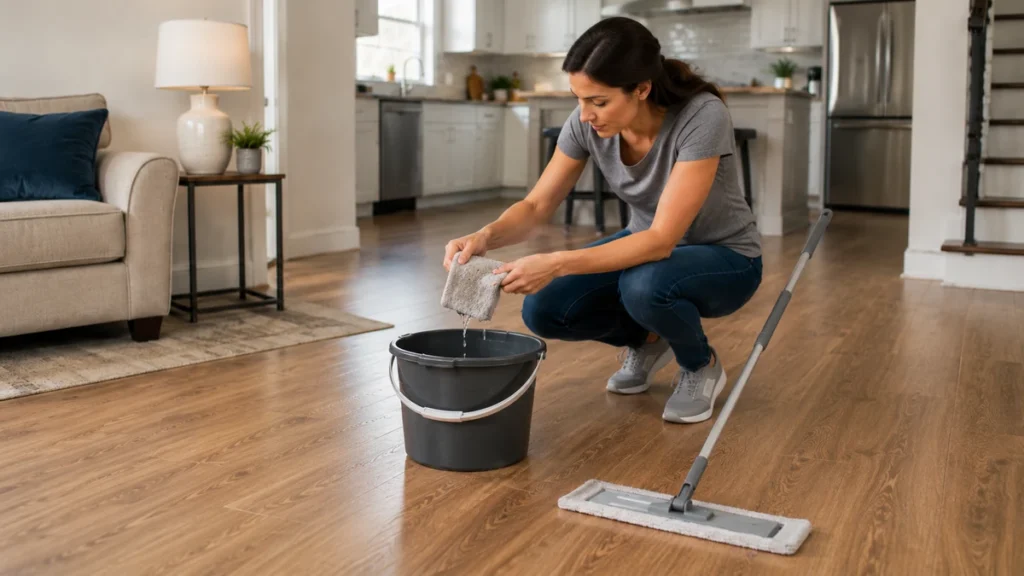
Dirty mop water quickly becomes a problem. Once the water turns visibly cloudy or contains significant debris, replace it.
Continuing to mop with heavily contaminated water does not properly clean the floor; it simply redistributes dirt across a larger area.
For large or particularly dirty rooms, you may need several water changes. Rinse reusable mop pads during cleaning or replace them with clean pads as necessary
- Rinse Only When Needed and Let the Floor Dry
Not every cleaning product requires rinsing. Many modern floor cleaners are designed to be used without a second pass, while other products can leave residue unless rinsed.
Check the cleaner instructions before adding unnecessary water
Not every cleaning product requires rinsing. Many modern floor cleaners are designed to be used without a second pass, while other products can leave residue unless rinsed.
Check the cleaner instructions before adding unnecessary water
How to Clean Different Types of Floors
The general process works for most surfaces, but proper floor maintenance cleaning requires adjusting the method to the material.
Hardwood and Engineered Wood Floors
If you are wondering, “how do I clean hardwood floors without damaging them?”, the most important rule is moisture control.
Start by vacuuming or sweeping with a soft tool. Then use a well-wrung microfiber mop with a cleaner designed for finished wood floors. The surface should become lightly damp, not visibly wet.
This approach applies to many types of wood flooring, including solid hardwood flooring, although the exact cleaning requirements depend on the protective finish.
When considering how do you clean engineered hardwood floors, the same cautious approach generally applies. Engineered wood has a real wood surface, so excessive moisture can still create problems even though its layered construction differs from solid timber.
Products such as engineered wood parquet and traditional parquet flooring should also be cleaned according to their specific finish rather than assuming every wood floor can tolerate the same treatment.
Remove spills promptly, avoid leaving water between boards, and do not use harsh household chemicals unless they are approved for the finish.
Cleaning is only one part of long-term wood floor maintenance. Protecting the finish, controlling scratches, dealing with wear, and maintaining suitable indoor conditions also affect how the floor performs over time
Laminate floors
For anyone asking “how do I clean my laminate floors?”, start with as little moisture as practical.
Sweep or vacuum loose dirt, particularly along plank joints. Then clean the surface with a lightly damp microfiber mop and a cleaner suitable for laminate.
Although laminate wood flooring can reproduce the appearance of timber convincingly, it should not be treated exactly like solid wood. Its layered construction means excessive water around seams and edges may cause swelling or other damage.
Avoid pouring water directly onto laminate and do not leave puddles sitting on the surface. If a spill occurs, wipe it up promptly.
For routine cleaning, frequent dry cleaning combined with occasional damp mopping is usually more appropriate than repeated wet washing
Vinyl, LVP and LVT Floors
People asking how do I clean vinyl plank flooring generally have more flexibility with moisture than owners of wood or laminate floors, but that does not mean the floor should be flooded.
Sweep or vacuum first, then damp mop with a vinyl-compatible cleaner. Products such as lvt flooring and many forms of spc flooring are designed to handle everyday spills well, making routine cleaning relatively straightforward.
If you are wondering how do you clean a really dirty vinyl floor, do not immediately reach for stronger chemicals. Start by removing loose debris and treating dirty areas individually. Allow a suitable cleaner brief contact time according to its instructions, then gently agitate stubborn marks using a soft cloth or non-abrasive tool.
Repeat the process if necessary rather than aggressively scrubbing the wear layer.
Avoid solvent-based products, highly abrasive pads, and cleaners that are not recommended for vinyl surfaces
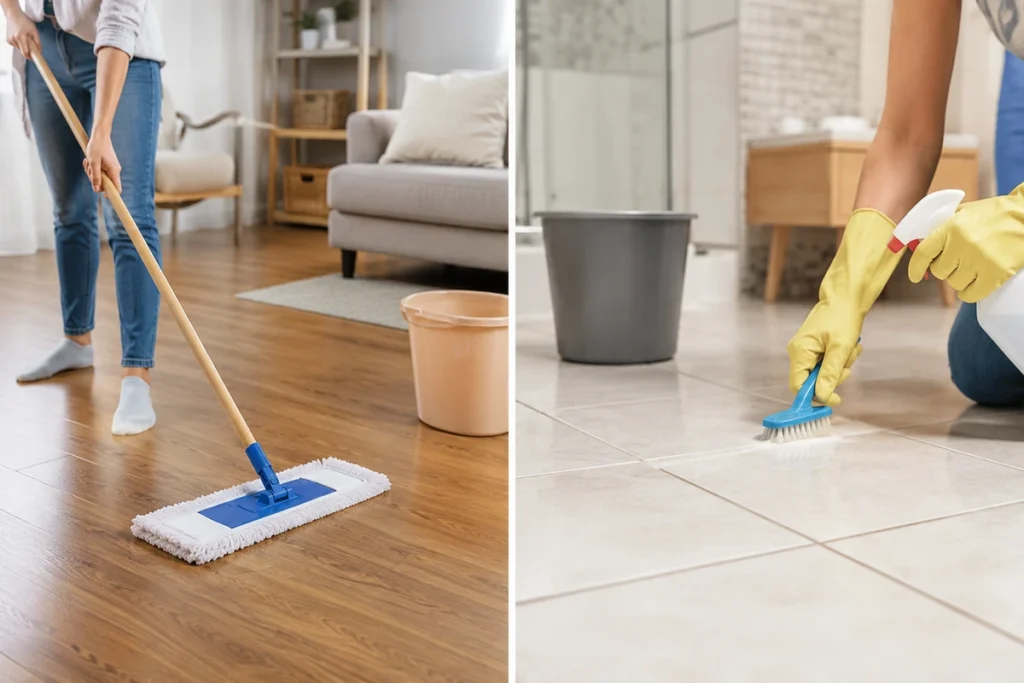
Tile and Grout Floors
Ceramic and porcelain tile generally tolerate moisture better than wood-based flooring, making them easier to mop thoroughly.
Sweep or vacuum first, then mop with an appropriate tile cleaner. Pay particular attention to grout lines because dirt can accumulate below the level of the tile surface.
For stubborn grout dirt, use a suitable grout-cleaning product and brush rather than increasing the concentration of the cleaner across the entire floor.
Rinse if the product requires it and avoid leaving detergent residue behind. Residue can make tile appear cloudy and may cause the floor to attract dirt more quickly
Natural Stone Floors
Natural stone requires more careful product selection than ordinary ceramic tile.
Use a pH-neutral cleaner designed for the specific stone. Marble, limestone, travertine, and some other natural materials can react with acidic substances, potentially damaging or dulling the surface.
Vacuum or sweep gently before damp cleaning and avoid excessive water around unsealed or highly porous stone.
If the floor has been sealed, remember that the sealant also has its own maintenance requirements. Cleaning methods should therefore be based on both the stone type and its current surface treatment
conclusion
The best way to wash floors depends less on how aggressively you clean and more on whether the method matches the flooring material. Remove loose dirt first, control the amount of water, use compatible cleaning products, keep your tools clean, and deal with spills before they become difficult stains.
Wood and laminate require particularly careful moisture control, while vinyl and tile usually tolerate more routine damp cleaning. Natural stone needs cleaners specifically compatible with the material.
If you are choosing or maintaining flooring and need product-specific guidance, Greenwood can help you understand the appropriate care requirements for different flooring materials before an incorrect cleaning method causes unnecessary damage
FAQs