
What Is Parquet Flooring? Types, Pros, Costs and Care
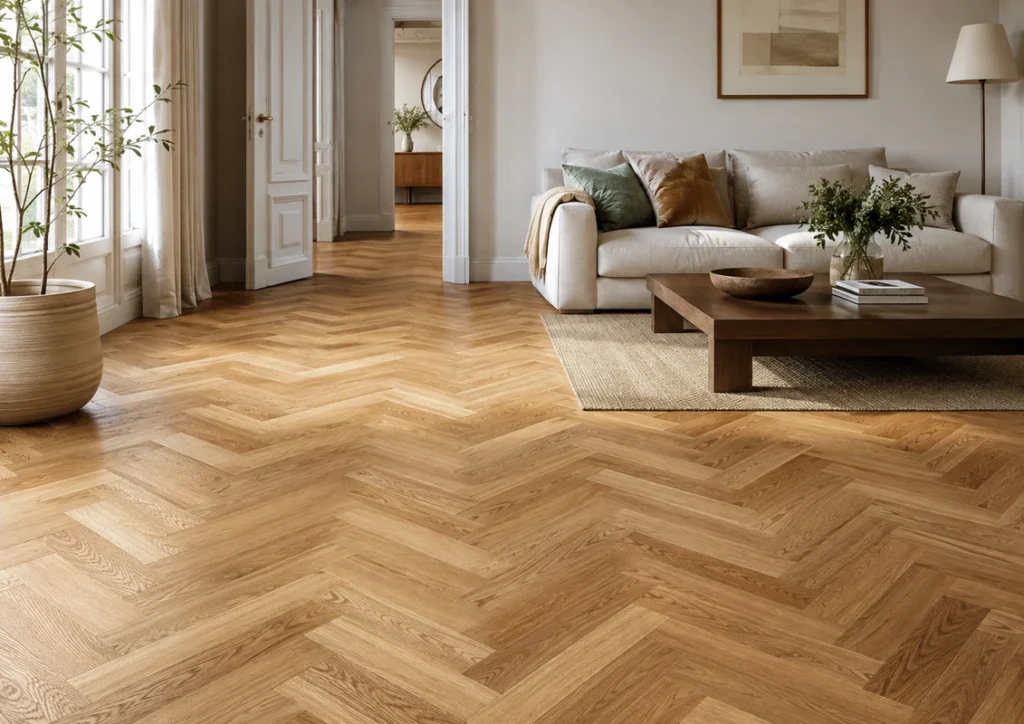
Parquet flooring is a wood floor made from small blocks, strips, or tiles arranged in decorative geometric patterns. The best-known design is herringbone, although chevron, basketweave, and Versailles are also common. Parquet may be solid wood, engineered wood, or a surface that only imitates the look. Its main advantage is visual character: it creates a more distinctive floor than standard straight-laid boards while still offering the warmth of wood.
What Is Parquet Flooring?
Parquet is created by arranging small flooring pieces into a repeated geometric design. Unlike regular plank floors, where long boards normally run in one direction, parquet uses the shape, size, and orientation of each piece to form the pattern.
It may be supplied as separate blocks, tiles, preassembled panels, or engineered boards. Oak is widely used for its visible grain and durability, although walnut, maple, ash, and other species are also available.
Parquet became associated with French interiors in the seventeenth century. Decorative floors in buildings such as the Palace of Versailles helped popularise it as an alternative to stone or marble. Modern products retain that patterned appearance in formats suited to current homes
Is Parquet Flooring Real Wood?
That depends on the construction. “Parquet” describes the pattern, not one specific material.
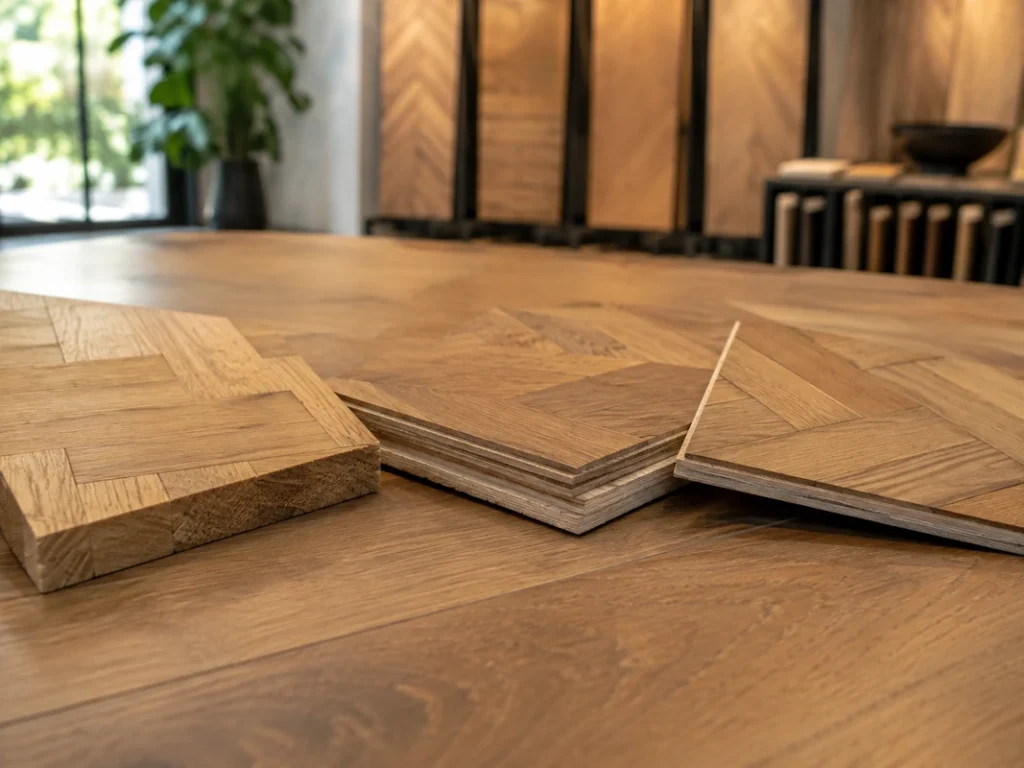
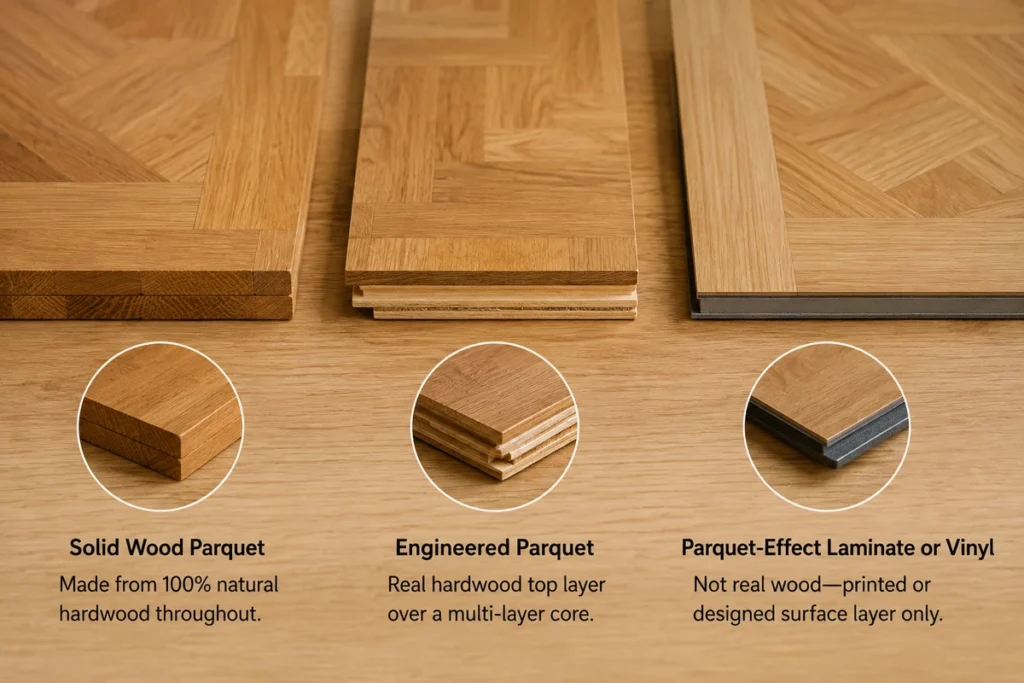
Solid wood parquet is natural timber through its full thickness. It can often be sanded and refinished several times, depending on its remaining depth.
Engineered parquet has a real-wood top layer over a stable layered core. It generally handles temperature and humidity changes better. Refinishing depends on the thickness of the wear layer.
Parquet-effect laminate or vinyl only reproduces the appearance. Laminate flooring uses a printed design layer, while vinyl uses a decorative film beneath a protective surface. Neither has a real-wood wear layer, so deep damage cannot be sanded away
Parquet vs Regular Wood Flooring
Both may use real timber, but they differ in format, layout, and installation
| Feature | Parquet Flooring | Regular Wood Flooring |
|---|---|---|
| Format | Small blocks, strips, tiles, or panels | Longer and wider boards |
| Layout | Repeated geometric patterns | Usually straight or diagonal rows |
| Appearance | Detailed and decorative | Cleaner and more continuous |
| Installation | Requires precise alignment | Usually quicker and simpler |
| Waste | Often higher around edges | Usually lower in simple rooms |
| Sanding | Harder because grain changes direction | Easier when boards run consistently |
| Best use | Feature and design-led rooms | Broad use across many interiors |
Parquet is therefore a category of wood flooring, defined mainly by its patterned composition
Types and Patterns of Parquet Flooring
Choosing parquet involves both construction and pattern. These affect appearance, stability, cost, installation, and maintenance
Solid, Engineered and Parquet-Effect Flooring
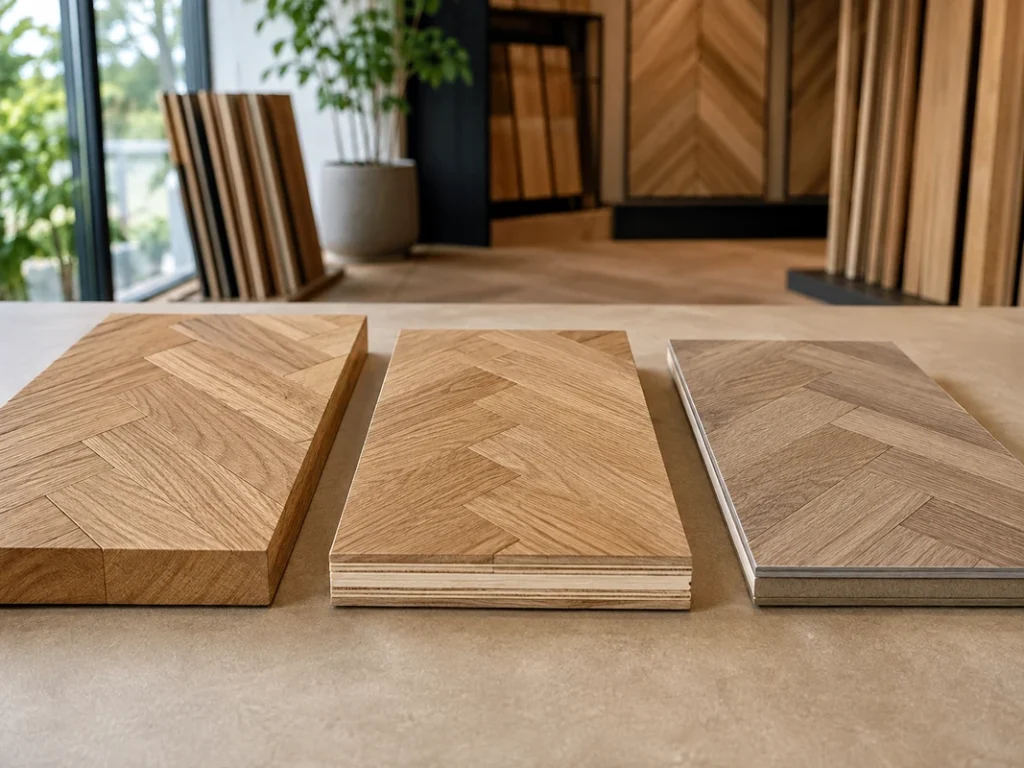
Solid hardwood flooring is the traditional option. It may offer strong long-term refinishing potential, but it responds more noticeably to moisture and humidity. Careful subfloor preparation and climate control are important.
Engineered wood flooring uses a real timber surface over a layered core. It is generally more stable and may suit more subfloors or underfloor-heating systems when approved by the manufacturer.
Parquet-effect laminate and vinyl offer the pattern at a lower price in many markets. They can be practical where easy maintenance or spill resistance matters more than a genuine wood surface. However, their printed design cannot be restored by sanding
Herringbone, Chevron, Basketweave and Versailles
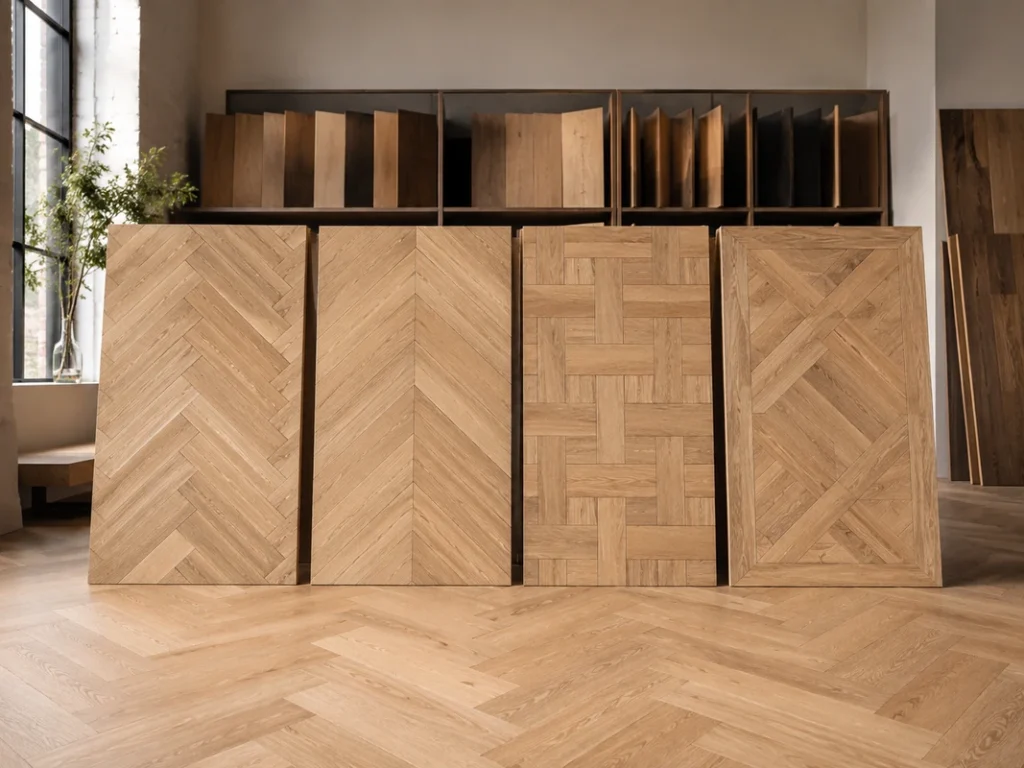
Herringbone uses rectangular blocks laid at right angles to create a broken zigzag. It works in both classic and modern rooms.
Chevron uses angled ends that meet in a continuous V. It creates a sharper effect but normally needs more precise cutting.
Basketweave groups short pieces to resemble interlaced strips. It suits dining rooms, entrances, and spaces that can display its compact geometry.
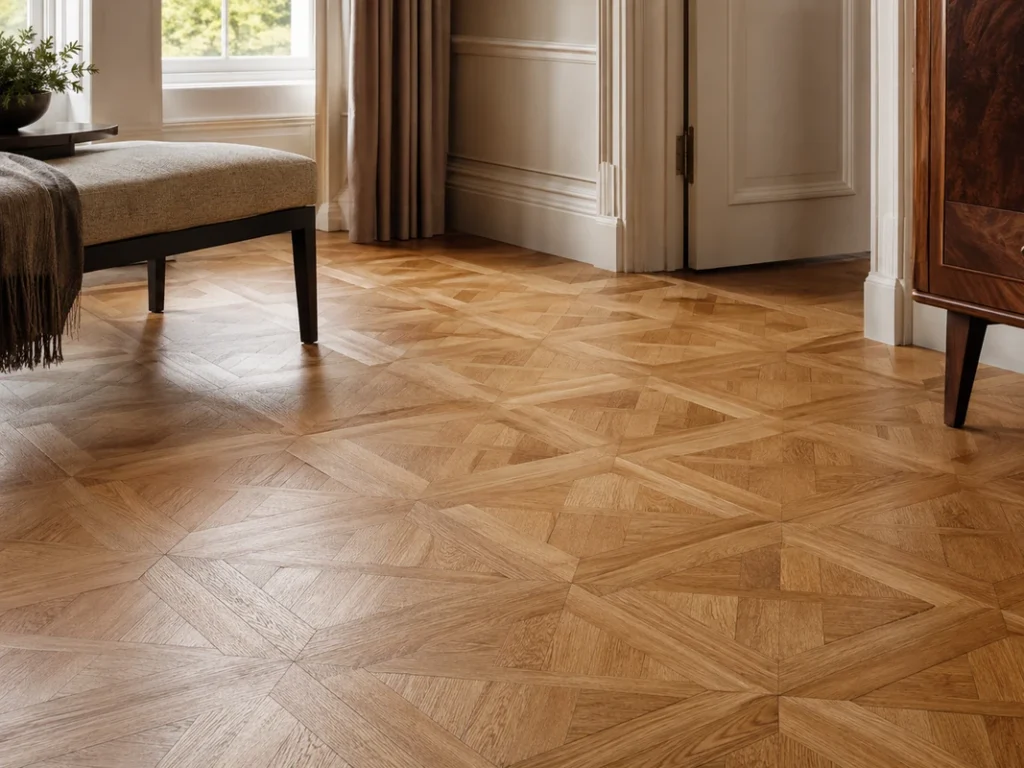
Versailles is usually a decorative panel with interlaced diagonal and square elements. It creates a formal look and works best in larger rooms.
The right pattern depends on room size, furniture placement, lighting, borders, and budget
Pros, Cons and Best Rooms for Parquet
Parquet can perform well, but the result depends on the product, installation quality, room conditions, and maintenance.
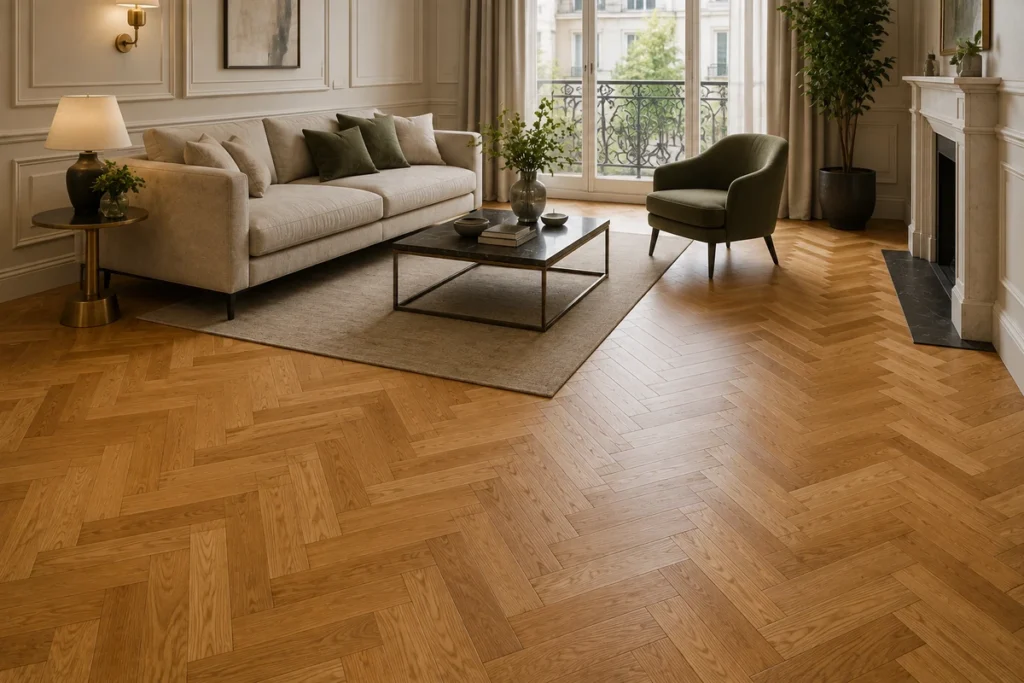
Its strongest benefit is visual character. Changes in grain direction and light give the floor more depth than standard boards, while the range of patterns suits classical and modern interiors.
Many real-wood versions can be repaired or renovated. Individual blocks may be replaceable, while suitable solid and engineered products may be sanded and refinished. This does not apply to every product, especially thin veneers or imitation surfaces.
With correct installation and care, parquet can be durable. However, wood remains sensitive to excessive water, grit, sharp impacts, and unstable humidity. Mats, felt pads, prompt spill removal, and regular cleaning improve its service life.
The main disadvantage is installation complexity. Patterns must remain straight, centred, and evenly spaced, while borders and irregular corners increase labour and waste. Installation is therefore often more expensive than fitting standard planks.
Scratches and dents may occur, particularly with softer species or heavy furniture. Sanding is also harder because the grain runs in several directions, so refinishing requires suitable equipment and experience
| Room | Suitability | Main consideration |
|---|---|---|
| Living room | Very suitable | Match the pattern to furniture placement |
| Bedroom | Suitable | Lower traffic helps protect the finish |
| Dining room | Suitable | Use pads beneath chairs and tables |
| Hallway | Suitable with care | Control grit and choose a durable finish |
| Kitchen | Conditionally suitable | Remove spills quickly |
| Bathroom | Usually unsuitable for real wood | High moisture can cause movement |
| Basement | Product-dependent | Engineered construction may be safer |
| Commercial space | Product-dependent | Check traffic rating and maintenance needs |
Parquet Flooring Cost and Installation
Parquet flooring cost varies because the category includes imitation products, engineered boards, solid blocks, and decorative panels. Parquet-effect vinyl or laminate is usually cheaper, engineered parquet often sits in the middle, and premium solid timber or Versailles panels can cost considerably more.
Labour is another major factor. Precise setting-out, angled cuts, borders, awkward room shapes, subfloor levelling, moisture control, and site finishing can all raise the total.
Installation may be glued, nailed, floated, or completed with a click system. Traditional blocks are commonly bonded to a smooth, stable subfloor. Even with faster engineered systems, the centre line and pattern direction must be planned before work begins.
Extra material is necessary because pattern matching and perimeter cuts create waste. The allowance should be based on the room and chosen design rather than one fixed percentage
How to Clean, Maintain and Refinish Parquet
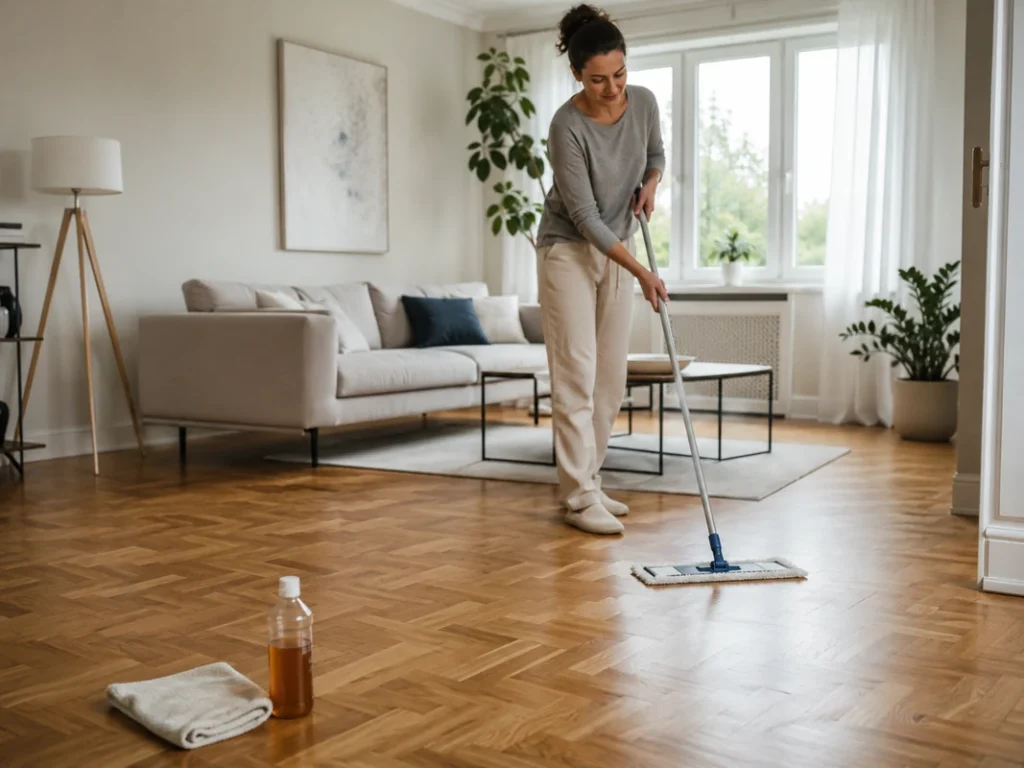
Cleaning parquet flooring begins with removing dust and grit. Use a soft broom or a vacuum with a hard-floor attachment, avoiding aggressive rotating brushes.
For routine care, use a slightly damp microfibre mop and a cleaner approved for the finish. Do not flood the surface or leave wet patches. Steam should only be used when the manufacturer permits it, because moisture can enter joints, swell wood fibres, weaken adhesive, or stain edges.
Wipe spills promptly. Fit felt pads beneath furniture, lift heavy items instead of dragging them, and use breathable rugs with non-staining backing. Stable indoor humidity also reduces gaps, movement, and cupping.
Refinishing depends on construction. Solid parquet and engineered products with a thick enough wear layer may be sanded and recoated. Thin veneers, laminate, and vinyl cannot. Because the grain changes direction, professional sanding is usually safer
Conclusion
What is parquet flooring in practical terms? It is a patterned floor made from small wood pieces or materials designed to imitate that look. Its strengths are visual character, pattern variety, and the repair potential of many genuine wood products. Its limitations are installation cost, moisture sensitivity, and more demanding refinishing.
Before buying, confirm whether the floor is solid, engineered, laminate, or vinyl. Check the wear layer, fitting method, room conditions, and whether the pattern suits the scale of the space
FAQ
What Is Parquet Wood Flooring Made From?
It is made from small solid-timber pieces or engineered boards with a real-wood top layer, arranged in patterns such as herringbone, chevron, basketweave, or Versailles
Is Parquet Flooring Outdated?
No. Its appearance depends on wood colour, block size, finish, and pattern. Pale oak and larger formats can look modern, while darker woods and decorative panels feel more traditional
Can Parquet Be Used With Underfloor Heating?
Some engineered products are suitable when the manufacturer approves the heating system and temperature limits. Solid wood is more sensitive to heat and moisture changes
Is Parquet Difficult to Clean?
Routine care is straightforward when the surface is sealed. Regular dry cleaning, minimal water, and an approved cleaner are normally sufficient
Can Damaged Parquet Blocks Be Replaced?
Often, yes. Individual blocks may be removed and replaced when matching material is available and the surrounding floor remains sound