
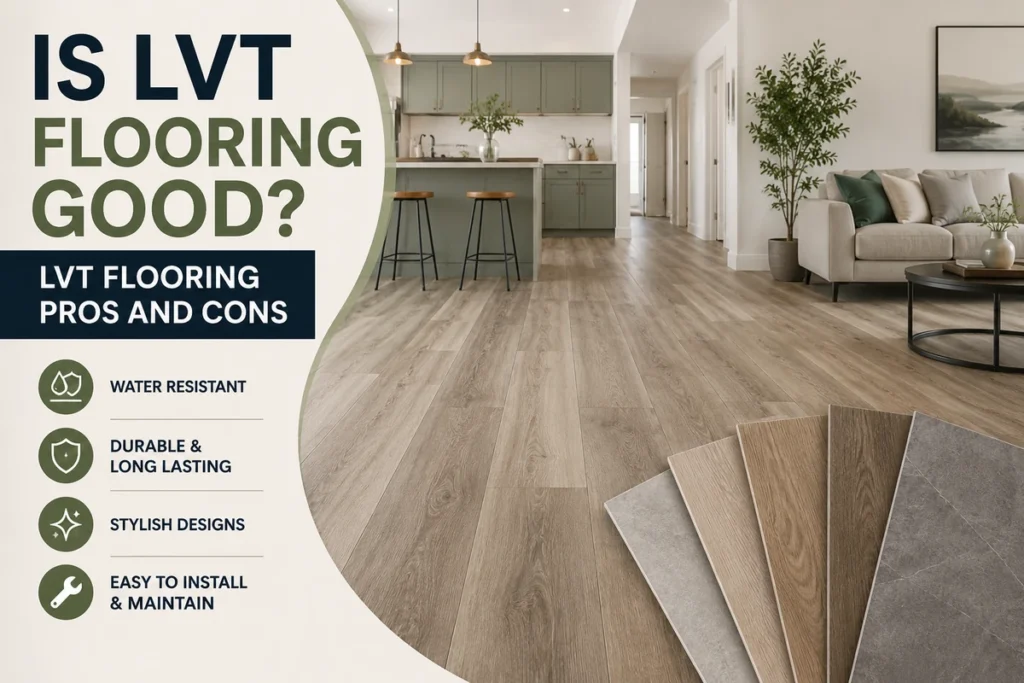
Is LVT Flooring Good? LVT Flooring Pros and Cons
Luxury vinyl tile has become a popular choice for homeowners who want the appearance of wood or stone without the cost and maintenance of natural materials. But is LVT flooring good enough for long-term use? In most homes, the answer is yes—provided the product is well made, correctly installed and suitable for the room. LVT is water-resistant, easy to clean, comfortable underfoot and available in realistic designs. However, it cannot be refinished like timber, and lower-quality products may scratch, dent or fade. Understanding the main LVT flooring pros and cons helps you decide whether its practical benefits outweigh its limitations for your space, budget and lifestyle
LVT Flooring Pros and Cons at a Glance
LVT stands for luxury vinyl tile. It is a layered synthetic floor designed to imitate wood, stone, ceramic and other finishes. Despite the name, it is also sold as planks
| Criterion | LVT Pros | LVT Cons | What Should You Check? |
|---|---|---|---|
| Water exposure | Handles spills and damp cleaning well | Water can still reach joints or the subfloor | Wet-area approval and installation guidance |
| Durability | Resists stains and everyday wear | Can scratch, dent or fade | Wear layer and warranty |
| Appearance | Realistic wood, stone and tile effects | Cheap products may look repetitive | Print quality and surface texture |
| Comfort | Warmer and softer than ceramic tile | Less solid than wood or stone | Core and backing type |
| Installation | Click and glue-down options | Poor fitting can cause gaps or movement | Subfloor condition and installer experience |
| Maintenance | Easy to sweep and mop | Harsh cleaners may damage the finish | Approved cleaning method |
The Advantages of LVT Flooring
Water Resistance and Easy Cleaning
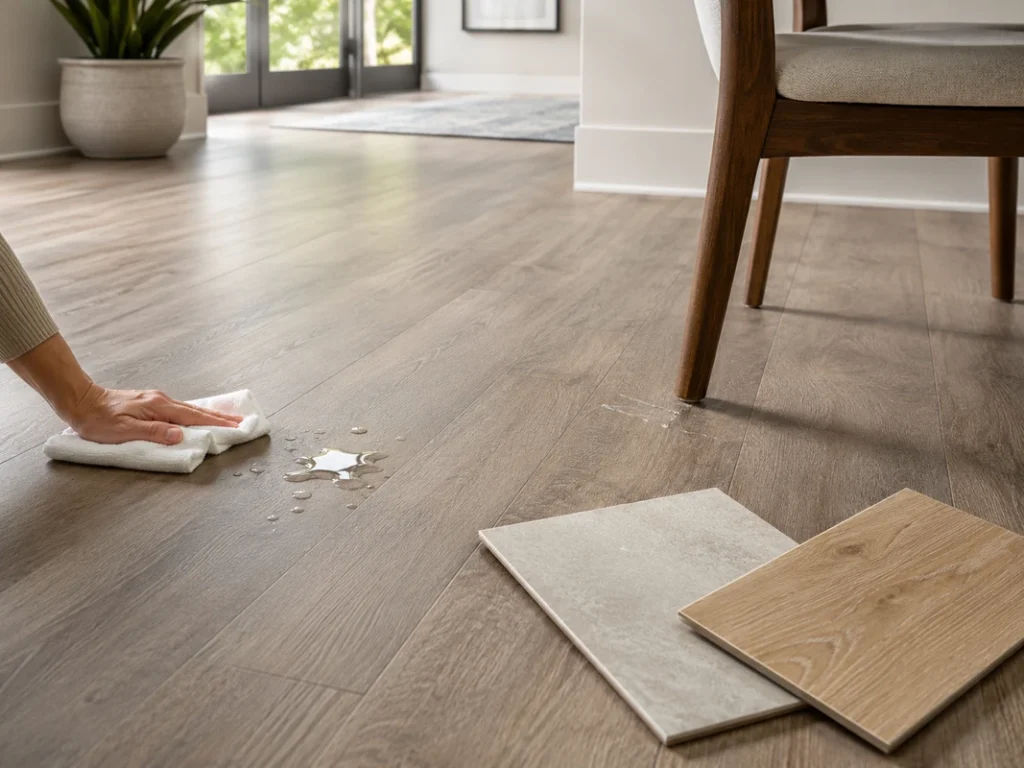
Moisture resistance is one of LVT’s strongest advantages. The vinyl surface does not absorb ordinary spills, making it useful for kitchens, utility rooms and some bathroom installations. It is also easy to clean with regular sweeping and a lightly damp mop
However, “waterproof” should not be confused with “flood-proof.” Water can still pass through edges or joints and affect the adhesive, underlay or subfloor.
Durability for Everyday Use
Good-quality LVT can handle children, pets, furniture and regular foot traffic. A transparent wear layer protects the design, while the surface coating helps resist stains and marks
Heavy-duty vinyl tile flooring is available for busy homes and commercial spaces. Still, total plank thickness alone does not prove durability. The wear layer, usage rating and warranty are more useful indicators.
Realistic Designs and Flexible Styling
Modern printing allows LVT to reproduce oak, stone, concrete and ceramic patterns convincingly. Homeowners can choose tile-look vinyl flooring, vinyl flooring with a marble effect or wood-style planks without the maintenance demands of the original material.
Decorative layouts are also available. LVT click flooring in a herringbone pattern can create a parquet-inspired look, while wider planks can make a room appear calmer and more spacious
Comfort and Noise Performance
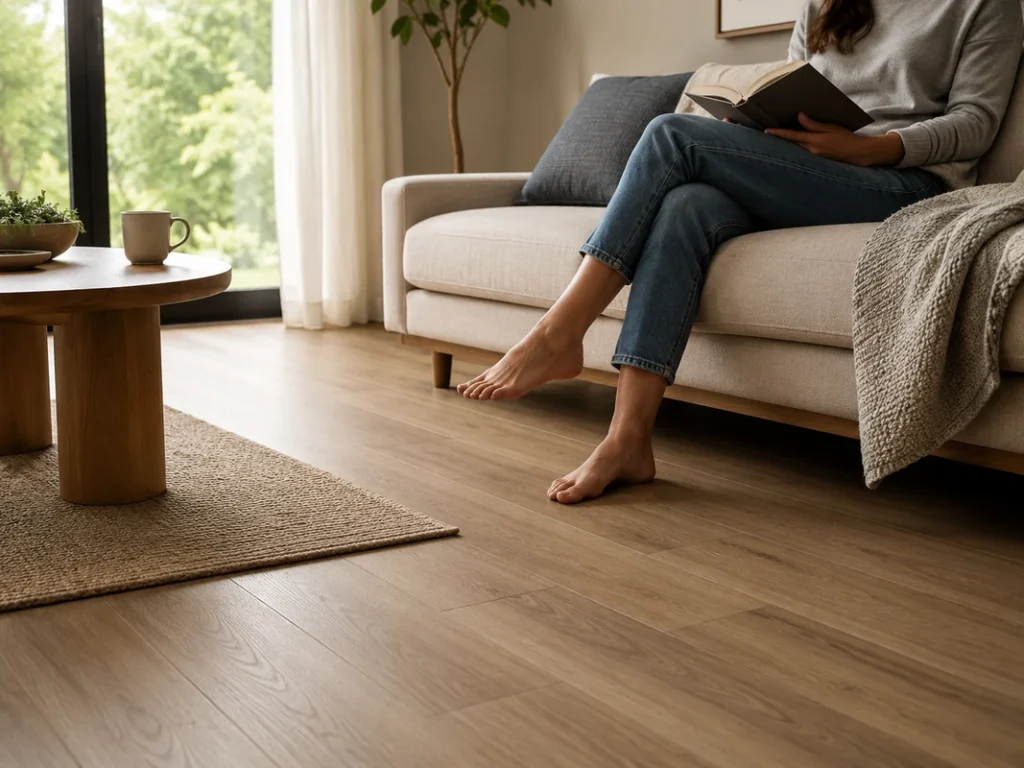
LVT generally feels warmer and slightly softer than ceramic tile. This makes it comfortable in kitchens, bedrooms and living areas. Acoustic backing may also reduce impact noise.
Installation and Budget Flexibility
LVT is available as click-lock, glue-down and loose-lay flooring. Click products are often faster to install and easier to remove. Glue-down formats may offer better stability in large rooms or high-traffic areas.
It can also cost less than natural stone or engineered timber, but the cheapest product may have weak joints or a poor wear layer
Low-Maintenance Ownership
LVT does not need sanding, sealing or polishing. It usually resists stains better than porous stone or unfinished wood. Furniture pads, entrance mats and suitable cleaners are still necessary, but routine ownership is simple
The Disadvantages of LVT Flooring
LVT Cannot Be Sanded or Refinished
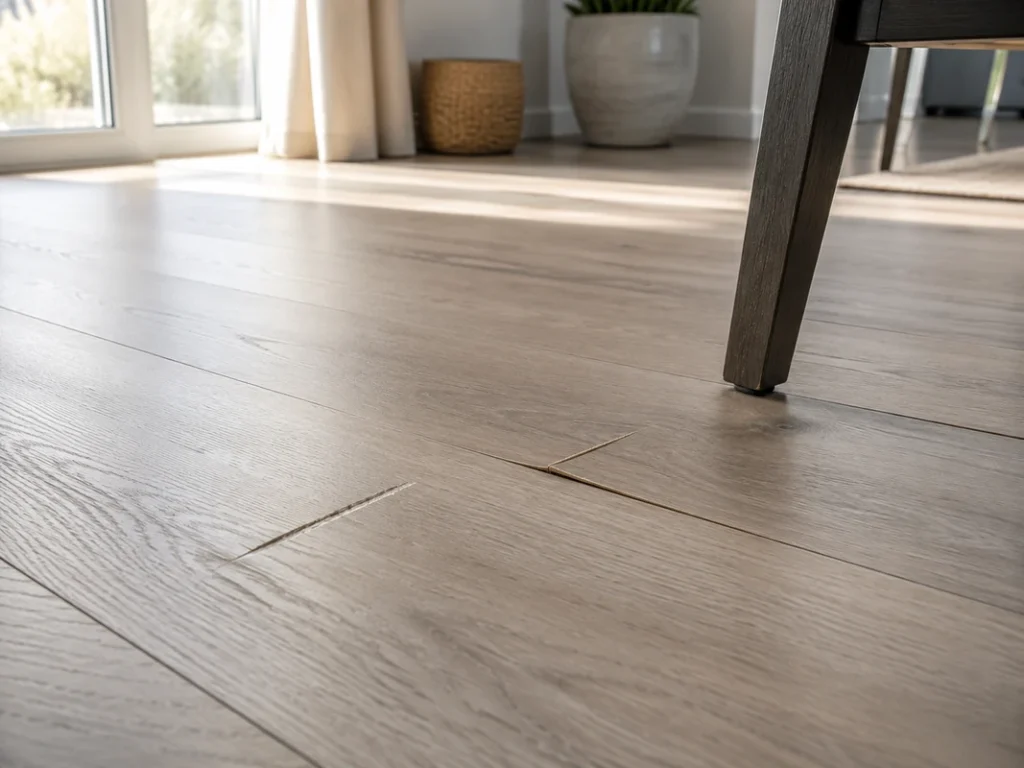
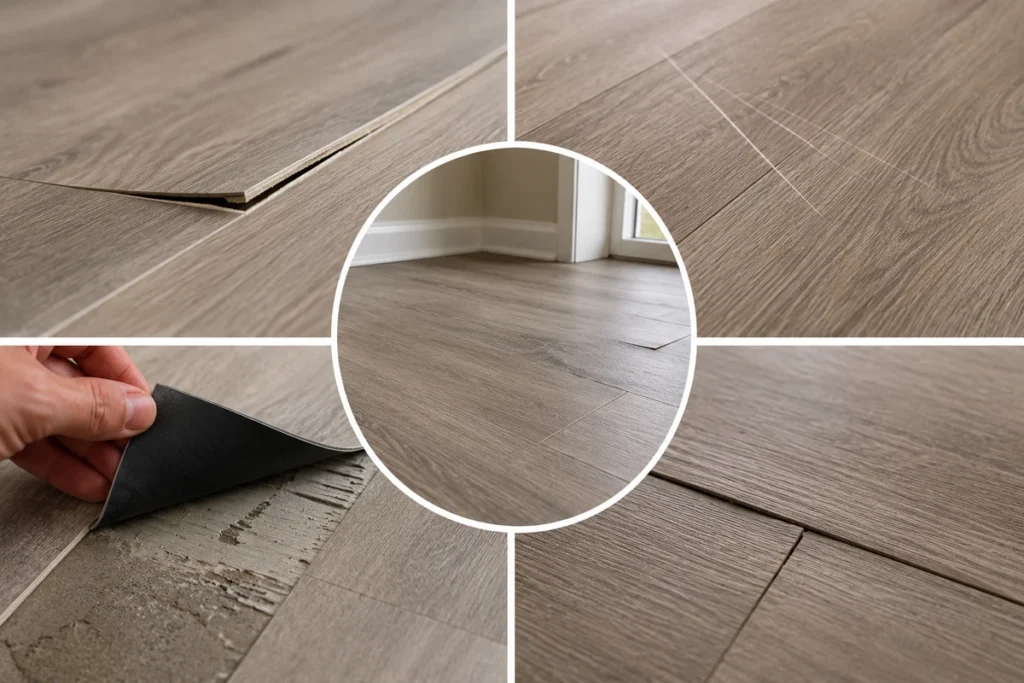
Unlike timber, LVT cannot be sanded to remove deep scratches or renew the surface. Once its wear and decorative layers are badly damaged, the affected plank or tile must be replaced
Dents, Scratches and Fading Are Still Possible
LVT is durable, not indestructible. Dragged furniture, sharp legs, grit, pet claws and heavy point loads can damage it. Direct sunlight may also cause fading or heat-related movement, particularly near large windows
Installation Quality Strongly Affects Performance
Even a premium product can fail on an uneven or damp subfloor. Poor preparation can cause separated joints, visible imperfections, hollow areas or adhesive failure.
Some negative LVT flooring reviews are therefore installation problems. Moisture testing, levelling and correct expansion gaps are essential
Repair and Removal Depend on the Installation
A click plank may be replaceable, but reaching damage in the centre of a room can require lifting several rows. Glue-down tiles can sometimes be removed individually, although adhesive residue may complicate the work.
Keep spare pieces from the original batch because colours and patterns may change or be discontinued
Environmental and Indoor-Air Considerations
LVT is synthetic, non-biodegradable and difficult to recycle in many markets. Choose products with recognised low-emission certification instead of vague “eco-friendly” claims
Is LVT Flooring Right for Your Home?
LVT is a strong choice for households prioritising easy cleaning, moisture resistance, design flexibility and moderate cost. It is less suitable for buyers who want a natural material, refinishing potential or the solid feel of real timber and stone
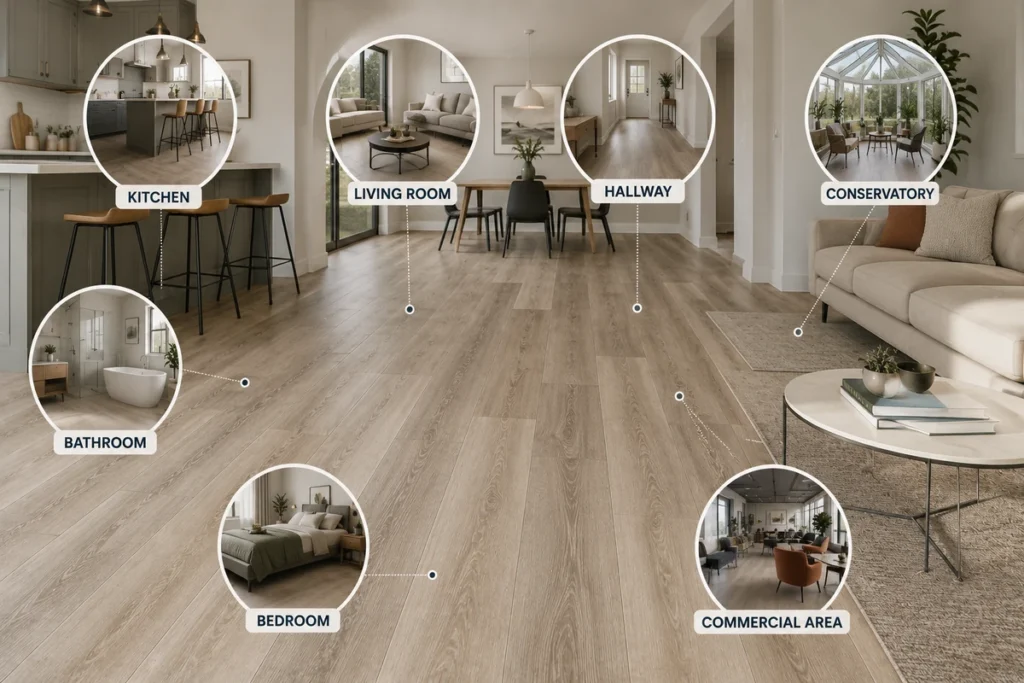
Where LVT Usually Works Well
| Space | Suitability | Key Point |
|---|---|---|
| Kitchen | High | Easy cleaning and good spill resistance |
| Bathroom | Medium to high | Use only products approved for wet areas |
| Living room | High | Comfortable and visually flexible |
| Bedroom | High | Warmer and softer than tile |
| Hallway | High | Select a durable wear layer |
| Conservatory | Variable | Check heat and sunlight limits |
| Commercial area | Product-dependent | Use the correct traffic rating |
Vinyl products can work well in bathrooms and kitchens when approved for the room and correctly installed. Leaks beneath appliances still require quick action
LVT vs Laminate, Ceramic Tile and Engineered Wood
In an engineered wood vs LVT comparison, engineered wood provides a natural surface and may be refinished, depending on its top layer. LVT is easier to maintain and usually handles everyday moisture better.
Laminate can offer strong scratch resistance at a competitive price, but water performance varies. Ceramic tile is extremely durable and heat-resistant, yet it feels colder and harder and usually requires more complex installation.
So, is vinyl flooring good compared with these alternatives? Yes, when practicality matters more than natural-material value. It is not automatically the best floor for every room

How to Choose Good-Quality LVT Flooring
Check more than colour and price:
- Wear layer: Choose a specification suited to the level of traffic.
- Core and locking system: Weak joints can separate under movement.
- Slip resistance: Important for entrances, kitchens and bathrooms.
- Backing: Acoustic backing may improve comfort and sound performance.
- Warranty: Read exclusions for moisture, sunlight and installation.
- Underfloor heating: Confirm temperature limits and compatibility.
- Emissions: Look for verifiable low-VOC certification.
- Installer: Proper subfloor preparation matters as much as the product.
For UAE projects, an experienced LVT flooring Dubai supplier should explain heat exposure, air-conditioning, subfloor moisture and suitable installation methods. The term luxury vinyl tile sounds premium, but the technical specification determines actual quality
Conclusion
Is LVT flooring good? For many homes, yes. It combines realistic design, water resistance, simple maintenance and flexible installation at a lower cost than many natural materials. It performs especially well in kitchens, living rooms, bedrooms and hallways.
Its limitations still matter. It cannot be refinished, weaker products may dent or look artificial, and poor installation can cause early failure. The right decision is to select the correct product, specification and installer for the room
FAQ
Is LVT Flooring Waterproof or Water-Resistant?
Many products are waterproof at the material level, meaning the plank or tile does not absorb water. The installed floor is not necessarily flood-proof because moisture can enter through joints and edges. Always follow the manufacturer’s wet-area instructions.
Can Damaged LVT Planks or Tiles Be Replaced?
Yes. Glue-down tiles may be replaced locally, while click systems can require several rows to be lifted. Spare flooring from the same production batch makes colour and pattern matching easier.
Is LVT Flooring Safe for Indoor Air Quality?
Certified low-emission products from reputable manufacturers are generally the safer choice. Check for independent VOC testing and avoid products that provide no information about emissions or compliance.
Can LVT Be Used With Underfloor Heating?
Many LVT products are compatible with underfloor heating, but maximum temperature and installation rules vary. The heating system, adhesive and subfloor must meet the manufacturer’s requirements