Chevron Flooring vs Herringbone: What’s the Difference
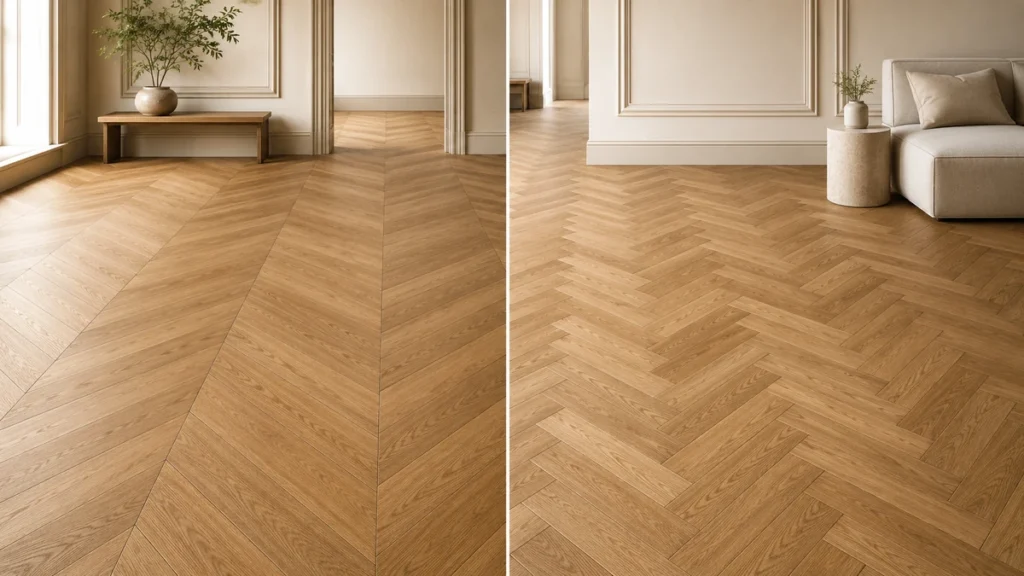
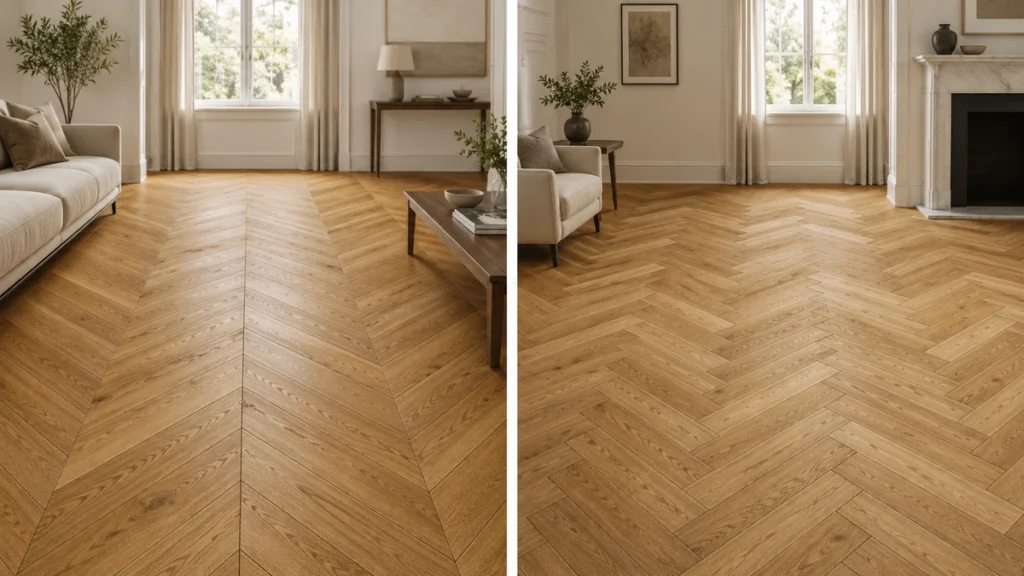
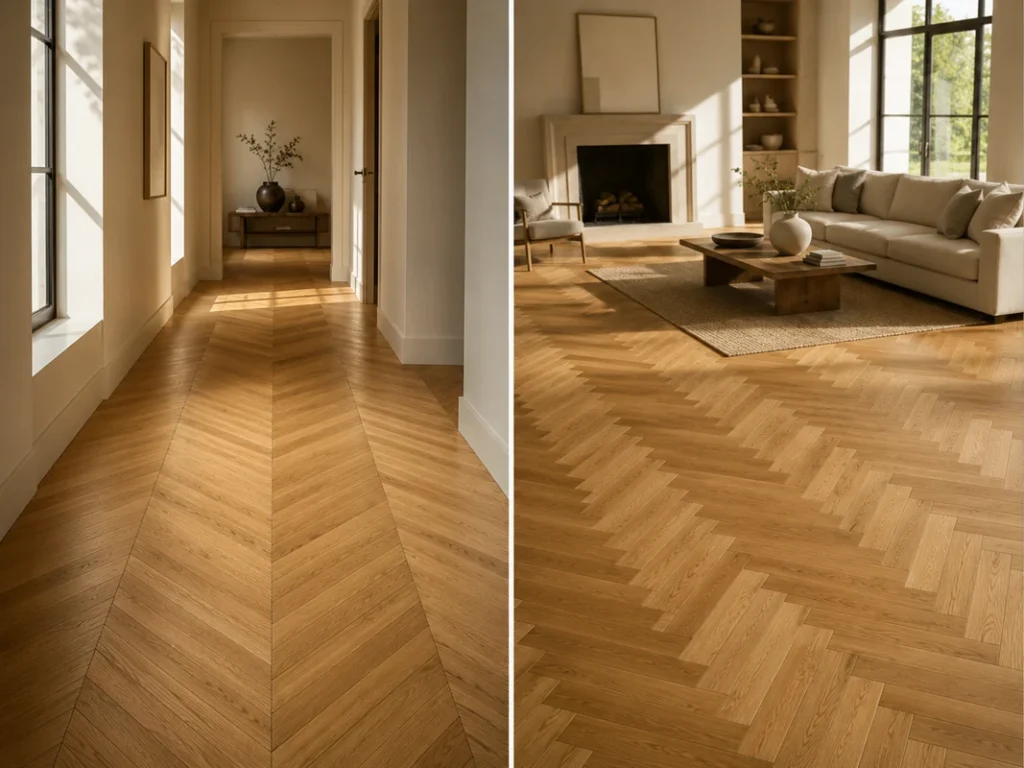
Chevron flooring and herringbone flooring are both classic parquet patterns, but they are built differently. Chevron uses planks cut at an angle so the ends meet in a sharp point, creating a clean V-shaped or arrow-like pattern. Herringbone uses rectangular planks laid in a broken zigzag, where each board meets the side of another at a 90-degree angle. The result is simple: chevron looks sharper, cleaner, and more formal, while herringbone feels more traditional, textured, and timeless
Chevron vs Herringbone: Quick Comparison Table
What Is Chevron Flooring?
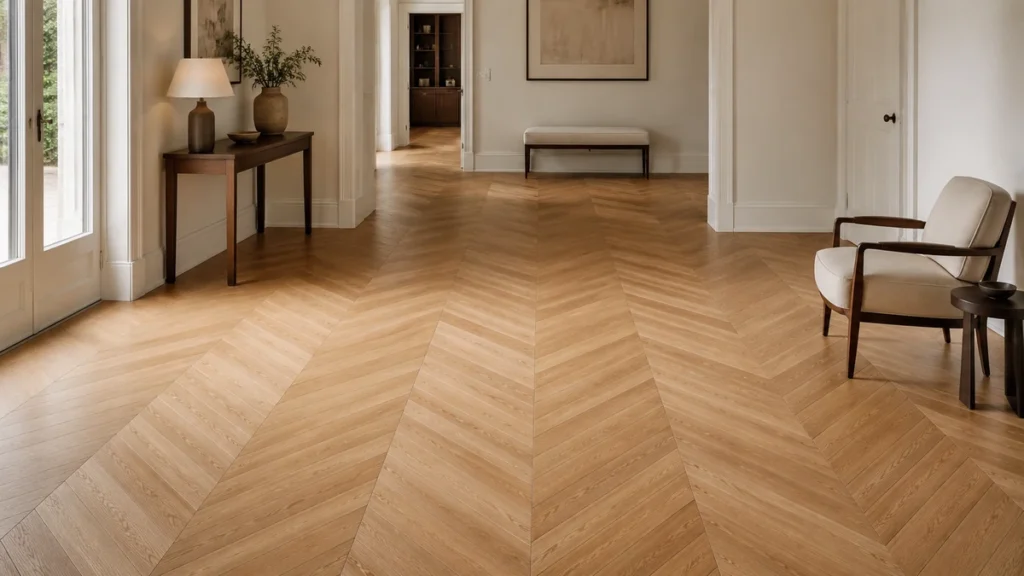
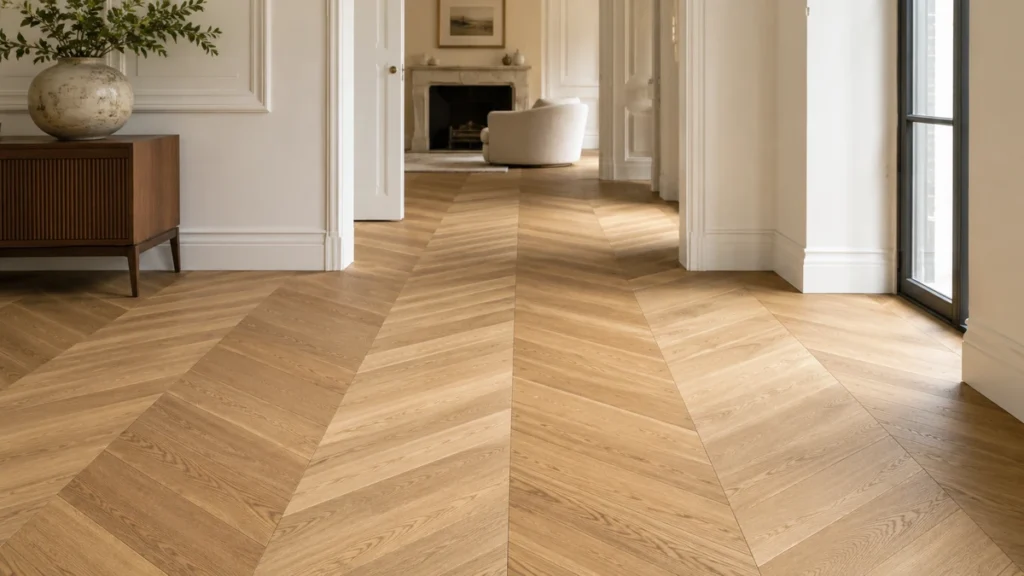
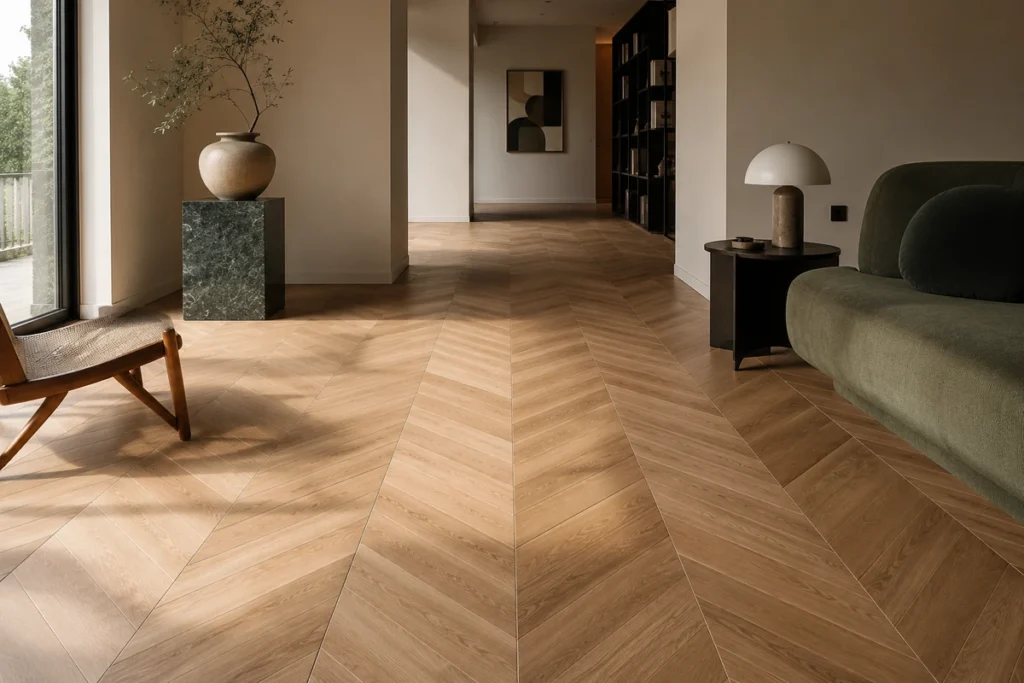
Chevron flooring is a parquet style where each plank is cut at an angle and fitted together to create a continuous V-shaped pattern. This is the main point people miss when comparing chevron vs herringbone. Chevron is not just a zigzag design. It is a sharp, aligned pattern where the ends of the boards meet perfectly to form a point.
In simple words, when someone asks what is a chevron, the answer is: a repeated V shape. In flooring, that V shape runs across the floor in a clean, directional layout. This is why chevron pattern flooring is often used in elegant interiors, hotel-style apartments, villas, showrooms, and high-end living rooms.
Chevron can be made from engineered wood, laminate, LVT, SPC, or even tile. In wood flooring, chevron parquet flooring is especially popular because it combines natural wood texture with a strong geometric design
What Does the Chevron Shape Look Like?
The chevron shape looks like a repeated V, arrow, or inverted V. Imagine two lines meeting at a sharp point. That point is what gives the chevron floor pattern its clean and premium look.
This is also why people search for terms like what’s a chevron, what chevron means, or shape chevron when they are trying to understand the design. A chevron pattern is not random. It has direction, symmetry, and rhythm. Each row points the eye forward, which can make a room feel longer or more structured.
In flooring, this shape is created by cutting the plank ends at matching angles. When installed correctly, the boards meet point-to-point, creating a continuous arrow-like flow
What Makes the Chevron Floor Pattern Different?
The biggest difference is the cut of the planks. In chevron flooring, the boards are not simple rectangles. Their ends are cut diagonally so they can meet in a perfect point. This gives the floor a more refined and architectural look.
The chevron floor pattern also creates stronger visual direction than herringbone. It pulls the eye across the room and can make a narrow space feel longer. That is why chevron parquet is often used in hallways, formal living areas, dining rooms, and luxury interiors where the floor is meant to become a design feature.
But here is the catch: chevron is less forgiving. If the angles are wrong, if the subfloor is uneven, or if the installer is careless, the whole pattern can look messy. A bad chevron installation looks cheap fast
What Is Herringbone Flooring?
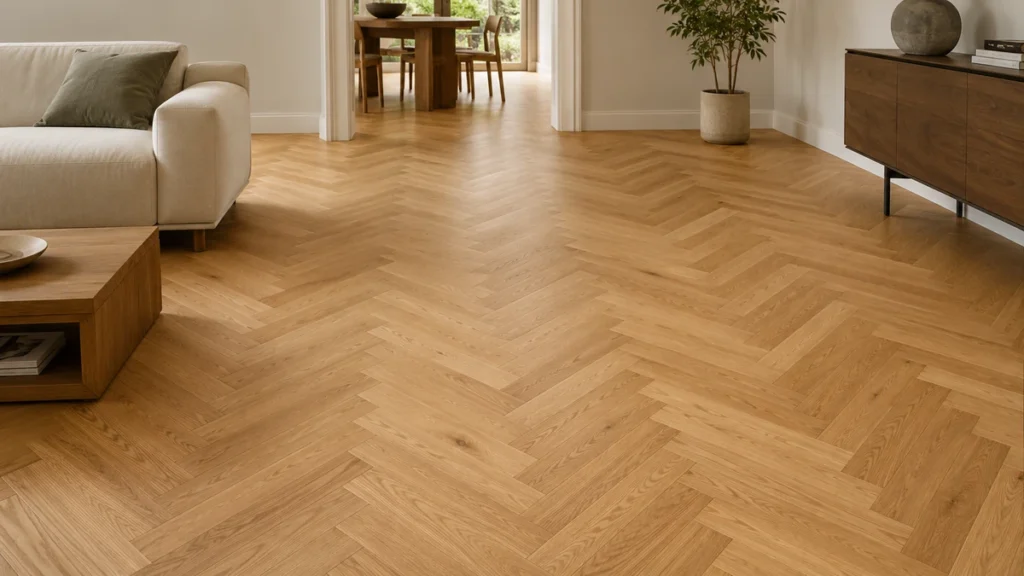
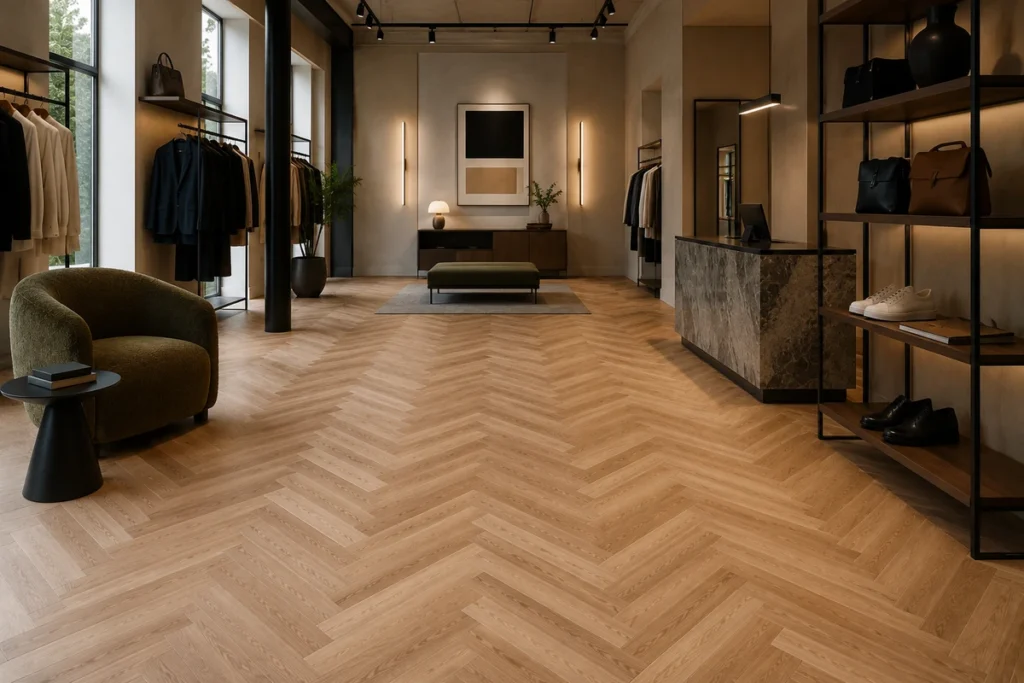
Herringbone flooring is another parquet pattern, but instead of angled-cut boards, it uses rectangular planks arranged in a staggered zigzag layout. Each plank meets the side of another plank at a right angle, creating a broken V effect.
Because herringbone has been used for centuries, it feels classic and familiar. It works well in both traditional and modern homes. It can look elegant in oak, warm in walnut, and clean in lighter engineered wood finishes.
This section is intentionally short because herringbone deserves its own full guide. For deeper detail, your internal page on herringbone parquet flooring should explain plank sizes, installation types, room suitability, and design variations. Here, the key point is simple: herringbone is more textured and traditional, while chevron is sharper and more directional
Chevron Flooring vs Herringbone: The Main Differences
1. Pattern and Shape
The first difference in chevron flooring vs herringbone is the shape. Chevron creates a continuous V pattern. Herringbone creates a broken zigzag.
Chevron is sharper. Herringbone is more layered. Chevron feels more formal and architectural. Herringbone feels more natural, classic, and decorative.
This is the easiest way to explain herringbone versus chevron to a customer: chevron points; herringbone steps.
2. Plank Cut and Installation Angle
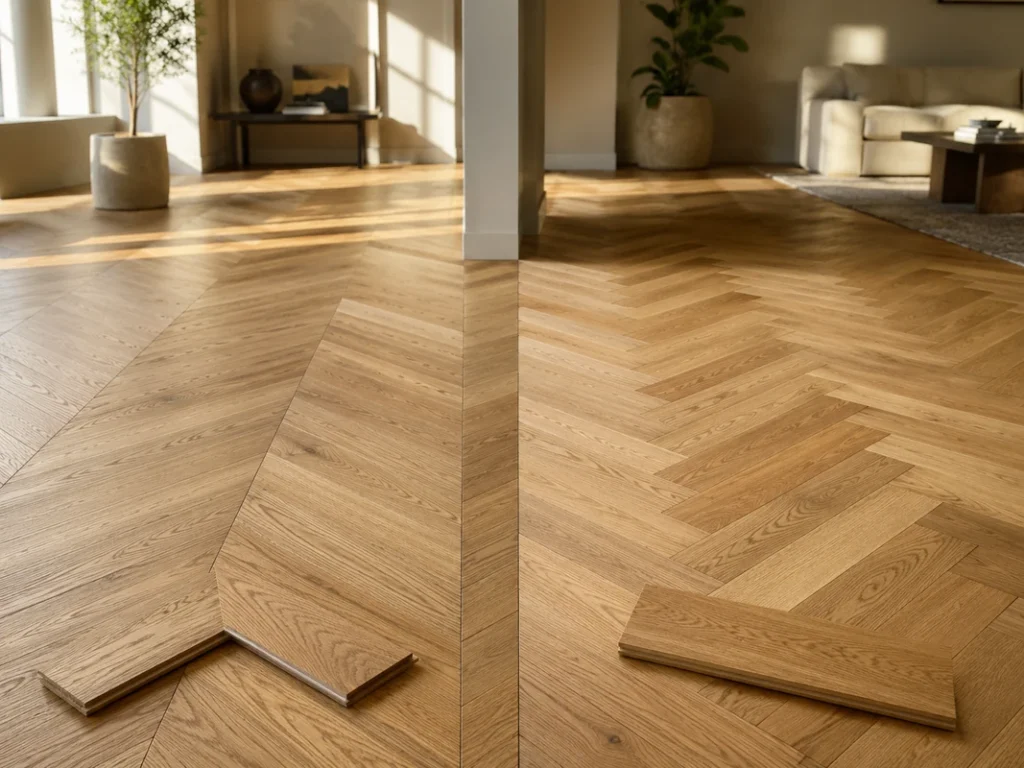
Chevron planks are cut at an angle, commonly 45 degrees or 60 degrees. The ends meet together to create a sharp point. This requires more precise manufacturing and installation.
Herringbone planks are rectangular. They do not need angled ends. They are installed in a repeated pattern where one plank sits against the side of another.
This is why chevron vs herringbone floor installation is not the same job. Chevron demands more accuracy. Herringbone still needs skill, but the plank shape is simpler
3. Visual Effect in a Room
Chevron flooring makes a room feel cleaner, longer, and more directional. The V shape guides the eye, so it can be useful in narrow spaces, corridors, and rooms where you want a sense of flow.
Herringbone flooring creates more texture and movement. It does not point as strongly in one direction, so it feels more balanced. In living rooms, bedrooms, and open-plan spaces, herringbone can add interest without becoming too aggressive.
If the room already has bold furniture, heavy marble, patterned walls, or strong décor, herringbone may be safer. If the room is minimal and needs a strong design feature, chevron can work better.
4. Installation Difficulty
Chevron is usually harder to install. The angled cuts must line up perfectly. Even a small mistake can break the visual flow of the pattern. The installer also needs to plan the center line, borders, expansion gaps, and direction carefully.
Herringbone is also not a beginner-friendly installation, but it is generally more forgiving than chevron. Since the boards are rectangular, small adjustments are easier.
This is where many homeowners make a bad decision. They choose chevron because it looks premium online, then hire a cheap installer. That is a trash move. A premium pattern with poor installation does not look luxurious. It looks broken
5. Cost Difference
Chevron is usually more expensive than herringbone because it often needs special angled planks, more accurate cutting, more planning, and more skilled labor.
Herringbone can also be expensive, especially with real wood or engineered parquet, but it is usually less costly than chevron when comparing similar material quality.
The final cost depends on material, plank size, floor preparation, waste percentage, room shape, and installer experience.
6. Maintenance and Durability
The pattern itself does not decide durability. The material does.
Engineered wood, laminate, SPC, LVT, and solid wood all behave differently. A chevron laminate floor and a herringbone engineered wood floor are not equal just because they both use parquet patterns.
For maintenance, both designs need the same basic care: regular sweeping, avoiding excess water, using furniture pads, and cleaning with the right product for the floor type. The only small difference is visual: herringbone can hide small scratches and dust slightly better because the pattern is busier. Chevron’s clean lines may show mistakes more clearly.
Chevron Floor Pattern: Pros and Cons
The chevron floor pattern has a strong luxury appeal. It looks clean, sharp, and intentional. It can make a space feel longer and more elegant, especially when installed in the right direction. It also works beautifully with natural wood tones, light oak, warm beige, and darker premium finishes.
Another benefit is that chevron is less common than standard plank flooring. That gives the room a more designed feel. For homeowners who want a floor that becomes part of the interior identity, chevron is a strong choice.
But the disadvantages are real. Chevron costs more, needs better installation, creates more waste, and can look too formal in small or crowded rooms. If the room is already busy, chevron may compete with the furniture and décor instead of supporting them
Herringbone Flooring: Pros and Cons
Herringbone flooring is versatile. It works in classic homes, modern apartments, villas, bedrooms, living rooms, and even commercial interiors. Its broken zigzag pattern adds movement without looking too sharp.
Another advantage is that herringbone is easier to style. It can feel traditional with darker wood, modern with pale oak, and luxurious with wider planks. It also hides minor wear better than chevron because the layout has more visual texture.
The downside is that herringbone can feel too common if the material is low quality or the plank size is badly chosen. Cheap herringbone parquet can look flat and artificial. Also, because the pattern is detailed, it may feel too busy in very small rooms if the planks are narrow and the color contrast is strong
Is Chevron More Expensive Than Herringbone?
Yes, chevron flooring is usually more expensive than herringbone flooring.
The main reason is precision. Chevron planks need angled ends, and the installation must be extremely accurate. The pattern depends on clean points. If those points do not align, the floor loses its entire design value.
Herringbone is still a skilled installation, but because it uses rectangular planks, it is often easier to source, cut, and fit. This can reduce both material and labor costs.
However, do not judge only by pattern. A high-quality herringbone engineered wood floor can cost more than a low-quality chevron laminate floor. Material quality, thickness, wear layer, brand, subfloor preparation, and installer skill all affect the final price.
So the smarter answer is this: chevron is usually more expensive when material quality is equal, but the total project price depends on the full flooring system
Conclusion
Chevron flooring vs herringbone is not just a style choice. It is a decision about shape, installation, budget, and the feeling you want the room to have.
Choose chevron if you want a sharp, elegant, modern, and directional floor. It is best for spaces where the flooring should become a premium design feature. But do not choose chevron unless you are ready to pay for proper materials and expert installation.
Choose herringbone if you want a timeless, flexible, and textured parquet pattern. It is easier to use across different interior styles and usually more forgiving in real homes.
The honest answer: chevron looks more luxurious when done perfectly, but herringbone is the safer and more versatile choice for most homes
FAQs