
How to Clean Wooden Floors: 11 Tips for Engineered Wood, SPC, and Laminate
Wood flooring adds warmth, elegance, and long-term value to a home or commercial space. But beautiful floors stay beautiful only when they are maintained correctly. Many people assume that floor care means using plenty of water or strong cleaning chemicals. In reality, leading manufacturers recommend the opposite: remove grit first, use a dedicated cleaner, keep moisture to an absolute minimum, and follow a routine that matches your specific flooring type.
This guide explains how to clean wooden floors in a practical and professional way. We will also cover the care differences between engineered wood, SPC flooring, and laminate flooring to help you protect your investment.
Why Correct Floor Care Matters
Good floor care is not just about appearance; it is about preserving the finish, protecting joints, reducing scratches, and ensuring the floor performs well for years. On wood-based floors, excess moisture can lead to swelling, gapping, cupping, or severe finish damage. On laminate and SPC, standing water and harsh chemicals can still deteriorate seams or dull the surface over time.
For real wood and engineered wood, indoor conditions play a massive role. Constant AC usage—which is common in places like the UAE—can severely dry out indoor air. Brands like Coswick and ESTA Parket highlight that maintaining a moderate indoor temperature (15–25°C) and a relative humidity of 40 to 65% is not just a small detail, but a core part of proper floor care.
11 Expert Tips on How to Clean Wooden Floors
1) Remove Dust and Grit Before Anything Else
The very first step in cleaning any floor is dry cleaning. Vacuum with a soft floor attachment or use a microfiber dust mop. In sandy or dusty environments like Dubai, fine particles can easily be tracked indoors. If left on the surface, these act like sandpaper, scratching the finish in high-traffic areas. Regular sweeping is a core maintenance habit emphasized by major manufacturers like Baltic Wood and Mohawk.
2) Use a Microfiber Mop, Not a Soaking Wet Mop
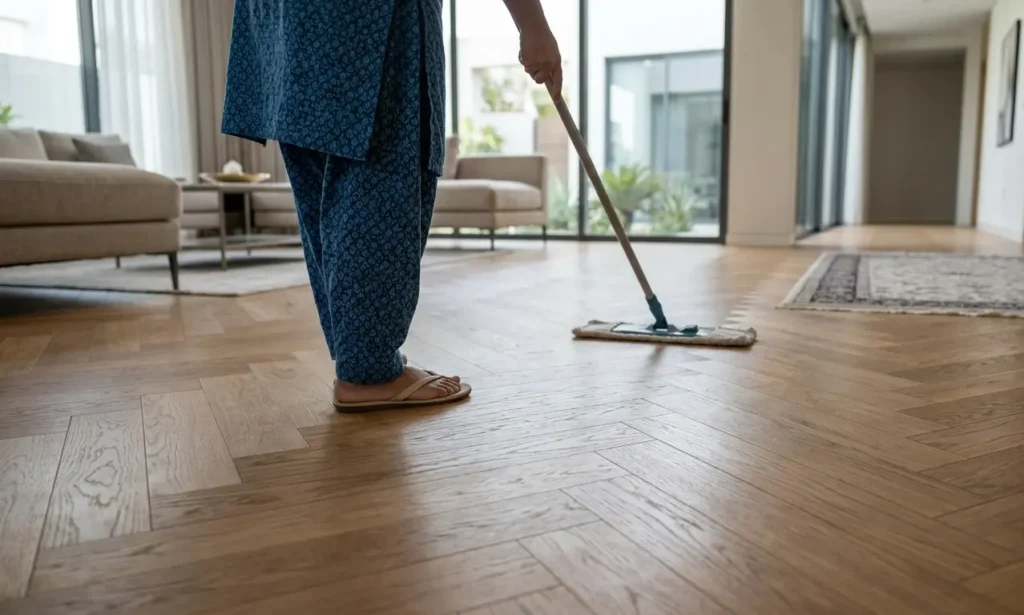
A crucial rule for safely cleaning floors is ensuring your mop is barely damp, never wet. A well-wrung microfiber mop is highly recommended because it lifts dirt effectively while keeping water exposure dangerously low. The surface should dry within minutes after cleaning.
3) Clean Spills Immediately
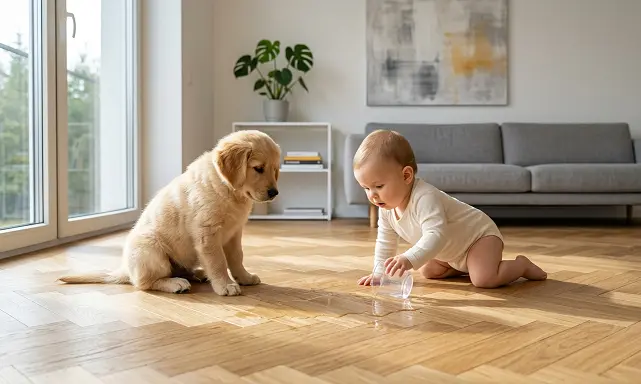
Prompt spill cleanup is one of the easiest ways to protect your flooring. Water, juice, coffee, and even cleaning residues should never be left sitting on the floor. Standing moisture will eventually penetrate the joints of engineered wood or damage the edges of laminate and SPC.
4) Use the Right Cleaner and Avoid Harsh Chemicals
When maintaining your floors, the cleaning solution matters just as much as the tool. Use a pH-neutral cleaner designed specifically for your surface type. Brands like Pergo advise avoiding harsh chemicals, abrasive scrubbing powders, wax-heavy products, or oil soaps unless explicitly recommended, as they can leave a cloudy film or ruin the protective finish.
5) Never Use Too Much Water on Wood-Based Flooring
Real wood and engineered wood floors should never be wet-mopped. Even on floors with a highly durable finish, excessive water can raise the wood grain, seep into the seams, and significantly shorten the floor’s lifespan.
6) Control Indoor Humidity and Temperature
Wood is a natural material that breathes. A stable indoor climate helps maintain the geometry of the boards and prevents gaps or cupping. If you live in a dry climate or rely heavily on air conditioning, using a humidifier to maintain that 40–65% humidity sweet spot is vital.
7) Place Mats at Entrances
Entrance mats are a highly effective preventive measure. They trap sand, dirt, and moisture before they reach your interior floors. This lowers daily wear and tear and makes your routine cleaning much easier.
8) Avoid Damaging Vacuum Heads and Harsh Tools
Not every vacuum is safe for hard flooring. Always use a soft-bristle or brush attachment. Avoid using beater bars or aggressive rotary heads on wood surfaces, as they can easily cause micro-scratches.
9) Match the Maintenance Method to the Flooring Type
A common mistake is treating every floor exactly the same. Engineered wood contains a real hardwood veneer and needs strict moisture control. Laminate is highly practical but still vulnerable to standing water at the seams. SPC is incredibly durable and water-resistant, yet it still performs best when maintained gently rather than being flooded with water.
10) Clean More Often in High-Traffic Zones
Not every room requires the same cleaning schedule. Entryways, living rooms, and commercial spaces collect more grit and require frequent dry cleaning. A smart maintenance routine is based on actual daily use, not just a strict weekly calendar.
11) Prevent Damage Before It Starts
The best cleaning strategy includes prevention. Keep pet nails trimmed, attach felt pads under heavy furniture legs, avoid dragging sharp items, and implement a “no shoes” policy if possible. These small habits keep the finish looking brand new for much longer.
Cleaning Methods by Flooring Type
How to Clean Engineered Wood Flooring
Engineered wood must be treated with the same care as solid hardwood. Start by vacuuming or dust mopping to remove grit. Then, use a slightly damp microfiber mop paired with a dedicated wood-floor cleaner. Never let water pool around the joints, and monitor your indoor humidity to prevent the boards from expanding or shrinking unnaturally.
How to Clean SPC Flooring
SPC flooring is highly resilient, making it perfect for busy homes and commercial spaces. Remove dry debris first using a soft broom or vacuum. Follow up with a damp microfiber mop and a mild, non-abrasive cleaner. Although SPC is highly moisture-resistant, avoiding unnecessarily strong chemicals and standing water ensures its longevity.
How to Clean Laminate Flooring
Laminate flooring is favored for its style and low maintenance. The safest cleaning method is straightforward: vacuum regularly, then wipe with a damp microfiber mop using minimal moisture. Gentle cleaning is always better than applying excessive liquid.
Common Mistakes to Avoid
Many flooring issues stem from incorrect cleaning habits rather than a defect in the floor itself. Avoid these frequent errors:
Using soaking wet mops.
Letting liquid spills sit for too long.
Cleaning with abrasive chemicals or bleach.
Using vacuums with hard rotary brushes.
Skipping entrance mats, especially in dusty regions.
Ignoring indoor humidity levels.
Assuming wood, laminate, and SPC all tolerate water equally.
Conclusion
Knowing how to clean wooden floors properly relies more on the correct technique than on strong chemicals. By removing abrasive dust regularly, using a soft microfiber mop with minimal water, cleaning spills instantly, and tailoring your routine to your specific floor type, you can protect your investment. When these habits become part of your regular maintenance, your floors will remain safe, clean, and visually stunning for decades.
At Green Wood, we believe premium flooring deserves expert guidance from selection to long-term care. Whether you are choosing engineered wood, SPC flooring, or laminate, our team helps you find the right solution for your space, lifestyle, and maintenance needs. If you are planning a residential or commercial flooring project in Dubai, Green Wood supports you with premium European flooring options, professional advice, and dependable service before and after installation.
Frequently Asked Questions
1) How often should I clean wooden floors?
Dry clean (vacuum or sweep) as often as needed to remove dust and grit, particularly in high-traffic areas. Deeper damp mopping can be done periodically depending on the traffic level, ensuring the mop is never overly wet.
2) Can I use a steam mop on wooden floors?
No. It is highly recommended to avoid steam mops on wood flooring. The combination of intense heat and moisture can severely damage the finish and warp the boards.
3) What is the safest mop for engineered wood?
A well-wrung, slightly damp microfiber mop is the safest and most widely recommended option. It captures dirt effectively without leaving harmful moisture behind.
4) Can I use a lot of water on laminate flooring?
No. While laminate is easy to maintain, water can seep into the seams and cause the core to swell. Always use a damp mop rather than a wet one
5) Is SPC flooring easier to clean than wood?
Yes, generally. SPC has a highly durable and water-resistant core, making it easier to maintain in busy environments. However, it still requires gentle cleaning tools and non-abrasive solutions.
6) Why does indoor humidity matter for wood floors?
Wood naturally expands and contracts based on moisture in the air. Conditions that are too dry (often caused by AC units) or too humid can lead to board movement, gaps, or cupping. Aim for a relative humidity of 40 to 65%.